Introduction
Imagine stepping outside to a kitchen that looks like it belongs in an architectural magazine — sleek, strong, and built to last. Concrete outdoor kitchen ideas have completely changed how homeowners think about backyard design, and once you see what is possible, you will never look at plain patios the same way again. Whether you are starting from scratch or upgrading an existing setup, concrete gives you a surface that is both beautiful and built for real outdoor life. In my experience, nothing creates that “wow” reaction quite like a well-designed concrete outdoor kitchen. This article walks you through 22 inspiring ideas to help you find your perfect style.
1. Polished Concrete Island
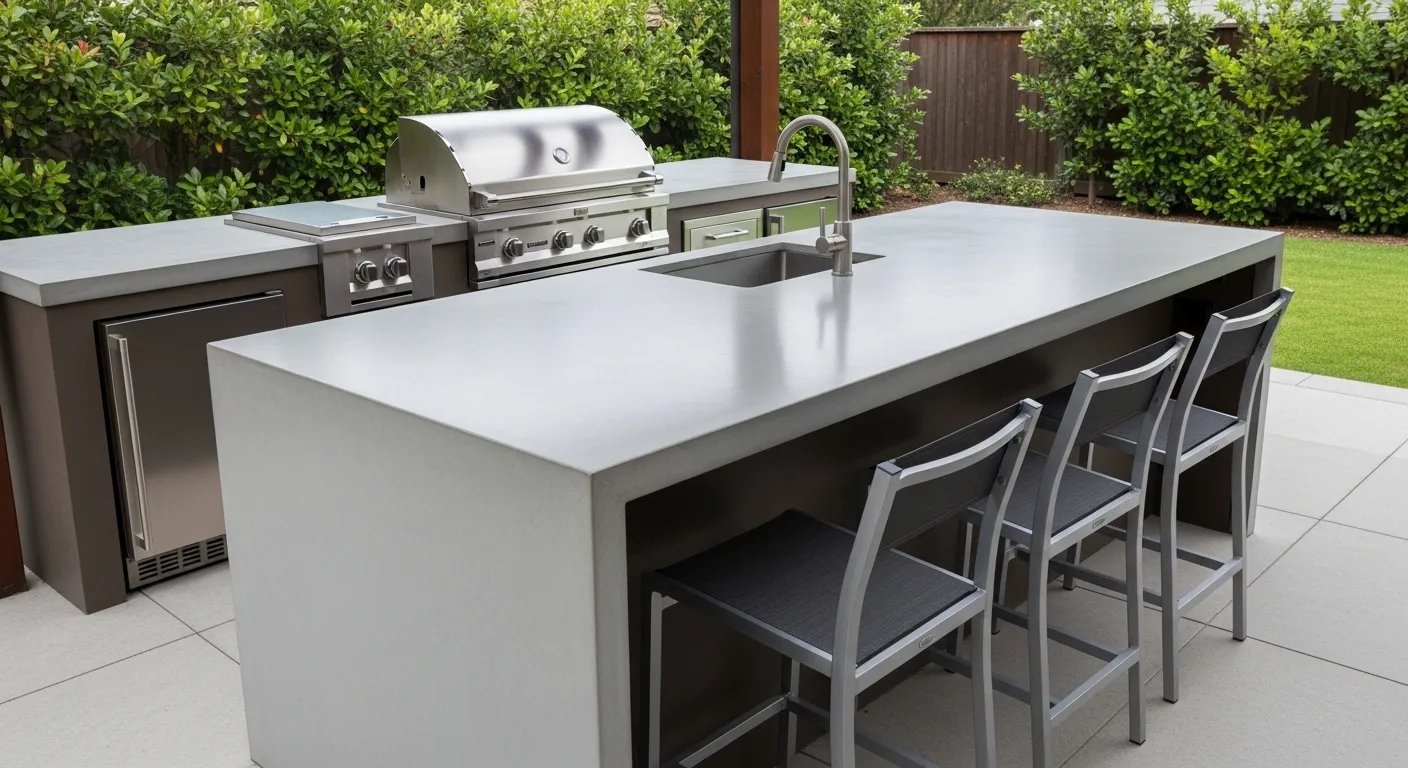
A polished concrete island is one of the most impactful upgrades you can make to your outdoor cooking space. The smooth, refined finish creates a surface that feels high-end and professionally designed, yet it is incredibly practical for daily use. Unlike wood or tile, polished concrete holds up beautifully against heat, weather changes, and heavy use. I have seen this finish transform completely average patios into spaces that feel like resort-style retreats, simply because the countertop demands attention. The sleekness anchors the whole kitchen and sets the tone for every other design choice you make outdoors.
What makes polished concrete especially appealing is how well it adapts to different design styles. In a modern outdoor kitchen, it reads as ultra-contemporary. In a more rustic or transitional space, it adds an unexpected refinement that feels intentional and curated. You can customize the finish level, choosing from satin to mirror-gloss depending on your preference. That versatility means the investment works across multiple design phases as your outdoor space evolves. That is why many designers recommend starting with the countertop as the anchor piece of any outdoor kitchen — when the surface is right, everything else falls naturally into place around it.
2. Raw Concrete Countertop
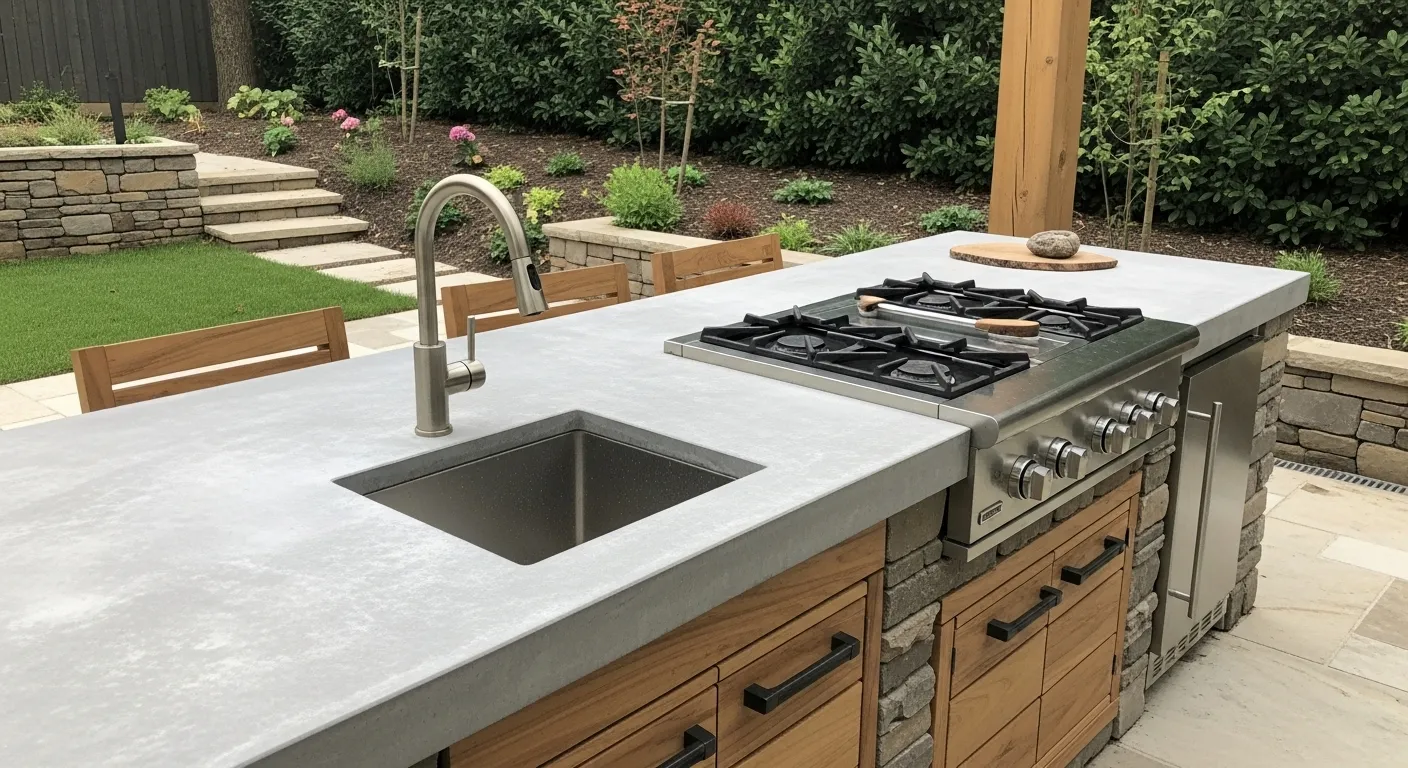
There is something genuinely compelling about a raw concrete countertop that polished finishes simply cannot replicate. The texture tells a story — of craftsmanship, of material, of decisions made by hand. In outdoor kitchens, where the goal is often to connect with nature and create an honest, grounded atmosphere, the raw finish feels completely at home. I have noticed that homeowners who choose this look tend to feel a deeper connection to their outdoor space, almost like the kitchen grew organically from the landscape itself rather than being placed on top of it. It is rustic without being rough, refined without being sterile.
A raw concrete countertop also pairs exceptionally well with natural elements like wood, stone, and mature garden plantings. The organic, matte texture creates visual harmony with bark, leaves, and stone pathways in ways that shinier surfaces sometimes fight against. You can leave it in its natural gray or add a slight tint during the pour to introduce warmth or depth. Either way, the result is a surface with real personality. That is why many designers recommend this finish for homeowners who want their outdoor kitchen to feel like an extension of the landscape rather than a separate structure placed on top of it.
3. Concrete Pizza Oven Base
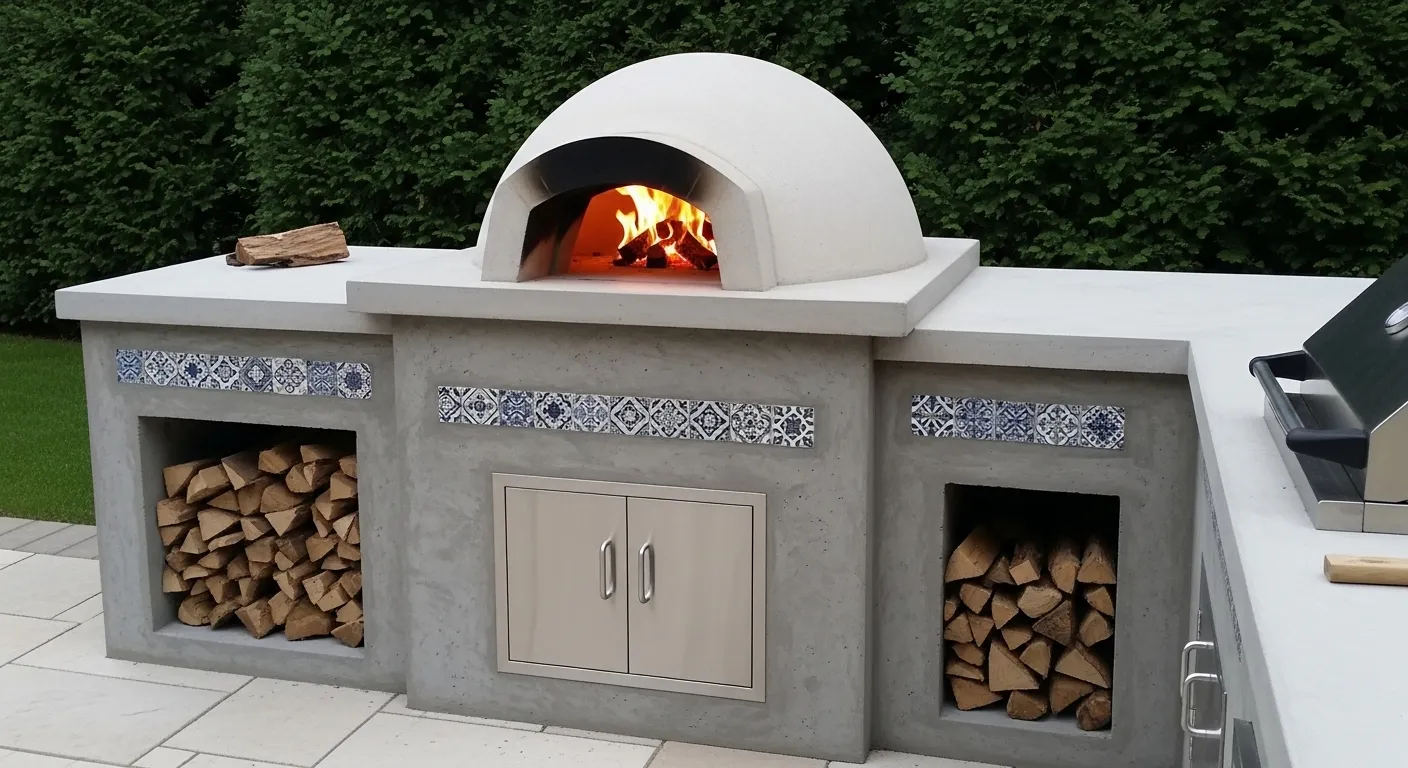
Building a pizza oven base from concrete is one of the smartest decisions you can make for a serious outdoor kitchen. Concrete is naturally heat-resistant and structurally robust enough to carry the considerable weight of a dome oven without shifting or settling over time. I have seen beautiful installations where the concrete base blends seamlessly with the surrounding countertop, creating a cooking area that looks architecturally intentional rather than assembled from separate components. The result is a kitchen with a true focal point — a place where the eye travels naturally and where guests instinctively gather as the fire warms the dome on a cool evening.
Beyond its structural benefits, a concrete pizza oven base contributes enormously to the visual drama of your outdoor space. The curved oven dome rising from a solid, textured base creates a sculptural quality that no flat kitchen can match. You can finish the concrete smooth for contrast against the dome, add an aggregate texture for cohesion, or even embed tiles as decorative accents across the front panel. Each option transforms the functional base into an artistic statement. For homeowners who love to entertain, this setup does double duty as both a working kitchen and a visual showpiece that guests will remember long after the meal ends.
4. Floating Concrete Shelves
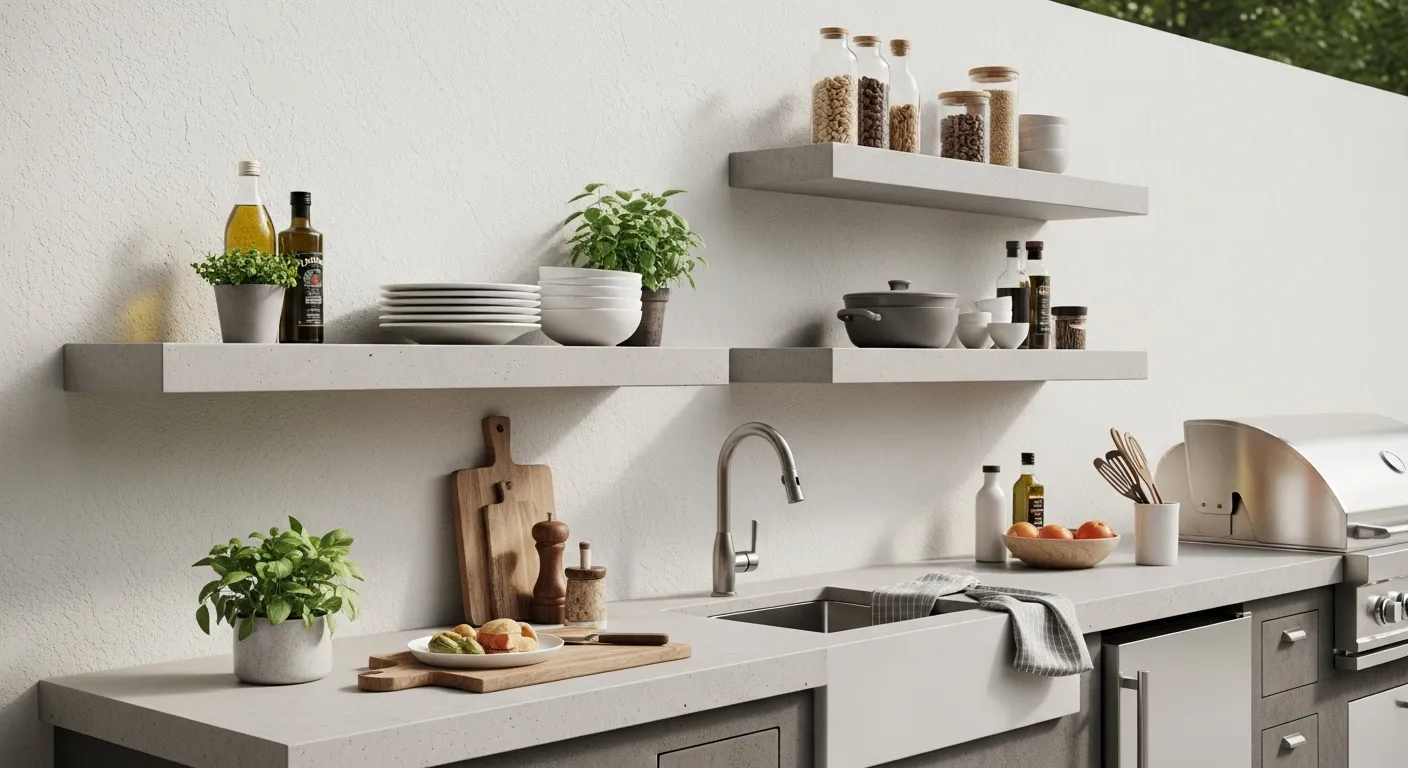
Floating concrete shelves are one of the most underestimated design tools in an outdoor kitchen. They solve a very real problem — where do you put everything when you are cooking outside — while simultaneously adding an architectural detail that makes the space feel curated and complete. The shelves hover cleanly against the wall, leaving the countertop clear for actual food preparation. I have noticed that outdoor kitchens with dedicated vertical storage always feel more functional and more polished than those relying solely on cabinet space below. It is a small addition with an outsized effect on both how the kitchen looks and how smoothly it operates during busy cooking sessions.
The beauty of concrete floating shelves is that they bring material consistency to spaces that can sometimes feel disjointed. When the shelves echo the countertop material and finish, the eye reads the whole kitchen as a unified composition rather than a collection of separate elements. You can keep them spare and minimal — a single bottle of olive oil, a small plant, a stack of plates — or load them with generous displays of herbs and cookware that signal a kitchen that is actively and joyfully used. Either approach works beautifully. The concrete surface itself adds enough visual weight to make even a simple shelf look intentional, elevated, and worth lingering on.
5. Stained Concrete Finish
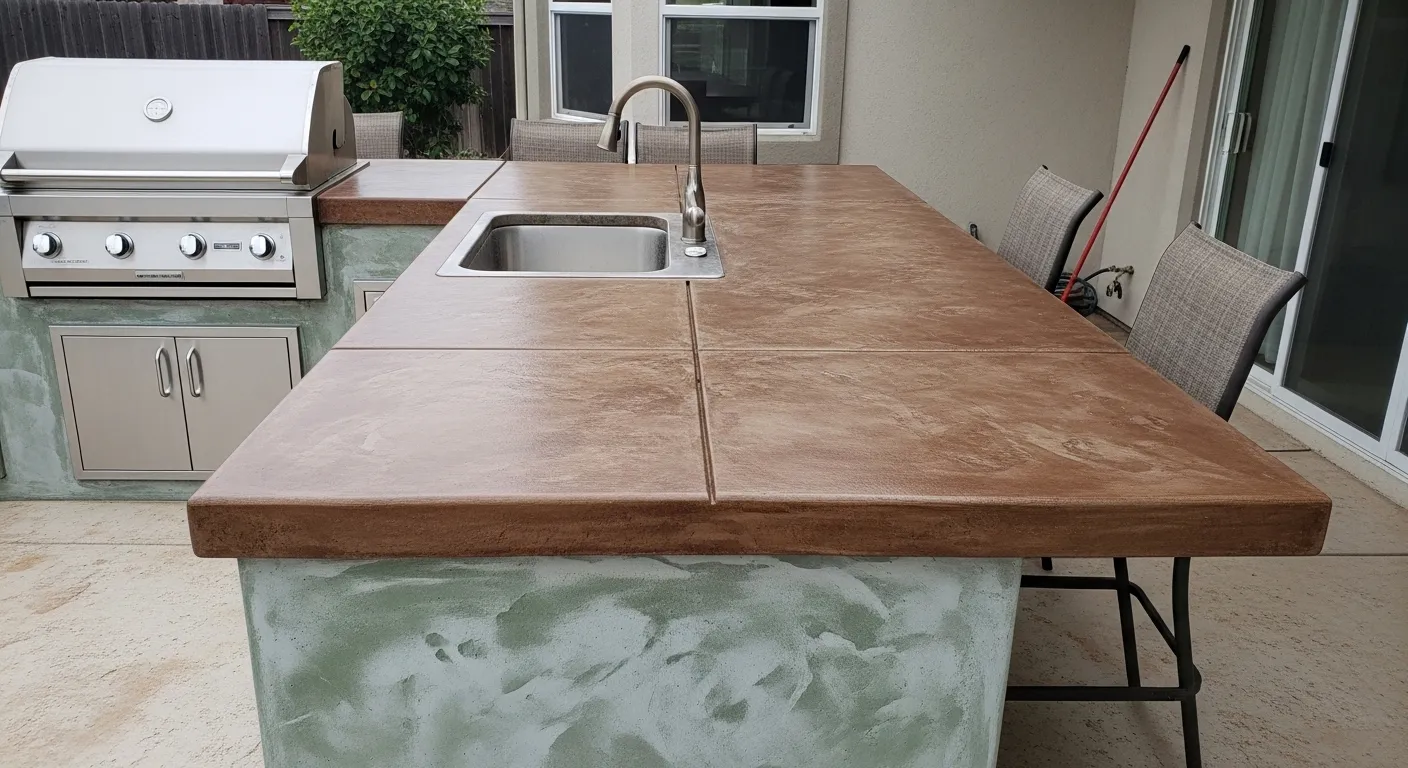
Stained concrete is the secret weapon of outdoor kitchen design that most homeowners have never considered. The acid staining process reacts chemically with the concrete surface, creating color variations that mimic the depth and warmth of natural stone at a fraction of the cost. Every section stains differently depending on the concrete’s exact composition, meaning the finished surface has an organic, artisan quality that feels impossible to manufacture. I have tried both pre-made stain colors and custom blends, and the results consistently surprise people who assumed concrete had to remain gray. A well-stained outdoor kitchen countertop can genuinely become the most talked-about feature of an entire backyard.
One of the greatest advantages of staining is the range of color directions it opens up for your outdoor kitchen design. Warm terracotta and bronze tones pair naturally with Mediterranean or Southwestern-style architecture. Deep charcoal and slate tones feel modern and sophisticated. Soft green and blue-gray washes give a coastal, relaxed feel that works beautifully in beach-adjacent homes. Once you choose a stain direction, the rest of your material selections — tile, wood, metal — fall into alignment much more easily. The concrete becomes the color anchor of your design, and every other choice becomes a response to that foundation rather than a starting-from-scratch decision that can feel overwhelming.
6. Concrete Waterfall Edge
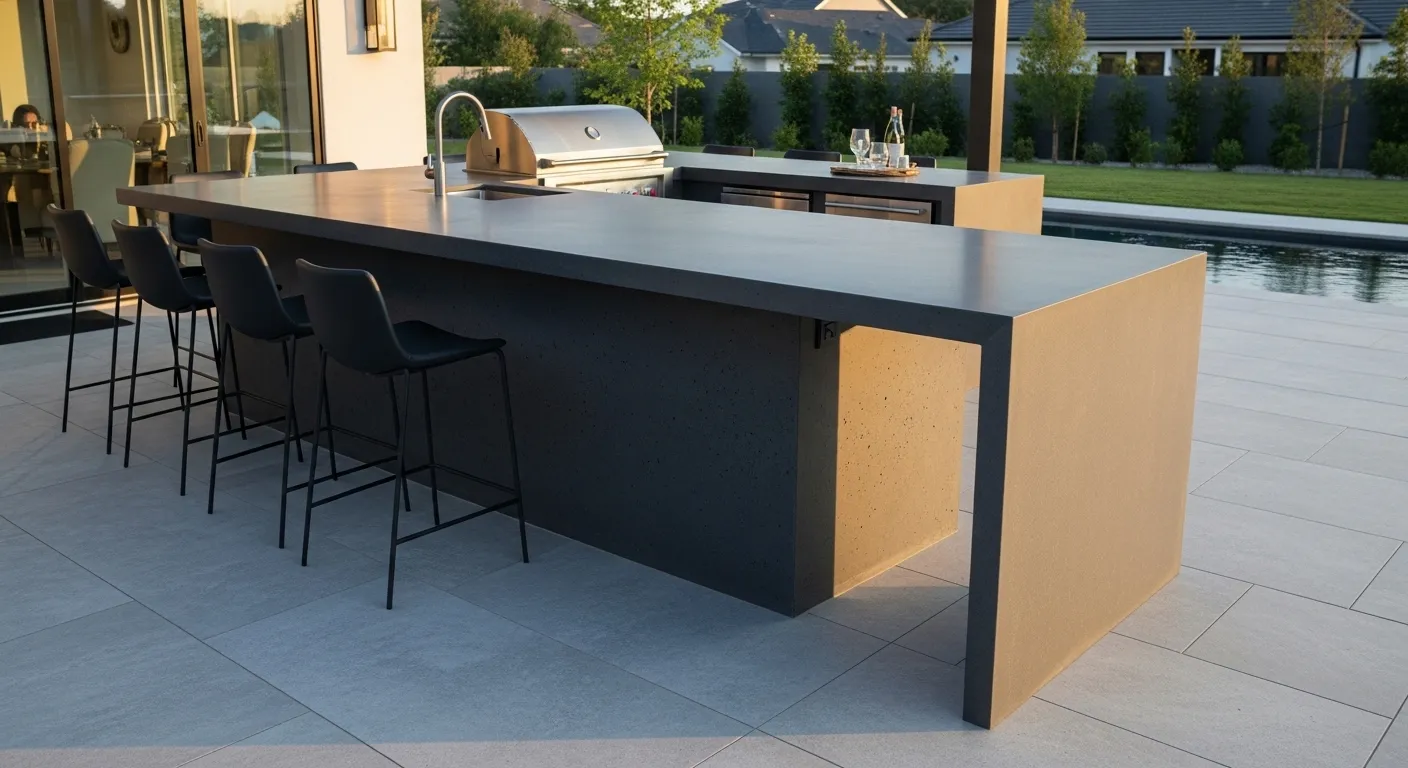
A concrete waterfall edge is the kind of design detail that makes outdoor kitchens look like they were designed by a professional architect. The edge wraps continuously from the horizontal countertop down the vertical face of the cabinet, creating a seamless, unbroken plane of material that is visually very powerful. Unlike standard countertop edges that reveal the cabinet structure beneath, the waterfall design keeps everything hidden and clean. That is why many designers recommend it for island-style kitchens where guests sit around all sides — it eliminates the awkward visual break at the countertop edge and replaces it with something genuinely beautiful to look at from every angle.
Beyond pure aesthetics, the waterfall edge serves important practical purposes in an outdoor kitchen. Concrete is naturally durable, but the side panel of an outdoor island is constantly exposed to rain, humidity, and UV light. By wrapping the concrete down the side, you create a sealed, weather-resistant surface that protects the structure beneath from moisture infiltration over time. This functional benefit comes with no compromise to the look — in fact, it improves it. The island reads as a solid, confident block of material rather than a countertop sitting on top of something else, and that feeling of solidity translates directly into a sense of permanence and luxury that instantly upgrades the whole outdoor space.
7. Built-In Concrete Sink
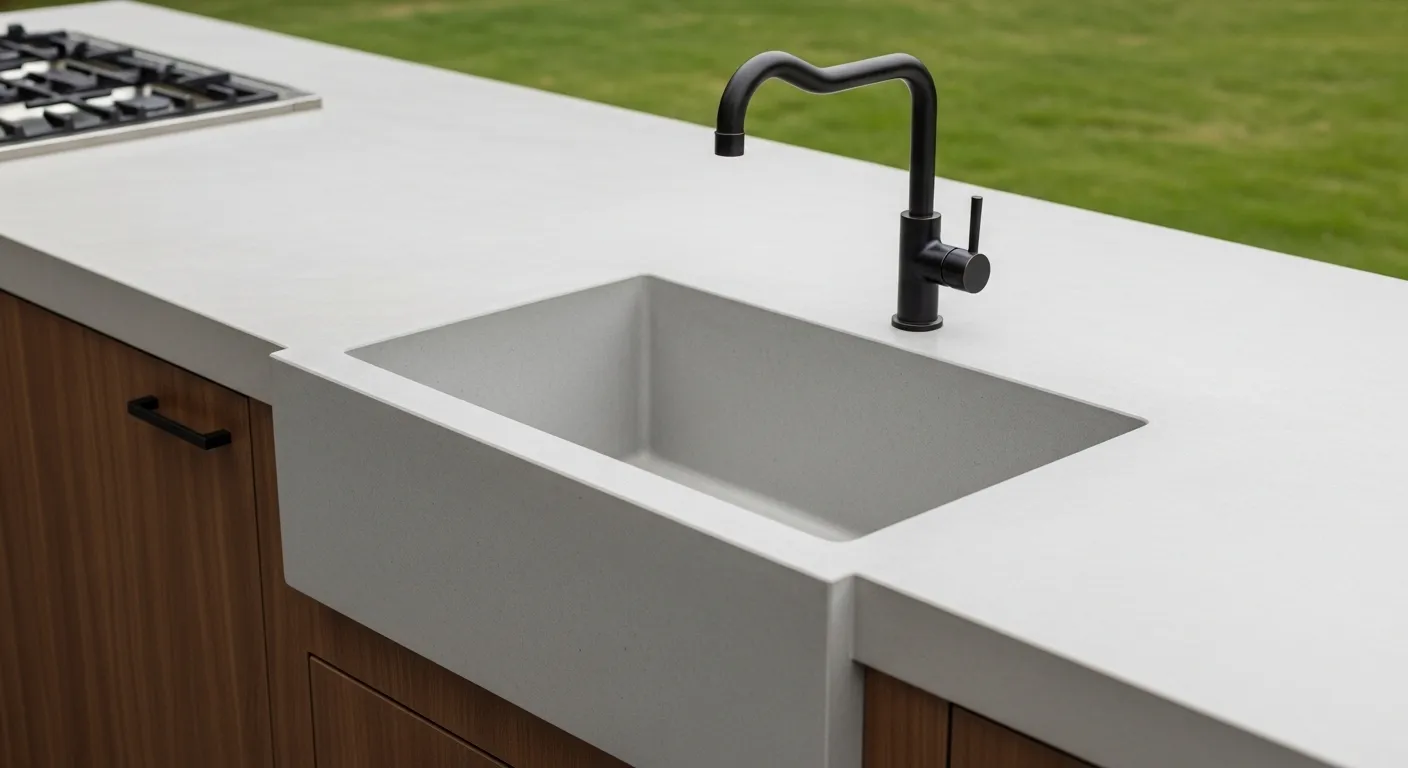
A concrete sink cast directly into the outdoor countertop is one of those design decisions that simultaneously solves a functional problem and creates a beautiful visual moment. Traditional drop-in sinks interrupt the flow of a countertop, drawing attention to the joint between the basin and the surface. An integral concrete sink eliminates that interruption entirely. The bowl, the rim, and the counter are all one continuous material, cast together and finished as a single composition. I have seen this detail in person, and the effect is genuinely surprising — it makes the entire kitchen feel purpose-built and architecturally resolved in a way that pre-made kitchen components almost never achieve.
The practical case for a built-in concrete sink is equally compelling, especially in outdoor environments where weather exposure is a constant challenge. Stainless steel sinks, while popular, develop a dulled, spotted appearance after prolonged outdoor exposure. Concrete, when properly sealed, maintains its surface integrity season after season with minimal upkeep. The deep basin design handles large pots, oversized platters, and messy prep work that backyard cooking inevitably generates. You can pair the sink with a wall-mounted faucet in matte black or brushed bronze for a fixture combination that looks considered and polished without adding any visual clutter to a countertop that is already doing beautiful design work on its own.
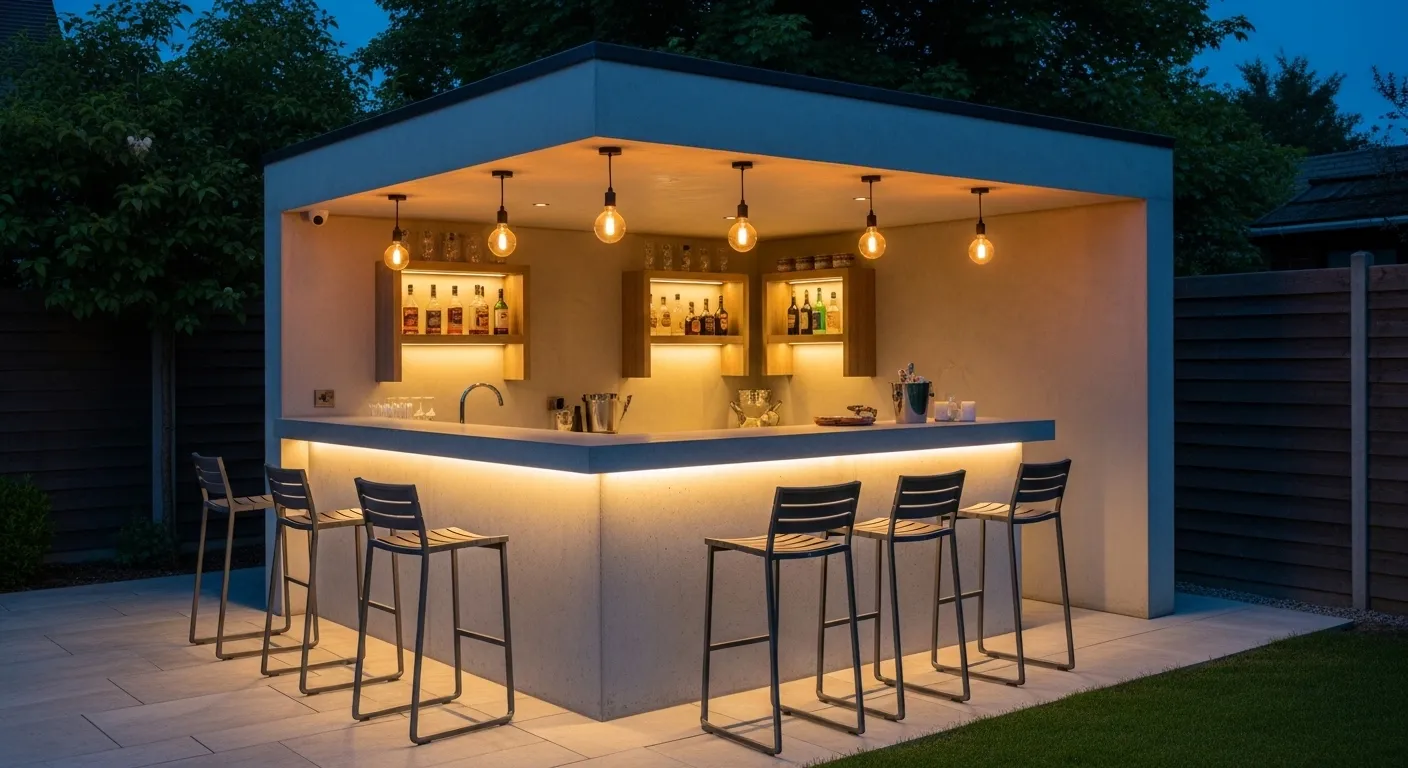
An outdoor concrete bar is the single upgrade that most dramatically shifts your backyard from a simple cooking space into a genuine entertainment destination. The structure itself communicates intention — this is a space where guests are welcomed, drinks are properly prepared, and evenings are meant to last. Concrete is ideal for the bar countertop because it handles the constant parade of glasses, ice buckets, and wet surfaces that bar service demands. The material does not absorb cold, does not warp under heat, and does not develop the soft spots that wood bars eventually suffer over years of outdoor exposure. It is genuinely the most practical luxury you can add to an outdoor kitchen.
What makes concrete bars particularly effective as design elements is how well they hold up at night. When you add underlighting beneath the concrete overhang, or backlight shelves behind the bar with warm amber bulbs, the material takes on a completely different character than it has during daylight hours.
The density and slight translucency of lighter concrete mixes allow light to glow through thin edges in a way that looks almost magical in an evening garden setting. I have noticed that guests are naturally drawn to these spaces without being directed — the combination of warm light, solid material, and that familiar bar-height overhang creates a social gravity that pulls a party together effortlessly and keeps it going longer than any other outdoor design feature.
9. Exposed Aggregate Surface
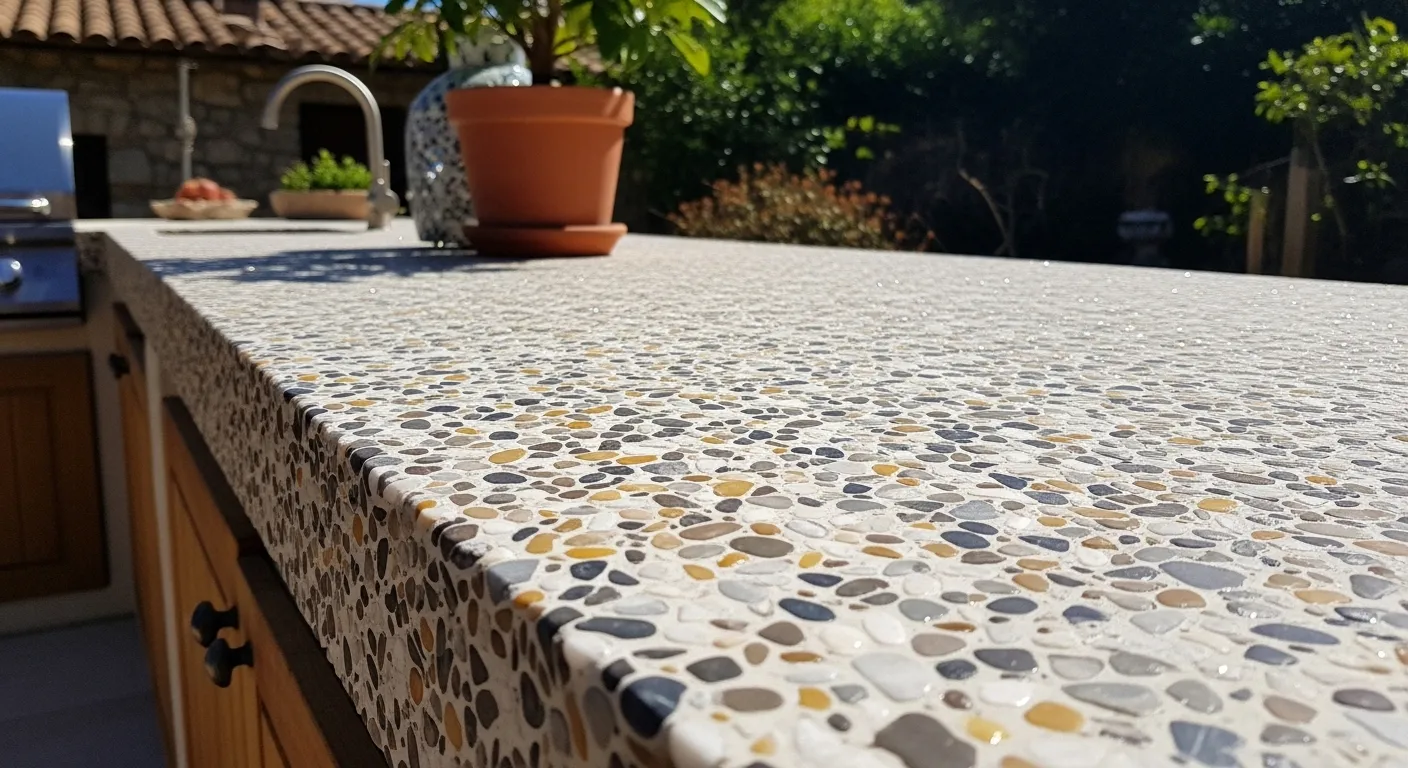
Exposed aggregate concrete brings a richness to outdoor kitchen surfaces that no other finish quite matches. Instead of a uniform gray plane, you get a living mosaic of natural stone, pebble, and aggregate that catches light differently at every hour and from every angle. The technique involves washing away the surface layer of cement paste during the setting process, revealing the beautiful aggregate material embedded within. The result looks artisanal and distinctive — more like a natural stone surface than a poured concrete one. I have seen this finish work particularly well in Mediterranean and Tuscan-inspired outdoor kitchens where texture and warmth are core elements of the design vocabulary.
Beyond its undeniable visual appeal, exposed aggregate offers practical advantages that make it especially smart for outdoor kitchen environments. The textured surface provides natural slip resistance, which matters enormously when water, cooking oil, and food particles are regularly on the countertop. Unlike polished surfaces that can become slippery when wet, aggregate gives you grip and traction exactly where it is needed most. The same texture that improves safety also makes the surface more forgiving to look at over time — small scratches and minor surface wear simply disappear into the naturally varied texture, which means the countertop looks as good after ten years of outdoor cooking as it did the day it was finished and sealed.
10. Concrete Bench Seating
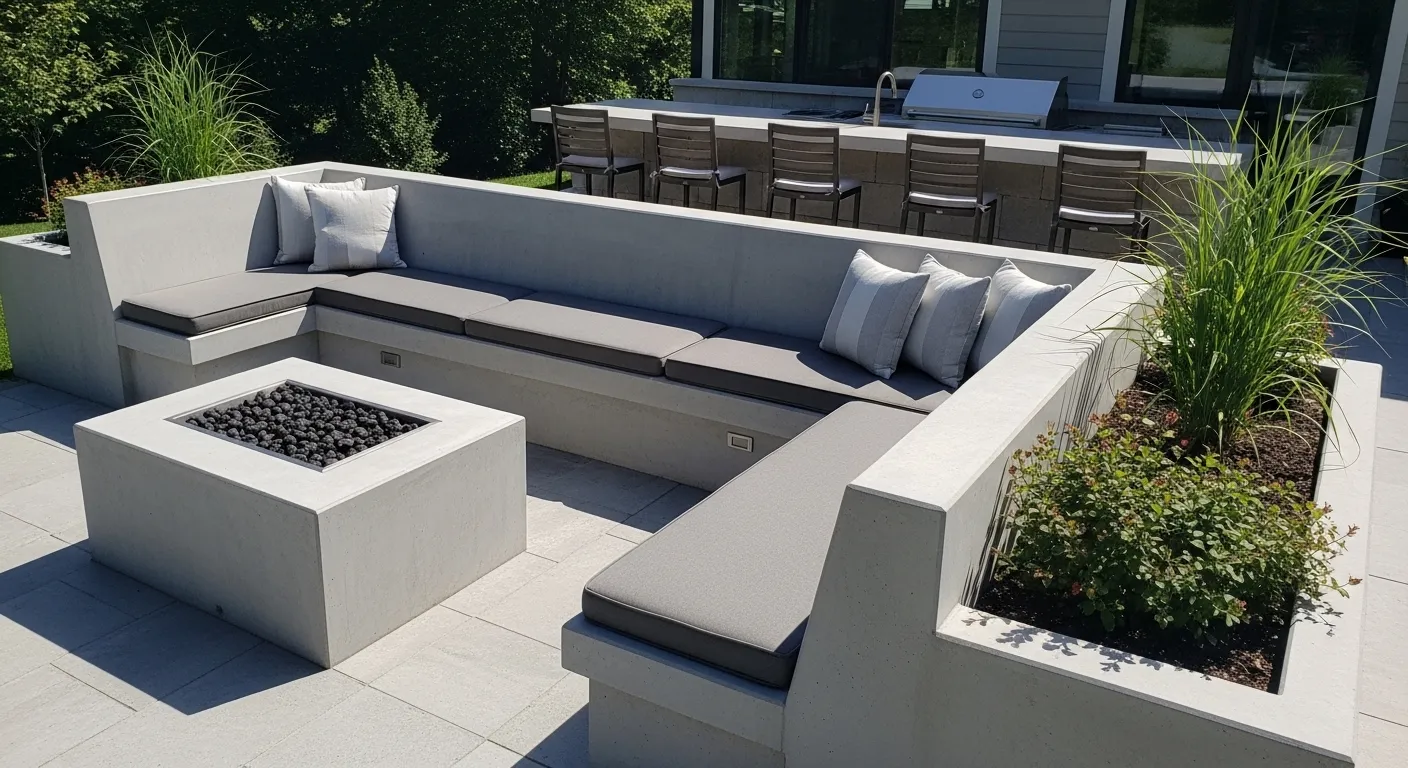
Concrete bench seating is one of the smartest investments you can make alongside a concrete outdoor kitchen because it solves the outdoor dining puzzle permanently. Standard patio chairs are moved, borrowed, weathered, and eventually replaced on a frustrating cycle. A built-in concrete bench simply stays. It weathers gracefully, requires almost no maintenance, and provides seating that looks as intentional on day one as it does five years later. When you add generous seat cushions in high-quality outdoor fabric, the bench becomes genuinely comfortable for long meals and evening conversations.
That is why many designers recommend this approach for homeowners who want an outdoor dining area that truly functions as an extension of the home rather than a temporary summer setup.The design possibilities with concrete bench seating are broader than most people initially realize. You can build benches that follow the perimeter of a patio, wrap around a fire pit, or face directly toward the outdoor kitchen for a counter-seating configuration that keeps guests engaged with the cooking action.
Varying the bench height slightly — from standard seat height to counter height — creates a layered seating arrangement that works for casual weekday lunches and organized dinner parties alike. Integrated planters at the bench ends, built from the same concrete, add greenery that softens the material heaviness and creates natural visual punctuation at the ends of the seating run without introducing separate containers that would need to be moved seasonally.
11. Concrete and Wood Blend
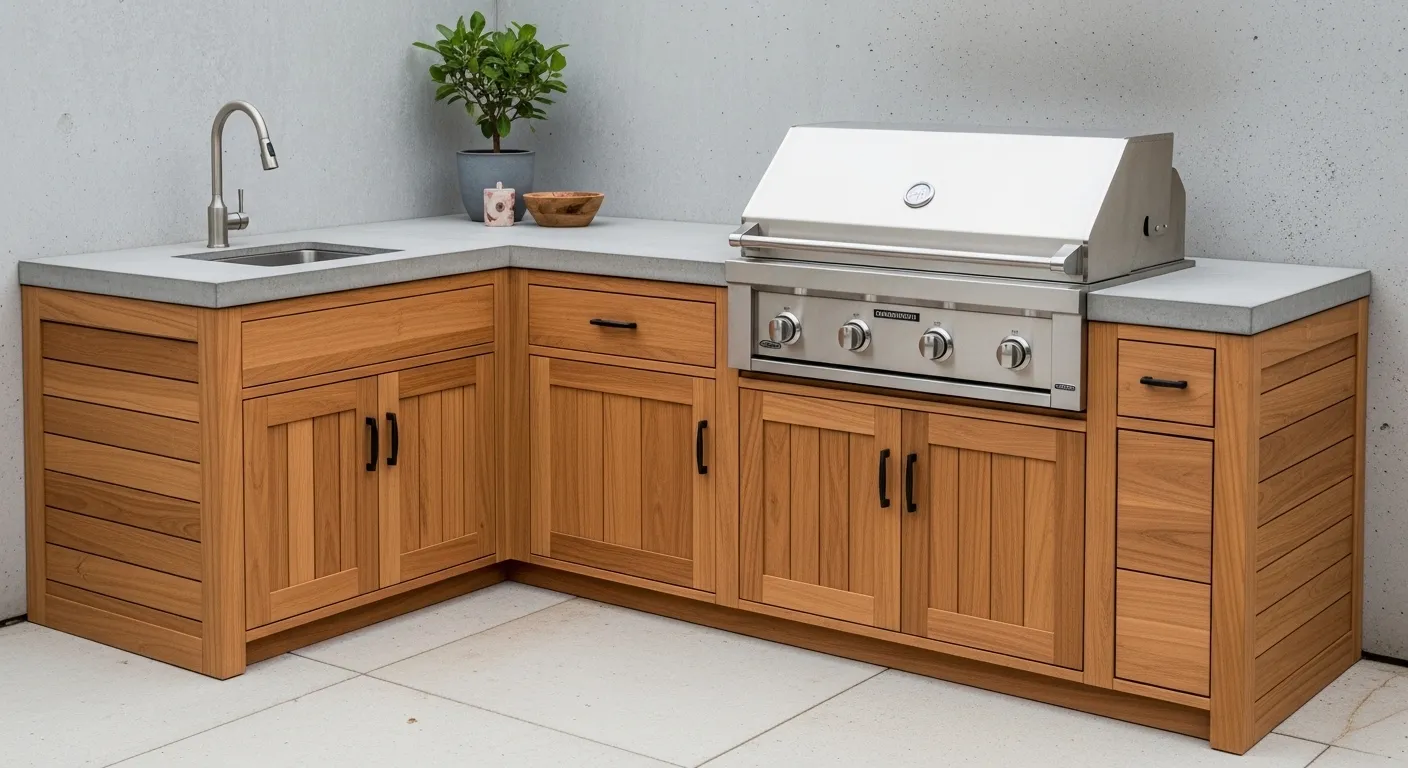
Pairing concrete with wood in an outdoor kitchen creates one of the most universally appealing material combinations in modern design. Each material compensates for the perceived weakness of the other. Concrete alone can feel cold, industrial, or heavy in large quantities. Wood alone can feel too soft, too informal, or insufficiently weather-resistant for serious outdoor cooking use. Together, they achieve a balance that is both visually dynamic and practically excellent. The concrete countertop handles heat and heavy prep work while the wood cabinetry introduces the warmth, grain, and organic character that makes the space feel genuinely inviting rather than simply functional. It is the kind of combination that photographs beautifully in every season.
I have noticed that concrete-and-wood outdoor kitchens tend to feel more timeless than those relying on a single material or trend-driven surface. Wood grounds the design in nature. Concrete speaks to craft and permanence. Together, they create a material story that does not need updating every few years to remain relevant. When selecting your wood, choose species specifically rated for outdoor use — teak, ipe, or thermally modified varieties that will not warp, rot, or crack through seasonal moisture cycles. Seal the concrete countertop with a penetrating food-safe sealer and apply a quality oil or finish to the wood annually. That small amount of maintenance keeps this beautiful material pairing looking intentional, fresh, and thoroughly impressive for many years.
12. Dark Charcoal Concrete
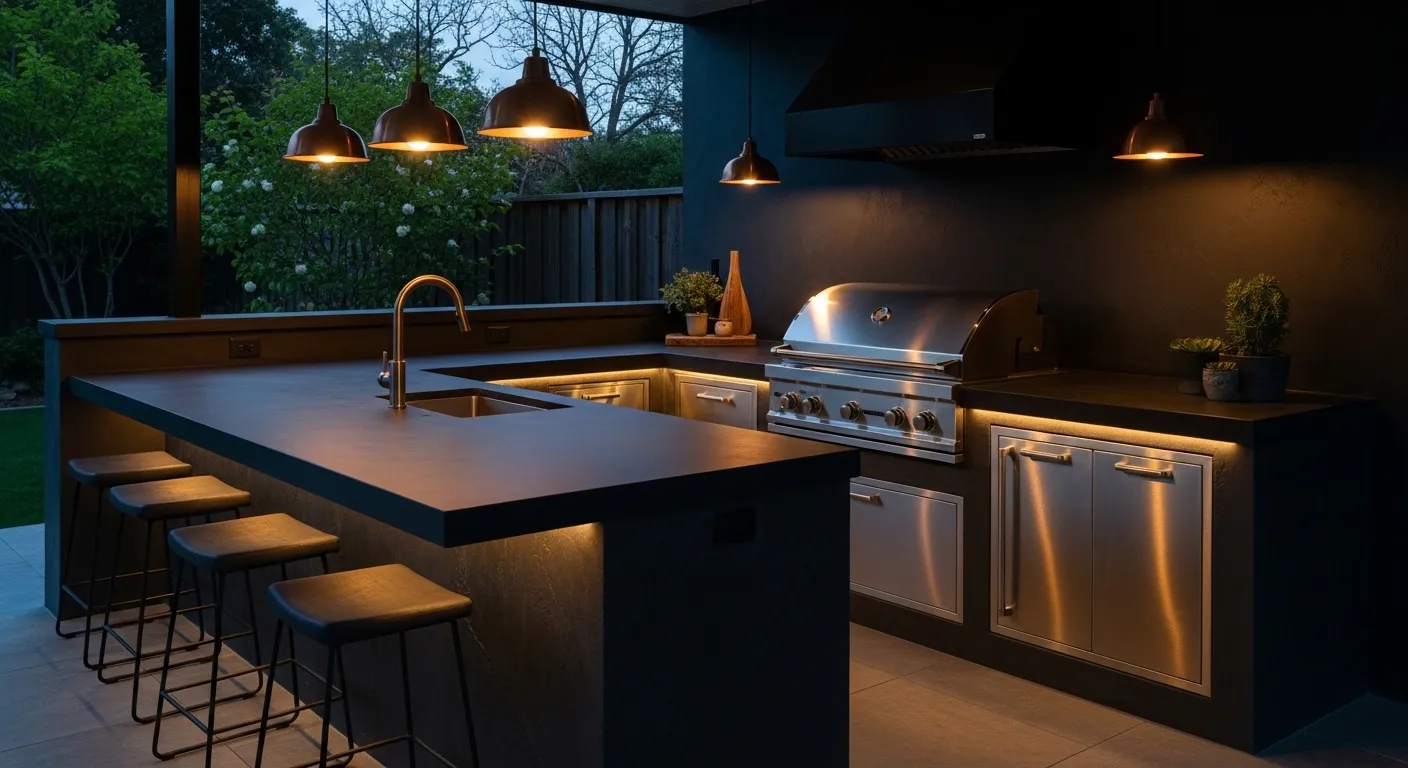
Dark charcoal concrete is the choice for outdoor kitchens designed to make a bold, uncompromising statement. While light gray concrete feels clean and open, charcoal shifts the entire atmosphere into something more dramatic, sophisticated, and undeniably grown-up. The deep pigment makes the material look denser and more architectural, giving the kitchen a sense of weight and permanence that lighter finishes rarely achieve. What surprises most people who choose this direction is how livable it actually is in practice — the dark surface hides minor spills, dust, and everyday cooking marks that would be more visible on paler surfaces, making the kitchen look perpetually pristine even after heavy use.
The evening performance of dark charcoal concrete is genuinely spectacular and often the decisive factor for homeowners who discover this finish during outdoor kitchen planning. As natural light fades and artificial lighting takes over, the deep surface becomes even more dramatic. Pendant lights in warm brass or copper cast pools of amber light across the matte surface. Recessed LED strips beneath the countertop overhang create a floating effect. The contrast between the glowing light and the dark material produces a visual depth that makes the kitchen feel more like an atmospheric dining destination than a functional cooking station. I have seen this combination stop guests mid-sentence — the effect is that striking in the right setting.
13. Concrete Fire Pit Table
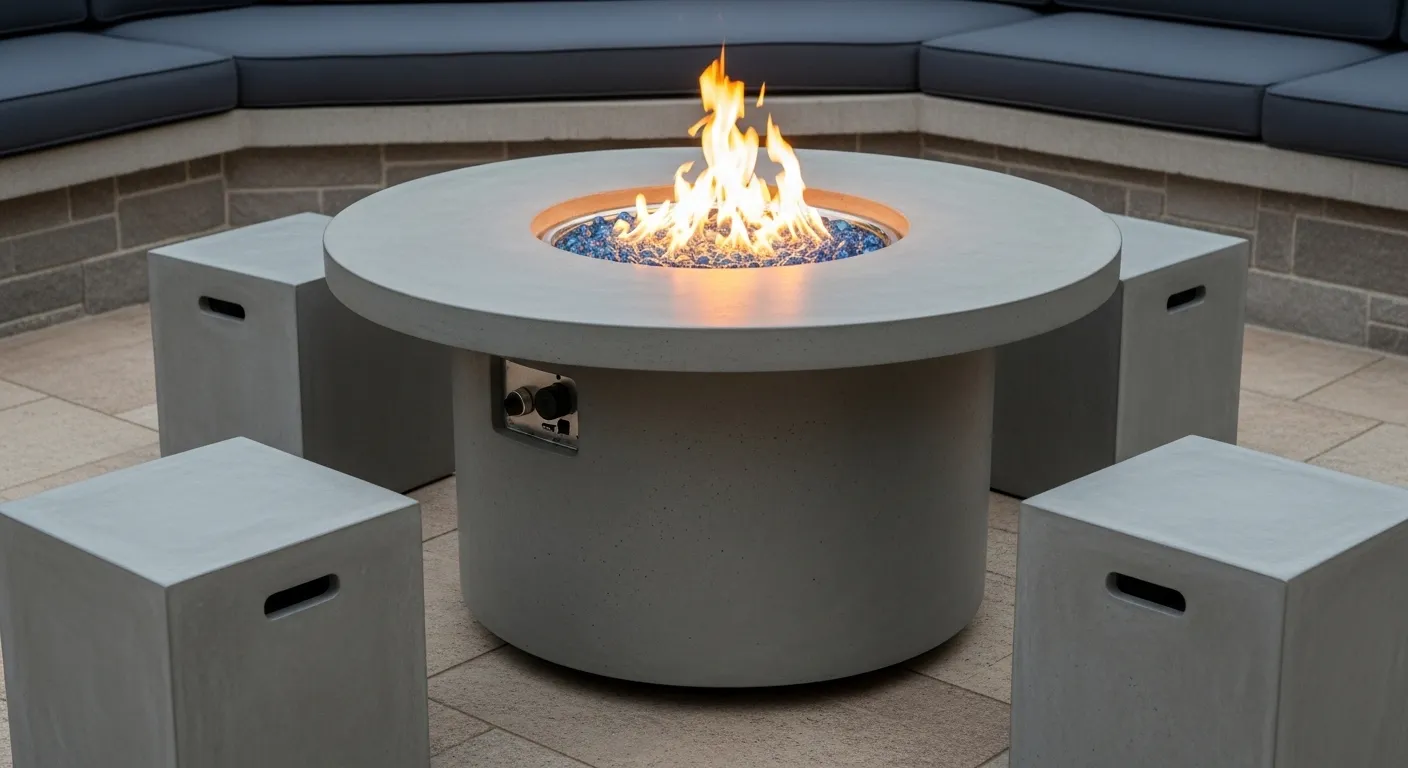
A concrete fire pit table is one of the most versatile additions you can make to an outdoor kitchen environment because it creates an entirely new functional zone beyond the cooking area. During the day, it works as an outdoor coffee table or casual dining surface. As the evening cools, the central flame becomes the gathering point that extends the usability of the entire outdoor space well into autumn and cooler spring nights. Concrete handles the heat of the gas burner absolutely safely, and its thermal mass actually helps the table radiate warmth outward to the people seated around it.
That combination of function, warmth, and material beauty makes it an investment that pays off in daily use throughout the year.What sets concrete fire pit tables apart from their metal or cast-stone alternatives is the design control they offer. Because concrete is cast rather than manufactured, you can specify the exact diameter, height, color, and finish that works for your outdoor living layout. A low coffee-height table encourages relaxed lounging on deep outdoor sofas. A taller dining-height version pairs with matching concrete stools for outdoor meals eaten beside an open flame
. You can even integrate a beverage ledge or small concrete shelf section around the perimeter so guests have a place to rest drinks without reaching across the fire. Each customization makes the table work harder and feel more personal than anything available off a showroom floor.
14. Textured Concrete Backsplash
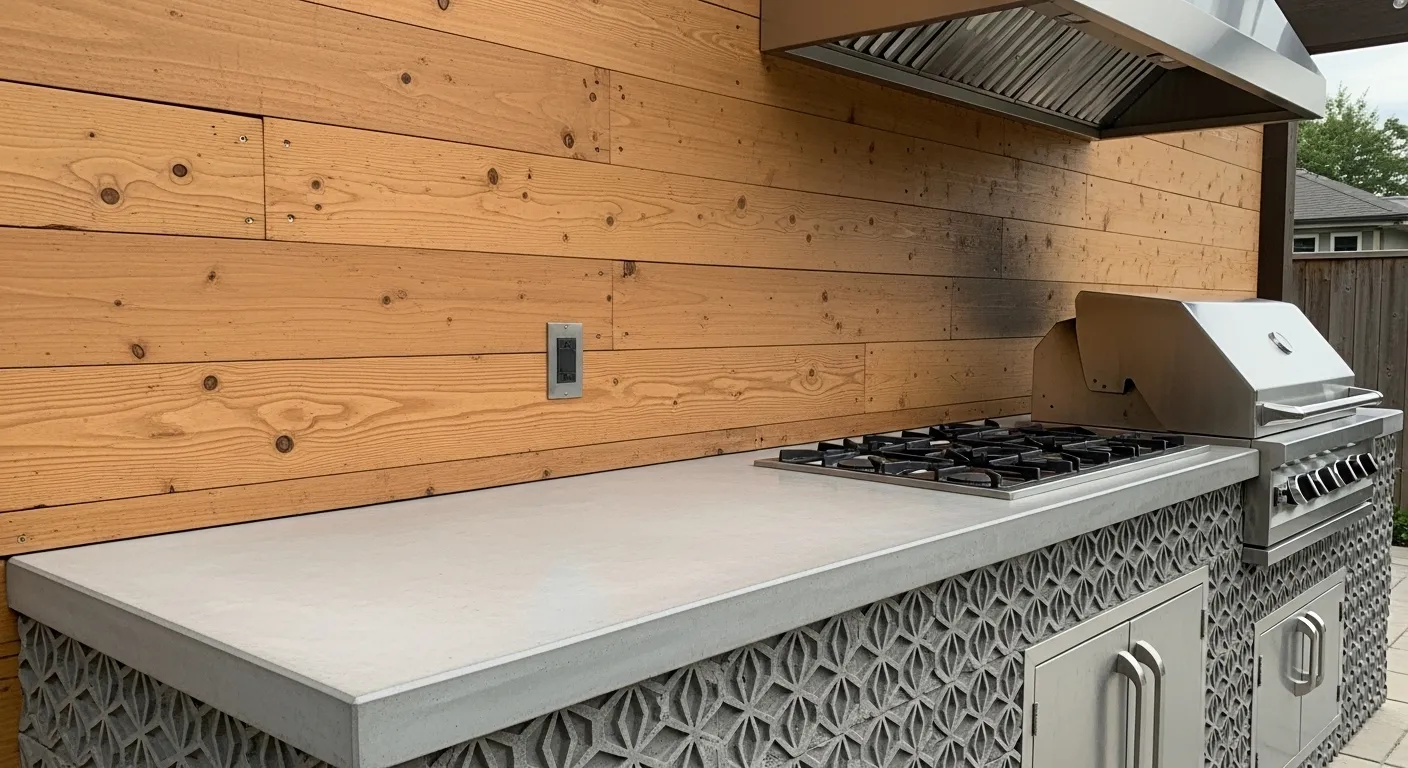
A concrete backsplash takes the material story of your outdoor kitchen and extends it vertically, creating a wall surface that is as considered and intentional as the countertop beneath it. Traditional tile backsplashes, while functional, always read as a secondary material brought in to fill the gap between counter and overhead structure. A concrete backsplash feels like the kitchen was conceived as one unified object from countertop to wall, which is a completely different design experience for both the cook and the guests watching from the dining area. The visual continuity is immediately apparent and it makes the space feel more architecturally resolved than almost any other finishing choice available.
The texture you choose for the backsplash determines the character of the entire cooking zone. A board-formed finish — created by pressing timber planks against the wet concrete before it cures — leaves beautiful horizontal or vertical line impressions that catch raking light spectacularly. A smooth troweled finish reads as modern and refined. A rough, hand-applied texture feels artisanal and Mediterranean. A stamped geometric pattern introduces graphic boldness that makes the backsplash a genuine feature wall rather than a background detail. In my experience, the backsplash texture is often the most personal decision in the entire concrete outdoor kitchen design process because it is the element you see and interact with every single time you cook outside.
15. Concrete With Tile Inlay
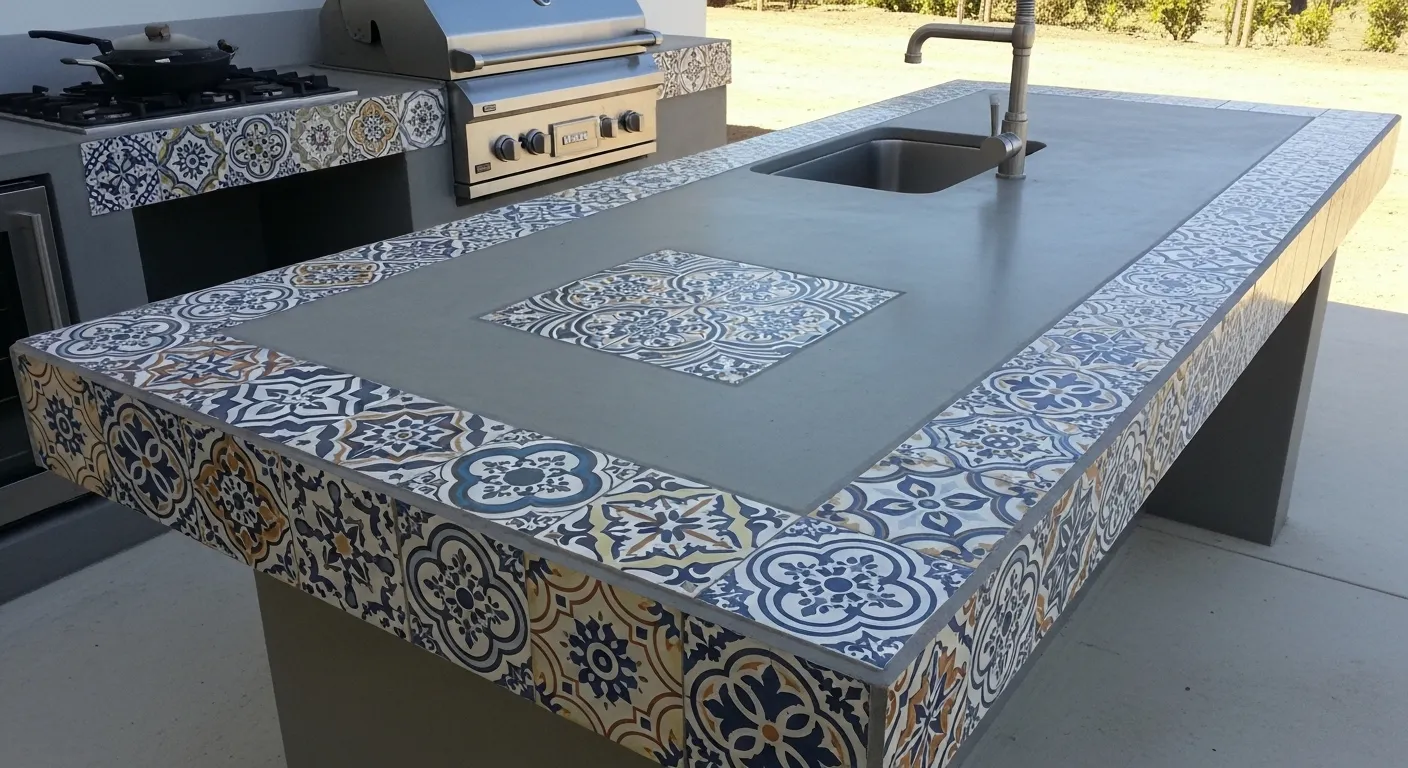
Concrete and tile inlays are a combination that brings two very different material energies into a single surface with remarkable harmony. Concrete provides the structural permanence, the neutral base, and the crafted quality. Tile introduces color, pattern, culture, and decorative energy that concrete alone cannot provide. Together, they create countertops that feel handmade and globally inspired in a way that manufactured quartz or granite surfaces simply cannot replicate. I have seen this approach used in outdoor kitchens from Portugal to California, and in every case it produced a surface that guests immediately commented on and reached out to touch — which is the highest compliment any countertop can receive.
The key to making concrete-and-tile inlays work beautifully is restraint in placement and generosity in tile quality. Rather than covering the entire countertop in decorative tile, which can feel busy and difficult to clean during heavy cooking sessions, consider embedding the tile as a deliberate accent strip along the front edge, around the perimeter, or as a single decorative panel in the center of the island. This approach lets the tile do meaningful visual work without overpowering the clean, grounded quality of the surrounding concrete. Choose tiles with a matte or slightly textured glaze for outdoor use — glossy tiles show water spots and become slippery when wet, both problems that matte finishes handle much more gracefully throughout the seasons.
16. Concrete Pergola Integration
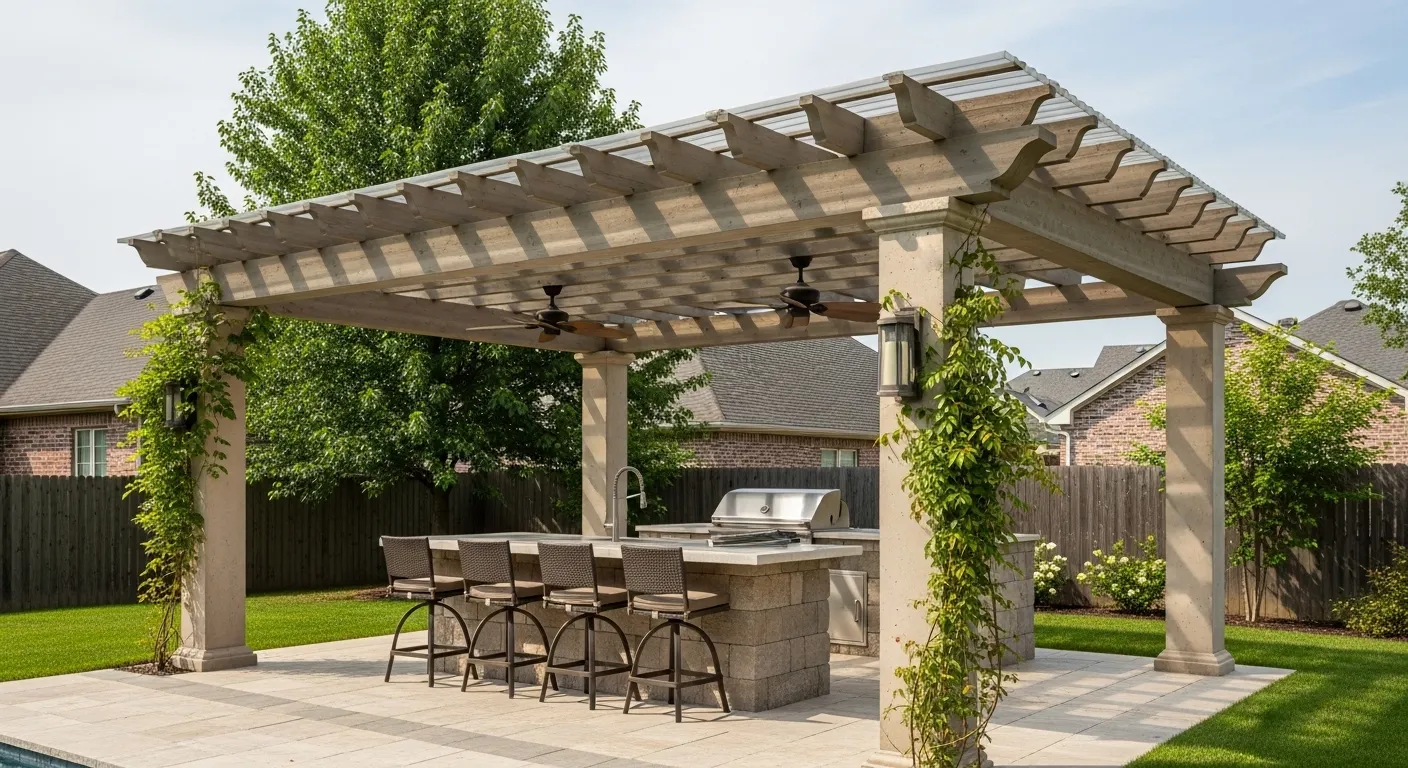
Integrating a concrete pergola directly with the outdoor kitchen structure is the design decision that transforms a backyard cooking area into a fully realized outdoor room. When the countertop, base, columns, and overhead structure share the same material and finish, the kitchen stops reading as furniture placed on a patio and begins reading as a piece of architecture — a destination with walls, columns, and a ceiling that simply happens to be open to the sky. That transformation is profound. Guests instinctively feel like they have entered a defined space rather than simply walked further into the garden, which changes how they interact with the kitchen and with each other in deeply social ways.
The practical benefits of a concrete pergola above the outdoor kitchen are as compelling as the aesthetic ones. The overhead structure creates a defined zone that can support ceiling fans for air circulation on hot days, pendant lights for evening ambiance, and even a weatherproof polycarbonate or fabric panel for light rain protection. Climbing vines on the concrete columns and beams grow beautifully over time, adding seasonal color and living texture that softens the material mass without diminishing its strength. In my experience, concrete pergola kitchens tend to become the undisputed center of outdoor living for the families who build them — the space is simply too comfortable and too complete to spend time anywhere else in the backyard.
17. Minimalist Concrete Setup
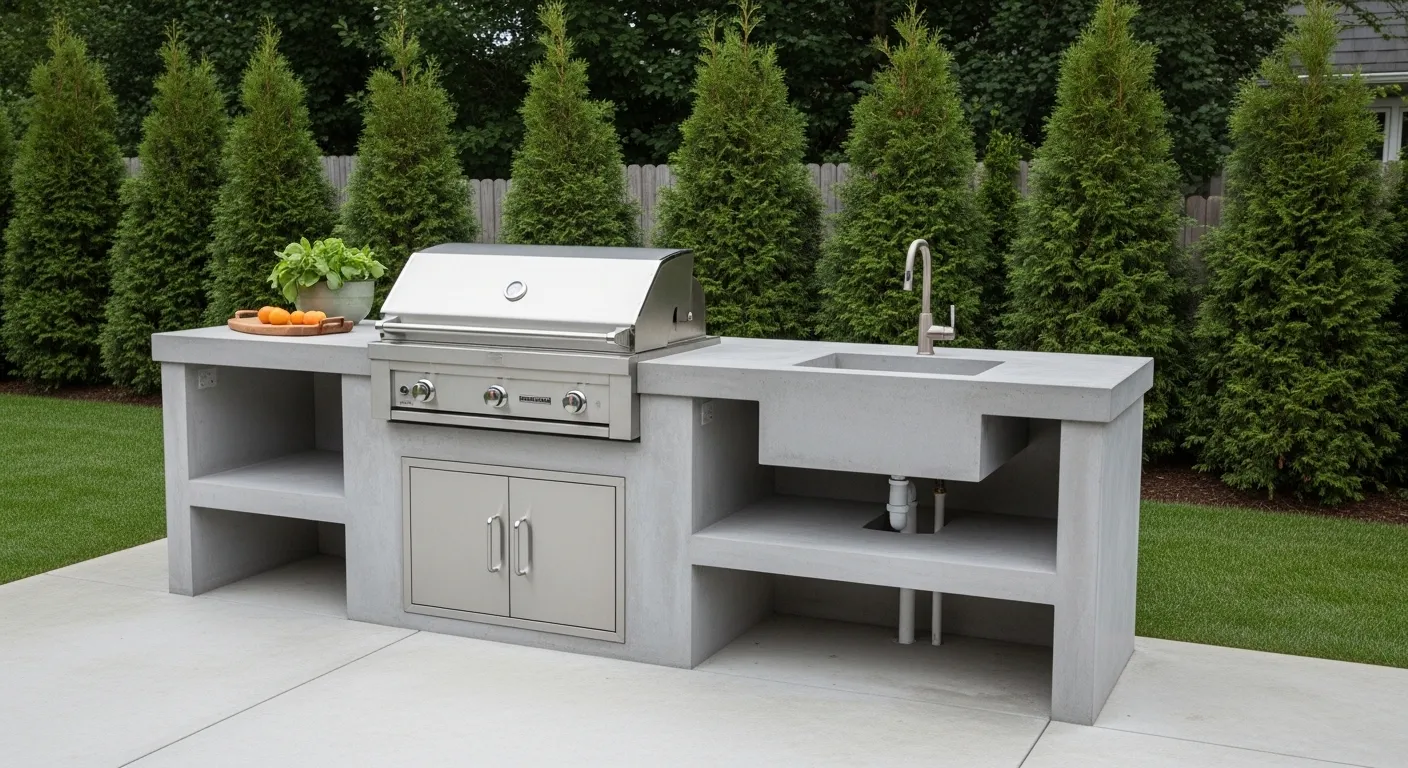
A minimalist concrete outdoor kitchen is proof that restraint is its own form of sophistication. Rather than building an elaborate multi-zone cooking complex, a single well-executed concrete slab with precisely selected appliances creates an outdoor kitchen that is visually quiet, deeply intentional, and surprisingly versatile. The material carries all the design weight needed — the texture, the solidity, the subtle color — so additional decoration is genuinely unnecessary. I have noticed that minimalist outdoor kitchens consistently photograph better than busier setups because there is nothing competing for attention. The concrete simply sits there, clean and confident, and the quality of the material and the craftsmanship becomes immediately and unmistakably clear.
Minimalist outdoor kitchens also make practical sense for homeowners who are exploring outdoor cooking for the first time or working within a thoughtful budget. A single well-designed concrete station — one burner, one sink, one generous prep surface — covers the needs of most outdoor cooking scenarios without the complexity, cost, and maintenance of a multi-station setup. Start minimal and genuinely excellent, then expand only if your cooking needs genuinely demand it. That is why many designers recommend this approach for first outdoor kitchens specifically — it is far better to build one extraordinary concrete surface than three mediocre ones, and the minimalist setup leaves maximum flexibility for future additions as your outdoor living vision evolves over time.
18. Concrete Herb Garden Counter
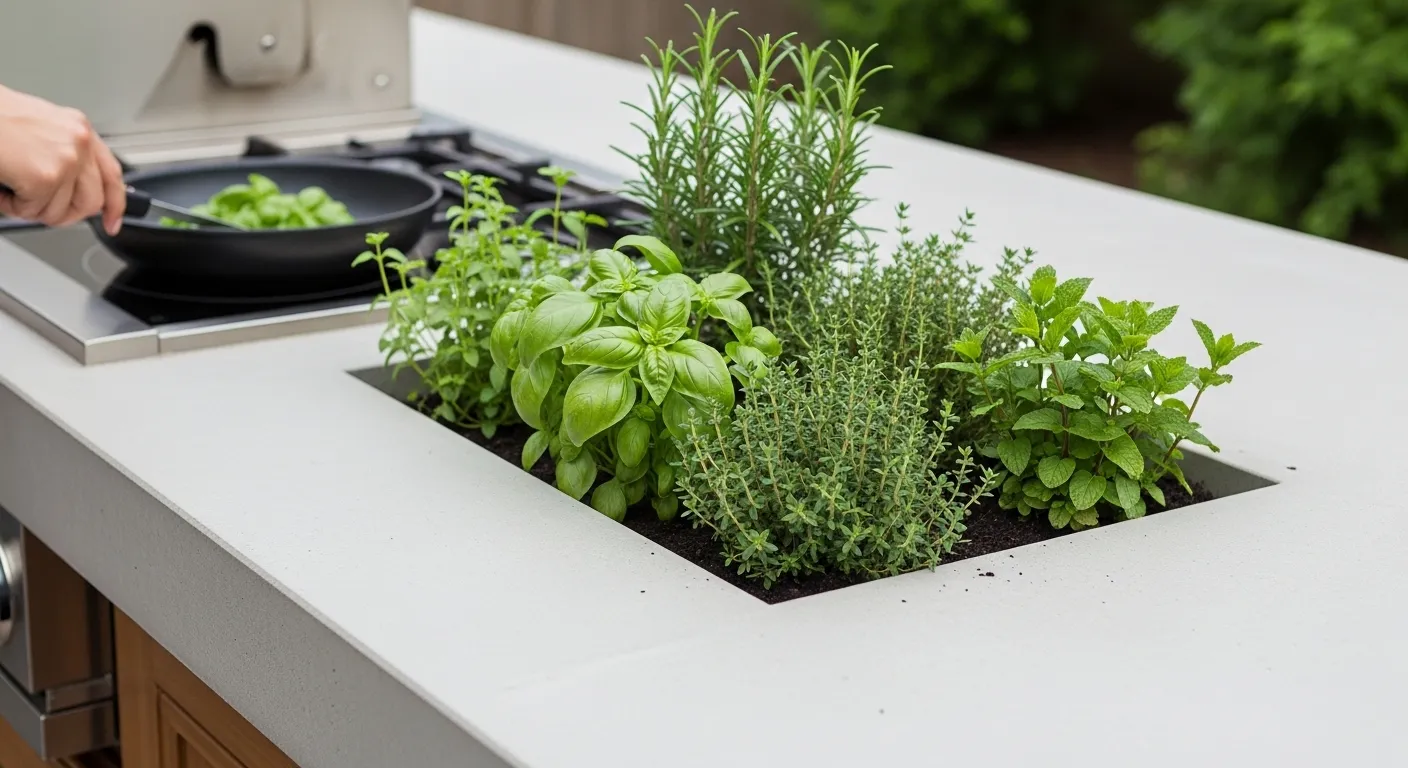
Building a herb garden directly into the concrete outdoor kitchen countertop is one of those ideas that seems small until you actually have it, and then you wonder how you ever cooked outdoors without it. The planter is cast as an integral part of the concrete slab — a recessed section at the counter’s edge, filled with drainage material and planted with the herbs you actually use. Basil, rosemary, thyme, and mint thrive in outdoor concrete planters because the material holds moisture and warmth better than terracotta at the root zone.
Reaching left to snip a handful of fresh basil directly into a pan already on the grill is a genuinely joyful cooking experience that an indoor kitchen can simply never replicate.The design logic behind an integrated concrete herb counter goes beyond the functional convenience of fresh herbs. The living green material growing directly from the concrete surface creates a visual contrast that is enormously appealing — hard and soft, permanent and seasonal, material and organic all in the same square meter of kitchen space.
The herbs bring color that changes through the growing season, fragrance that fills the cooking zone on warm evenings, and a sense of care and cultivation that makes the outdoor kitchen feel actively loved rather than simply installed. Guests notice the planter immediately and it invariably becomes a conversation starter, which is exactly the kind of human detail that makes an outdoor kitchen feel like a genuinely personal space rather than a catalog showroom display.
19. Industrial Pipe and Concrete
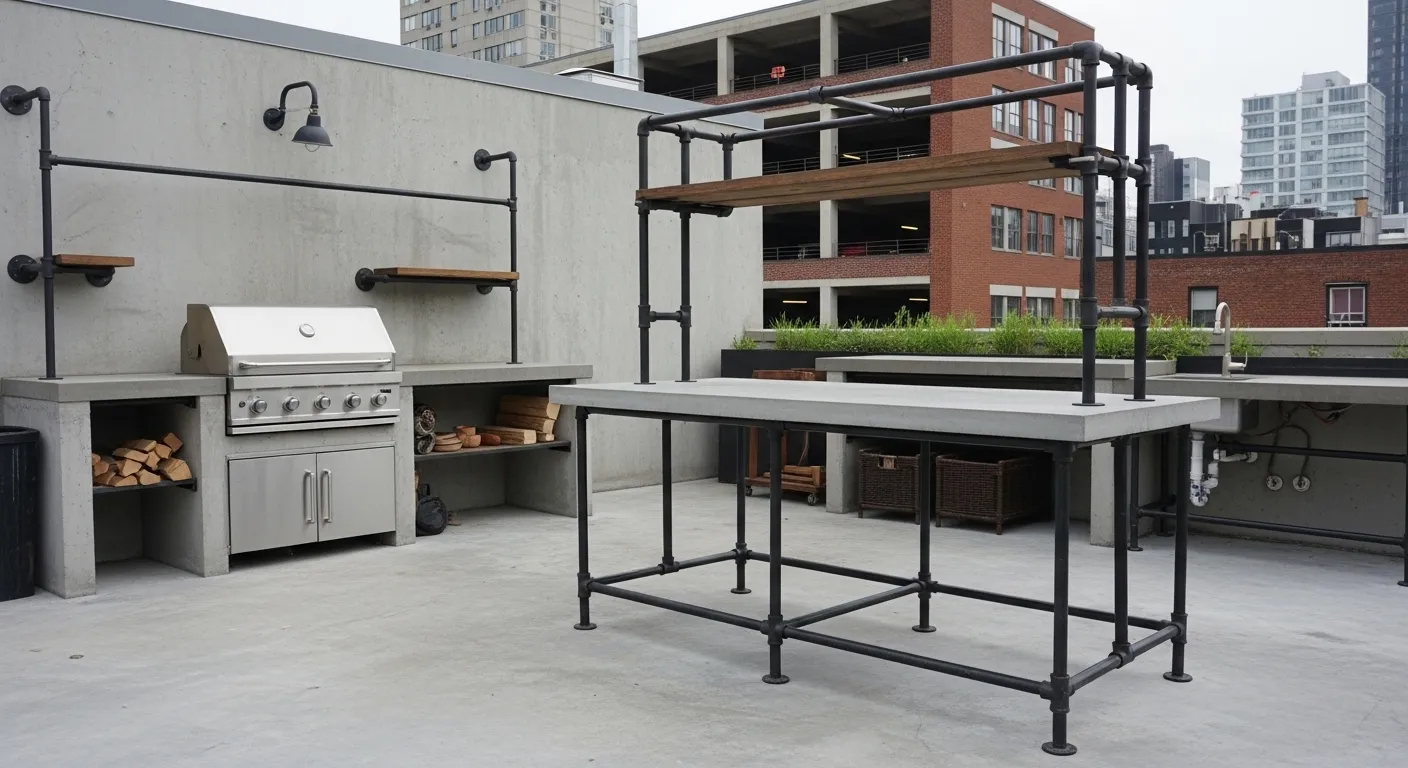
Industrial pipe and concrete outdoor kitchens speak a design language that is completely unapologetic about its material influences. The black iron pipe references plumbing, scaffolding, and factory architecture. The raw concrete references brutalism, parking structures, and honest construction. Together in a well-considered outdoor kitchen, they create something genuinely unexpected — a space that looks tough and refined simultaneously, industrial and curated at the same time. I have seen this combination work particularly well in urban rooftop kitchens and converted commercial outdoor spaces where the surrounding environment is already industrial in character, and the kitchen needs to meet that context rather than fight against it with conventional outdoor furniture.
The practical appeal of iron pipe-and-concrete construction is its affordability relative to its visual impact. Pre-cut and pre-threaded iron pipe fittings are available at most hardware suppliers, and assembling them into table legs, shelf supports, or overhead rails requires only basic tools and moderate DIY confidence. The concrete countertop can be cast in place or prefabricated off-site and set onto the pipe frame. The result looks custom and intentional without the cost of a fully bespoke kitchen build. That accessibility is part of why the industrial style has remained genuinely popular rather than becoming a trend that peaked and faded — it delivers authentic design character at a price point that is genuinely achievable for most outdoor kitchen budgets.
20. Curved Concrete Counter
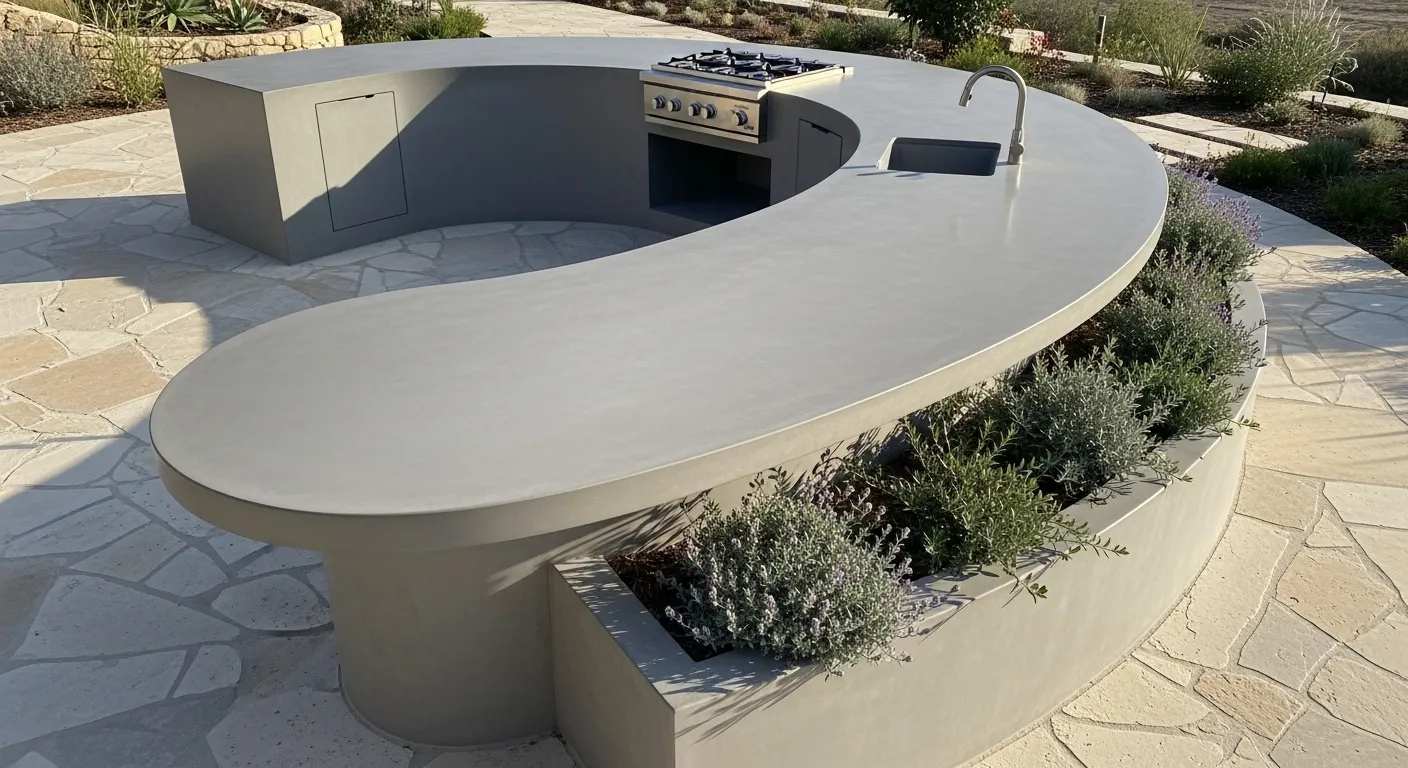
A curved concrete outdoor kitchen island is the design choice that most completely distinguishes a truly custom outdoor kitchen from anything prefabricated or catalog-sourced. Concrete is the only countertop material that can be poured, formed, and cured into genuinely organic, flowing shapes without visible joints or compromises to structural integrity. A smoothly curving island can wrap around a cooking zone, create a natural circulation path for guests, and produce a sculptural form that reads as much as a piece of outdoor art as it does as a functional kitchen element.
That dual reading — art and utility in a single object — is the hallmark of the very best outdoor kitchen design and something that curved concrete achieves more naturally than any other approach.The social dynamics around a curved outdoor kitchen island are meaningfully different from those around rectangular configurations. A rectangle has defined ends and a clear spatial hierarchy. A curve has no such boundaries — guests drift around it freely, conversations span the whole perimeter, and no one is stranded at an awkward corner.
I have noticed that curved island kitchens tend to produce more fluid, connected outdoor entertaining experiences where guests move freely and engage with both the cook and each other in ways that rectangular layouts sometimes inhibit. The absence of sharp corners also matters with children in the backyard — the softened edge profile is genuinely safer during the kind of active, energetic movement that outdoor dining with families always involves.
21. Concrete With Stone Accents
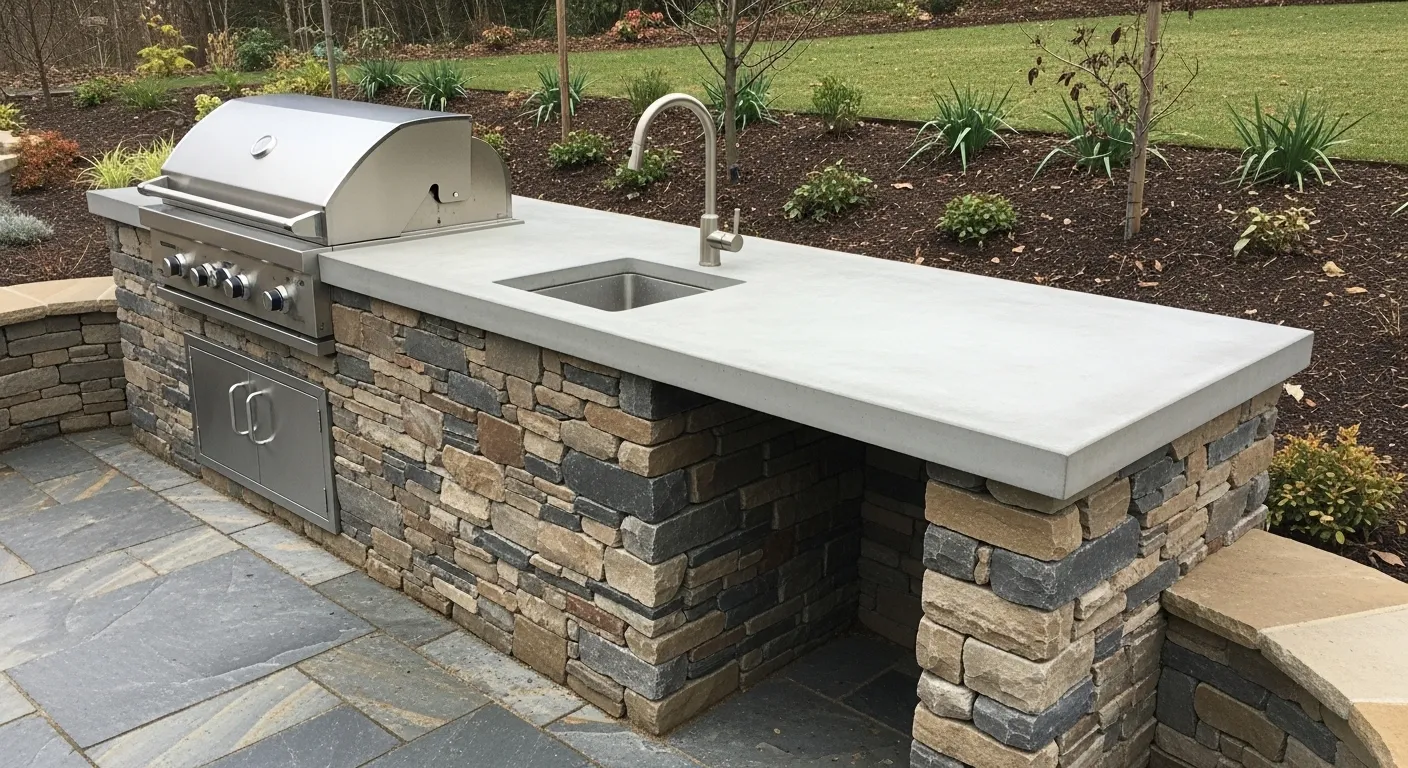
Concrete countertops sitting atop a stacked stone base create an outdoor kitchen that feels simultaneously crafted and rooted in the natural landscape. The contrast between the smooth, precise concrete surface and the rough, varied texture of natural stone is visually compelling without being jarring — each material complements the other by providing exactly what the other lacks. The concrete brings refinement and practicality at countertop height where you need a clean, workable surface. The stone brings earthiness, texture, and a sense of geological permanence at the base level where the kitchen meets the ground. Together, they tell a story of craftsmanship that resonates strongly with the concrete outdoor kitchen aesthetic.
Choosing the right stone for the base of a concrete outdoor kitchen requires considering both the visual relationship to the concrete above and the connection to the surrounding landscape. Warm sandstone and travertine work beautifully beneath cream or warm gray concrete tones. Dark basalt and slate pair powerfully with charcoal or cool-gray concrete finishes. River rock creates an informal, naturalistic base that suits garden kitchens surrounded by mature planting. Each stone type brings its own color, texture, and geographical reference that shapes the entire personality of the outdoor kitchen.
That is why many designers recommend selecting the stone and the concrete finish together rather than separately — the dialogue between them is central to the final design outcome and worth careful, unhurried consideration from the very beginning.
22. Illuminated Concrete Panels
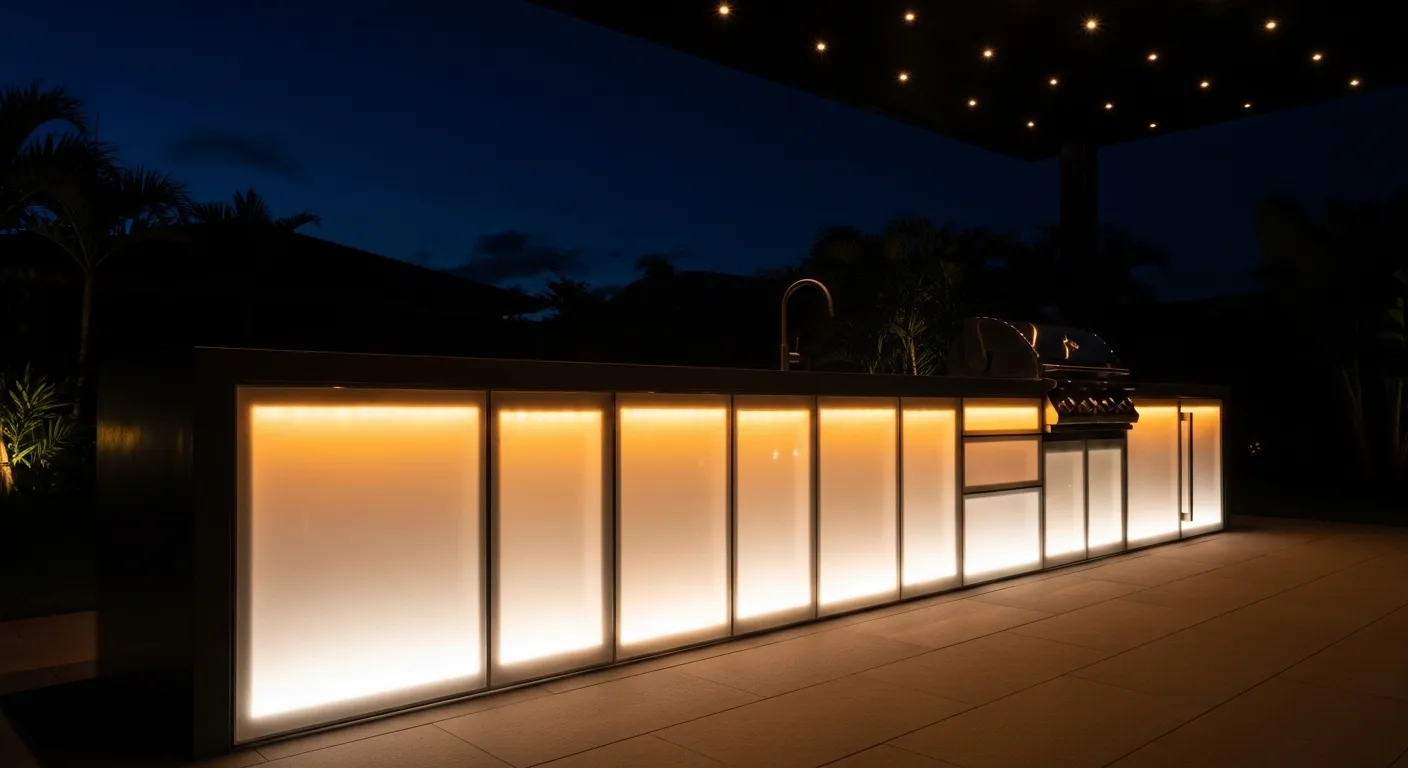
Illuminated concrete panels represent the frontier of concrete outdoor kitchen design — technology and material craft combined into something that is genuinely visionary. Translucent concrete, created by embedding optical fibers or thin acrylic rods throughout the concrete mix during casting, allows LED light to pass through the solid material, creating a surface that glows from within. The effect in an evening outdoor kitchen setting is extraordinary. The kitchen base transforms from a daytime structural element into a dramatic light source that anchors the entire outdoor space around its warm, steady glow. I have seen photos of illuminated concrete kitchens that genuinely look more like architectural installations than cooking spaces, and that ambiguity is entirely intentional.
The practical design possibilities of illuminated concrete panels are broader than many homeowners initially consider. You can specify panels that glow uniformly across the entire surface for a floating, ethereal effect. You can embed geometric or linear LED strips that create structured, graphic light patterns within the concrete face. You can program the lighting to shift color temperature through the evening — warmer tones during dinner, cooler ambient tones for late-night conversation around the fire.Each option creates a completely different atmosphere from the same structural element.
This versatility makes illuminated panels one of the most future-forward investments available in outdoor kitchen design, and as the technology becomes more widely available, it is rapidly becoming the signature feature of truly exceptional backyard concrete kitchen builds worldwide.
Conclusion
Concrete outdoor kitchen ideas have the power to completely transform how you experience your backyard — from a plain patio to a polished, functional, and breathtakingly beautiful space you will use all year long. Whether you are drawn to the simplicity of a minimalist slab, the drama of dark charcoal surfaces, or the magic of illuminated evening panels, there is a concrete design direction that fits your home, your lifestyle, and your vision. I have seen how small, intentional design decisions like these can turn an ordinary outdoor space into something truly extraordinary. Save this post on Pinterest, share it with someone planning a backyard upgrade, and start imagining your own perfect outdoor kitchen today.