Introduction
Want your outdoor space to feel instantly more stylish and expensive without a full renovation? These concrete backyard patio designs might be exactly what you need. From sleek finishes to cozy built-in features, small design choices can completely change how your backyard looks and feels.
This article is all about helping you turn a plain patio into a space that feels intentional, inviting, and visually stunning. Whether you’re working with a small area or a larger layout, these ideas focus on practical upgrades that actually make a difference. I’ve noticed that even simple changes like texture, layout, or lighting can create a huge visual impact without overwhelming the space.
In my experience, many homeowners struggle with making outdoor areas feel “finished.” That’s exactly where these ideas come in. You’ll discover designs that not only look beautiful but also improve how the space functions day to day. By the end, you’ll have clear, inspiring ideas you can actually use to create a backyard that feels modern, comfortable, and worth spending time in.
1. Polished Concrete Finish
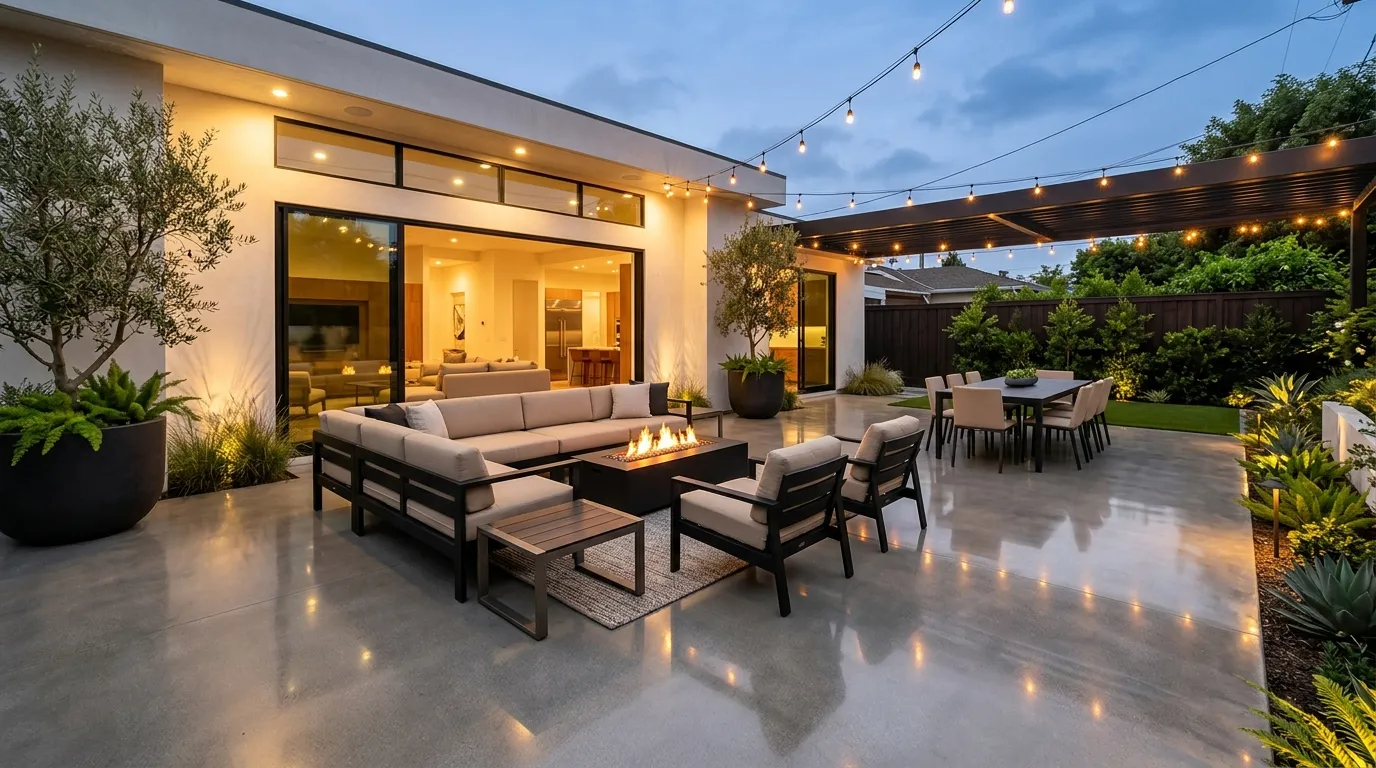
A polished finish instantly transforms a basic outdoor space into something that feels elevated and refined. The smooth surface reflects natural and artificial light in a subtle way, which helps brighten the entire area without needing extra decor. In many homes, this type of surface creates that “finished” look people often struggle to achieve with traditional materials. It’s especially effective in layouts where you want the backyard to feel open, uncluttered, and visually calm while still looking thoughtfully designed.
In my experience, polished surfaces work best when paired with simple furniture and soft lighting, allowing the material itself to stand out. That’s why many designers recommend this approach for homeowners who want a luxe feel without overcomplicating the design. When used in concrete backyard patio designs, this finish brings a modern edge while staying practical and durable. Over time, it also tends to age well, maintaining its appearance with very little upkeep, which makes it ideal for everyday use.
2. Stamped Stone Pattern
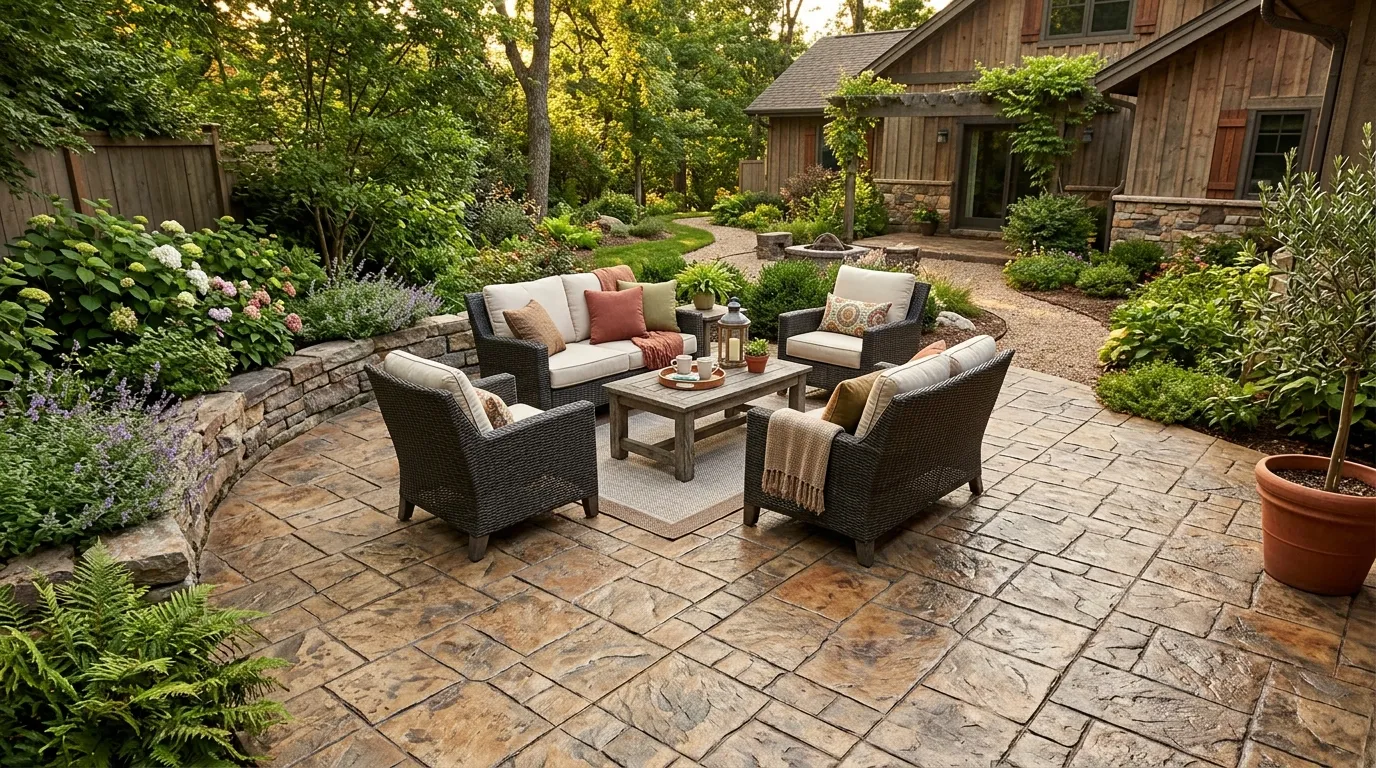
Stamped patterns are one of the easiest ways to make a patio feel custom-designed without stretching your budget. The textured surface breaks the monotony of plain flooring and introduces a natural, organic look that feels warm and inviting. Many homeowners prefer this style because it creates the illusion of real stone, adding character while still being practical. It’s a simple upgrade that can completely change how the space looks and feels from the moment you step outside.
I’ve noticed that this style works especially well in backyards with plants, wood elements, or rustic furniture. That’s why many designers recommend it for spaces that aim to feel relaxed yet visually rich. Within outdoor concrete layouts, stamped textures offer flexibility in color and pattern, allowing you to match different aesthetics easily. Over time, the subtle variations in texture continue to add charm, making the patio feel less artificial and more connected to the outdoor environment.
3. Two-Tone Concrete Layout
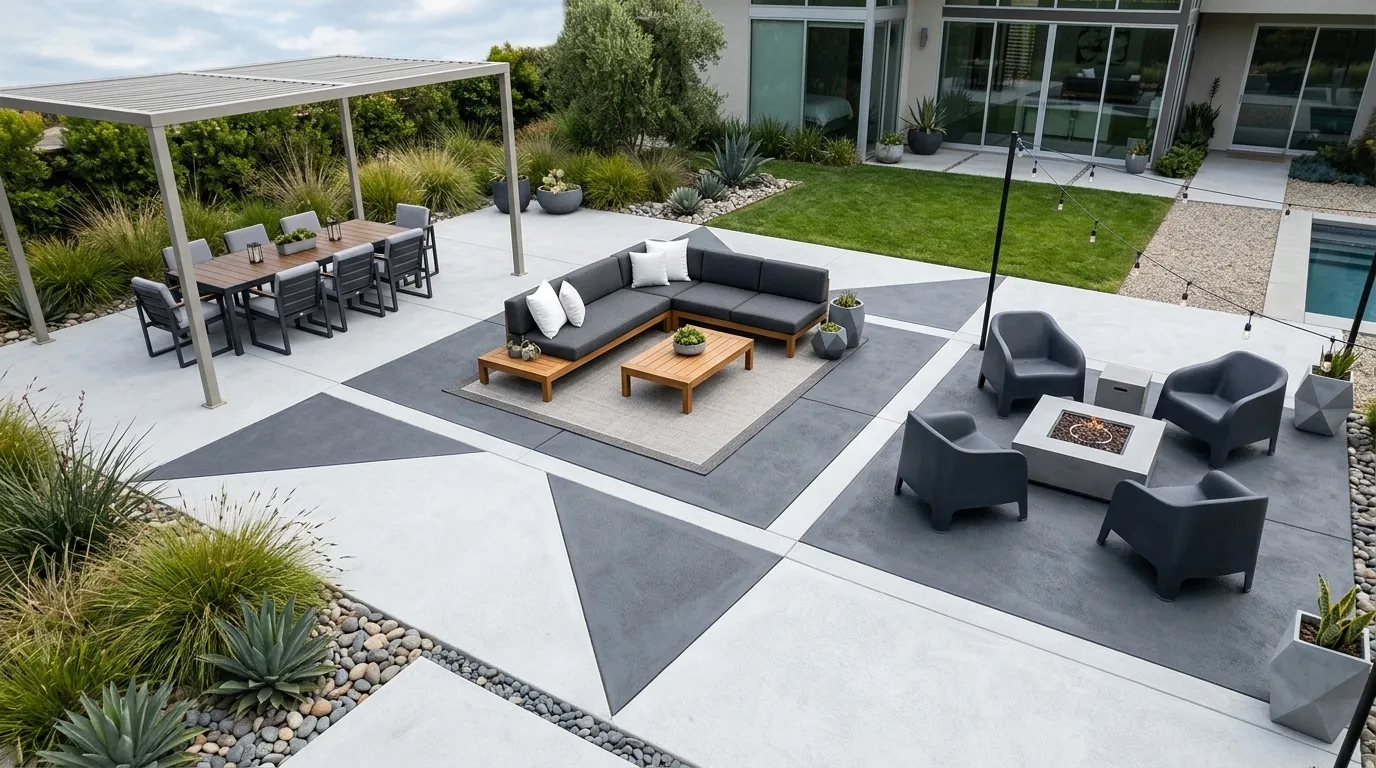
A two-tone layout introduces contrast in a subtle yet impactful way, making the patio feel more designed and intentional. Instead of relying on furniture alone, the flooring itself creates visual separation between areas like dining and lounging. This approach is especially useful in open backyards where everything can otherwise blend together. The clean contrast between shades draws the eye and adds structure, giving the entire space a more polished and thoughtfully arranged appearance.
In many cases, I’ve seen this approach completely redefine how a patio is used. That’s why many designers recommend it for larger layouts that need visual balance without clutter. When applied to modern patio surfaces, two-tone combinations allow for creativity while staying minimal and elegant. Choosing complementary shades ensures the look remains cohesive, and over time, the design continues to feel fresh rather than overwhelming, making it a smart long-term choice.
4. Exposed Aggregate Finish
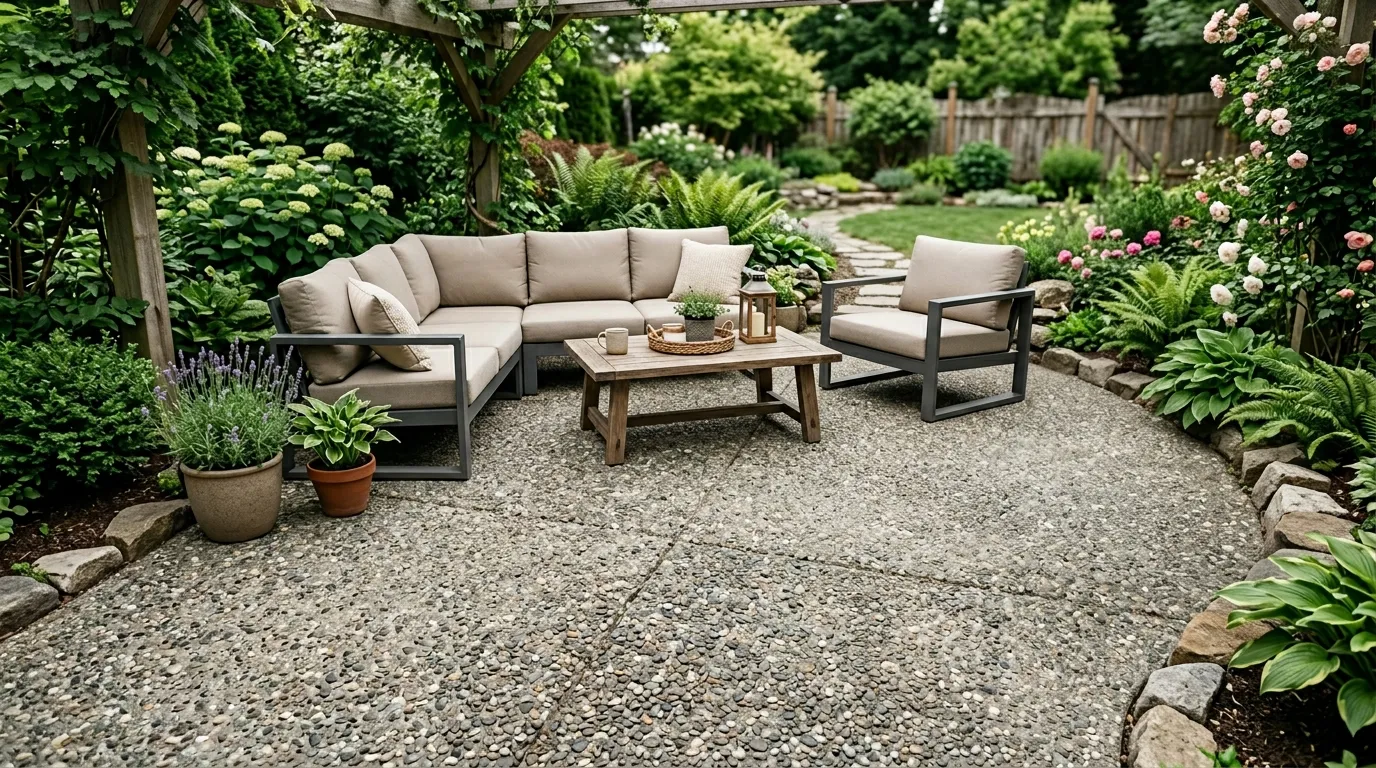
An exposed aggregate finish brings texture and character to an otherwise flat outdoor surface. The small stones embedded within the concrete create a naturally detailed look that feels both functional and visually interesting. This type of finish is especially useful in areas where slip resistance matters, like near pools or garden paths. It adds depth without overwhelming the space, making the patio feel thoughtfully designed while still remaining practical for everyday use.
I’ve seen this finish work particularly well in homes that blend indoor comfort with outdoor living. That’s why many designers recommend it for spaces where durability meets subtle style. In many outdoor setups, this approach adds just enough visual interest to avoid a plain look while staying low maintenance. Over time, the texture continues to hold up well, keeping the space looking fresh without requiring constant cleaning or upkeep.
5. Concrete Paver Grid
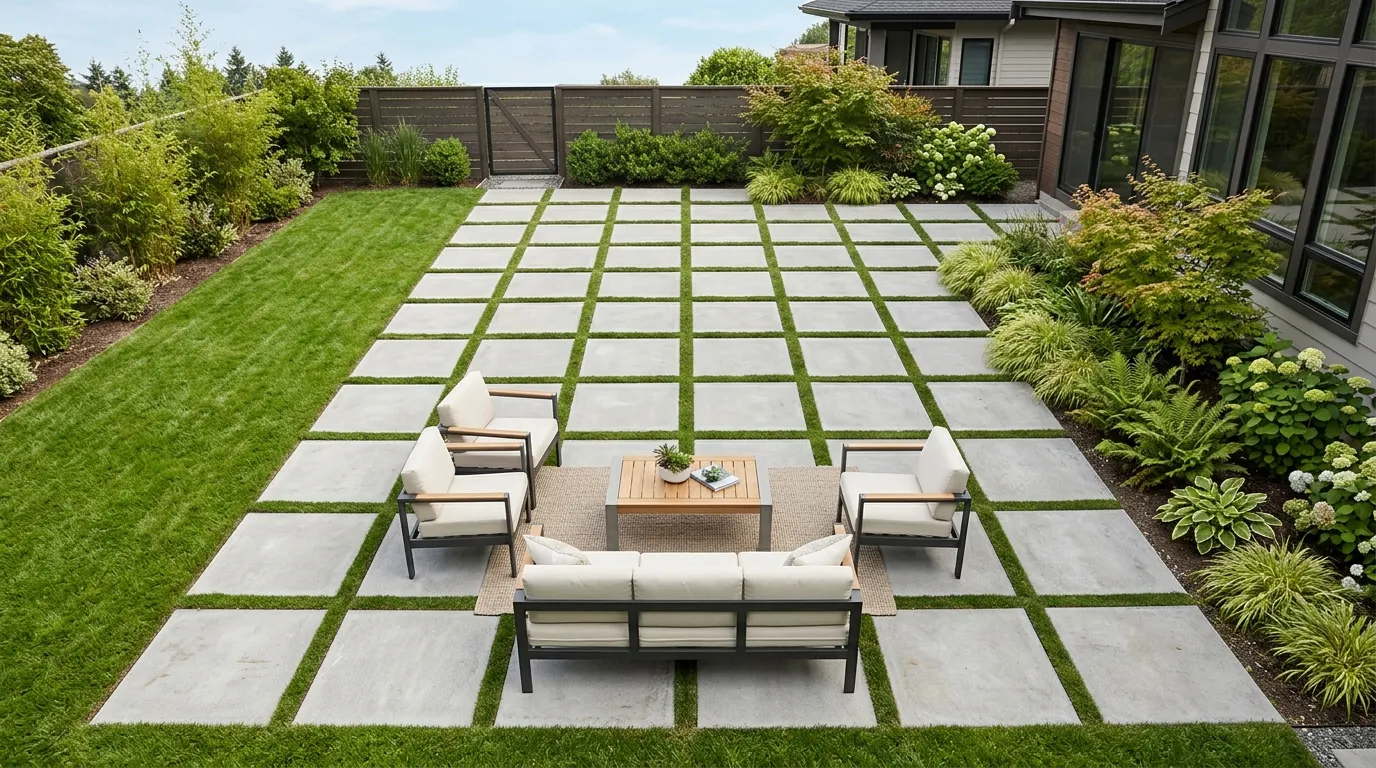
A paver grid layout instantly adds structure and rhythm to an outdoor area. The spacing between each slab introduces a balance between hard and soft elements, which helps the patio feel less rigid. This design works especially well in backyards where you want a mix of greenery without fully covering the ground. The clean lines guide the eye naturally, creating a visually satisfying layout that feels intentional and well-organized.
In my experience, this setup is ideal for homeowners who want a modern look without losing that outdoor connection. That’s why many designers recommend combining concrete slabs with grass or gravel for a more relaxed feel. It also allows flexibility in design, letting you adjust spacing or pattern based on the size of your patio. Over time, this layout continues to feel fresh and breathable, especially as greenery grows between the sections.
6. Built-In Seating Edges
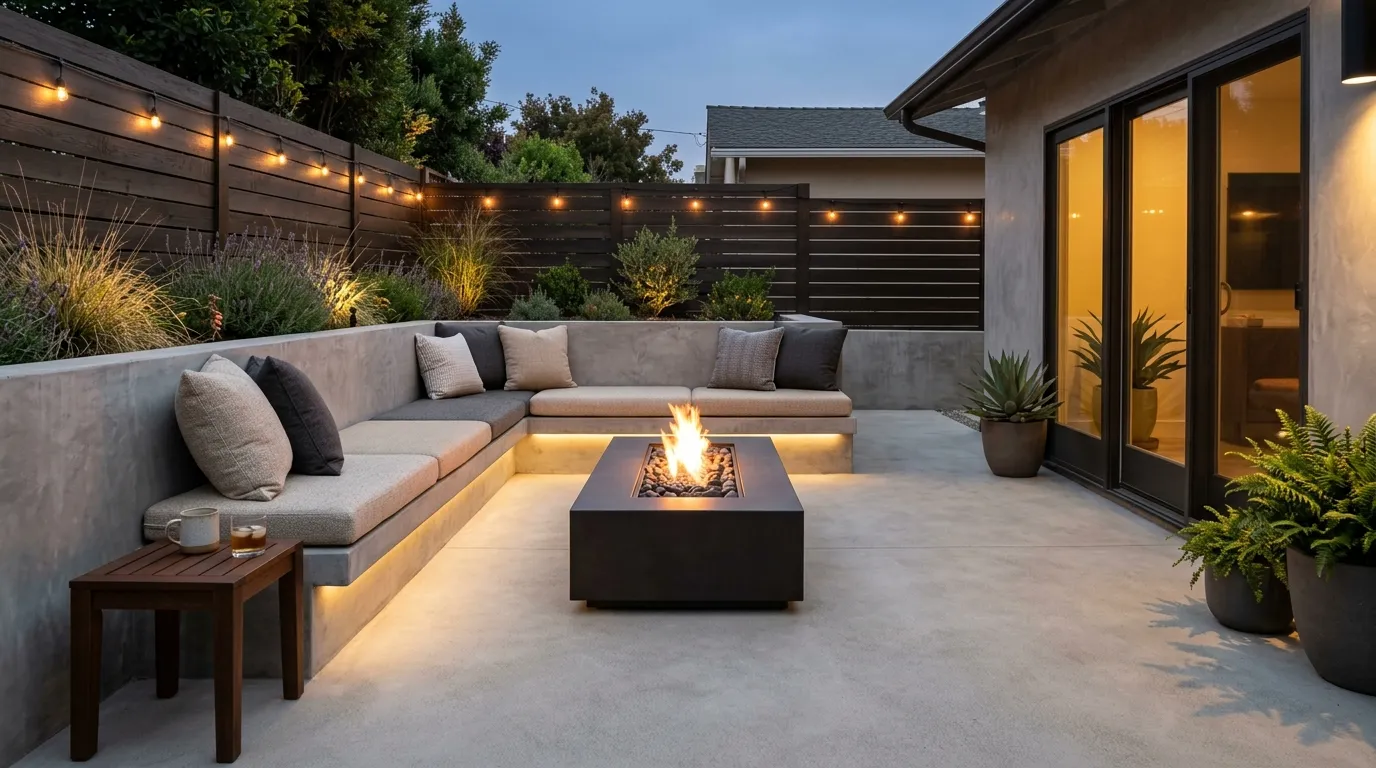
Built-in seating edges transform a simple patio into a functional and inviting gathering space. Instead of relying on movable furniture, the seating becomes part of the structure, which creates a cleaner and more cohesive look. This approach is especially useful in smaller areas where extra furniture can feel overwhelming. It keeps everything streamlined while still offering plenty of space for relaxing or entertaining guests comfortably.
I’ve noticed that built-in seating works best when paired with soft cushions and subtle lighting. That’s why many designers recommend adding warm tones to balance the solid structure. In real homes, this feature often becomes a natural focal point where people gather and unwind. Over time, it proves to be both practical and visually appealing, helping the patio feel more intentional, comfortable, and well-designed without needing constant rearrangement.
7. Sunken Lounge Area
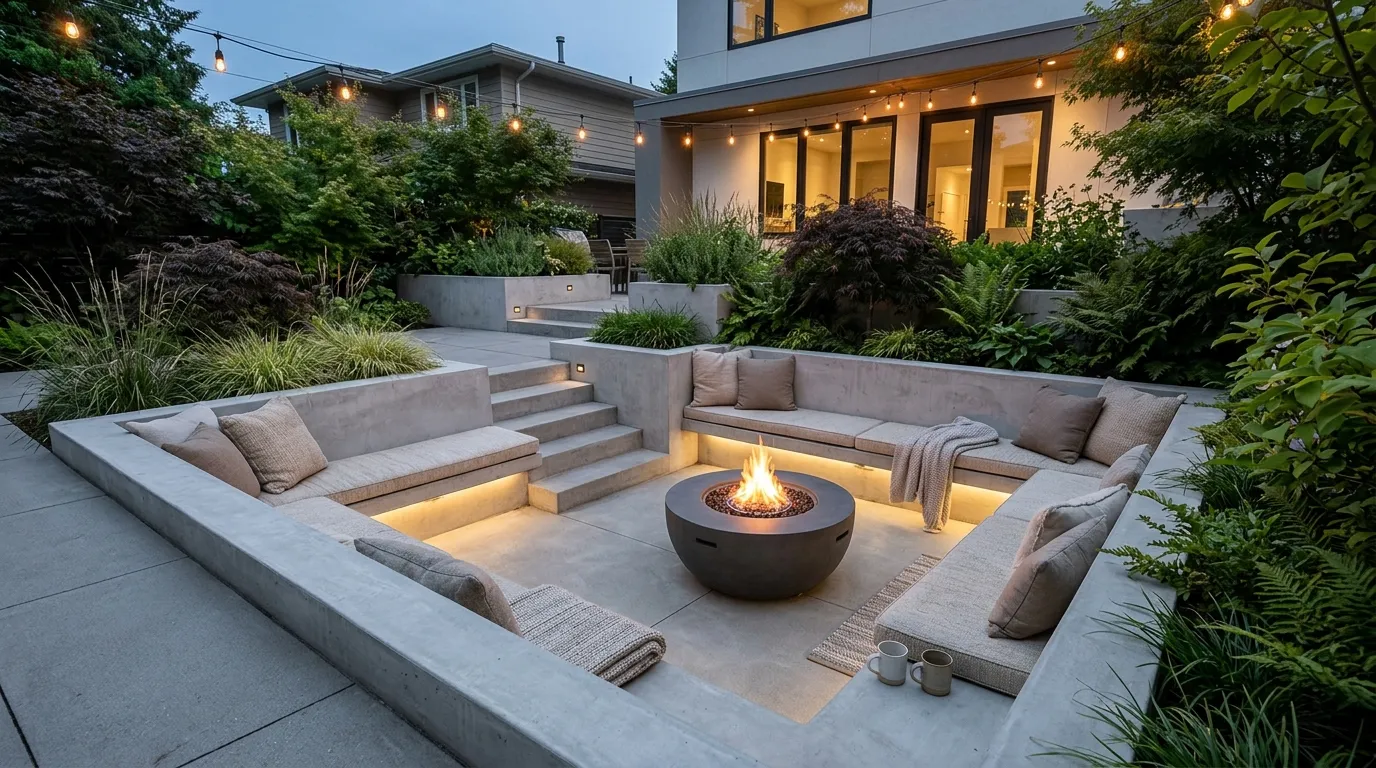
A sunken lounge instantly changes how a patio feels by adding depth and a sense of enclosure. The lowered seating area creates a natural gathering spot that feels separate from the rest of the yard without needing walls or dividers. This design works especially well for social spaces, where comfort and connection matter most. The step-down feature also adds a subtle architectural element that makes the entire layout feel more intentional and visually dynamic.
In my experience, this type of setup becomes the most used part of the backyard, especially during evenings. That’s why many designers recommend pairing it with a fire pit or soft lighting to enhance the atmosphere. It transforms a basic outdoor surface into a destination within the home, offering both function and style. Over time, it continues to feel inviting and unique, making the patio stand out without requiring constant updates or changes.
8. Concrete and Wood Mix
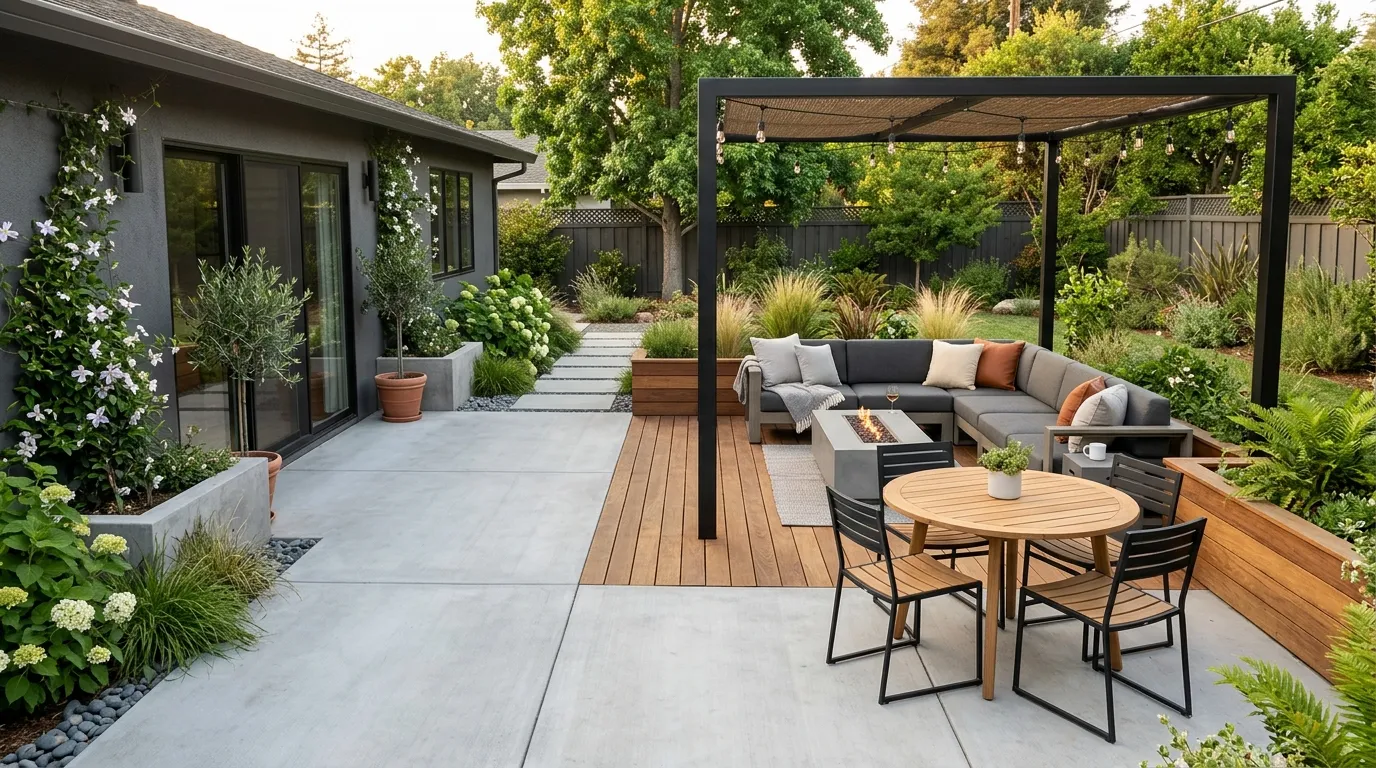
Mixing concrete with wood creates a balanced and inviting outdoor environment that feels both modern and warm. The contrast between the cool gray surface and natural wood tones adds depth without making the space feel busy. This combination is especially effective in backyards where you want to avoid a fully industrial look. It brings in a touch of nature while still maintaining a clean and structured layout.
I’ve seen this pairing work incredibly well in homes that aim for a relaxed yet polished vibe. That’s why many designers recommend using wood accents in seating areas or pathways to break up large concrete sections. It allows the patio to feel more comfortable underfoot and visually softer overall. Over time, the mix of materials continues to age gracefully, adding character and making the space feel more lived-in and welcoming.
9. Minimalist Slab Design
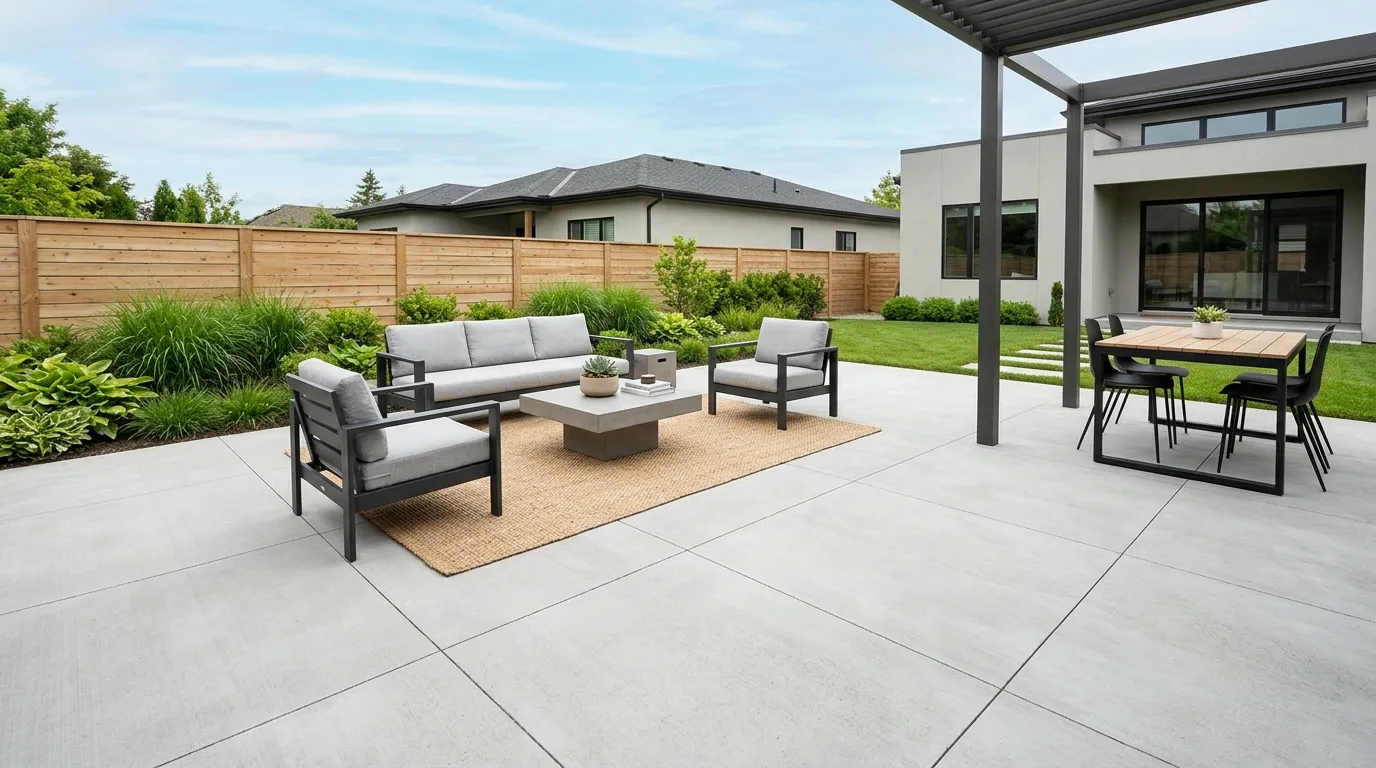
A minimalist slab design focuses on simplicity, allowing the overall space to feel calm and open. Large, clean slabs reduce visual noise and create a seamless surface that doesn’t distract from the rest of the design. This approach works especially well in smaller backyards where too many details can feel overwhelming. The simplicity helps the space breathe, making it easier to style and maintain without constantly adjusting elements.
I’ve noticed that this design style is perfect for homeowners who prefer a clean and organized look. That’s why many designers recommend keeping furniture and decor minimal to match the flooring. In real-life settings, this approach often makes the patio feel larger than it actually is. Over time, the simplicity continues to feel fresh and timeless, making it a reliable choice for those who want a modern outdoor space without unnecessary complexity.
10. Geometric Scored Lines
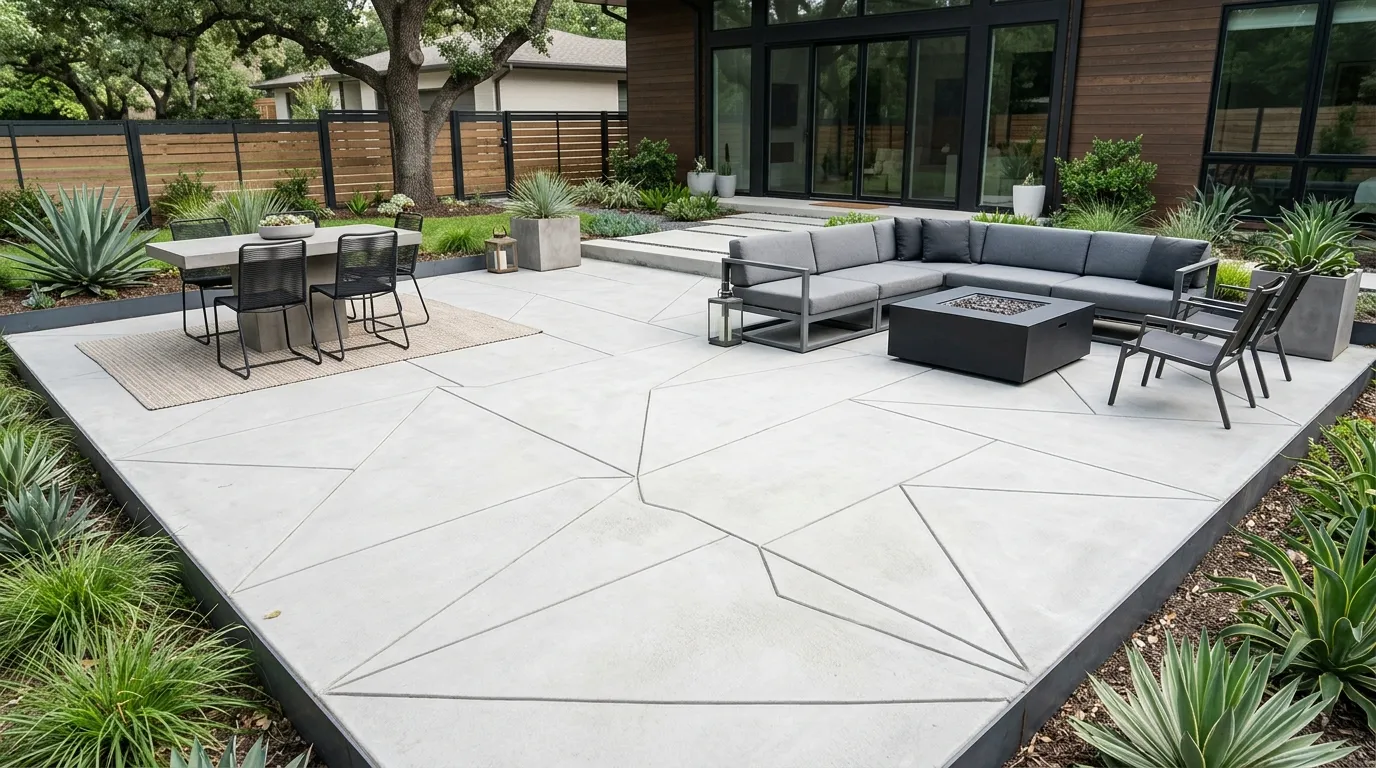
Geometric scoring introduces clean patterns directly into the surface, giving the patio a custom feel without adding extra materials. The lines create visual movement, which helps break up large flat areas that might otherwise feel plain or unfinished. This approach works especially well in modern outdoor spaces where structure and simplicity are key. The subtle detailing enhances the overall design while keeping the look clean and uncluttered.
In my experience, this technique is one of the easiest ways to elevate a simple patio without increasing maintenance. That’s why many designers recommend it for homeowners who want a tailored look on a budget. The patterns can be customized to suit different layouts, making each space feel unique. Over time, the design remains timeless and easy to maintain, offering both style and practicality without requiring additional decorative elements.
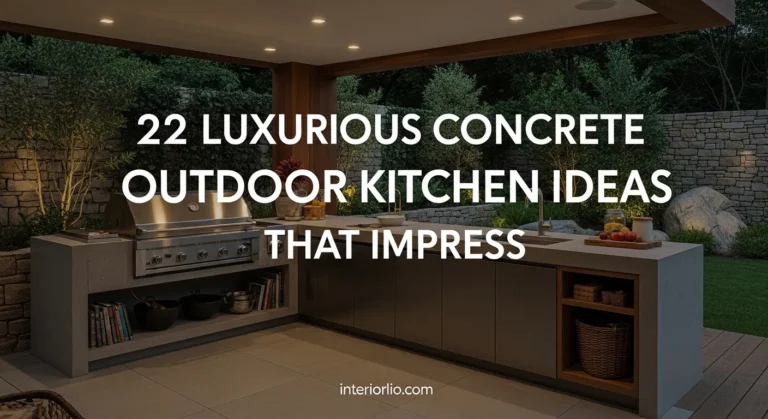
11. Outdoor Concrete Kitchen Base
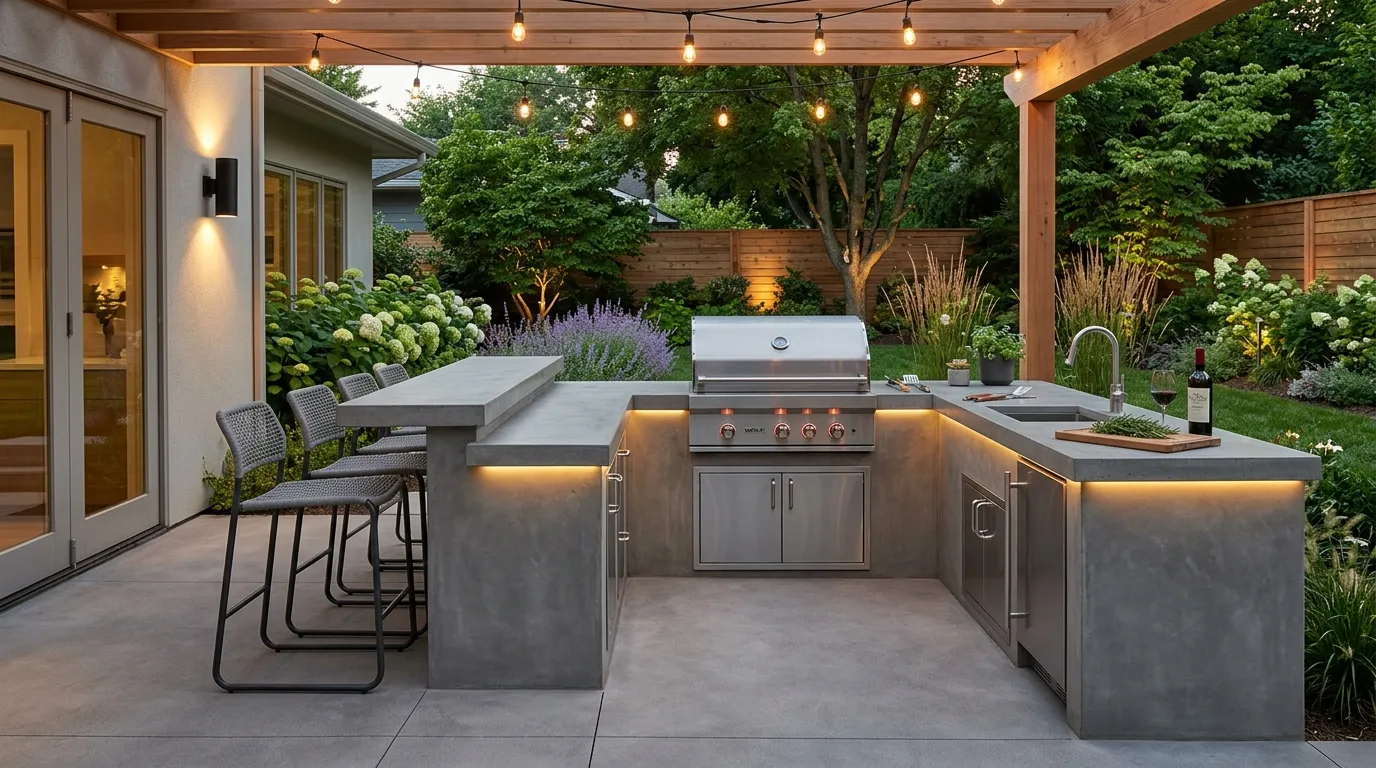
An outdoor kitchen base transforms a patio into a fully functional living space where cooking and socializing happen together. The solid structure keeps everything organized, making it easier to prepare meals without constantly moving between indoor and outdoor areas. This setup works especially well for homeowners who enjoy hosting, as it creates a natural hub for gatherings while keeping the space practical and easy to navigate.
I’ve seen this feature become a game-changer in many backyards, especially during weekends and family events. That’s why many designers recommend integrating storage and seating into the layout for better flow. It allows the patio to feel more complete and purposeful rather than just decorative. Over time, it adds both convenience and value, turning the outdoor area into a space that’s used regularly instead of occasionally.
12. Gravel and Concrete Combo
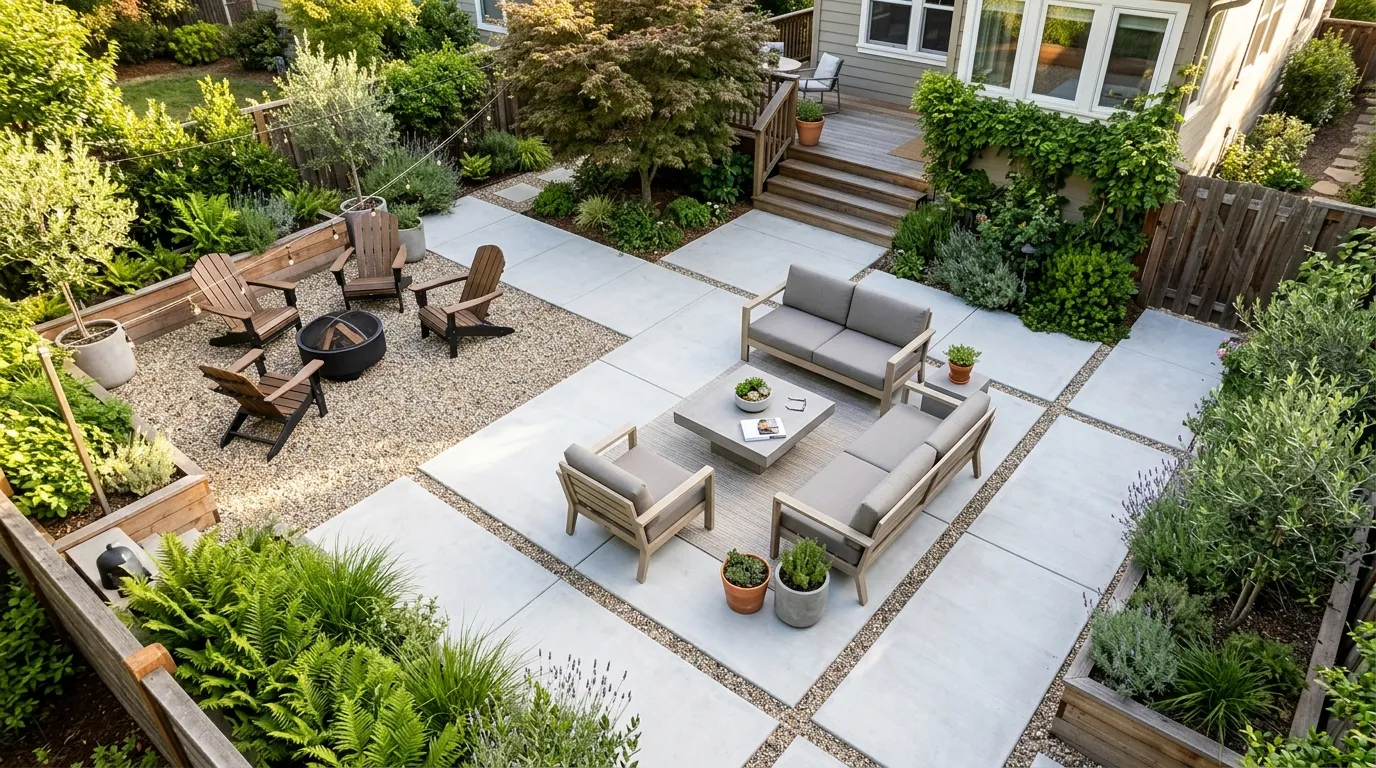
Combining concrete with gravel creates a balanced outdoor design that feels both structured and relaxed. The solid slabs provide stability, while the gravel introduces texture and softness, preventing the space from feeling too rigid. This mix works especially well in backyards where you want a natural touch without fully committing to grass or plants. It creates a visually interesting layout that feels intentional yet easygoing.
I’ve noticed that this combination is particularly useful for areas that deal with water or uneven ground. That’s why many designers recommend it for both style and practicality. In real-life use, it also helps reduce maintenance since gravel areas require less upkeep than grass. Over time, the contrast between materials continues to add character, making the patio feel more dynamic and adaptable to different design changes.
13. Raised Platform Patio
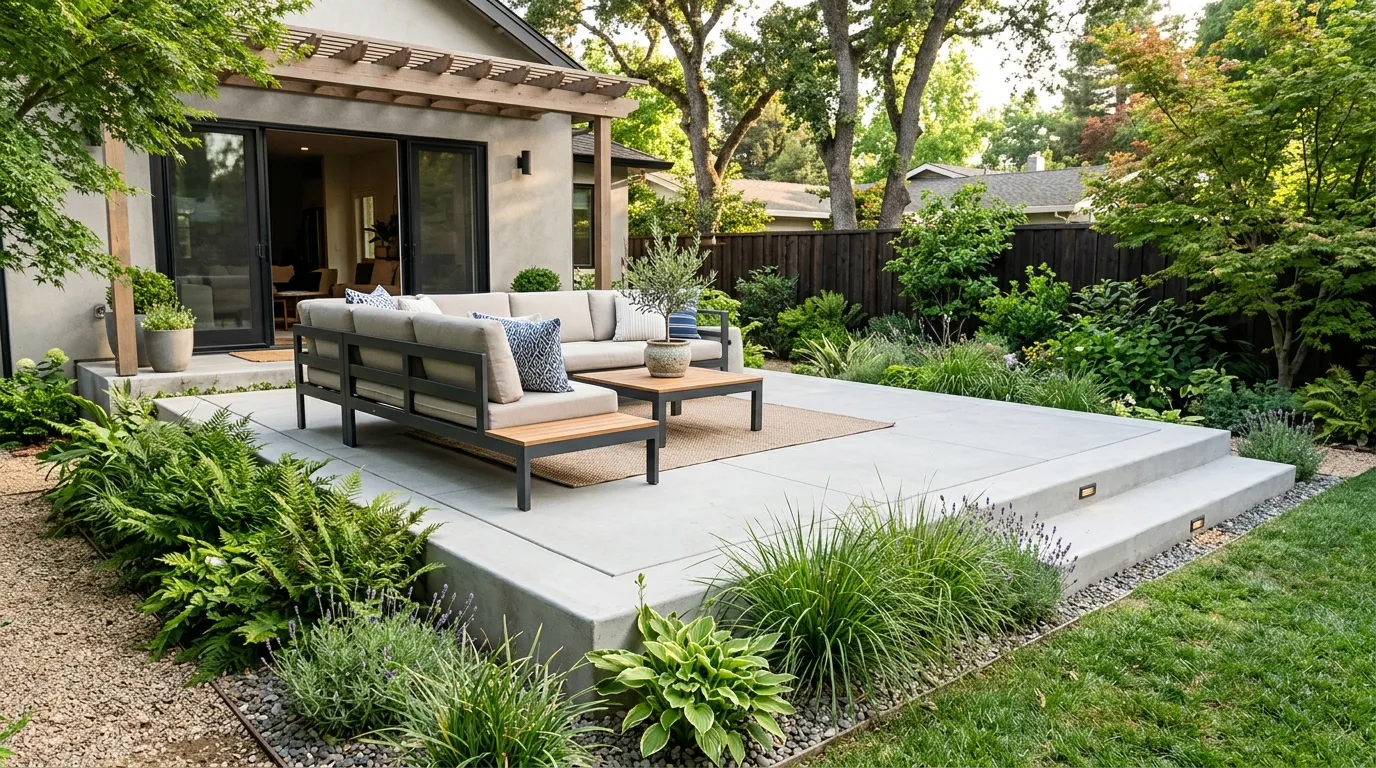
A raised platform instantly makes a patio feel more defined and intentional by lifting it slightly above the surrounding ground. This small elevation creates a natural boundary without needing walls or fences, helping the space feel more organized. It’s especially useful in backyards where the ground isn’t perfectly level, as it provides a stable and polished surface for furniture and daily use.
I’ve seen this approach work well in homes that want a clean, architectural feel without going too complex. That’s why many designers recommend subtle elevation changes to add depth without clutter. Over time, the platform continues to enhance both function and appearance, making the outdoor area feel more structured and thoughtfully designed while still being easy to maintain.
14. Integrated Fire Pit Zone
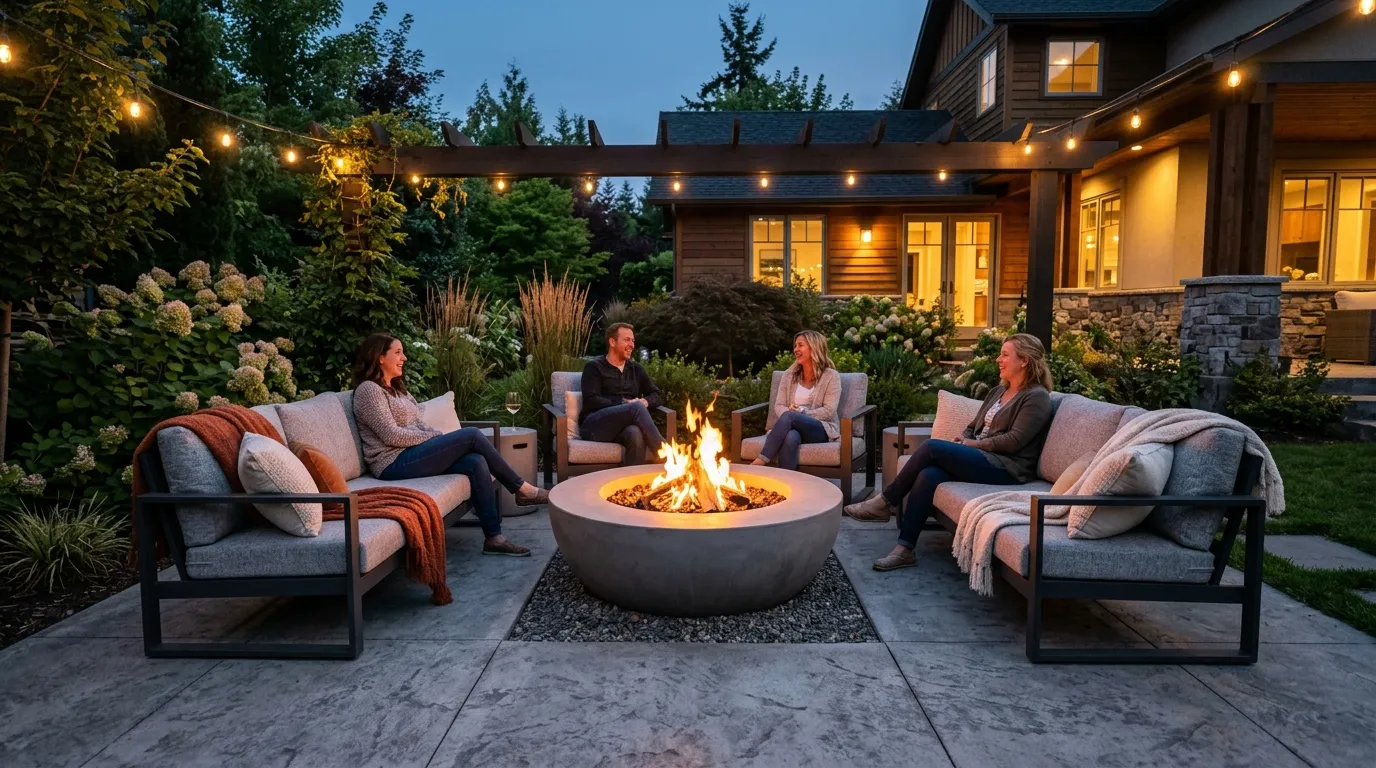
A fire pit zone transforms an ordinary patio into a space people naturally gather around. The warmth and glow create an inviting atmosphere that makes the area usable even during cooler nights. This feature adds both function and mood, turning the patio into a comfortable place for conversations, relaxation, or quiet evenings outdoors.
In my experience, a central fire feature quickly becomes the heart of the backyard. That’s why many designers recommend placing seating around it to encourage interaction. It doesn’t require excessive decoration because the fire itself provides visual interest and ambiance. Over time, this setup continues to feel special and inviting, making the patio a space that people look forward to using regularly.
15. Smooth Curved Edges
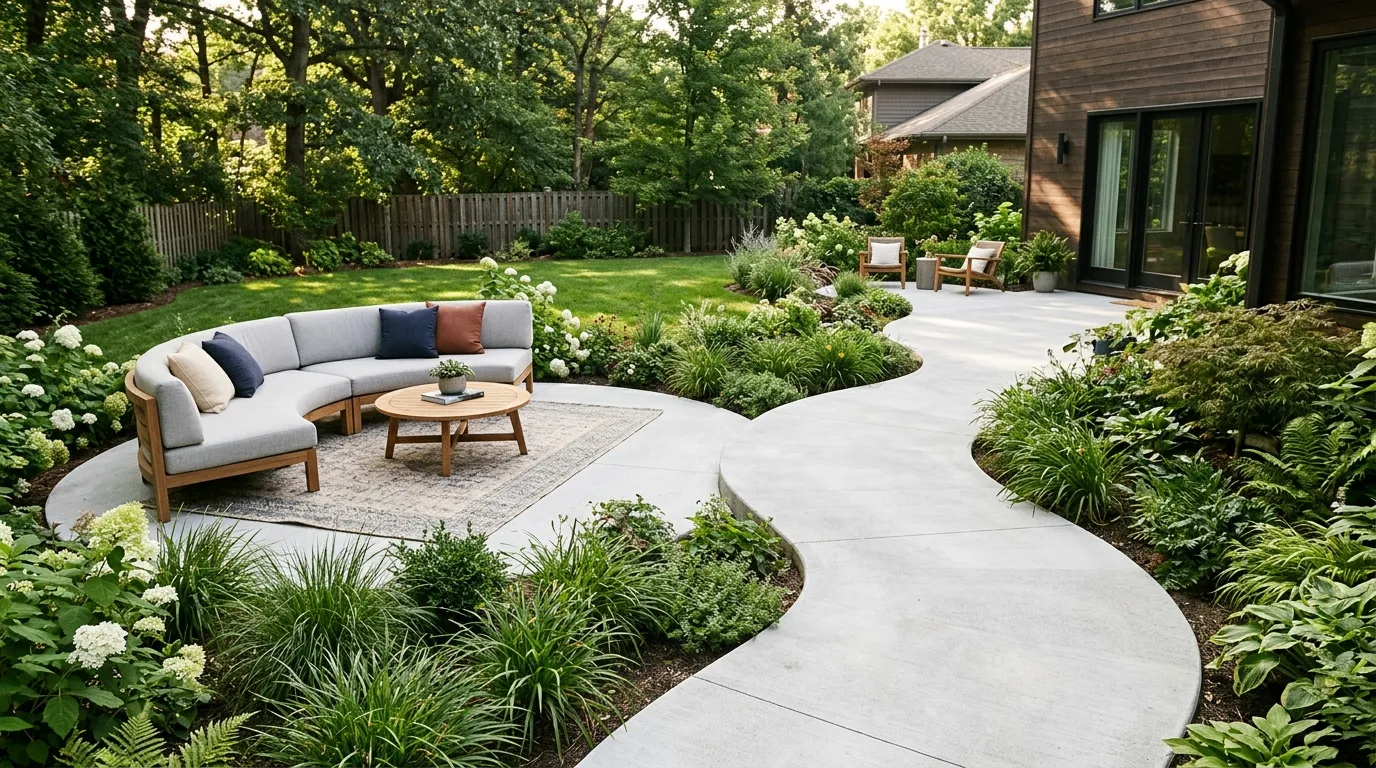
Curved edges bring a softer, more relaxed feel to a patio by moving away from sharp lines and rigid shapes. The gentle flow of the design makes the space feel more natural and inviting, especially in backyards that include plants or organic elements. This approach helps create a smoother transition between different areas, making the entire layout feel more connected.
I’ve noticed that curved designs often make a patio feel more welcoming and less formal. That’s why many designers recommend them for spaces meant for relaxation rather than structure. Over time, the soft lines continue to stand out without feeling overwhelming, giving the patio a unique identity while still maintaining a balanced and practical layout.
16. Concrete Step Pathway
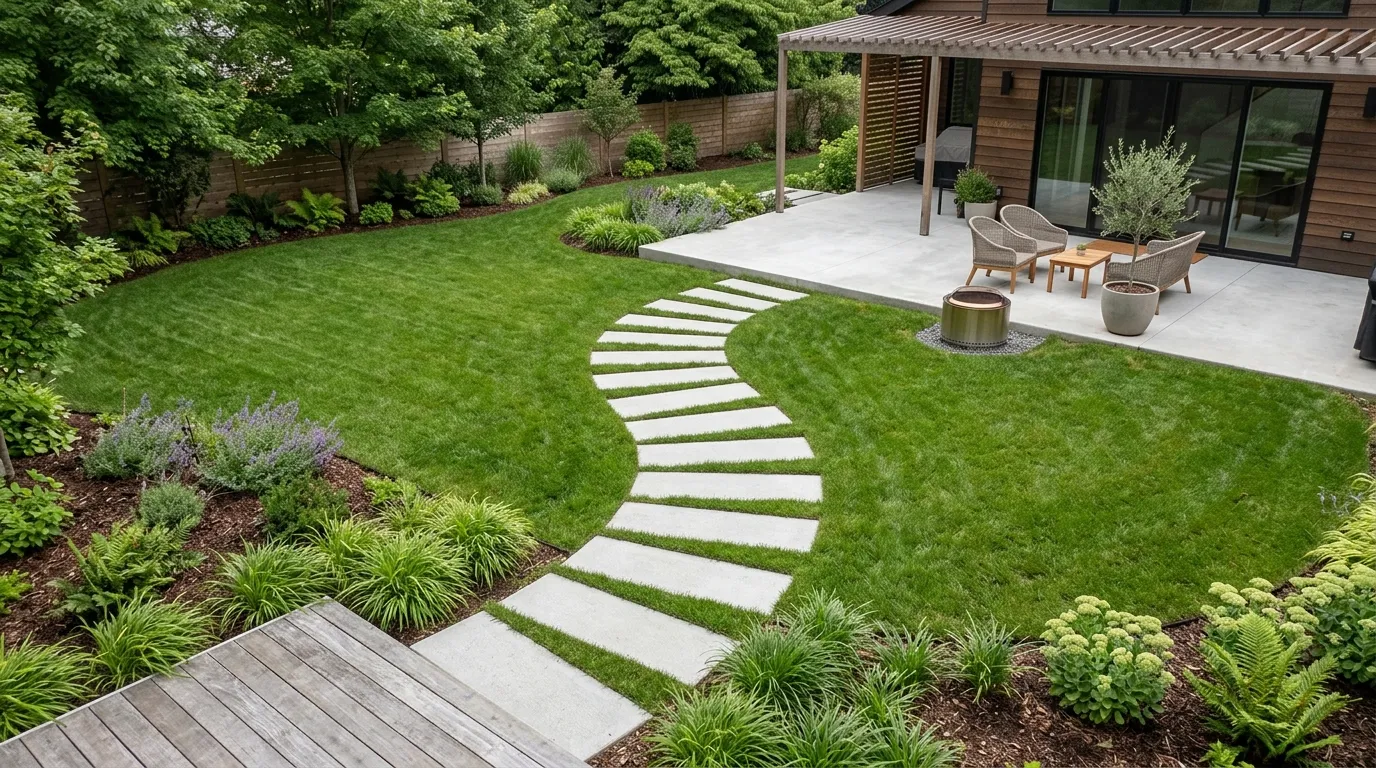
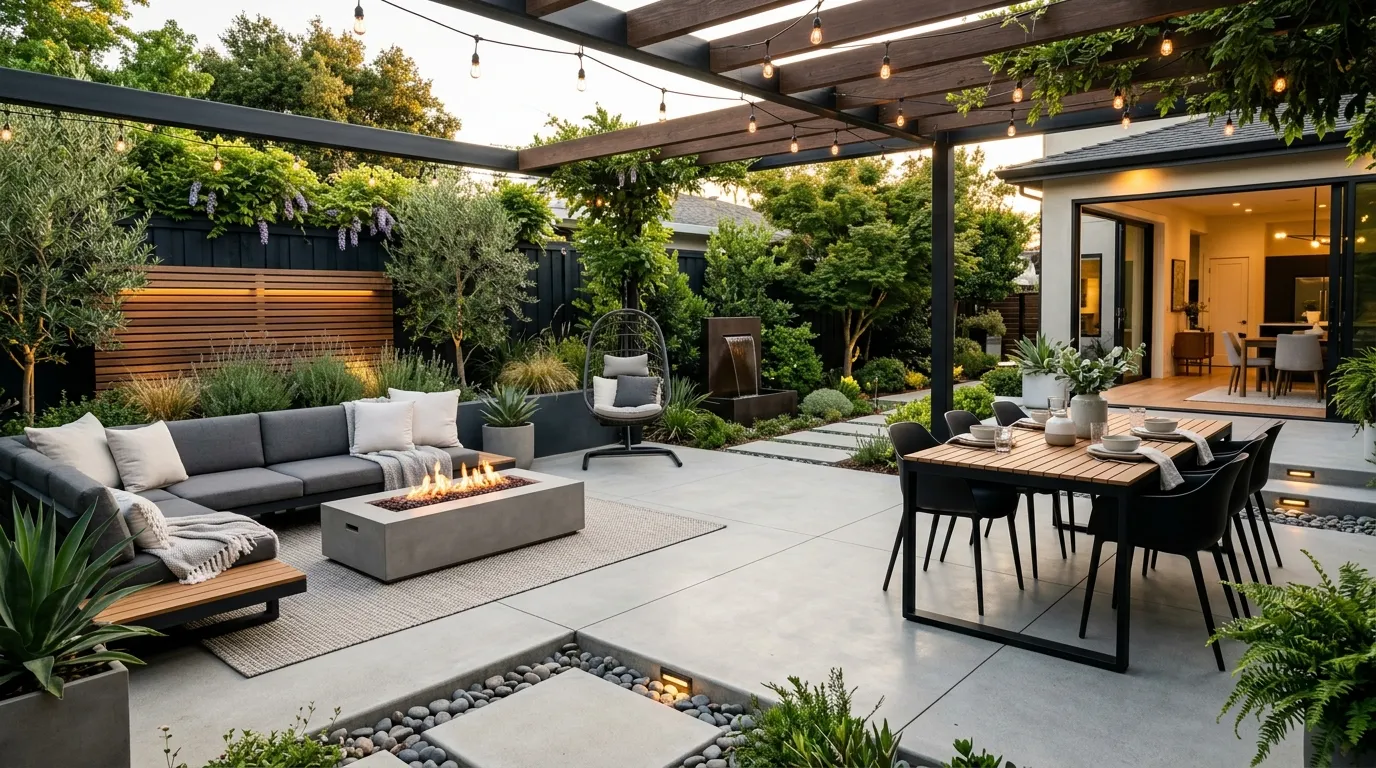
A step pathway introduces direction and flow, making the patio feel more structured without adding barriers. The spaced slabs guide movement while keeping the layout open and breathable. This approach works especially well in larger backyards where defining walking areas helps improve usability. It also creates a subtle visual rhythm that makes the entire space feel more thoughtfully arranged.
In my experience, step pathways are one of the simplest ways to upgrade an outdoor layout without major changes. That’s why many designers recommend pairing them with greenery or gravel for added contrast. Over time, the design remains flexible, allowing you to expand or adjust the layout easily. It keeps the patio functional while maintaining a clean and modern appearance that feels natural and inviting.
17. Outdoor Rug Defined Zone
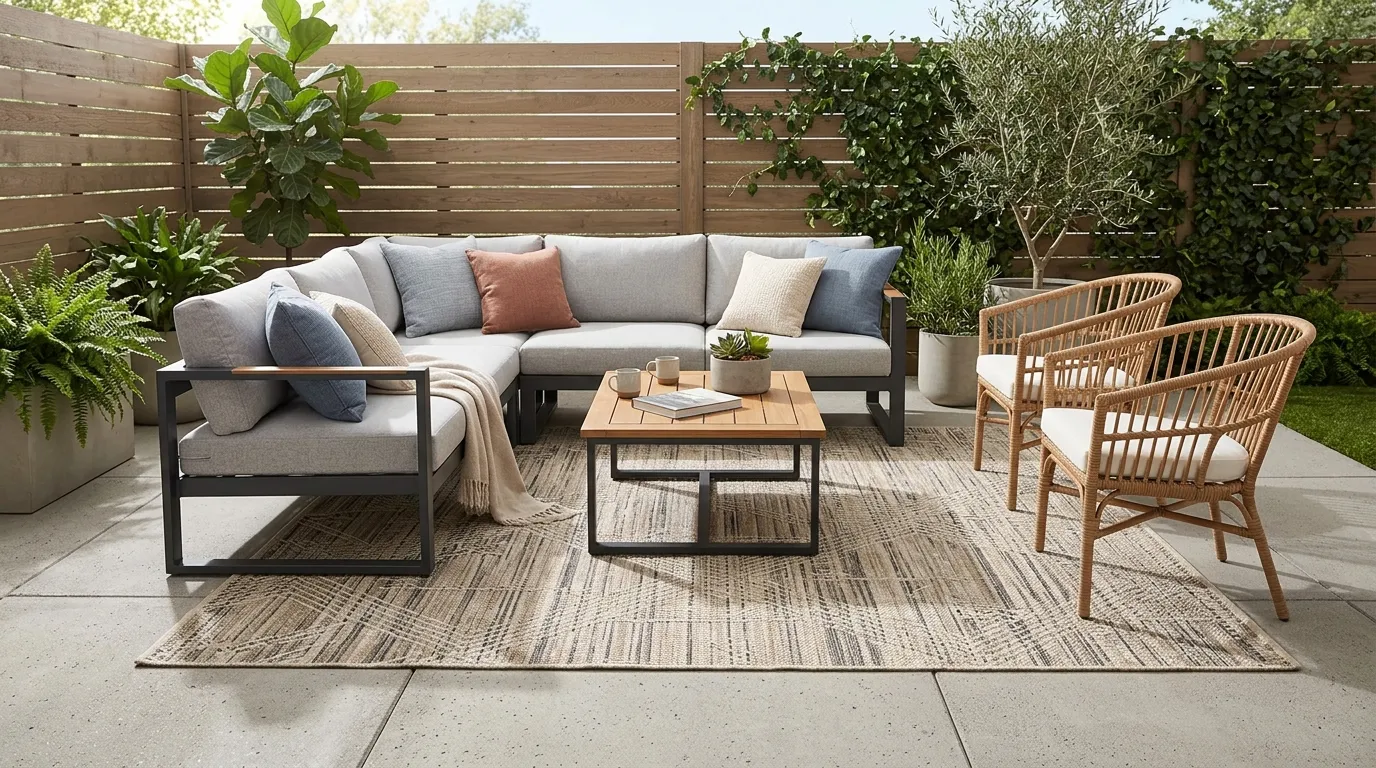
An outdoor rug is a simple addition that can completely change how a patio feels. It defines a specific zone, making seating or dining areas more intentional and visually grounded. This works especially well in open layouts where furniture alone doesn’t create clear boundaries. The added texture also softens the overall look, making the space feel more inviting and comfortable.
I’ve noticed that rugs are often overlooked, yet they make a big impact with minimal effort. That’s why many designers recommend them for quick upgrades without permanent changes. In real-life use, they also help protect the surface and add a layer of comfort underfoot. Over time, swapping rugs allows you to refresh the look easily, keeping the patio feeling updated and personalized.
18. Pergola Over Concrete
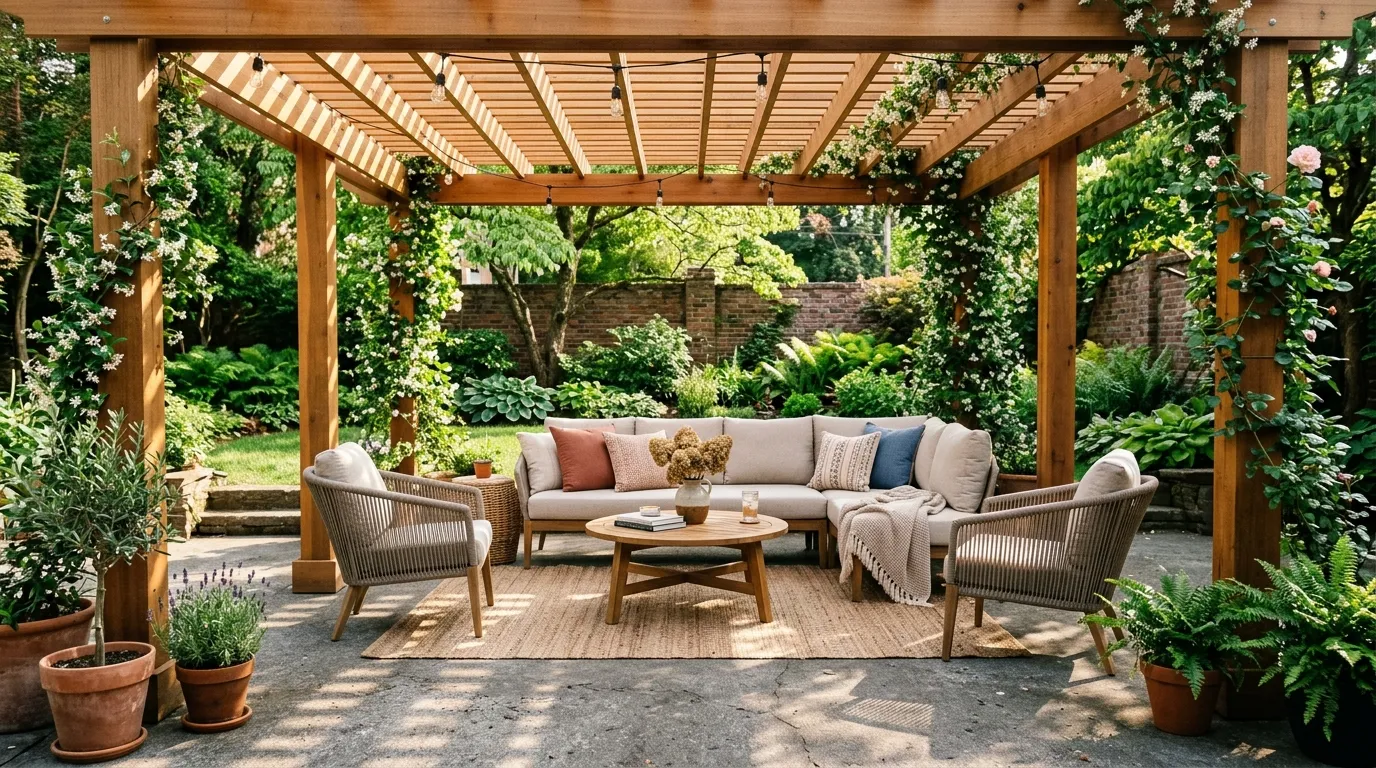
A pergola adds a whole new layer to a patio by introducing height and partial shade. The structure helps define the space, making it feel more like an outdoor room rather than just an open area. The filtered light creates beautiful patterns throughout the day, adding visual interest without extra decor. It’s especially useful in sunny climates where direct exposure can make patios uncomfortable.
I’ve seen this setup transform simple patios into cozy retreats that feel more private and usable. That’s why many designers recommend combining pergolas with lighting or plants for added effect. Over time, it becomes a focal point that enhances both function and style. The balance between open air and covered space makes the patio more versatile and enjoyable throughout the day.
19. Concrete Water Feature Edge
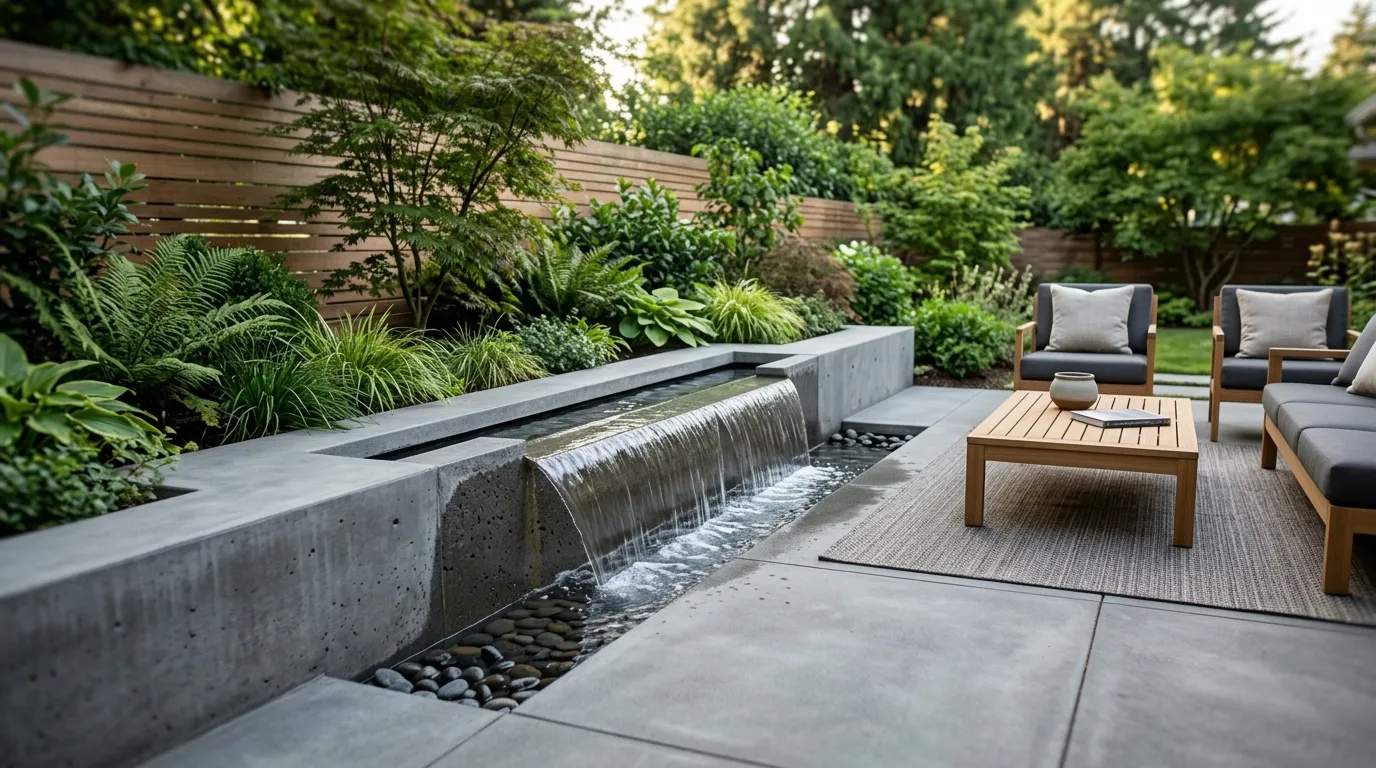
A water feature along the patio edge introduces a sense of calm that instantly elevates the space. The gentle sound of flowing water softens the environment, making the patio feel more peaceful and relaxing. This addition works especially well in areas where you want to create a retreat-like atmosphere without overcrowding the design. The clean lines of concrete keep the look modern while the water adds movement and life.
In my experience, even a simple water feature can completely shift how a space feels. That’s why many designers recommend integrating it into edges or borders rather than the center. It keeps the layout open while still adding a standout element. Over time, this feature continues to enhance the overall experience, making the patio feel more luxurious and thoughtfully designed without requiring constant attention.
20. Border Inlay Design
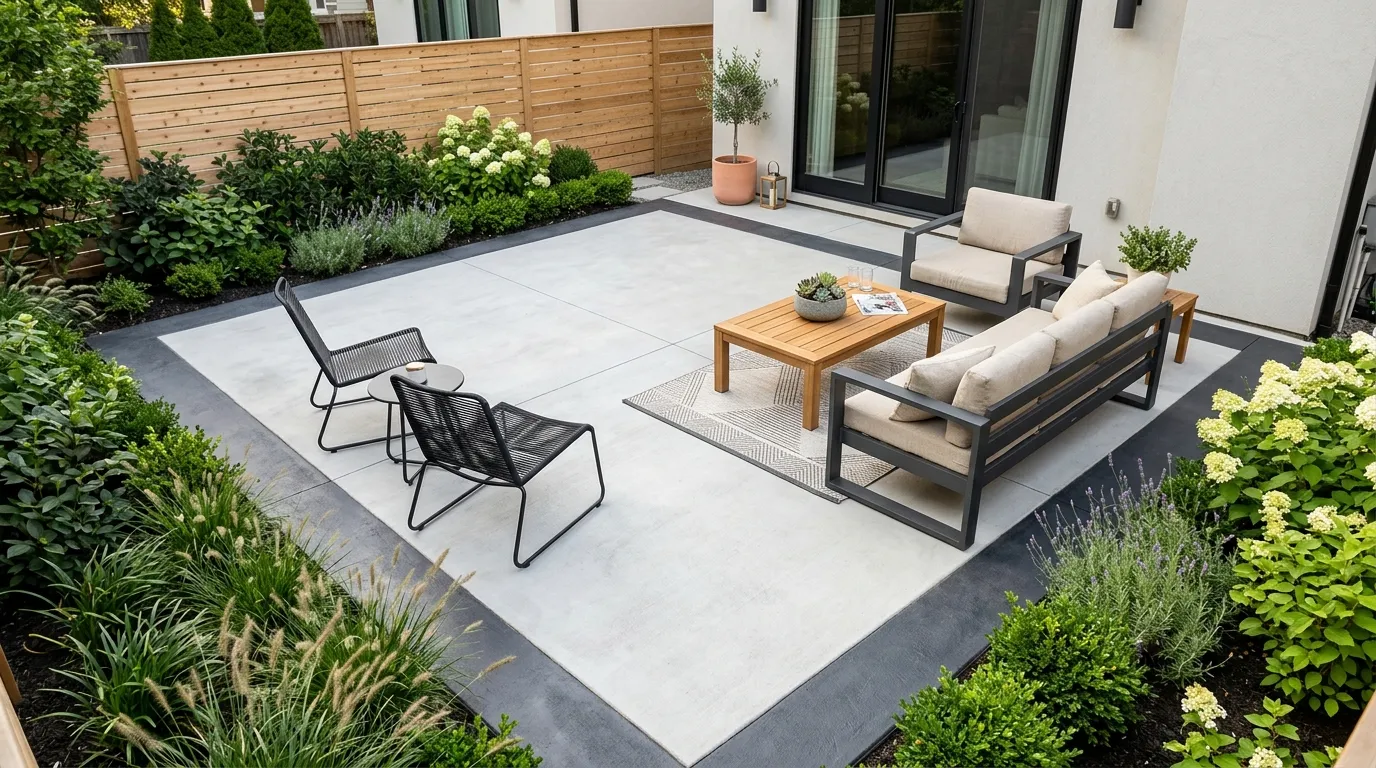
A border inlay design adds definition by framing the patio with a contrasting edge. This small detail makes a big difference, giving the space a more complete and polished appearance. It works especially well in patios that feel too plain or undefined, as the border naturally draws attention and creates structure. The contrast doesn’t have to be bold to be effective, making it a flexible option for different styles.
I’ve noticed that this detail is often what makes a patio feel professionally designed. That’s why many designers recommend it as a simple upgrade with strong visual impact. In everyday use, it also helps guide furniture placement by subtly marking the boundaries. Over time, the framed look continues to hold its appeal, making the space feel balanced and intentionally styled.
21. Concrete Planter Integration
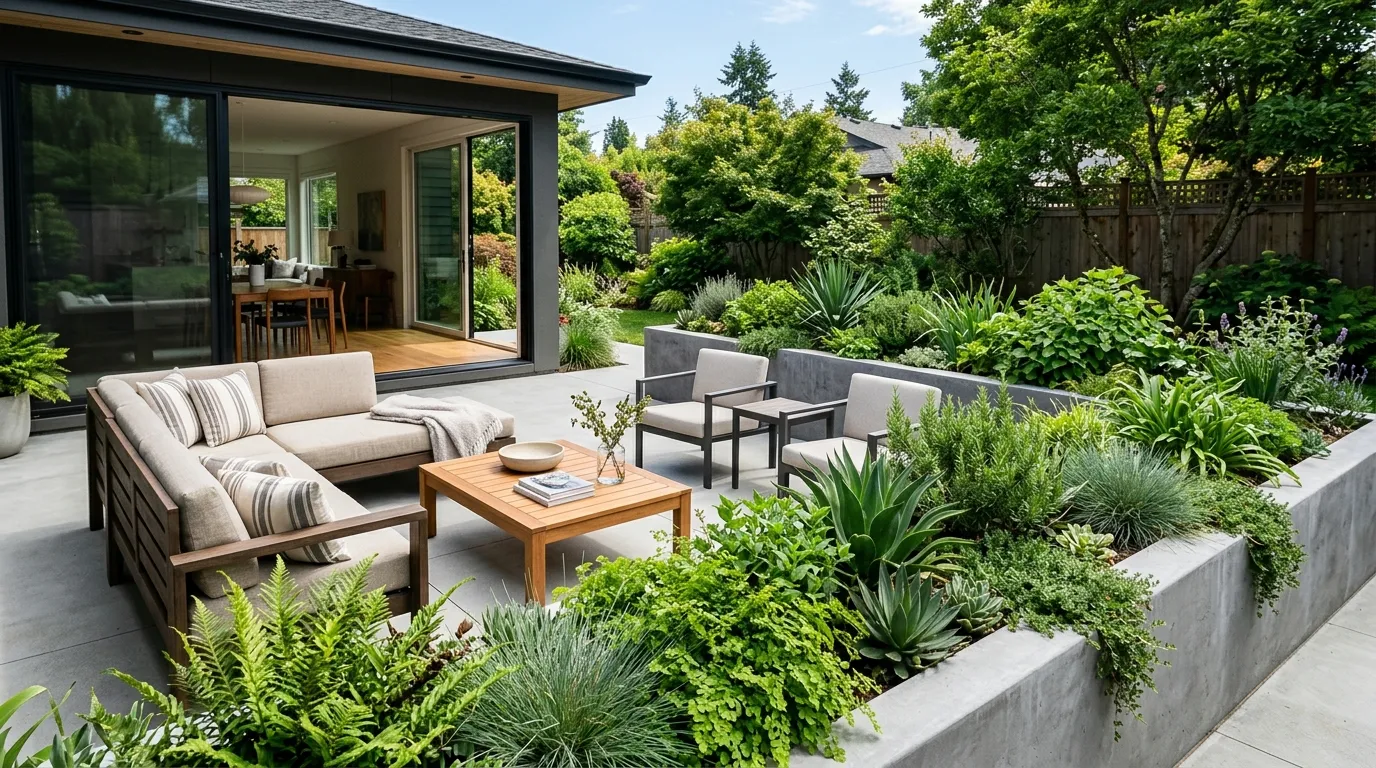
Integrated planters bring life to a patio by combining greenery directly with the structure. Instead of placing pots around randomly, the plants become part of the design, which creates a cleaner and more cohesive look. This approach works especially well in modern outdoor spaces where simplicity and organization matter. The greenery softens the hard surface, making the patio feel more inviting and balanced.
In my experience, built-in planters make maintenance easier because everything has a designated place. That’s why many designers recommend them for long-term practicality and style. Over time, as the plants grow, they add depth and character to the space without requiring major changes. This combination of structure and nature helps the patio feel more alive and visually complete.
22. Floating Bench Design
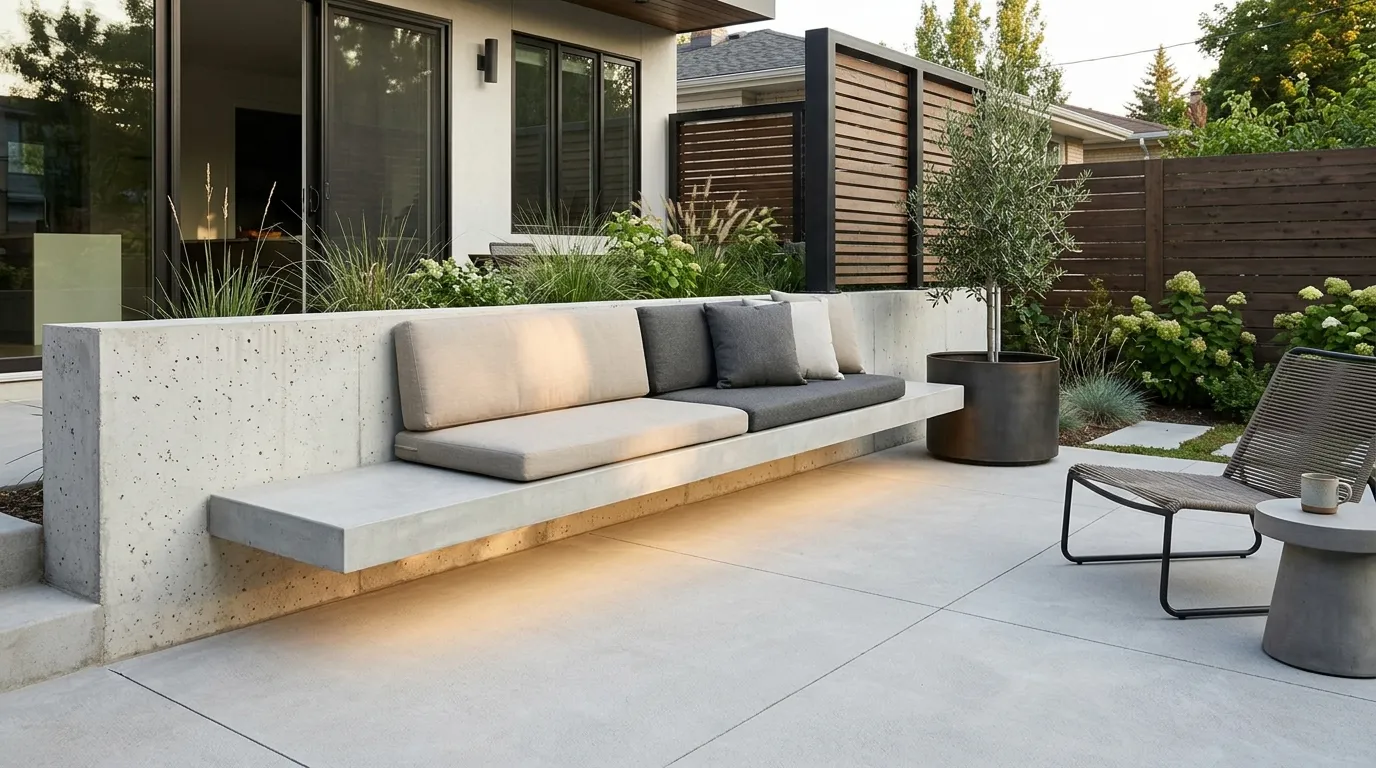
A floating bench adds a clean, architectural detail that instantly makes the patio feel more modern. The lifted design keeps the floor visible, which helps the space feel larger and less crowded. This is especially useful in compact backyards where every inch matters. The simplicity of the structure allows it to blend seamlessly with the overall layout while still standing out as a unique feature.
I’ve noticed that floating elements often create a subtle “wow” factor without trying too hard. That’s why many designers recommend them for minimalist outdoor spaces. In everyday use, they’re practical and easy to maintain since there are fewer gaps for dirt to collect. Over time, the sleek design continues to feel fresh, making the patio look thoughtfully designed and effortlessly stylish.
23. Concrete Dining Platform
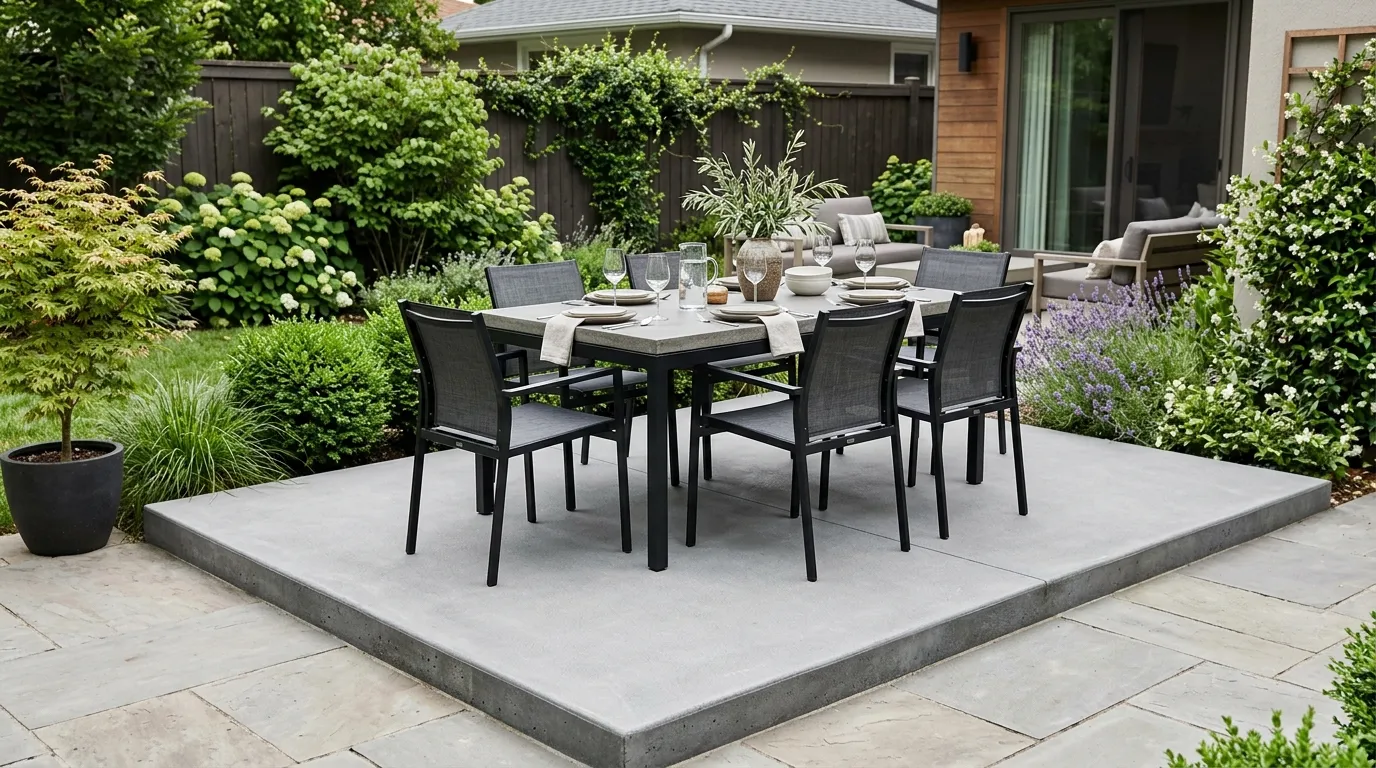
A dedicated dining platform creates a clear purpose within the patio, making outdoor meals feel more organized and enjoyable. The slight elevation or defined section helps separate dining from lounging areas without adding walls or barriers. This approach works especially well in larger spaces where multiple functions need to coexist without feeling cluttered or confusing.
In my experience, having a defined dining zone makes people use the patio more often. That’s why many designers recommend creating subtle separations within outdoor layouts. It helps guide how the space is used while keeping everything visually connected. Over time, this setup continues to improve both comfort and usability, making the patio feel like a natural extension of indoor living.
24. Textured Concrete Finish
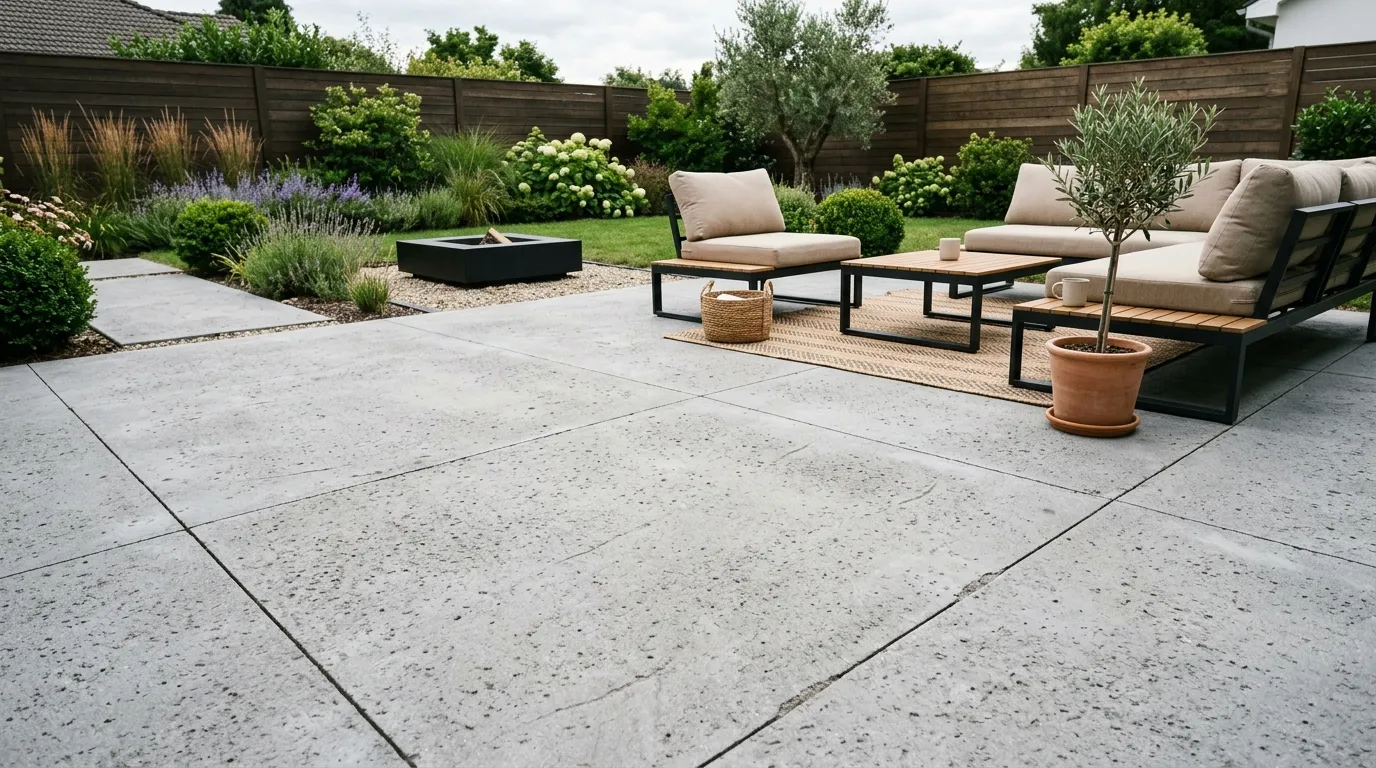
A textured finish offers a perfect balance between style and function by adding subtle detail to the surface. Unlike completely smooth finishes, it reduces slipperiness and glare, making the patio more comfortable to use throughout the day. This is especially helpful in areas that receive strong sunlight or frequent foot traffic. The texture enhances the look without overwhelming the overall design.
I’ve seen this finish perform well in everyday use, especially in family homes. That’s why many designers recommend it for both safety and durability. Over time, it continues to look good while handling wear and tear more effectively than smoother surfaces. This makes it a practical choice that doesn’t sacrifice visual appeal, keeping the patio both functional and attractive.
25. Seamless Indoor-Outdoor Flow
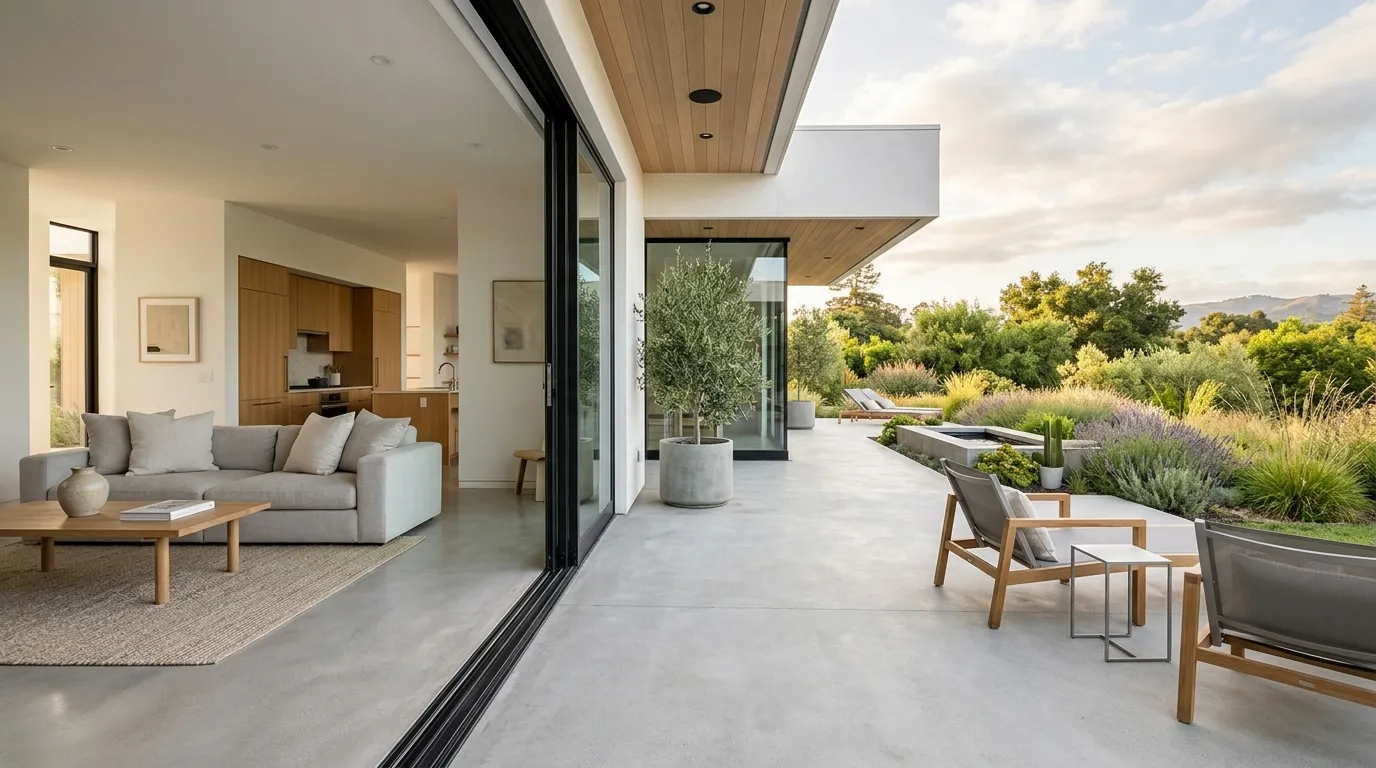
A seamless transition between indoor and outdoor areas can completely change how a home feels. By using similar tones and materials, the patio becomes an extension of the interior rather than a separate space. This approach works especially well with large glass doors that open up the view, allowing natural light to flow freely. The result is a bright, open environment that feels both modern and inviting.
In my experience, this design makes everyday living more enjoyable because it removes the visual barrier between inside and outside. That’s why many designers recommend keeping the flooring consistent or closely matched. Within concrete backyard patio designs, this idea stands out for its ability to blend function with aesthetics effortlessly. Over time, it helps the entire home feel more connected, spacious, and thoughtfully designed.
Conclusion
Creating a beautiful outdoor space doesn’t require a complete overhaul—sometimes, the right design idea is all it takes. These concrete backyard patio designs show how small, thoughtful changes can transform a basic area into something that feels stylish, functional, and truly inviting. From textures to layouts, each idea brings its own unique impact.
I’ve seen how simple upgrades like these can completely change how often a space is used and enjoyed. If something inspired you, save this post on Pinterest, try one idea in your own backyard, and share it with someone who’s looking to upgrade their space too.
FAQs
1. Are concrete patios a good choice for backyards?
Yes, concrete patios are one of the most practical and versatile options for backyards. They are durable, low-maintenance, and can be customized in many ways to match different styles. I’ve noticed they work especially well for homeowners who want a clean, modern look without constant upkeep. With the right finish or layout, they can also feel just as warm and inviting as more expensive materials.
2. How can I make a concrete patio look more luxurious?
You can make a concrete patio feel more high-end by focusing on finishes, layout, and small design details. Adding elements like lighting, built-in seating, or mixing materials such as wood can instantly elevate the space. In my experience, even simple upgrades like a two-tone layout or a defined seating zone can create that “designer” feel without spending too much.
3. Is concrete better than pavers or stone?
Concrete is often more affordable and easier to maintain compared to pavers or natural stone. It also offers a smoother, more modern appearance. However, the best choice depends on your style and needs. I’ve seen many people choose concrete because it provides flexibility in design while still being strong and long-lasting, especially for everyday use.
4. Does a concrete patio get too hot in summer?
Concrete can get warm under direct sunlight, especially in darker shades. However, using lighter tones, adding shade structures like pergolas, or placing outdoor rugs can help reduce heat. I’ve noticed that combining shade and proper layout makes a big difference in comfort, even during hotter days.
5. How long does a concrete patio last?
A well-installed concrete patio can last 25–30 years or even longer with proper care. Regular cleaning and occasional sealing help maintain its appearance and durability. In many homes I’ve seen, concrete patios remain in great condition for decades, making them a reliable long-term investment.
6. Can I update an old concrete patio without replacing it?
Yes, you can refresh an existing patio with techniques like resurfacing, staining, or adding texture. These upgrades can completely change the look without the cost of a full replacement. I’ve seen older patios transformed into modern spaces just by updating the surface and adding a few design elements.
7. What is the lowest maintenance patio option?
Concrete is considered one of the lowest maintenance patio materials available. It doesn’t shift like pavers or require frequent sealing like some stones. That’s why many designers recommend it for busy homeowners who want a stylish outdoor space without ongoing effort.
8. How do I decorate a concrete patio without cluttering it?
Keep the design simple and intentional by focusing on a few key elements like seating, lighting, and greenery. Using built-in features or defined zones can help maintain a clean look. In my experience, less is more—choosing a few well-placed items often creates a more polished and inviting space than overcrowding it.