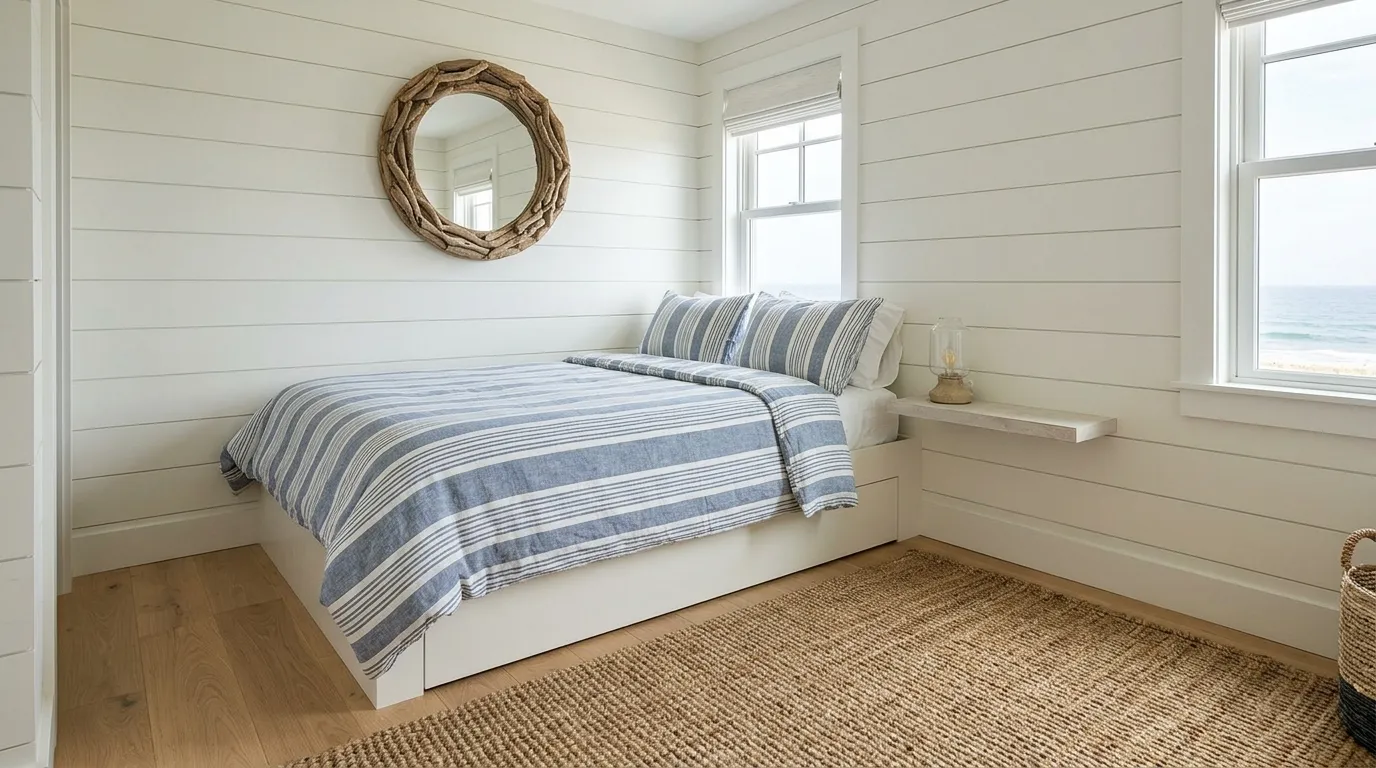
Introduction
Dreaming of coastal bedrooms that feel light, airy, and effortlessly beautiful—even in the smallest spaces? You’re not alone. Creating a calm, beach-inspired retreat in a compact room can feel challenging, especially when space is limited and clutter builds up quickly. But the good news is, with the right ideas, even the tiniest bedroom can feel open, relaxing, and visually stunning.
This article is packed with simple yet impactful design ideas that help you maximize space while bringing in that breezy coastal charm. From smart storage tricks to soft color palettes and natural textures, each idea is designed to make your room feel bigger, brighter, and more inviting. In my experience, small changes like adjusting lighting or switching to lighter materials can completely transform how a space feels. You’ll find inspiration that’s not only beautiful but also practical and easy to apply.
1. Soft Blue Palette
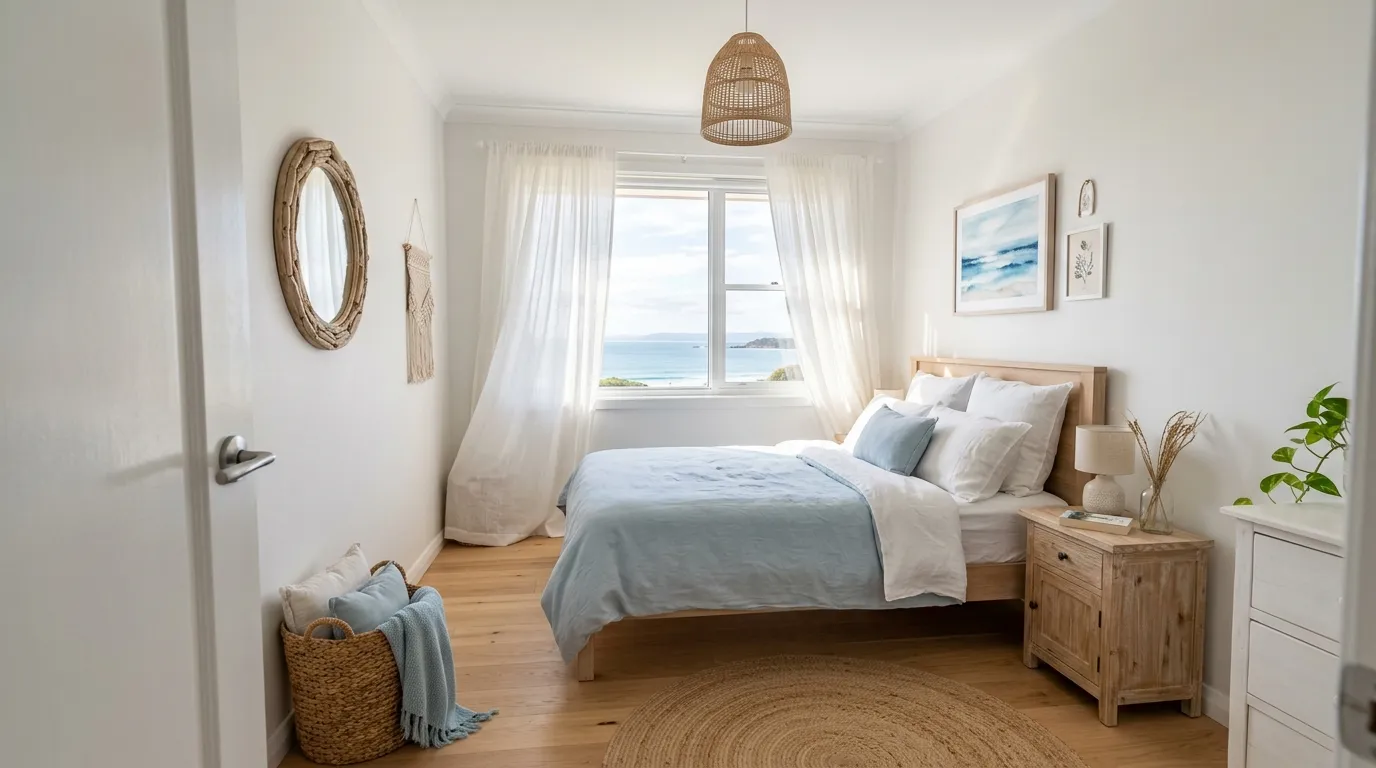
A soft blue palette instantly transforms a tight bedroom into a peaceful retreat that feels larger than it is. Light blue walls paired with crisp white bedding create visual openness, while subtle coastal tones bring in that relaxed seaside feel. In my experience, even a small change like switching to pale blue textiles can completely shift the mood of the room. This approach works especially well in compact spaces because it reflects light instead of absorbing it, making everything feel brighter and more spacious.
The beauty of this idea is how easy it is to apply without a full makeover. You don’t need expensive furniture—just layer soft blues through bedding, curtains, or accent pieces. I’ve noticed that keeping the palette consistent helps avoid visual clutter, which is key in smaller layouts. The result is a clean, cohesive space that feels intentional and calming. This is why many designers lean on light coastal tones to create that effortless, breezy bedroom look that feels both stylish and livable.
2. White Linen Bedding
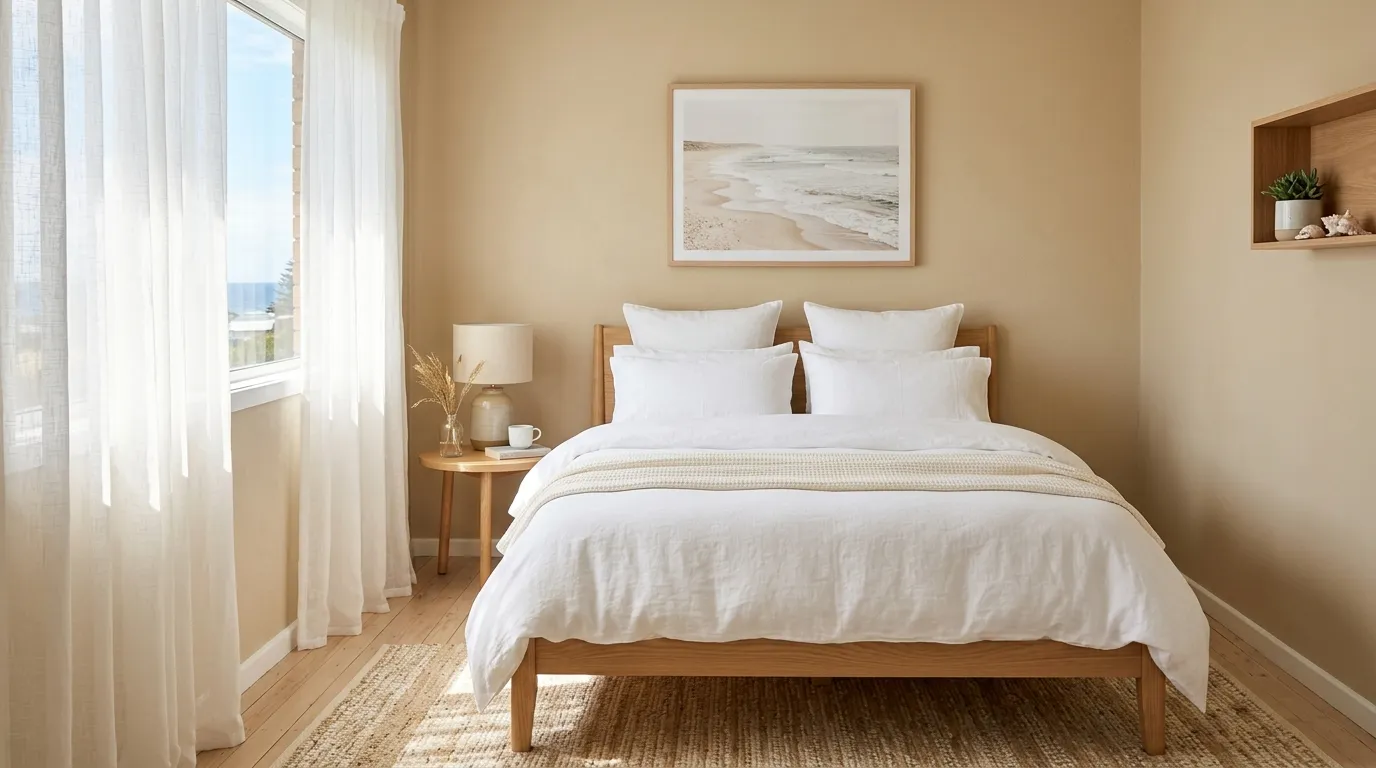
Nothing refreshes a small bedroom quite like crisp white linen bedding layered with soft textures. It immediately makes the space feel brighter, cleaner, and more inviting without adding visual weight. The slightly wrinkled look of linen brings a relaxed charm that fits perfectly with beach-inspired interiors. I’ve tried this in smaller rooms, and it consistently creates a more open feel because it doesn’t visually break up the space like darker patterns often do.
White bedding also gives you flexibility to experiment with accents without overwhelming the room. You can easily add striped pillows, woven throws, or subtle blue tones for variation. That’s why many designers recommend starting with a neutral base and building around it. In coastal bedrooms especially, keeping the bed light and simple prevents the space from feeling crowded. The result is a serene, breathable environment that feels thoughtfully designed yet incredibly easy to maintain.
3. Woven Texture Accents
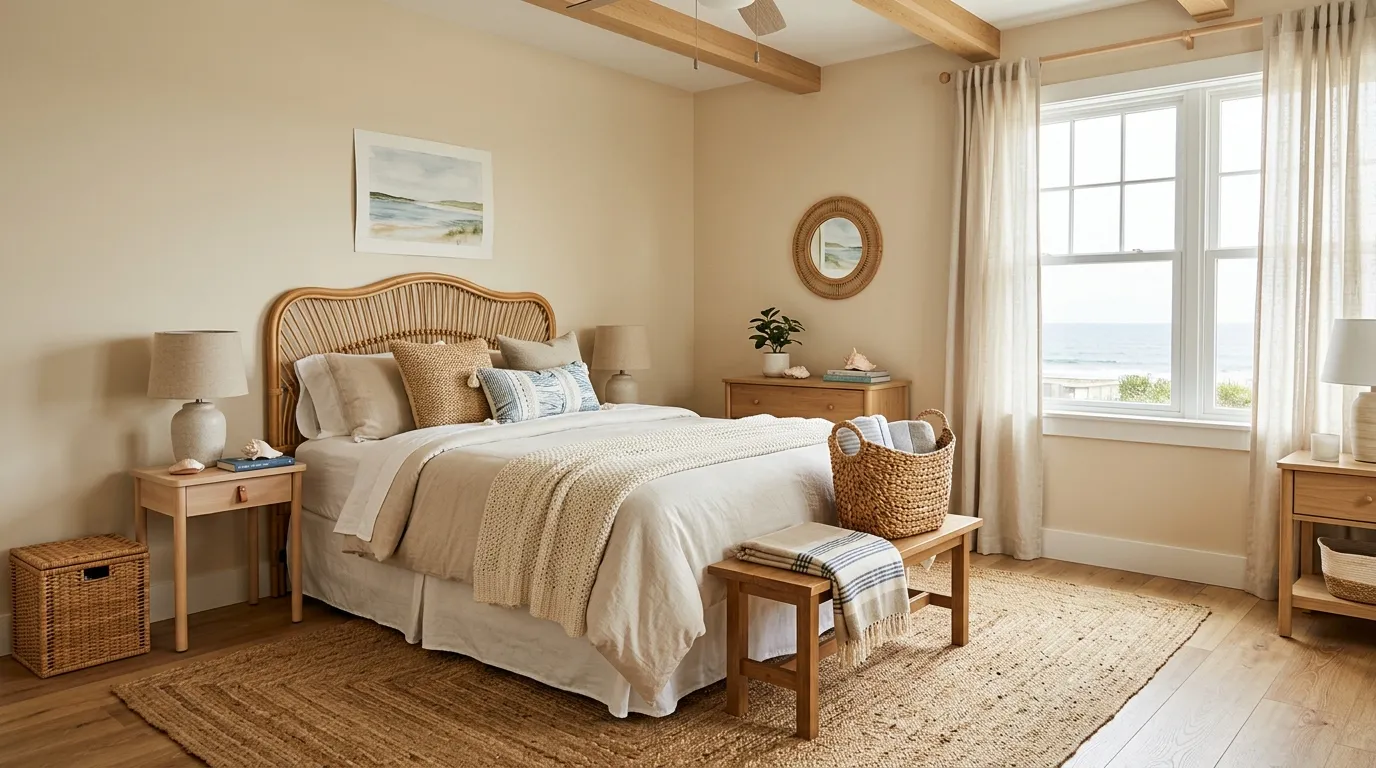
Woven textures can instantly elevate a small bedroom by adding warmth and subtle detail without overwhelming the space. Elements like rattan headboards, jute rugs, or wicker baskets introduce a natural, grounded feel that balances out lighter tones. I’ve seen this work well in many homes where the goal is to create a cozy yet airy environment. These textures break the monotony of flat surfaces and make the room feel more thoughtfully designed while still keeping everything visually light.
The key is to use woven accents in moderation so the space doesn’t feel busy. A single statement piece, like a rattan headboard, paired with smaller touches such as baskets or lampshades, is often enough. In my experience, layering different natural materials adds depth while maintaining simplicity. This approach works especially well in compact spaces where every detail matters. The end result is a balanced, inviting bedroom that feels warm, textured, and effortlessly connected to a coastal-inspired aesthetic.
4. Sheer Curtain Layers
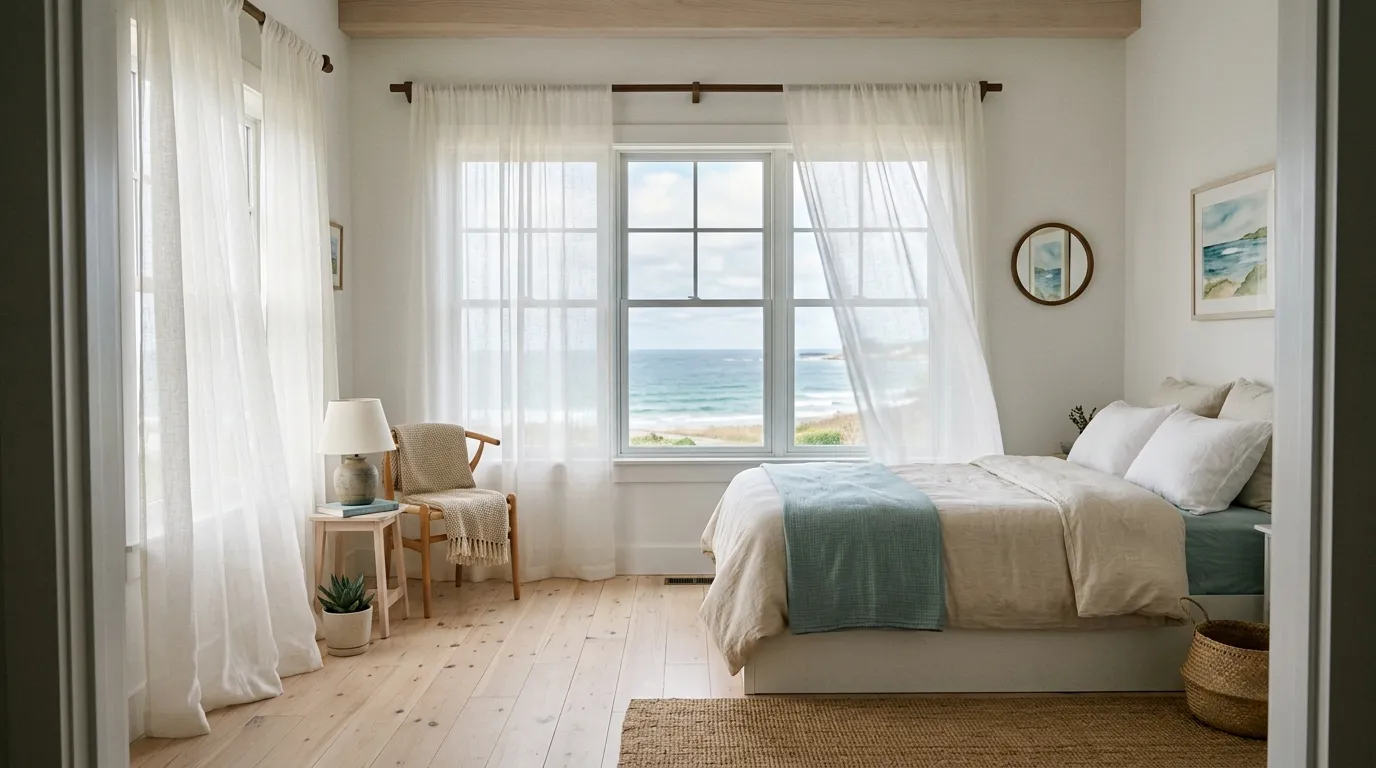
Soft, sheer curtains can completely change how a small bedroom feels the moment daylight enters. Instead of blocking light, they gently diffuse it, creating a glowing, airy atmosphere that feels calm and inviting. I’ve noticed that even in tighter rooms, sheer layers make windows appear bigger and more open. This subtle trick helps expand the visual space without moving a single piece of furniture. The light filtering through also enhances soft tones, making the entire room feel cohesive and naturally bright.
What makes this idea so effective is its simplicity and flexibility. You can pair sheer curtains with minimal rods or layer them over blinds for added depth. In my experience, keeping the fabric light and flowy prevents the room from feeling heavy or crowded. This approach works especially well in beach-inspired interiors where natural light is a key element. The result is a soft, breathable space that feels effortlessly styled while still being practical for everyday living.
5. Light Wood Furniture
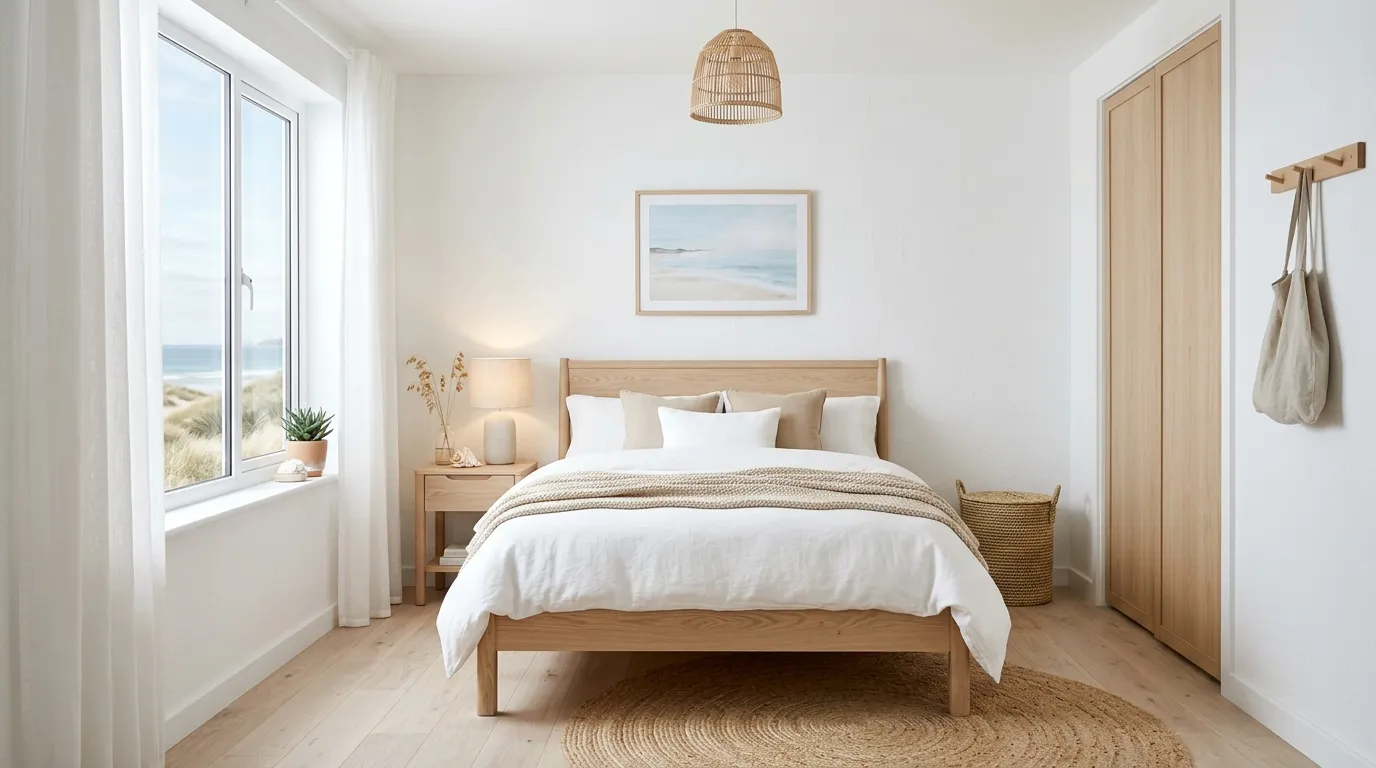
Light wood furniture is one of the easiest ways to keep a small bedroom feeling open while still adding warmth. Pieces like oak or pine bring in natural texture without the heaviness of darker finishes. I’ve seen this make a big difference in compact rooms where bulky furniture can quickly overwhelm the space. The lighter tones reflect more light, helping the room feel airy and balanced instead of crowded or closed in.
Another advantage is how versatile light wood can be when styling. It pairs effortlessly with whites, soft blues, and sandy neutrals, allowing you to build a cohesive look without overthinking every detail. In my experience, even switching just the bed frame or nightstand to a lighter finish can refresh the entire room. This approach keeps things simple while still feeling intentional, making it perfect for small spaces that need both function and visual ease.
6. Nautical Stripe Touches
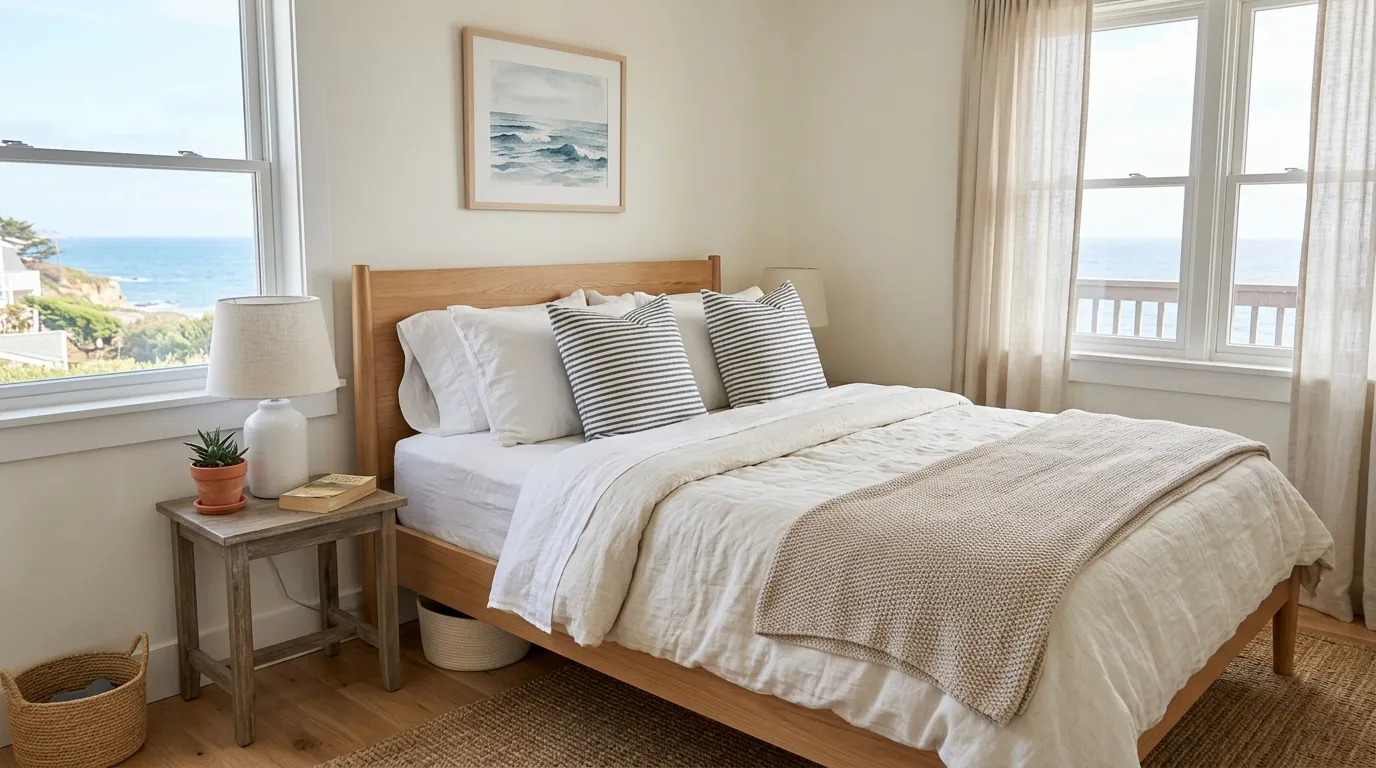
Nautical stripes are a timeless way to bring personality into a small bedroom without making it feel busy. When used in moderation, like on pillows or a throw, they create a crisp and structured look that complements softer elements. I’ve noticed that stripes work especially well in compact spaces because they add visual interest without cluttering the design. The clean lines help maintain order, which is essential when every detail counts.
The key is to keep the stripes subtle and balanced with neutral tones. Too many bold patterns can quickly overwhelm a small room, but a few well-placed accents can make a big impact. In my experience, pairing striped pieces with simple bedding and natural textures creates a polished yet relaxed feel. This approach keeps the design cohesive while still adding that signature coastal charm that feels fresh, classic, and easy to live with.
7. Driftwood Decor Pieces
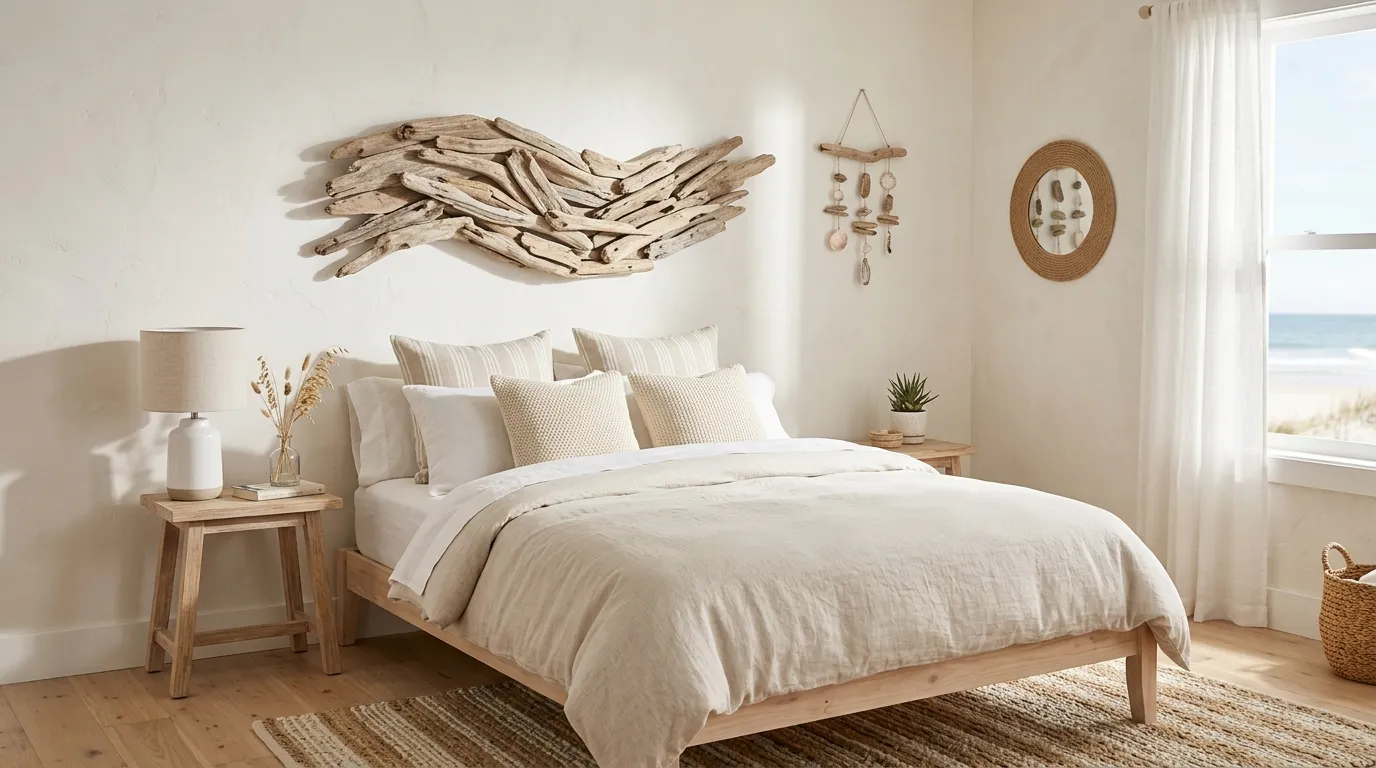
Driftwood decor introduces a raw, natural element that instantly connects a bedroom to a relaxed seaside feel. Whether used as wall art, a mirror frame, or small accents, it adds character without overwhelming the space. I’ve seen this work beautifully in compact rooms where every piece needs to feel intentional. The weathered texture creates visual interest while still blending seamlessly with light, neutral tones.
What makes driftwood so effective is its organic, imperfect look that softens the overall design. In my experience, even one statement piece can elevate the entire room without making it feel busy. It pairs especially well with soft fabrics and light wood finishes, creating a layered yet simple aesthetic. This approach keeps the space grounded and calm while adding a unique, natural detail that feels both effortless and thoughtfully styled.
8. Compact Floating Shelves
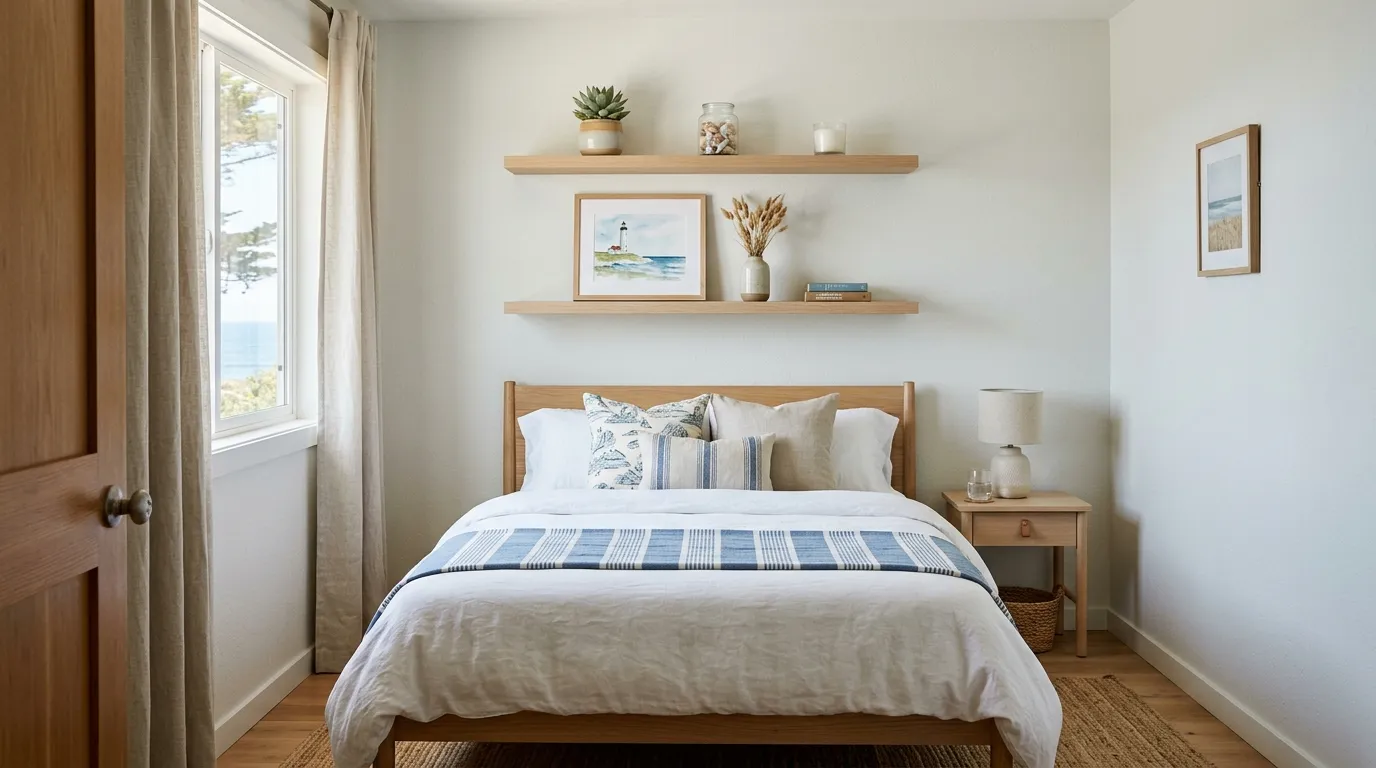
Floating shelves are a smart solution for small bedrooms where every inch matters. By using vertical space, they free up the floor and keep the room feeling open. I’ve noticed that even a couple of slim shelves can make a big difference in how organized a space feels. They give you a place to display decor, books, or small essentials without adding bulky furniture.
The key is to keep styling simple and intentional. Overloading shelves can quickly make the room feel cluttered, especially in tighter spaces. In my experience, a mix of a few decorative items and functional pieces works best. This balance keeps the look clean while still adding personality. The result is a practical setup that enhances both storage and style, making the room feel more efficient and visually appealing.
9. Soft Beige Neutrals
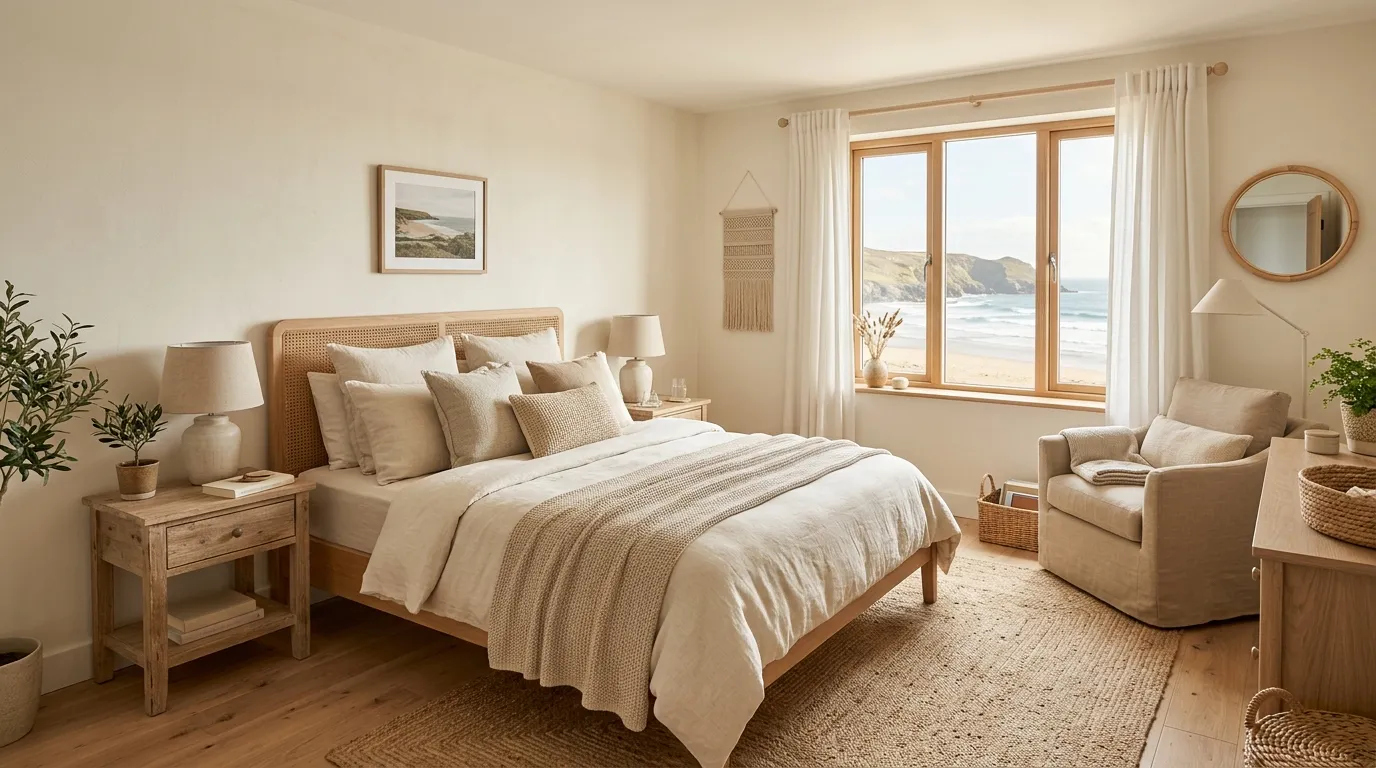
Soft beige tones bring warmth into a small bedroom without sacrificing that light, airy feel. Unlike darker colors, these neutrals reflect light gently, helping the space feel open and balanced. I’ve noticed that beige works especially well when layered with different textures, creating depth without adding visual clutter. This makes it perfect for smaller rooms that need both comfort and simplicity.
Another benefit is how easy it is to build around neutral tones. You can add subtle blues, whites, or natural materials without disrupting the overall look. In my experience, starting with a beige base makes decorating much less overwhelming. It creates a calm foundation that allows every detail to stand out without competing for attention. The result is a cozy, cohesive space that feels relaxed, welcoming, and effortlessly styled.
10. Ocean Artwork Prints
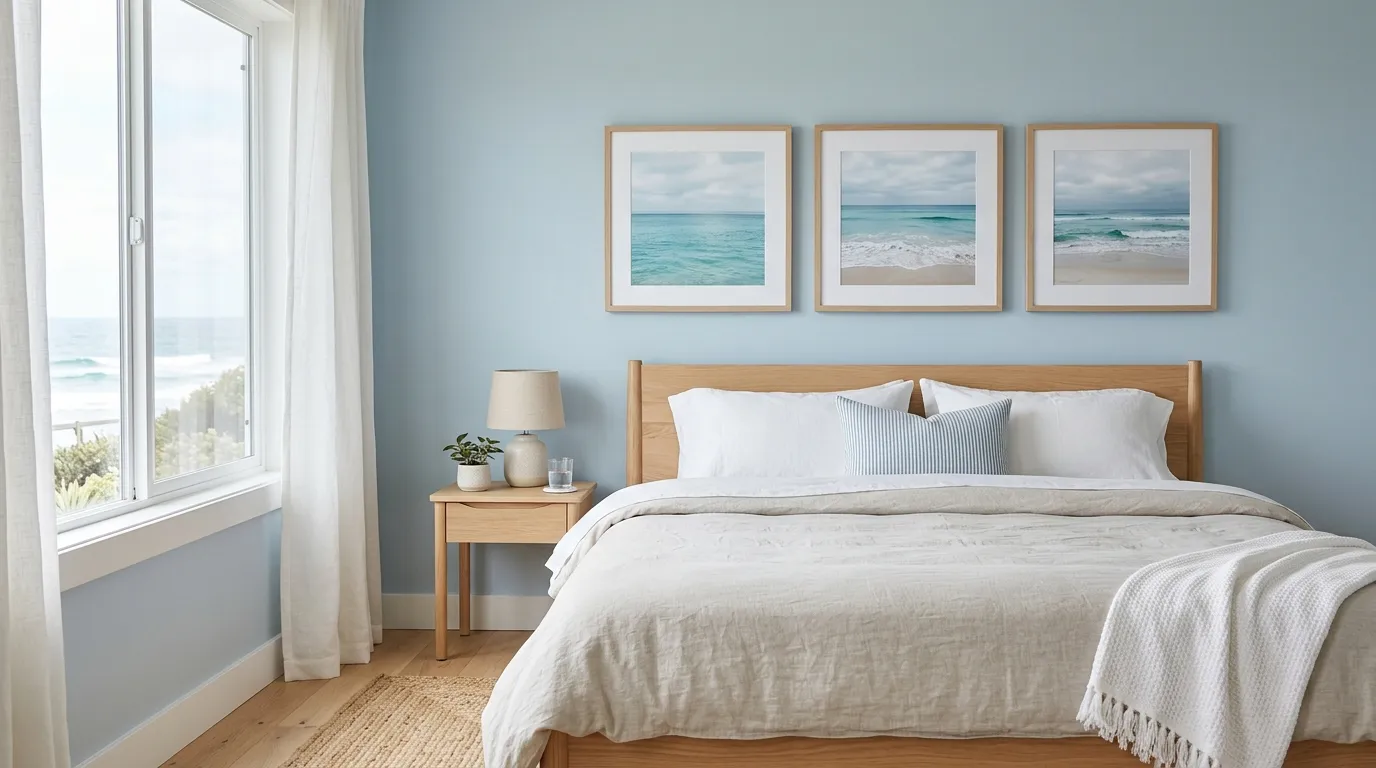
Ocean-inspired artwork is one of the simplest ways to bring a coastal feel into a small bedroom without adding physical bulk. A well-placed print above the bed or on a main wall draws the eye and sets the tone instantly. I’ve noticed that even a single large piece can make the room feel more styled and complete. It adds depth and interest while keeping the overall layout clean and uncluttered.
The key is to choose artwork that complements the room’s color palette rather than overpowering it. Soft blues, sandy tones, or abstract ocean scenes tend to work best in smaller spaces. In my experience, keeping frames simple and consistent helps maintain a cohesive look. This approach allows the artwork to enhance the atmosphere without becoming distracting. The result is a calm, visually engaging space that feels thoughtfully designed and easy to personalize.
11. Minimal Bed Frame
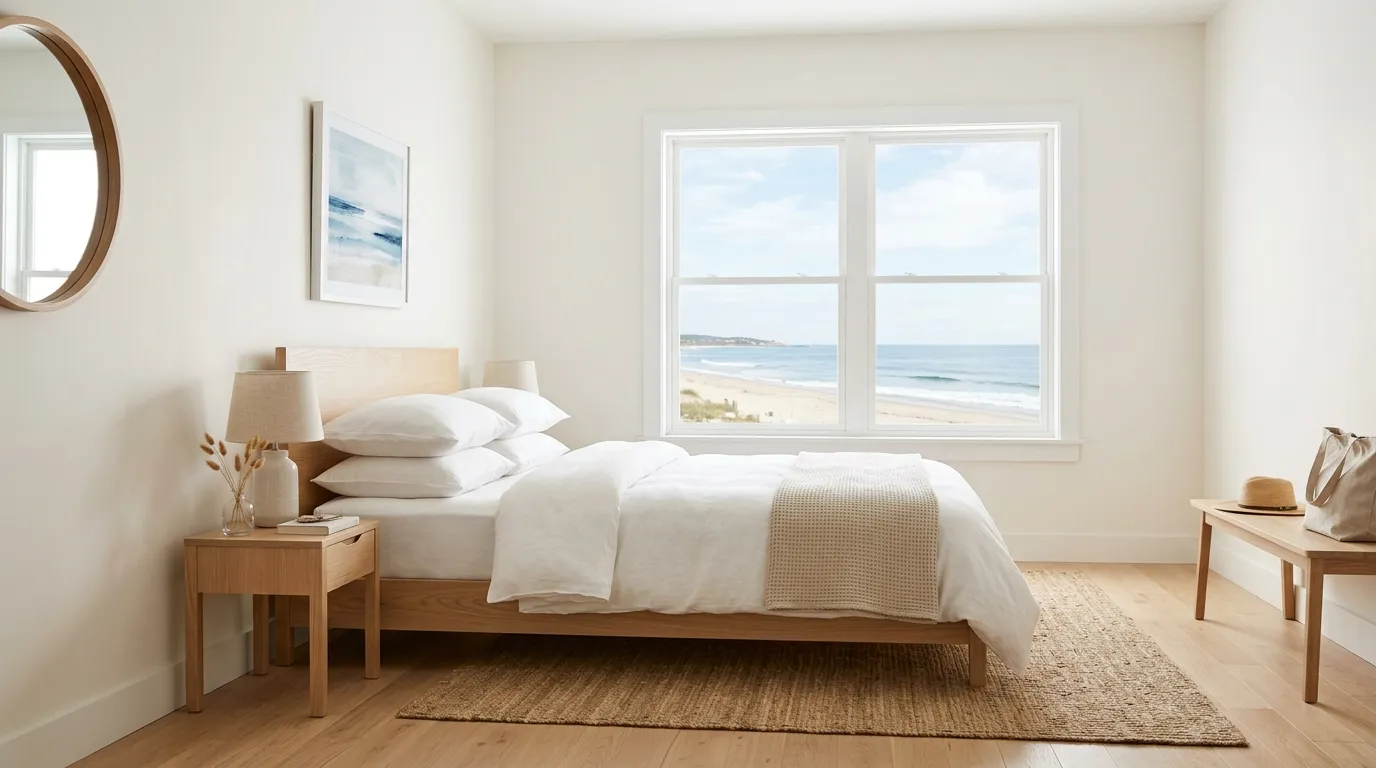
A minimal bed frame can completely change how spacious a small bedroom feels. By keeping the design low-profile and simple, it reduces visual weight and allows the room to breathe. I’ve seen this work especially well in compact spaces where bulky furniture can quickly dominate the layout. Clean lines and lighter finishes help maintain an open, balanced look that feels both modern and relaxed.
Another advantage is how easily a simple bed frame blends with different decor styles. You can layer textures, colors, or accents without the furniture competing for attention. In my experience, this creates a more flexible design that can evolve over time. Keeping the bed visually light also makes the entire room feel less crowded. The result is a practical and stylish setup that maximizes space while maintaining a calm, uncluttered atmosphere.
12. Coastal Wall Paneling
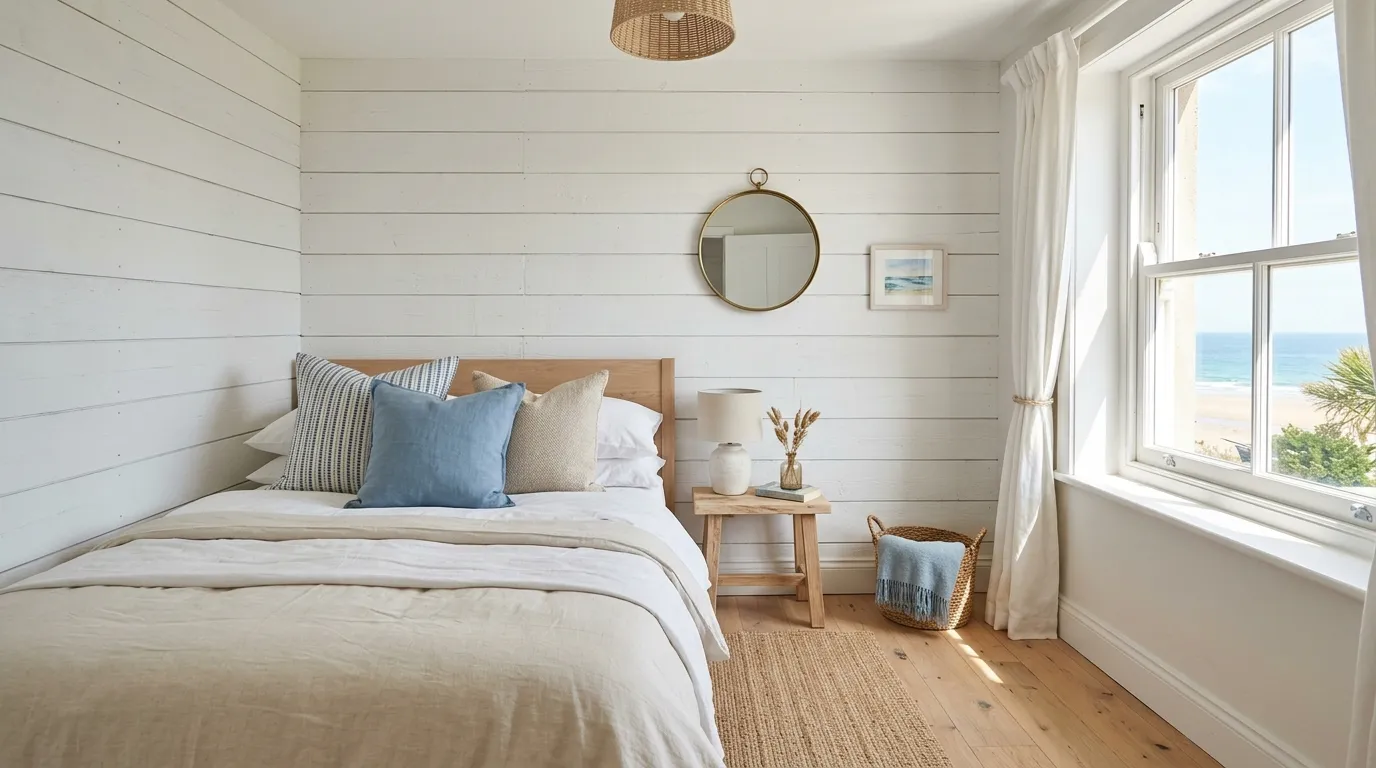
Wall paneling can instantly elevate a small bedroom by adding subtle texture without overwhelming the space. Styles like shiplap or vertical panels create visual interest while keeping the design clean and light. I’ve noticed that lighter finishes, especially white or soft neutrals, help reflect light and make the room feel larger. This is a great way to add character without relying on too many decorative items.
What makes this idea so effective is its ability to transform plain walls into a design feature. In my experience, even a single accent wall can bring depth and structure to the room. It works especially well when paired with simple furniture and soft tones. This balance keeps the space from feeling busy while still adding personality. The result is a bright, textured environment that feels polished, inviting, and perfectly suited for a relaxed coastal look.
13. Rope Detail Accents
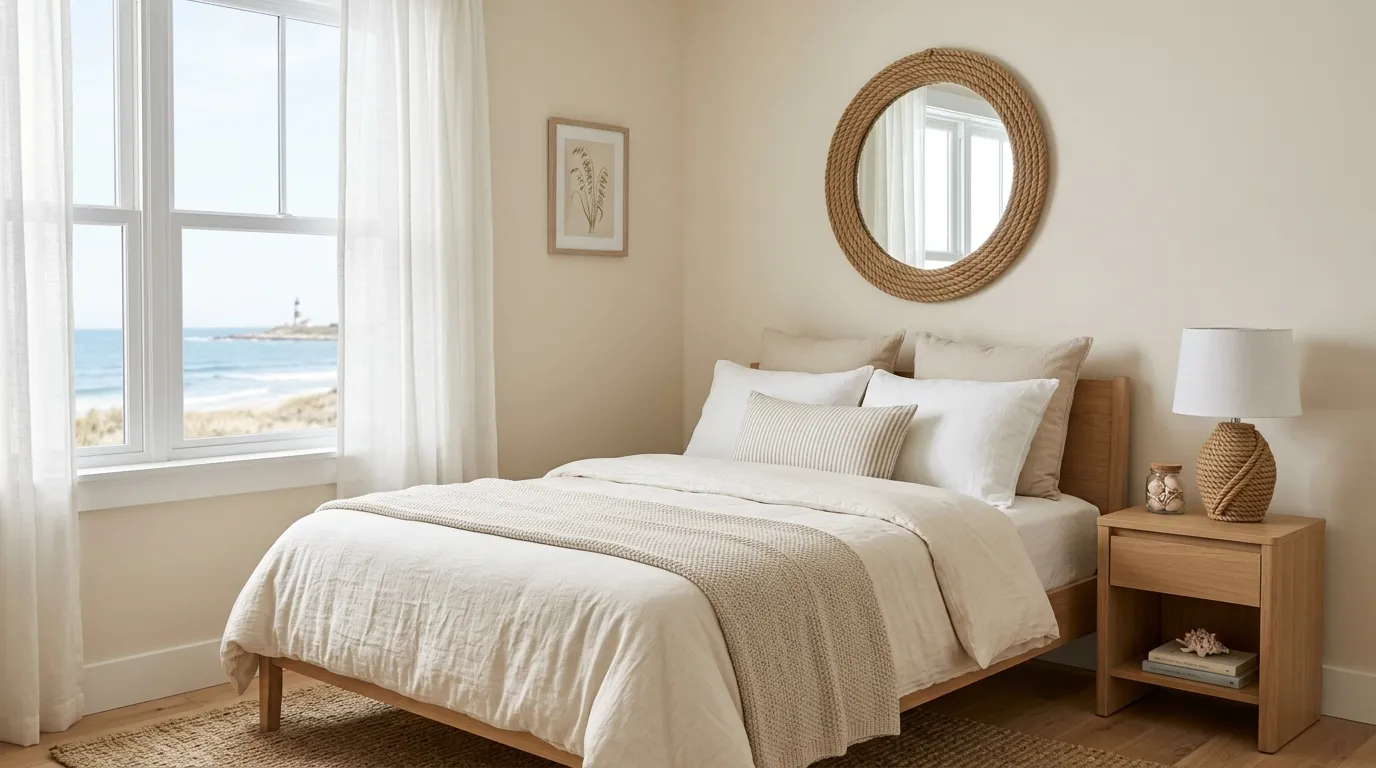
Rope details can introduce a subtle nautical touch that feels authentic without making the room look themed. Small elements like a rope-framed mirror or a lamp base can add texture and personality in a controlled way. I’ve noticed that these details work best in compact rooms because they don’t take up extra space but still create visual interest. They quietly reinforce a beach-inspired style while keeping the room clean and balanced.
The key is to use rope accents sparingly so they feel intentional rather than overwhelming. In my experience, one or two well-placed pieces are enough to create impact. Pairing them with soft fabrics and light tones keeps the look cohesive and relaxed. This approach helps maintain simplicity while still adding a unique design element. The result is a thoughtfully styled space that feels warm, detailed, and naturally connected to a coastal aesthetic.
14. Glass Decor Elements
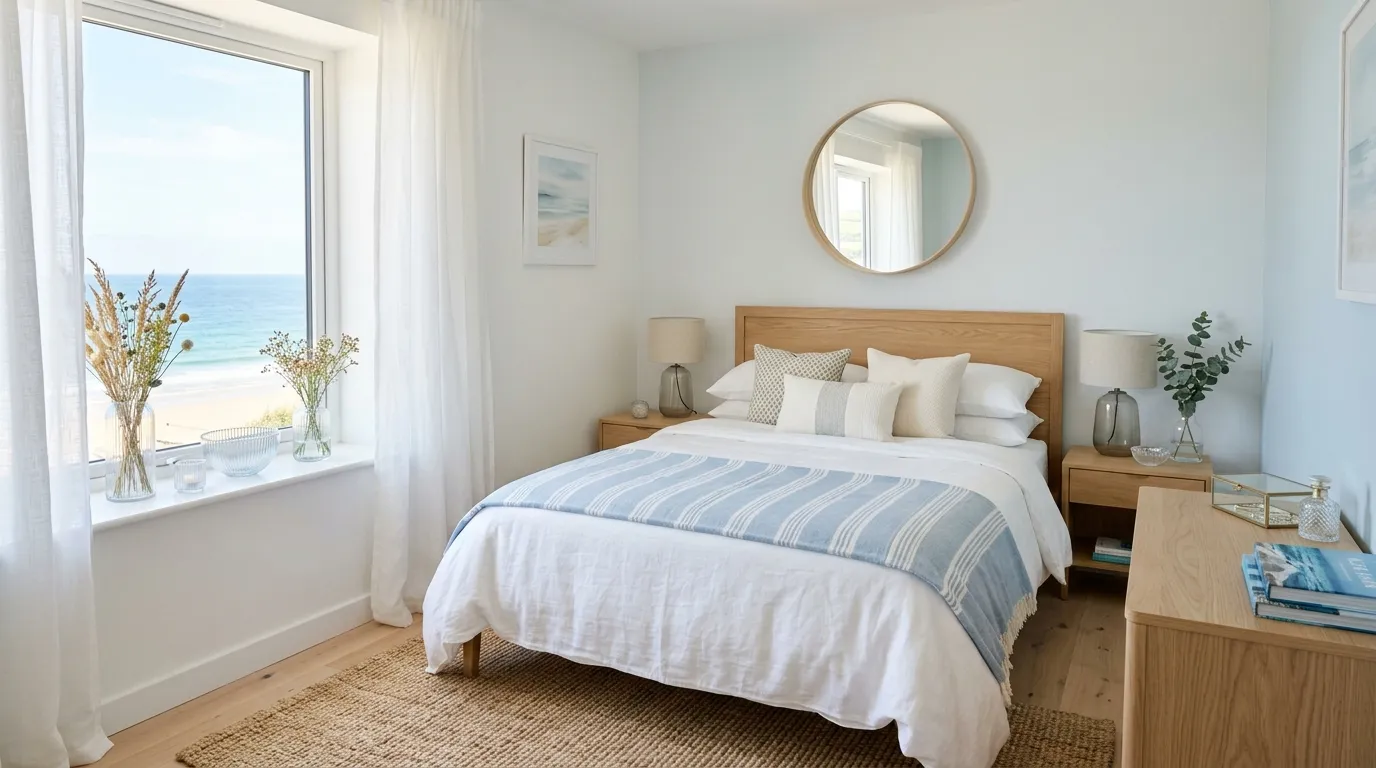
Glass decor is a simple yet effective way to enhance brightness in a small bedroom. Because it reflects light instead of absorbing it, it helps create a more open and airy feel. I’ve seen this make a noticeable difference in tighter spaces where every detail impacts how the room feels. Items like glass lamps, vases, or small accents can subtly elevate the design without adding visual clutter.
Another advantage is how effortlessly glass blends with other materials and colors. It works well alongside wood, linen, and soft tones, keeping the overall look balanced. In my experience, even a few glass pieces can help break up heavier textures and make the space feel lighter. This approach is especially useful in compact rooms where maintaining openness is key. The result is a bright, clean environment that feels both elegant and easy to live in.
15. Underbed Storage Baskets
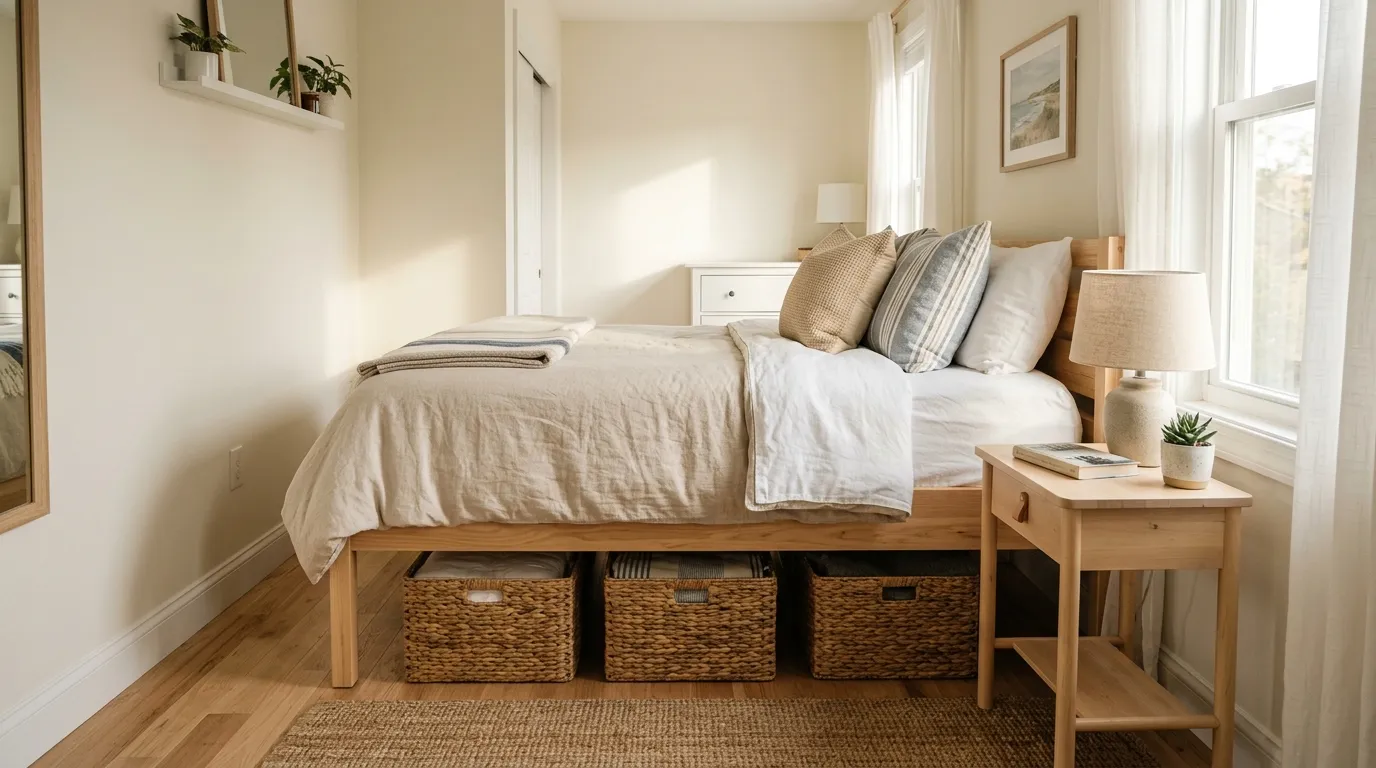
Underbed storage baskets are a practical solution that keeps a small bedroom organized without sacrificing style. By using the space beneath the bed, you can store extra linens, clothing, or essentials out of sight. I’ve noticed that this makes a huge difference in maintaining a clean and uncluttered environment, especially in compact rooms where storage is limited. It’s a simple change that improves both function and appearance.
The key is choosing baskets that match the room’s overall aesthetic, such as woven or natural materials. In my experience, this keeps storage from feeling purely functional and instead turns it into part of the design. Keeping everything neatly tucked away also makes the space feel more open and calm. This approach helps you stay organized while still maintaining a cohesive, visually pleasing bedroom that feels both practical and thoughtfully styled.
16. Soft Layered Rugs
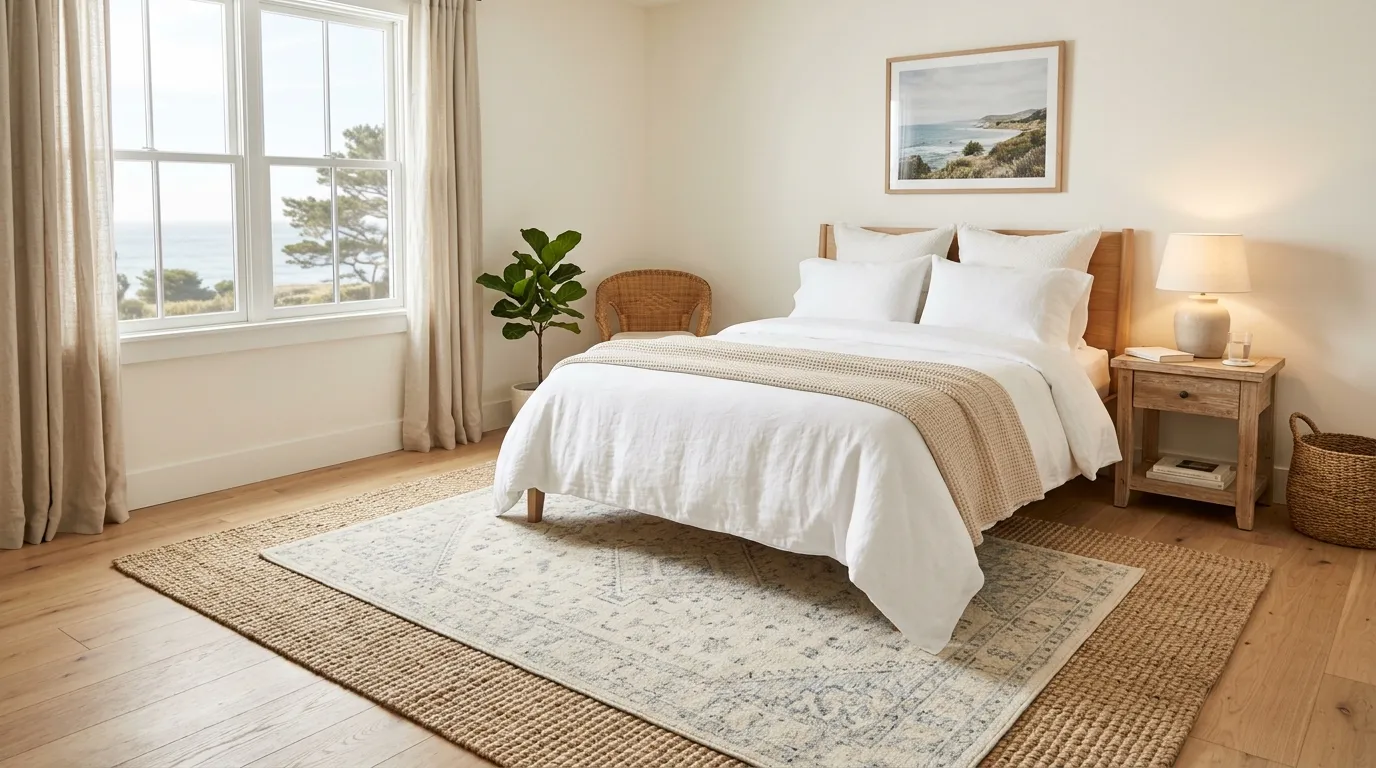
Layered rugs can instantly make a small bedroom feel more comfortable and visually complete. Starting with a neutral base like jute and adding a softer rug on top creates depth without overwhelming the floor. I’ve noticed this works especially well in compact rooms where large furniture isn’t an option for adding dimension. The layered look draws the eye while keeping everything grounded and cohesive.
The key is to keep colors soft and patterns subtle so the space doesn’t feel busy. In my experience, sticking to neutral tones or light coastal-inspired designs maintains that airy feel. This approach also allows you to experiment with textures without committing to bold changes. The result is a cozy, well-balanced space that feels thoughtfully styled while still being practical and easy to maintain.
17. Open Nightstand Design
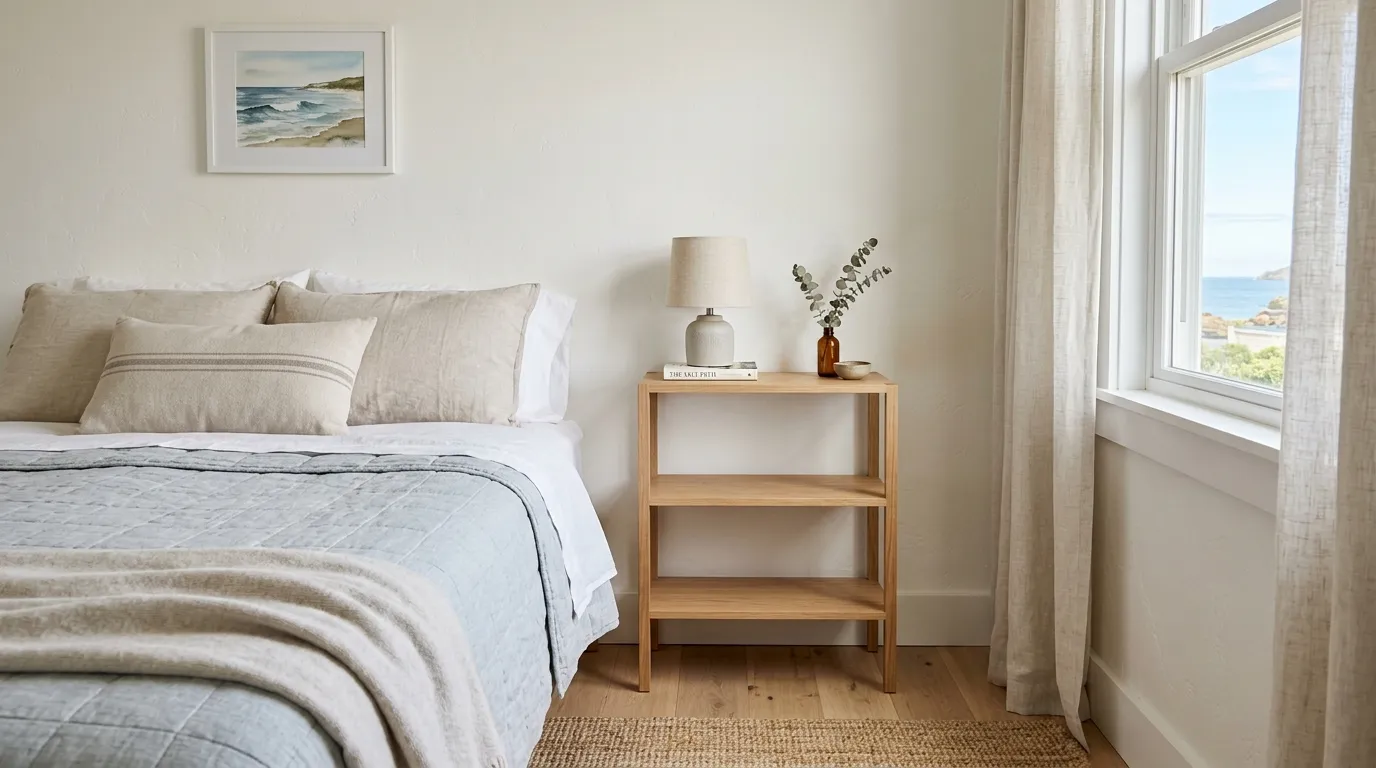
An open nightstand design helps maintain a light and breathable look in a small bedroom. Unlike bulky cabinets, it offers function without adding visual weight. I’ve seen this make a noticeable difference in compact spaces where every piece of furniture matters. The open structure allows light to pass through, making the room feel less crowded and more balanced overall.
Styling is also much easier with an open design because it encourages simplicity. In my experience, keeping just a few essentials like a lamp and a book prevents clutter from building up. This approach keeps the space practical while still looking clean and intentional. The result is a functional setup that supports daily use while maintaining an airy, relaxed aesthetic that fits perfectly in smaller rooms.
18. Seashell Decor Touches
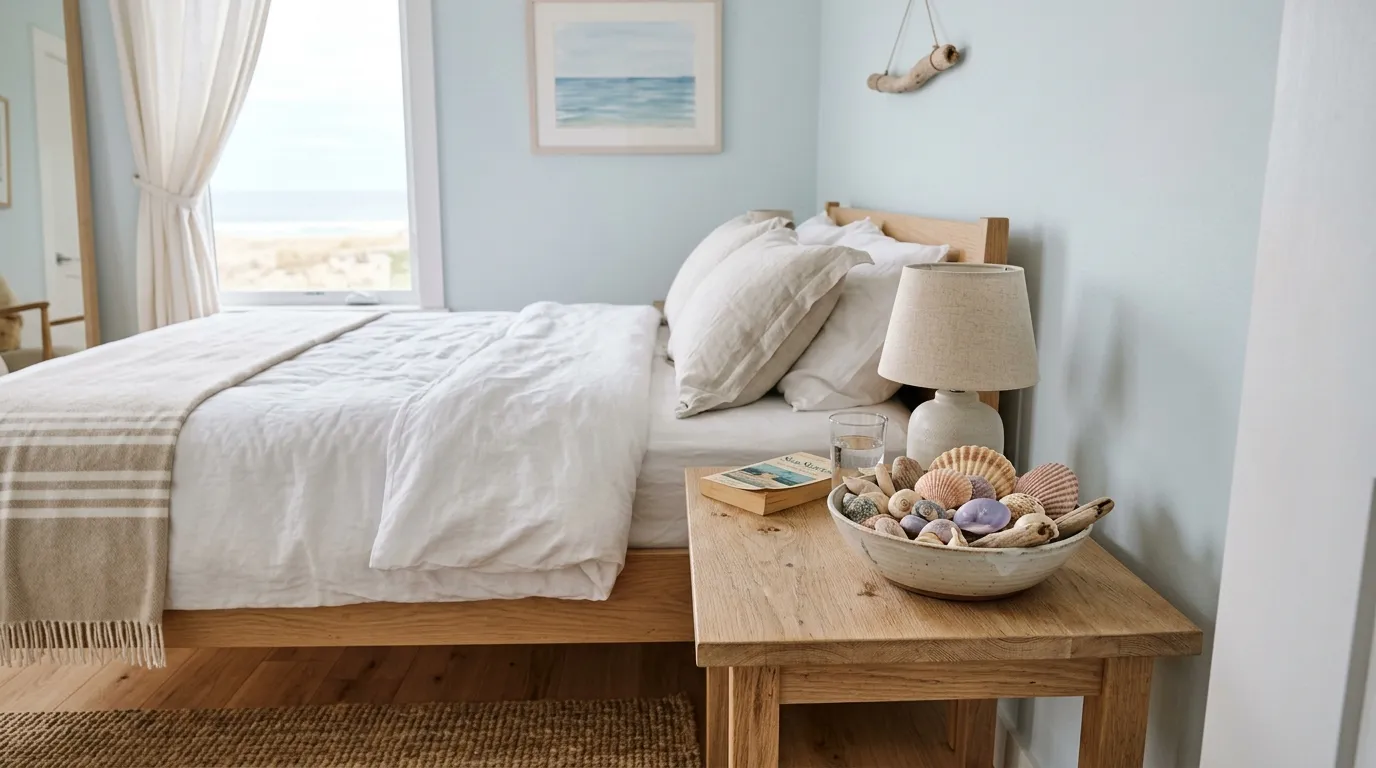
Seashell decor can bring a gentle coastal touch into a bedroom without making it feel overly themed. Small accents like a bowl of shells or framed pieces add charm while keeping the space simple. I’ve noticed that using these details sparingly works best, especially in smaller rooms where too many decorative items can feel cluttered. A few well-placed pieces can create a subtle connection to the seaside without overpowering the design.
The beauty of this idea is how easy it is to personalize and adjust over time. In my experience, rotating or rearranging small decor keeps the space feeling fresh without major changes. Pairing seashell accents with neutral tones and natural textures helps maintain balance. This approach ensures the room stays calm and cohesive while still reflecting a relaxed, beach-inspired style that feels light, personal, and inviting.
19. Slim Vertical Mirror
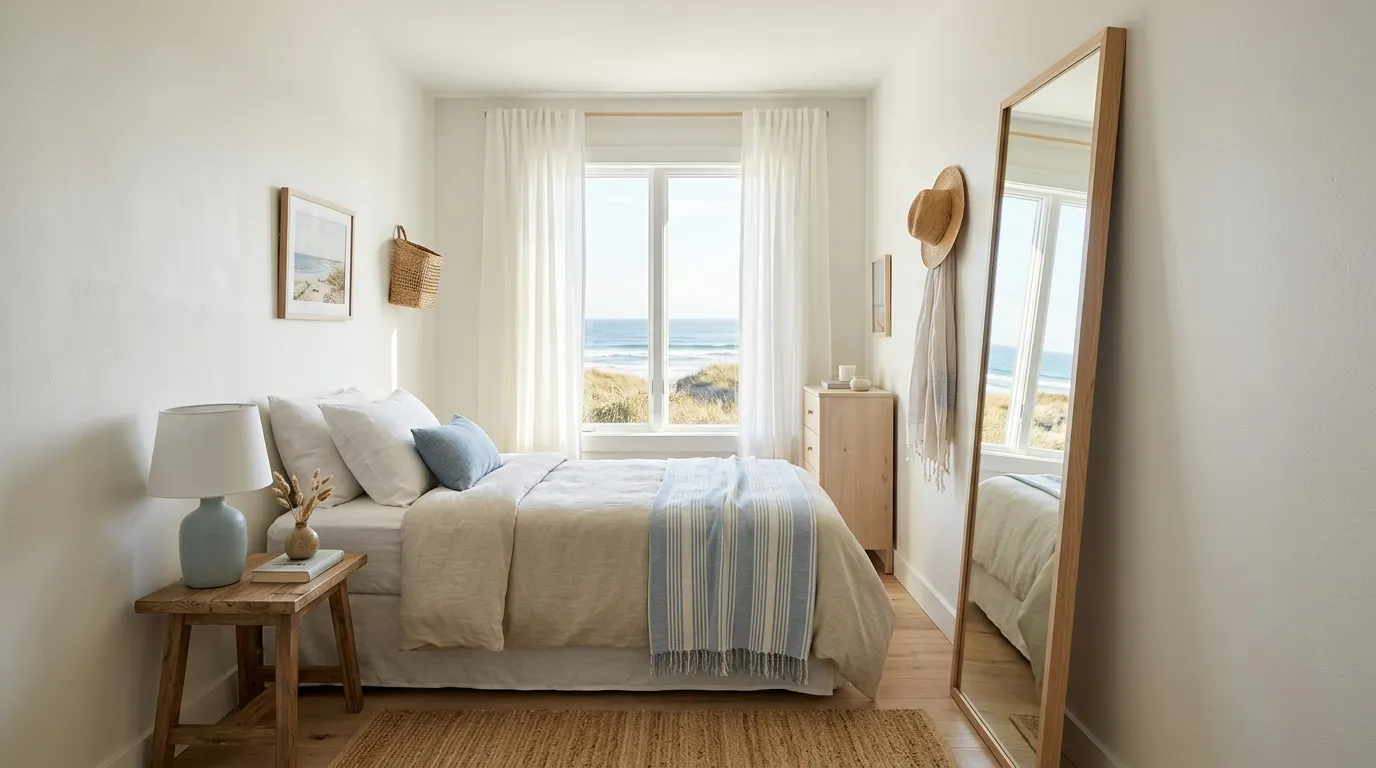
A slim vertical mirror is one of the easiest ways to make a small bedroom feel bigger without changing the layout. By reflecting light and surrounding elements, it visually expands the room and adds depth. I’ve noticed that placing it near a window works especially well, as it bounces natural light throughout the space. This simple addition can make even the tightest areas feel more open and breathable.
The design stays clean and functional when you choose a minimal frame in light wood or neutral tones. In my experience, leaning the mirror against the wall instead of mounting it creates a more relaxed, effortless look. This also allows flexibility if you want to reposition it later. The result is a brighter, more spacious-feeling bedroom that feels thoughtfully styled without adding clutter or complexity.
20. Coastal Color Blocking
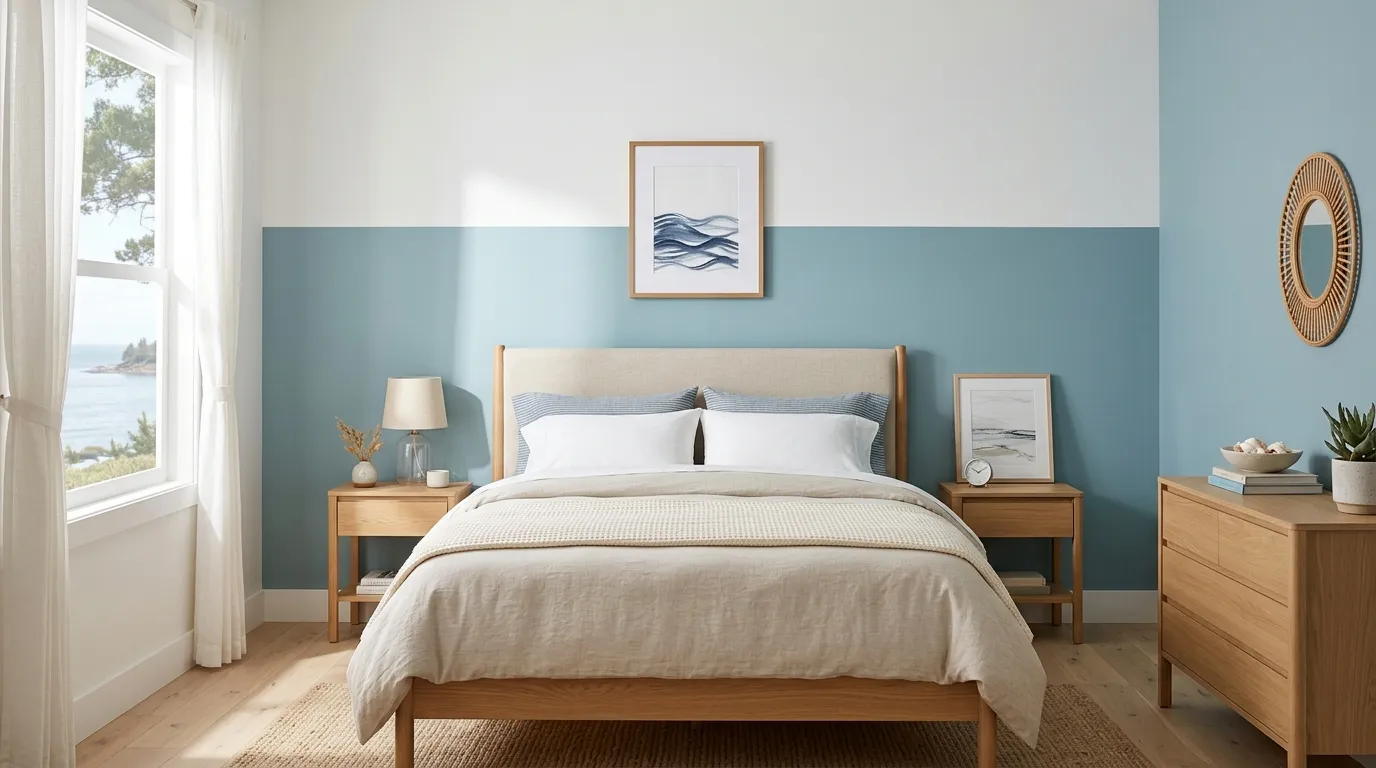
Coastal color blocking is a creative way to add depth and style to a small bedroom without relying on extra furniture or decor. Using soft tones like white and muted blue in defined sections can make the space feel more structured and intentional. I’ve seen this work well in compact rooms where walls become a key design feature. It adds personality while still keeping the overall look light and uncluttered.
The key is to keep the contrast subtle and balanced so it doesn’t overwhelm the space. In my experience, clean lines and soft transitions create a more polished result. This approach allows you to experiment with color while maintaining a calm, cohesive feel. The final effect is a visually interesting room that feels modern, airy, and perfectly suited for a relaxed coastal-inspired atmosphere.
21. Low Profile Lighting
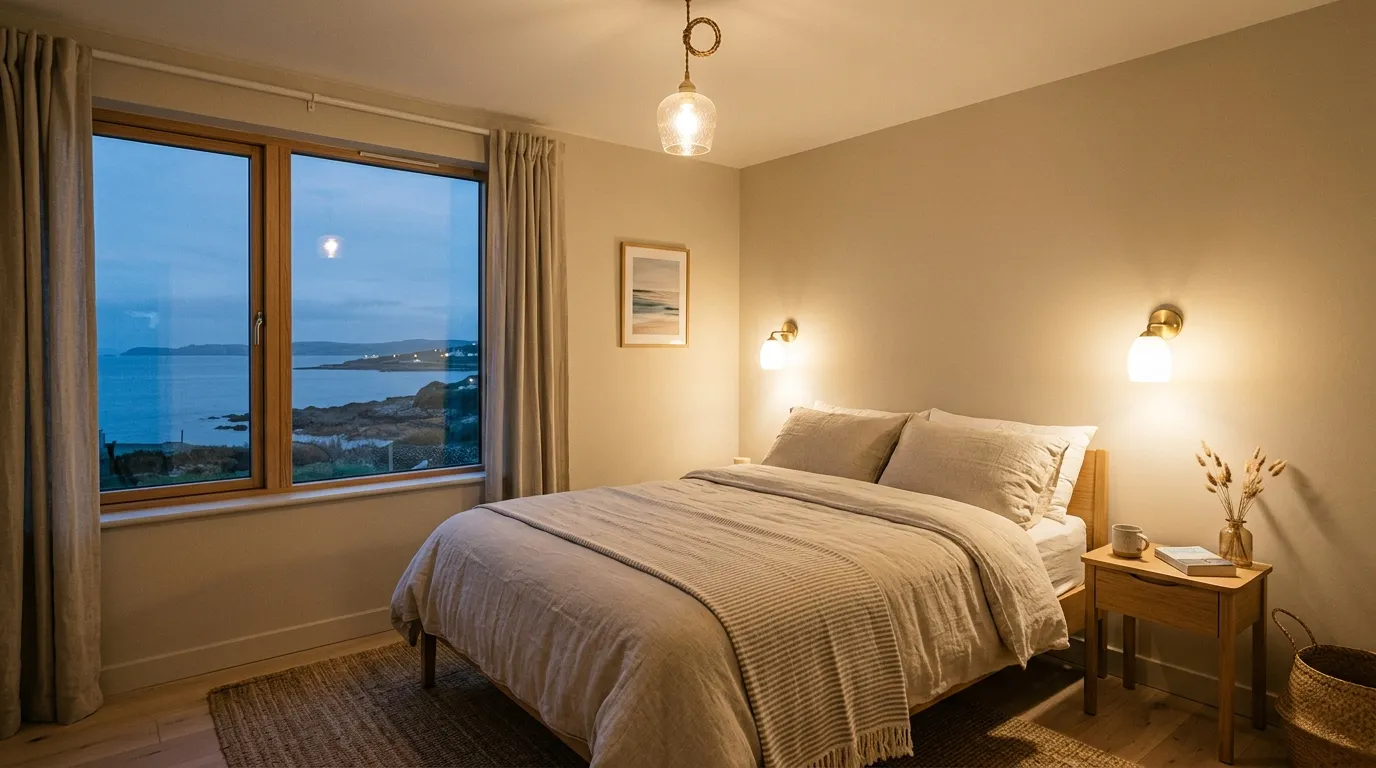
Low profile lighting is a smart choice for small bedrooms where space is limited and every surface counts. Wall-mounted lamps or compact fixtures free up bedside space while still providing enough light for daily use. I’ve noticed that this setup makes the room feel less crowded and more organized. It also creates a softer, more ambient glow that enhances the overall atmosphere, especially in the evening.
Choosing simple designs in neutral or natural finishes helps maintain a cohesive look. In my experience, warm lighting works best to create a cozy, inviting feel without being too harsh. This approach balances function and style while keeping the room visually light. The result is a well-lit space that feels calm, practical, and perfectly suited for relaxing at the end of the day.
22. Breezy Canopy Fabric
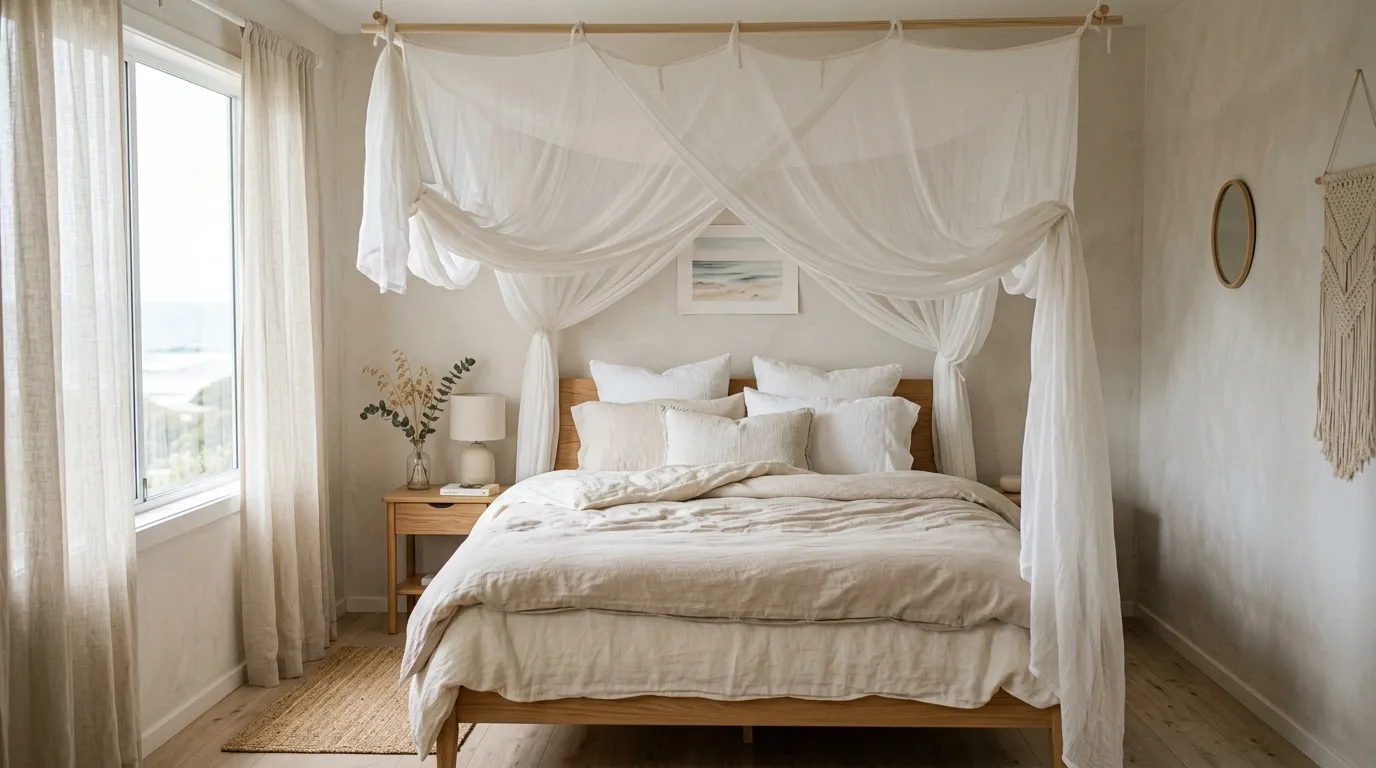
A breezy canopy fabric can completely transform how a small bedroom feels by adding softness and gentle movement. Instead of heavy drapes, light sheer fabric keeps the space open while still creating a cozy, defined sleeping area. I’ve noticed this works especially well in compact rooms where you want comfort without adding bulk. The way the fabric catches natural light adds a dreamy quality that instantly elevates the atmosphere.
The key is to keep the fabric light, neutral, and loosely styled so it doesn’t overwhelm the room. In my experience, simple draping over a minimal frame or ceiling hook works best. This approach adds visual interest without complicating the layout. The result is a calm, inviting space that feels both intimate and airy, making it a perfect finishing touch for a relaxed, coastal-inspired bedroom design.
23. Minimal Coastal Styling
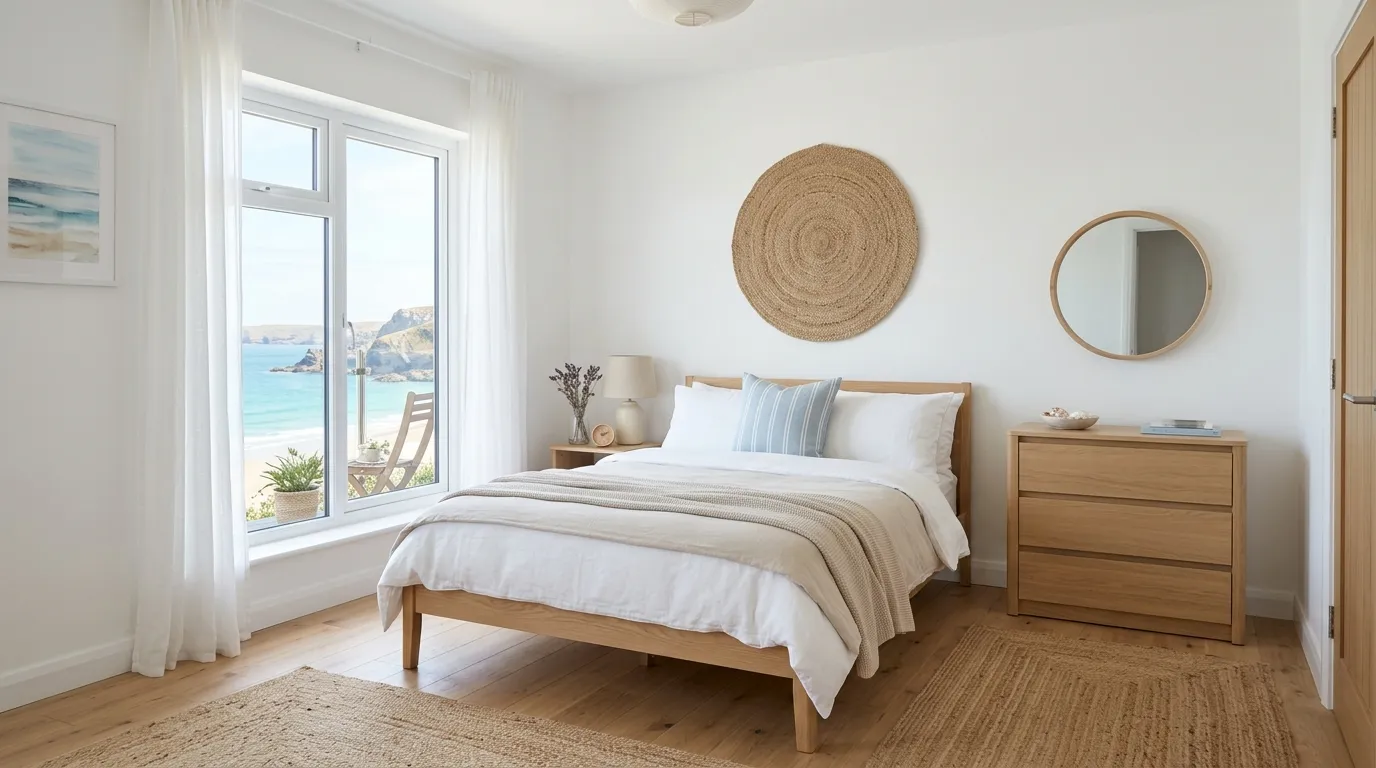
Minimal coastal styling is all about keeping only what truly adds value to the space. By limiting decor and focusing on a few meaningful elements, a small bedroom can feel much larger and more peaceful. I’ve seen this approach work especially well in tight layouts where too many items quickly create clutter. Clean surfaces and simple styling allow the room to breathe while still maintaining a clear design direction.
In my experience, choosing a few well-coordinated pieces instead of filling every corner creates a more refined look. That’s why many designers recommend editing decor regularly to maintain balance. This approach works beautifully in coastal bedrooms, where the goal is to feel relaxed and effortless. The result is a clean, calming environment that feels intentional, easy to maintain, and perfectly aligned with a light, breezy lifestyle.
Conclusion
Creating a beautiful, relaxing space doesn’t require a large room—just thoughtful design choices that work together. These ideas show how small updates can completely shift the look and feel of your space, making it brighter, calmer, and more functional. I’ve seen how simple changes like light colors, natural textures, and smart layouts can truly transform a room.
If you’re inspired, start with just one or two ideas and build from there. Save this guide to Pinterest so you can come back anytime, and share it with anyone looking to refresh their coastal bedrooms. Your dream space might be smaller than you think—but it’s absolutely possible to create.
FAQs
1. How do I make a small coastal-style bedroom look bigger?
Focus on light colors, minimal furniture, and reflective elements like mirrors or glass decor. I’ve noticed that soft blues, whites, and neutrals help bounce light around the room, making it feel more open. Keeping surfaces uncluttered and using vertical storage also creates a more spacious look without needing extra square footage.
2. What colors work best for a beach-inspired bedroom?
Soft blues, sandy beige tones, crisp whites, and light grays work beautifully together. These colors reflect natural seaside elements and create a calming atmosphere. In my experience, sticking to a consistent palette prevents the room from feeling busy, which is especially important in smaller spaces.
3. Can I create a coastal look on a budget?
Yes, absolutely. You don’t need a full makeover to achieve this style. Simple changes like switching to light bedding, adding woven baskets, or using sheer curtains can make a big difference. I’ve tried this approach, and even small, affordable updates can completely refresh the feel of a room.
4. How do I avoid making the room feel cluttered?
Keep decor minimal and intentional. Choose a few key pieces instead of filling every corner. That’s why many designers recommend focusing on quality over quantity. In smaller rooms, every item should serve a purpose or add clear visual value.
5. What furniture works best in a small coastal bedroom?
Opt for light wood, low-profile, and multi-functional furniture. Pieces like open nightstands or beds with storage underneath help save space while maintaining a clean look. I’ve seen this work well in many homes where maximizing function without sacrificing style is essential.
6. How can I add texture without overwhelming the space?
Use natural materials like linen, jute, or rattan in small amounts. Layering textures through rugs, pillows, or decor adds depth while keeping the design soft and balanced. In my experience, subtle layering works better than bold, heavy textures in compact rooms.
7. Is wall decor necessary in a small bedroom?
Not always, but a few well-chosen pieces can enhance the space. Simple artwork or a mirror can create a focal point without making the room feel crowded. The key is to keep it minimal and aligned with the overall theme for a clean, cohesive look.