Introduction
Dreaming of a calm, clutter-free minimalist bedroom that instantly feels peaceful and refreshing? You’re not alone—and the good news is, it’s easier than you think. A thoughtfully designed space can completely change how you relax, sleep, and recharge every day.
This article brings you simple yet powerful ideas to help you create a clean, organized, and visually calming bedroom without feeling overwhelmed. Whether you’re working with a small room or just tired of constant mess, these ideas focus on practical changes that actually work in real homes. In my experience, even a few intentional updates can shift the entire mood of a space.
You’ll discover smart ways to simplify your layout, reduce visual clutter, and create a room that feels open, cozy, and effortlessly stylish. Each idea is designed to inspire you visually while also being easy to apply, so you can start transforming your space step by step.
1. Neutral Color Palette
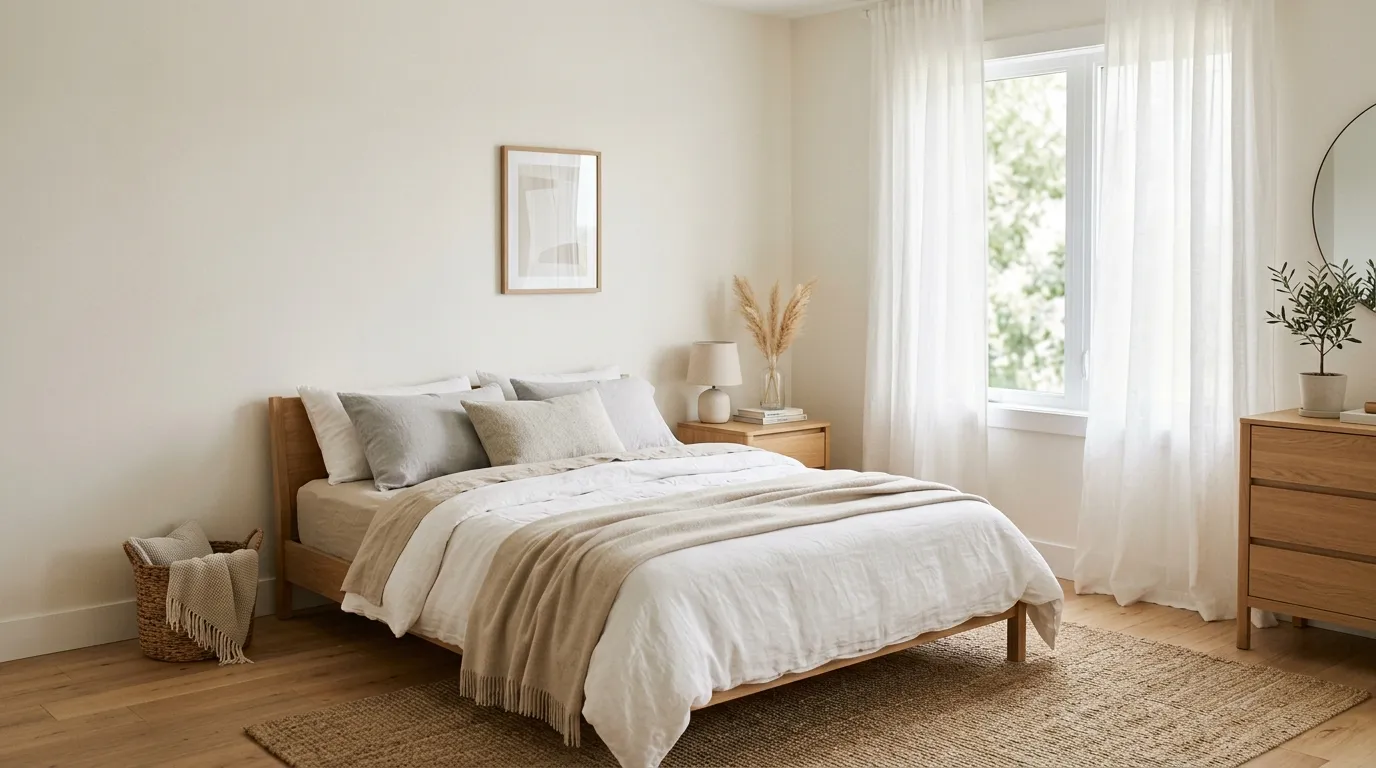
A soft, neutral color palette instantly transforms the feel of a bedroom into something calm and breathable. Shades like white, beige, and light gray reflect light beautifully, making even smaller spaces feel open and airy. This approach removes harsh contrasts and visual clutter, allowing your eyes to relax the moment you walk in. In my experience, switching to softer tones often makes a noticeable difference in how peaceful the room feels, especially after a long day when your mind needs quiet.
Beyond aesthetics, neutral tones are incredibly practical for a clutter-free lifestyle. They create a consistent visual base, which makes it easier to manage decor and avoid overcomplicating the space. A well-balanced palette supports a clean and organized environment without requiring constant effort. That’s why many designers recommend starting with a neutral foundation when creating a minimalist bedroom, as it naturally guides better design choices and prevents unnecessary additions over time.
2. Low Platform Bed
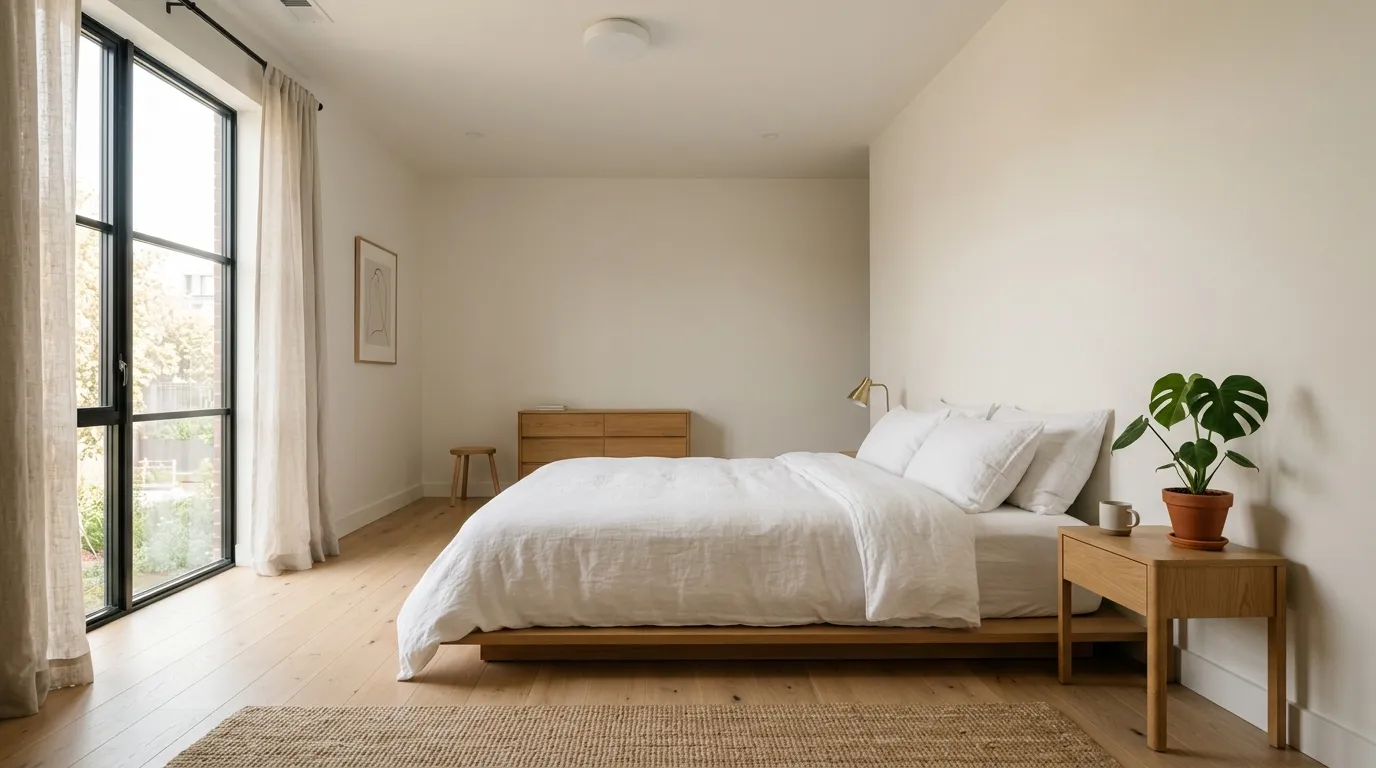
A low platform bed changes the entire visual balance of a room by bringing everything closer to the ground. This simple shift makes ceilings appear higher and creates a more open, breathable layout. Without bulky bed frames or heavy headboards, the space instantly feels less crowded. I’ve noticed that rooms with lower furniture naturally appear more organized, even when very few elements are present, which is perfect for anyone aiming for a clutter-free setup.
Functionally, this type of bed supports simplicity and ease of maintenance. With fewer structural details, there are fewer places for dust and clutter to collect. It also encourages intentional design, where every piece in the room has a clear purpose. That’s why a low platform bed is often a key feature in a minimalist bedroom, helping maintain both visual clarity and everyday practicality without sacrificing comfort or style.
3. Hidden Storage Solutions
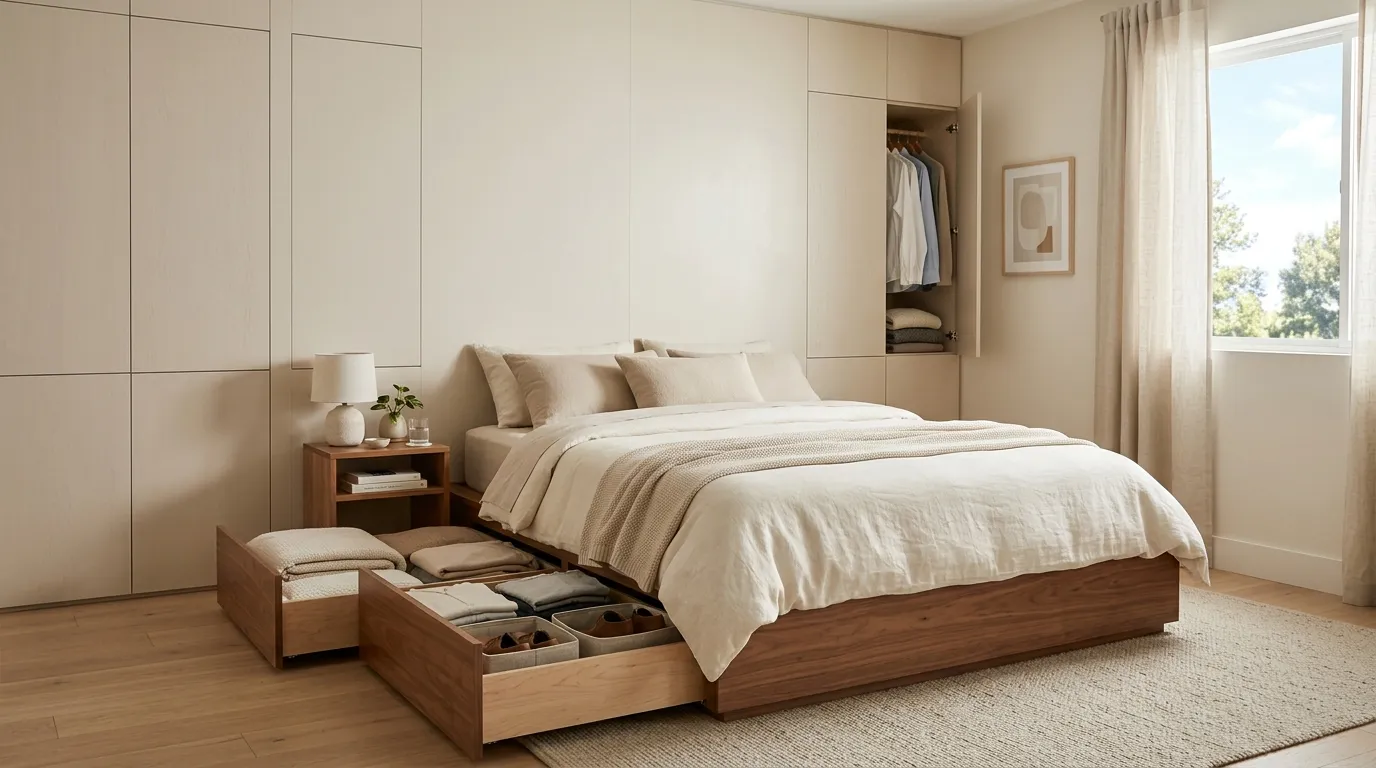
Hidden storage is one of the smartest ways to maintain a clean and organized bedroom without sacrificing functionality. By storing items out of sight, the room instantly feels calmer and more spacious. Built-in drawers, under-bed compartments, or concealed cabinets allow you to keep essentials nearby without adding visual noise. In my experience, even a small amount of hidden storage can dramatically reduce daily mess and make the room easier to maintain.
This approach also helps build better organization habits over time. When everything has a designated place behind closed surfaces, it becomes easier to avoid piling things up in the open. The result is a smoother, more streamlined environment that supports both relaxation and efficiency. That’s why hidden storage plays such an important role in a minimalist bedroom, allowing you to enjoy both simplicity and practicality without compromise.
4. Floating Nightstands
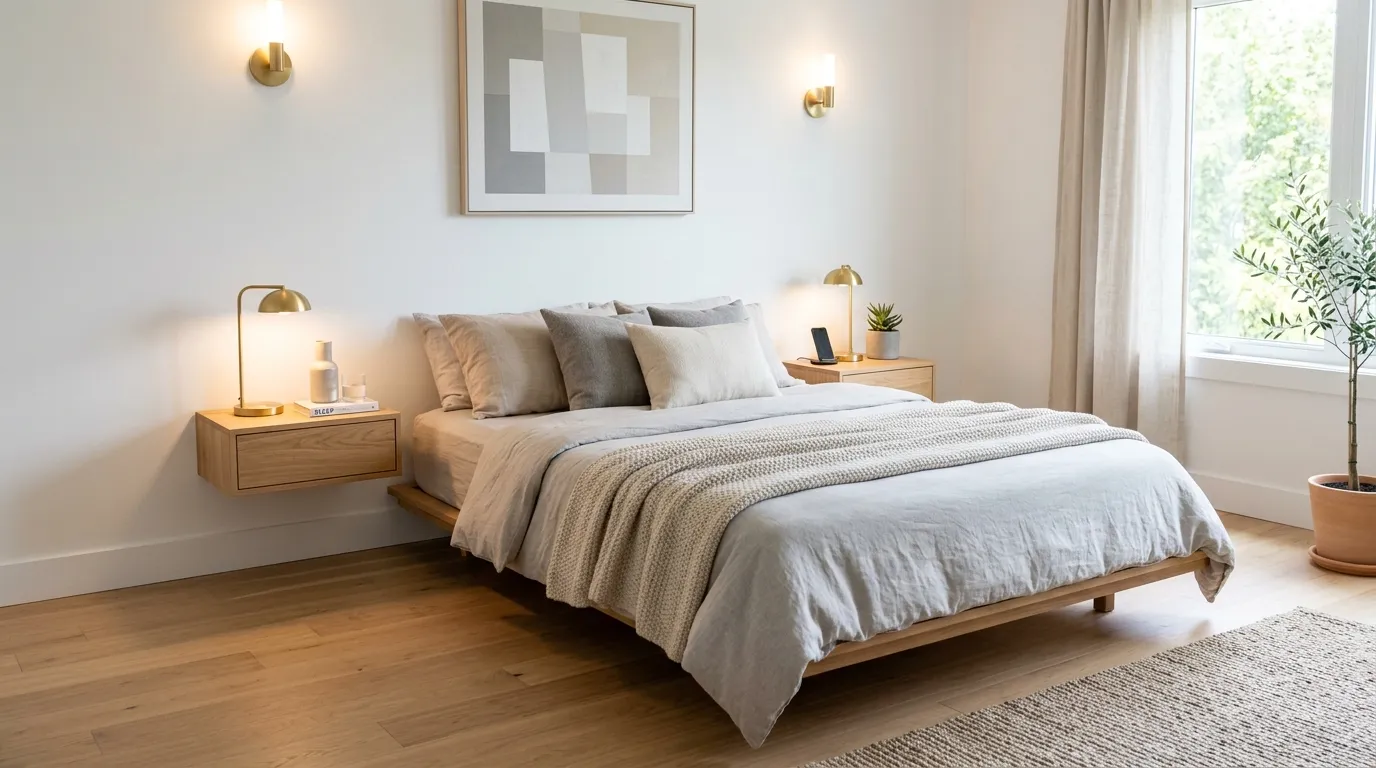
Floating nightstands instantly make a bedroom feel more spacious by freeing up valuable floor space. When the ground area stays visible and uncluttered, the entire room appears lighter and easier to navigate. This small change can have a surprisingly big visual impact, especially in compact spaces. I’ve noticed that even replacing bulky side tables with wall-mounted ones can make a room feel more intentional and less crowded.
Beyond aesthetics, floating nightstands are practical for everyday living. They encourage you to keep only the essentials nearby, which naturally reduces clutter buildup. With fewer surfaces to fill, it becomes easier to maintain a clean and organized environment. That’s why many designers recommend this setup for a minimalist bedroom, as it blends functionality with simplicity while supporting a calm and clutter-free atmosphere.
5. Under-Bed Storage Drawers
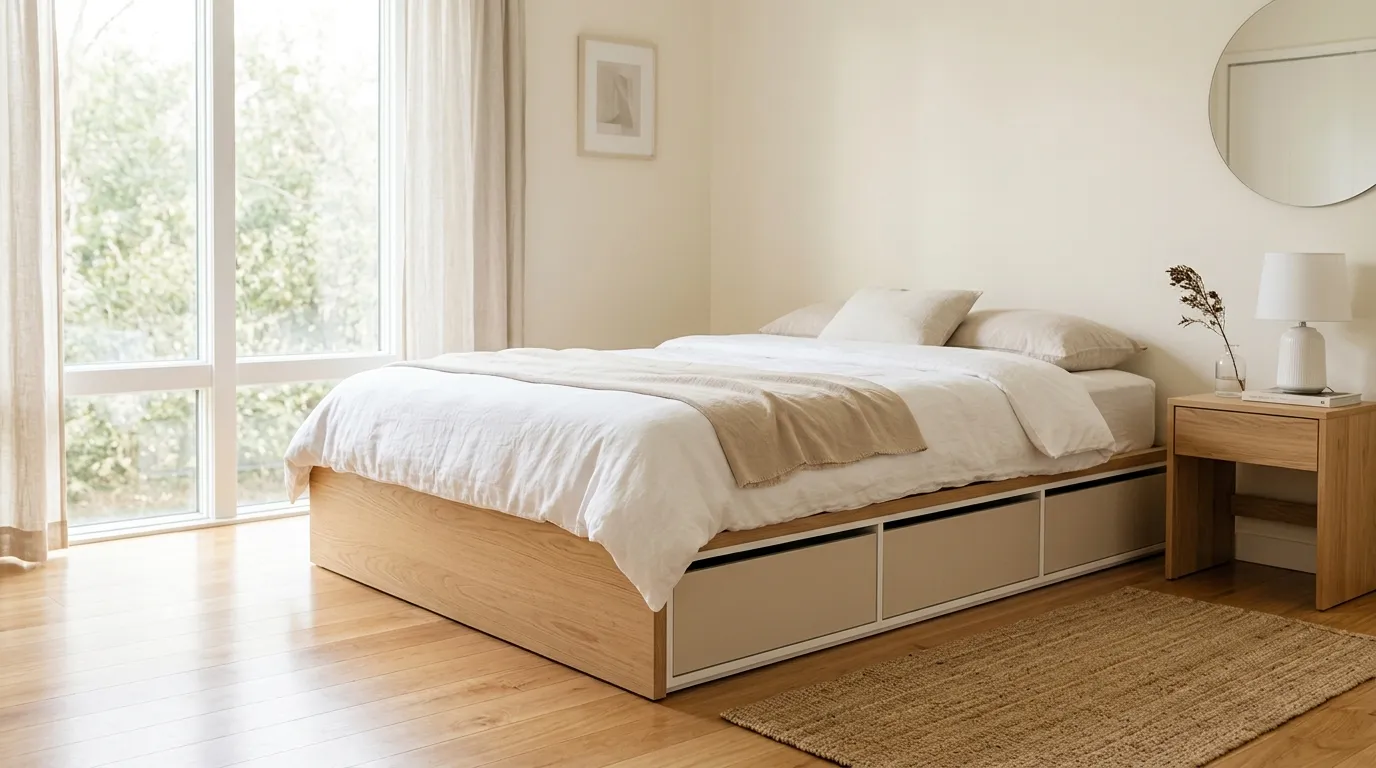
Under-bed storage drawers make use of space that often goes completely wasted. Instead of adding more cabinets or shelves, you can store seasonal clothes, bedding, or less-used items right beneath your bed. This approach keeps everything accessible while maintaining a clean and uncluttered appearance. In my experience, using this hidden space effectively can significantly reduce the need for extra furniture in the room.
This solution also supports a more streamlined layout by minimizing visible storage units. When fewer items are out in the open, the room naturally feels calmer and more organized. It becomes easier to maintain a tidy environment without constant effort. That’s why under-bed storage works so well in a minimalist bedroom, helping you balance practicality with a clean and visually relaxing design.
6. Simple Bedding Layers
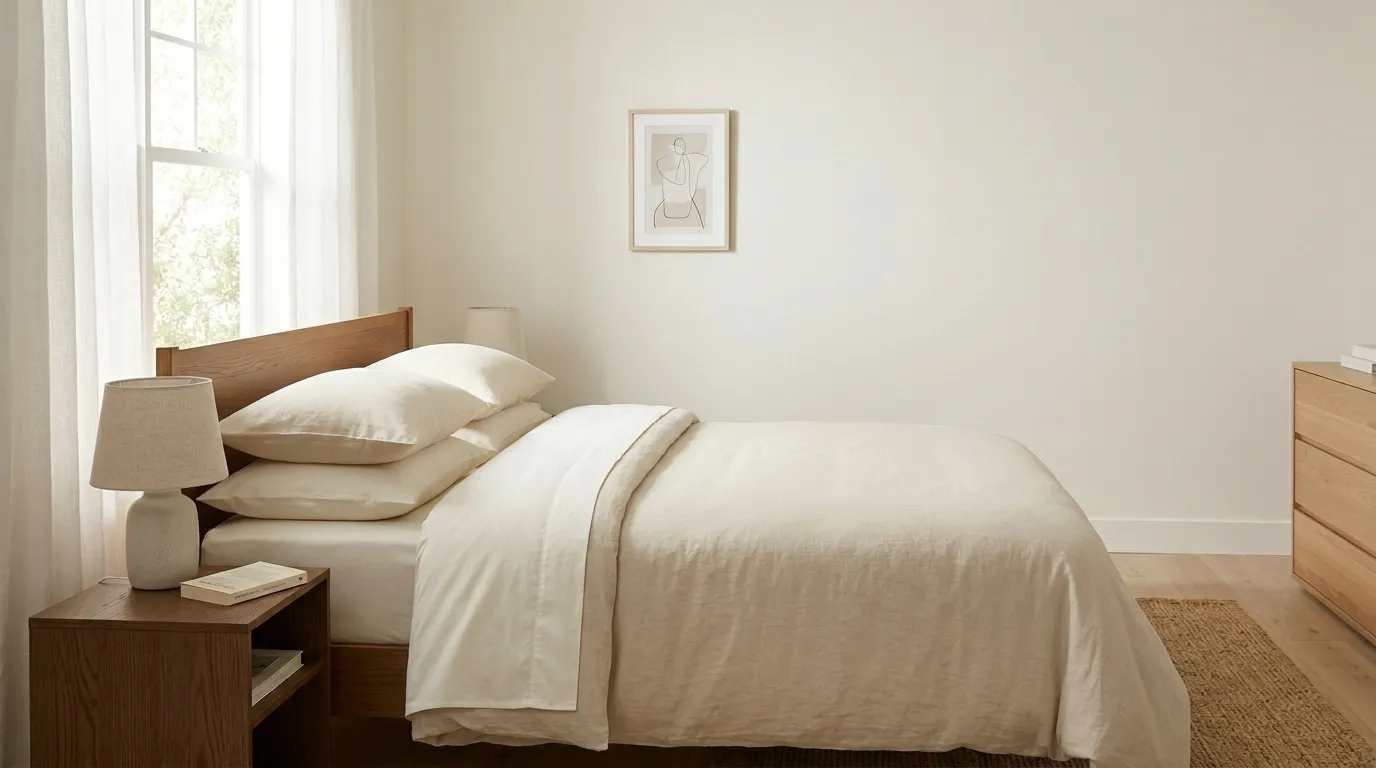
Simple bedding layers can completely change how a bedroom feels without adding unnecessary bulk. Using a few well-chosen pieces, like soft sheets, a light duvet, and minimal pillows, keeps the bed looking clean and inviting. This approach avoids the heavy, over-styled look that often makes a room feel cluttered. I’ve seen that simplifying bedding not only improves the visual appeal but also makes the space feel more breathable and relaxed.
Functionally, fewer layers mean less effort in daily upkeep. Making the bed becomes quicker, and maintaining a neat appearance feels more manageable. It also encourages a more intentional approach to comfort, where quality matters more than quantity. This is why simple bedding works beautifully in a minimalist bedroom, helping create a cozy yet uncluttered space that feels both practical and visually soothing.
7. Decluttered Surfaces
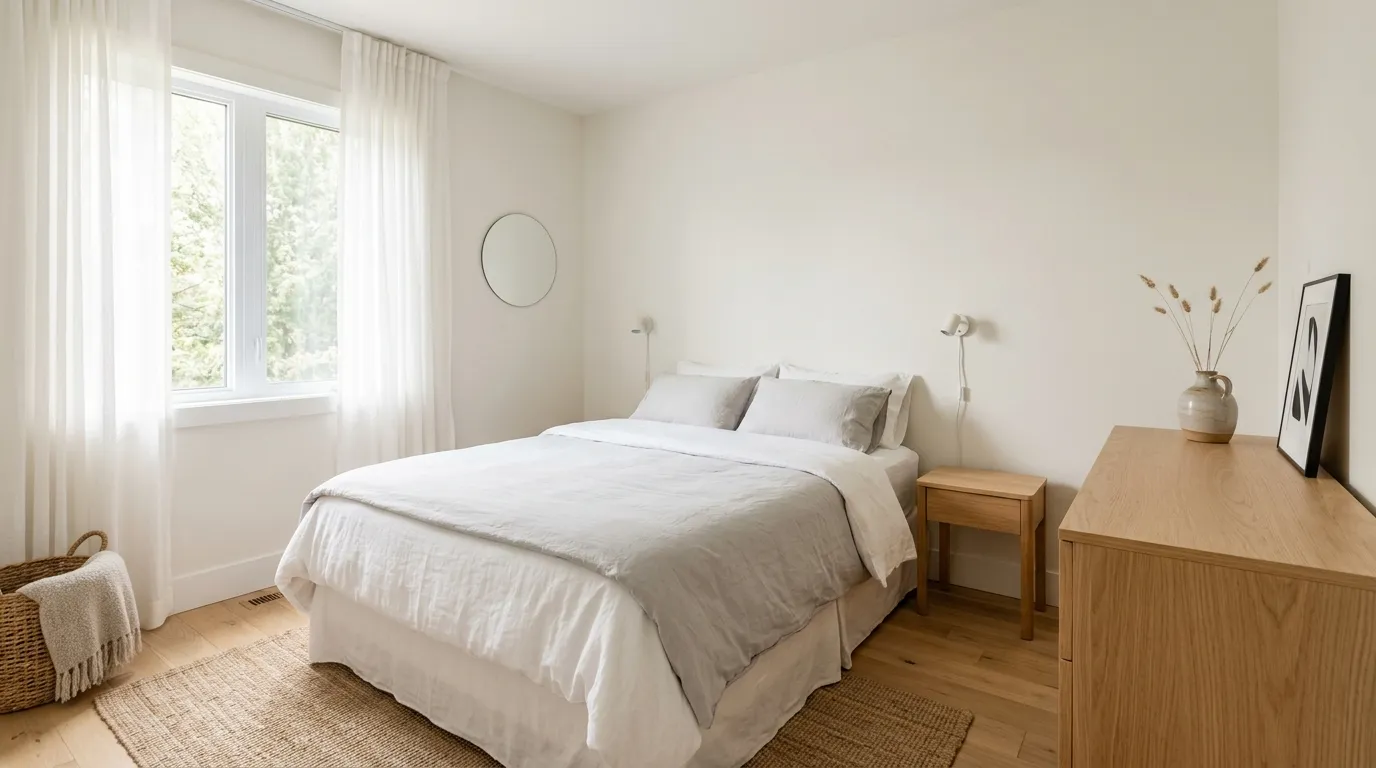
Clear, uncluttered surfaces can completely change how a bedroom feels the moment you walk in. When nightstands, dressers, and shelves are kept mostly empty, the space looks cleaner, lighter, and far more relaxing. Your eyes are not constantly jumping between objects, which creates a sense of calm. I’ve noticed that even removing just a few unnecessary items can make a room feel noticeably more peaceful and easier to enjoy.
This approach also simplifies everyday living. With fewer items sitting out, cleaning becomes quicker and maintaining order feels effortless. It naturally encourages mindful choices about what deserves to stay visible. Over time, this habit helps prevent clutter from building up again. That’s why keeping surfaces clear is such a powerful step toward creating a minimalist bedroom that feels balanced, functional, and easy to live in.
8. Soft Ambient Lighting
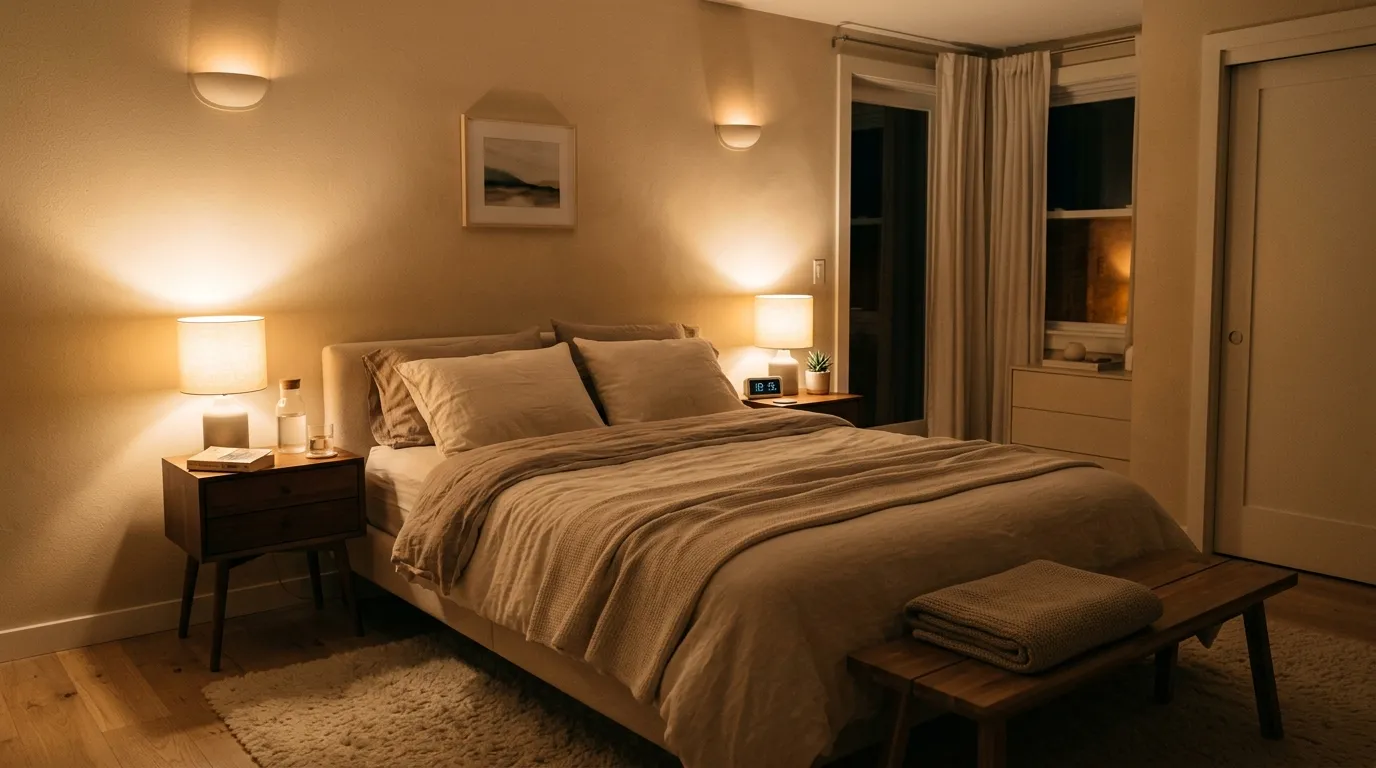
Soft ambient lighting plays a key role in shaping how a bedroom feels, especially during the evening hours. Harsh overhead lights can make a space feel cold and overwhelming, while warm, diffused lighting creates a calming and inviting atmosphere. This gentle glow helps the room feel more comfortable and restful. In my experience, switching to softer lighting instantly makes the space feel more personal and easier to unwind in after a long day.
Beyond mood, ambient lighting also improves how the room functions at night. It reduces eye strain and creates a more peaceful environment for reading or relaxing. By layering light in a subtle way, you can enhance the room’s depth without adding visual clutter. This is why soft lighting is often recommended for a minimalist bedroom, as it supports both simplicity and comfort while maintaining a clean, serene aesthetic.
9. Minimal Wall Art
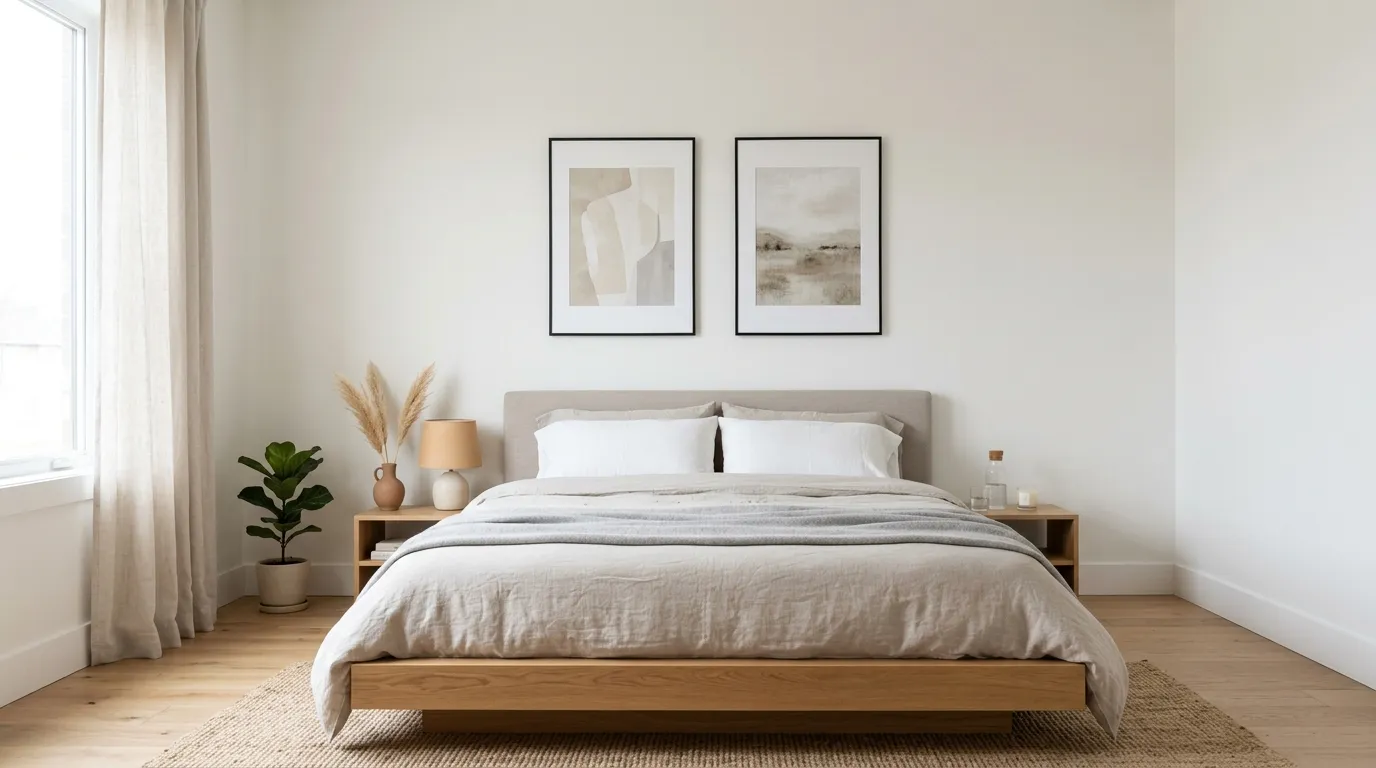
Minimal wall art allows you to add personality to your bedroom without overwhelming the space. Instead of filling every wall, choosing one or two meaningful pieces creates a more intentional and balanced look. This approach keeps the room feeling open while still adding visual interest. I’ve seen this work well in many homes, where a single well-placed artwork becomes a focal point without creating unnecessary distraction.
It also makes decorating more flexible and manageable. With fewer pieces to arrange, it’s easier to maintain a clean and cohesive style over time. You can update or switch artwork without disrupting the entire room. This simplicity supports a clutter-free environment while still allowing for personal expression. That’s why minimal wall art fits perfectly into a minimalist bedroom, offering both style and restraint in a thoughtful way.
10. Built-In Wardrobes
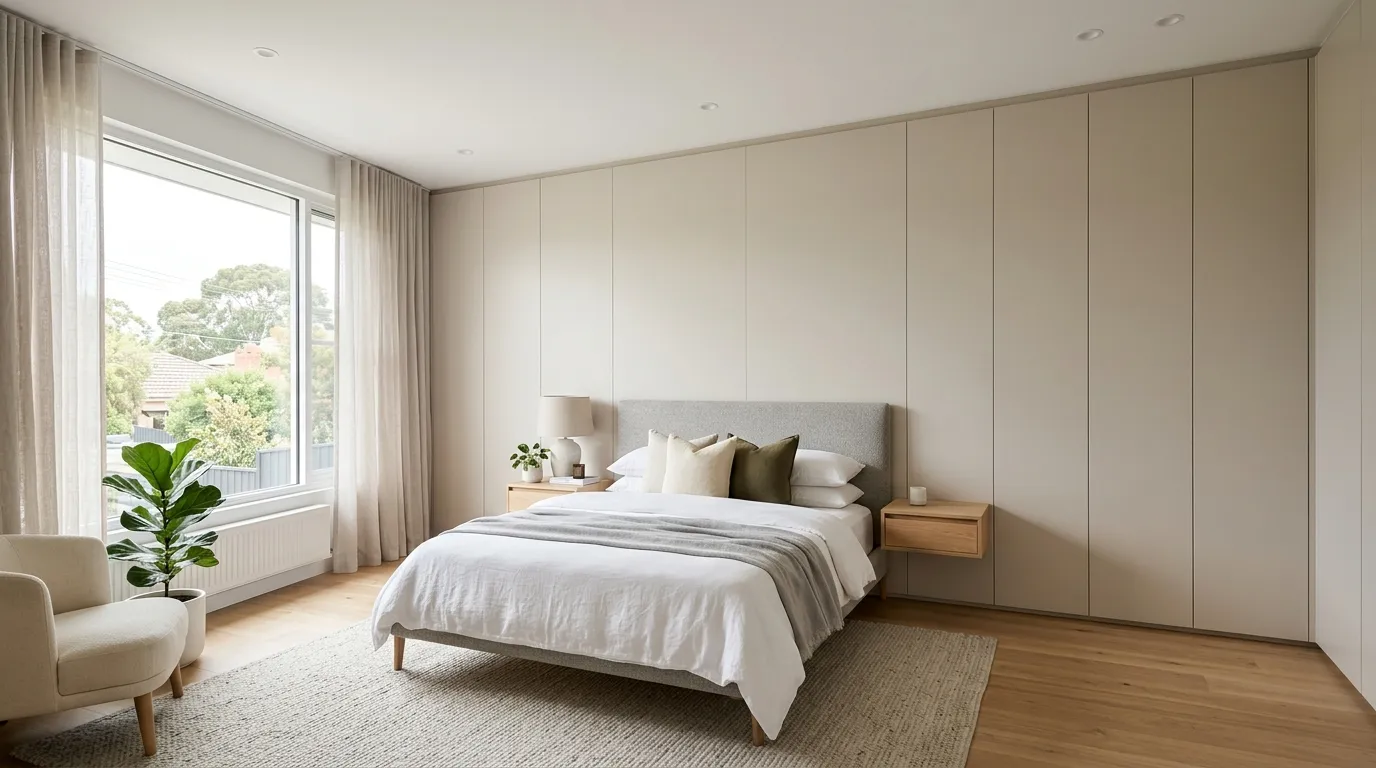
Built-in wardrobes instantly create a cleaner and more organized bedroom by blending storage into the architecture itself. Instead of adding bulky standalone units, everything is neatly integrated behind smooth, continuous panels. This makes the room feel more spacious and less visually busy. I’ve noticed that when storage disappears into the walls, the entire space feels calmer and more intentional without needing constant tidying.
Functionally, this setup improves long-term organization and efficiency. With designated compartments and hidden sections, it becomes easier to keep everything in its place. You avoid overcrowding visible areas, which helps maintain a balanced environment. That’s why built-in wardrobes are often a key feature in a minimalist bedroom, supporting both visual simplicity and practical storage without compromising the overall aesthetic.
11. Monochrome Color Scheme
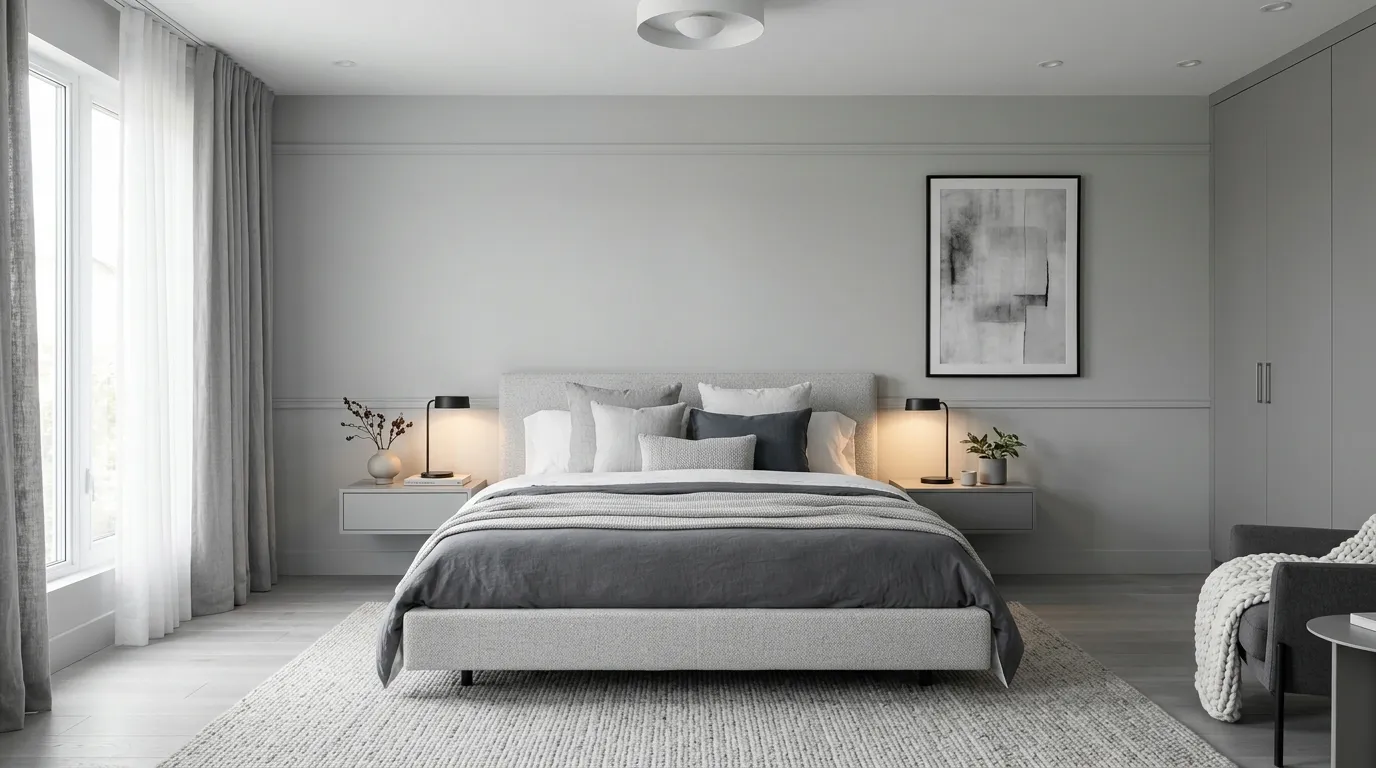
A monochrome color scheme brings a sense of unity and calm by using different shades of a single color throughout the room. This approach removes visual chaos and creates a smooth, flowing design that feels easy on the eyes. Instead of mixing multiple colors, the focus shifts to texture and subtle contrast. In my experience, this kind of palette makes a bedroom feel more put-together without requiring extra effort.
It also simplifies decision-making when decorating or updating the space. With a consistent color base, every addition naturally blends in, reducing the risk of cluttered visuals. This makes it easier to maintain a clean and organized look over time. A monochrome setup works beautifully in a minimalist bedroom, helping create a refined, cohesive environment that feels both modern and آرام and comfortable.
12. Sheer Curtain Panels
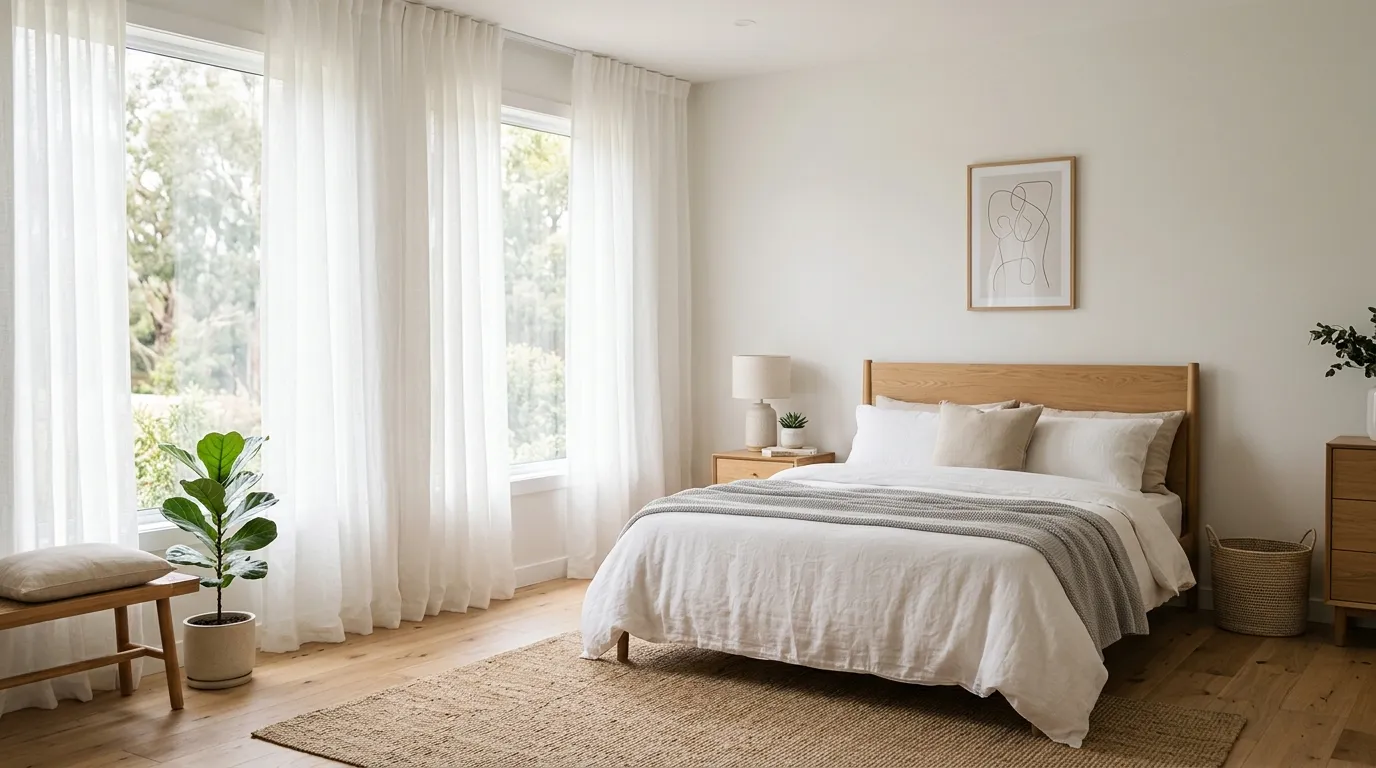
Sheer curtain panels transform the way light enters a bedroom, creating a soft and diffused glow that feels calm and inviting. Instead of blocking sunlight completely, they gently filter it, making the room feel brighter and more open. This natural light effect enhances the overall atmosphere without adding visual weight. I’ve noticed that rooms with sheer curtains often feel more peaceful and welcoming throughout the day.
They also offer a practical balance between privacy and openness. You can enjoy daylight without exposing the entire room, which makes them ideal for everyday use. Their lightweight appearance keeps the space from feeling heavy or crowded. This is why sheer curtains are a perfect addition to a minimalist bedroom, helping maintain an airy, light-filled environment while supporting a simple and elegant design.
13. Open Floor Space
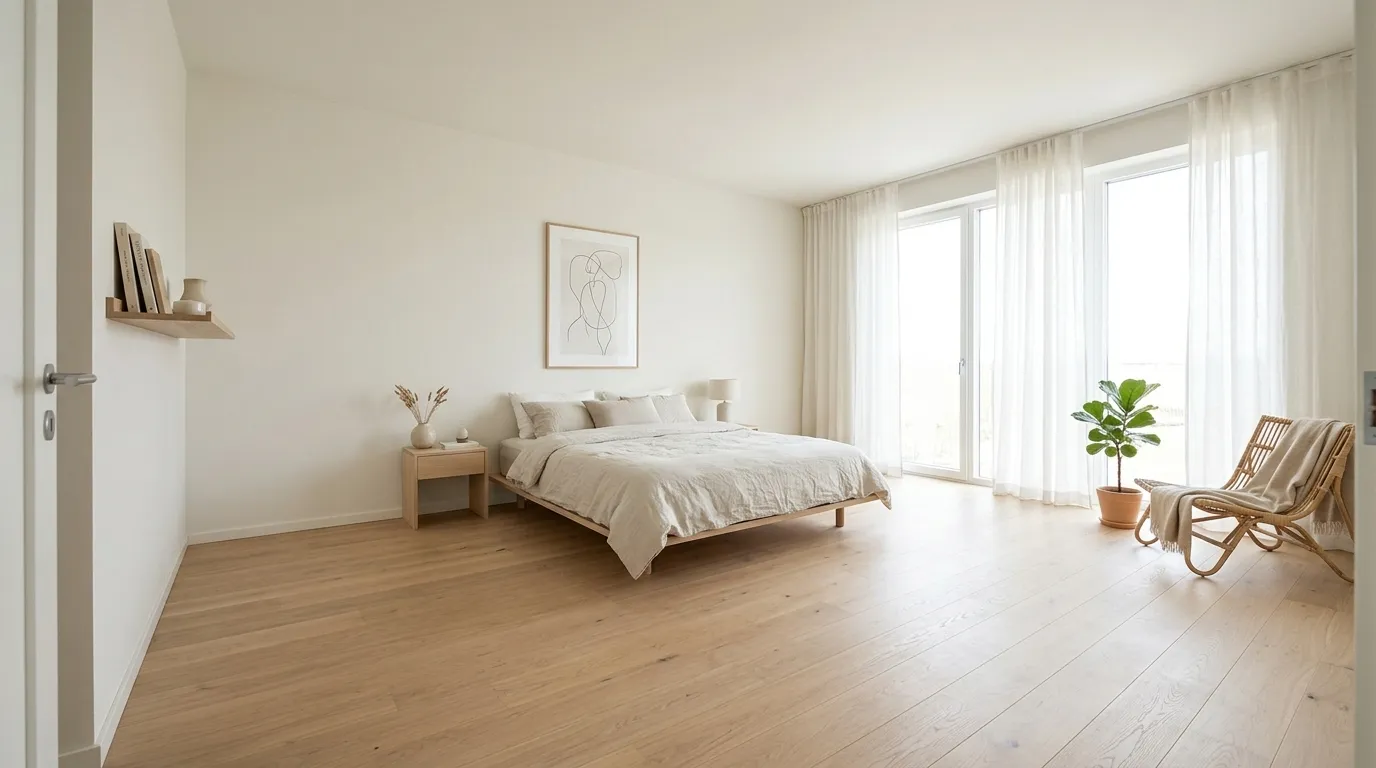
Open floor space is one of the simplest ways to make a bedroom feel bigger and more relaxing without changing the actual size. When the floor is visible and not crowded with furniture, the entire room feels lighter and easier to move through. This openness gives your eyes space to rest, which creates a calm and balanced atmosphere. I’ve noticed that even removing one unnecessary piece of furniture can dramatically improve how spacious a room feels.
It also encourages more intentional design choices. When you prioritize open space, every item in the room needs to serve a purpose, which naturally reduces clutter. Cleaning becomes easier, and the overall layout feels more organized. This is why maintaining open floor areas works so well in a minimalist bedroom, helping create a peaceful environment that feels both functional and visually refreshing.
14. Single Accent Piece
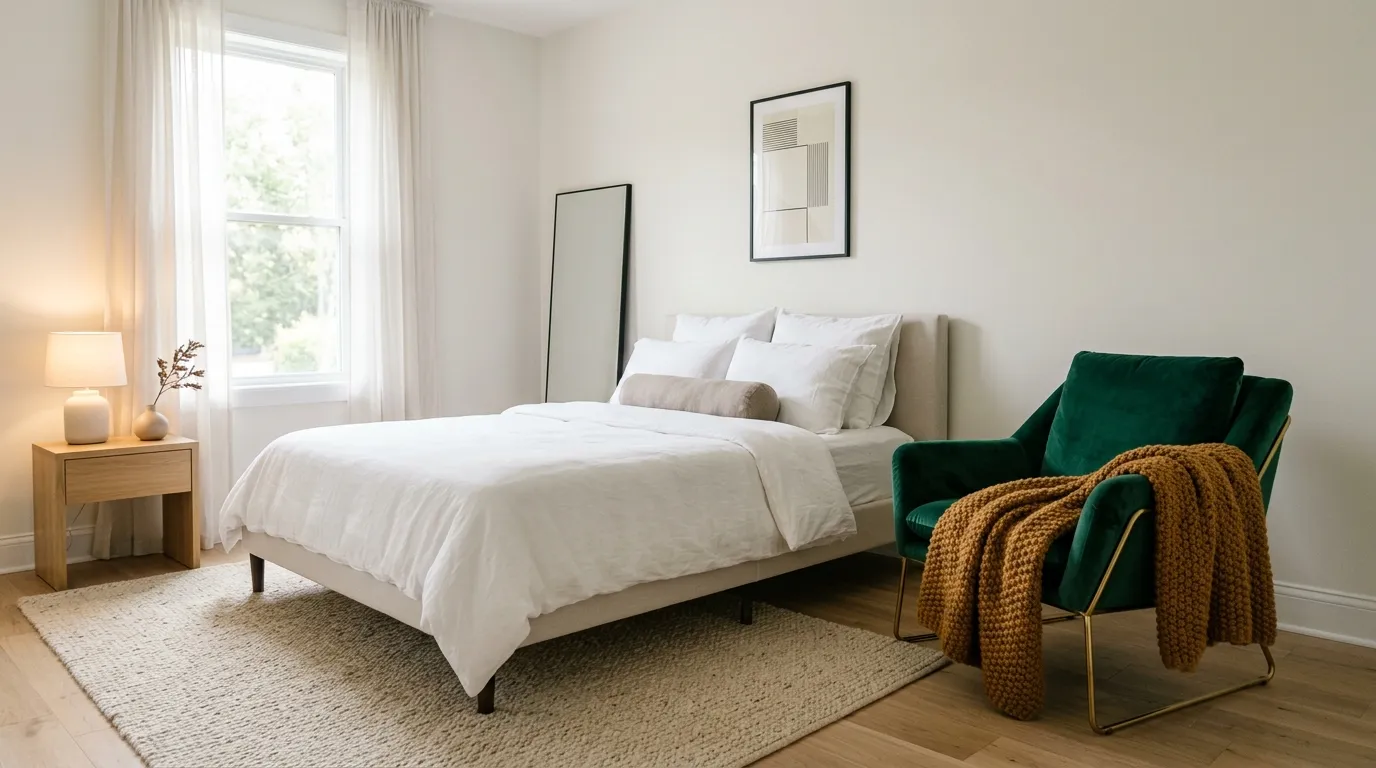
A single accent piece can bring life and character to a bedroom without overwhelming the space. Instead of layering multiple decorative elements, choosing one standout item allows it to shine while keeping the rest of the room calm. This creates a strong focal point that draws attention in a subtle and balanced way. I’ve seen this work especially well in simple spaces where one bold detail adds just enough interest.
It also makes decorating more flexible and manageable over time. You can easily switch or update the accent piece without reworking the entire room. This keeps the design fresh while maintaining simplicity. By limiting decorative elements, the space stays clean and uncluttered. That’s why using a single accent piece is such an effective strategy for maintaining a minimalist bedroom that still feels personal and visually engaging.
15. Neutral Area Rug
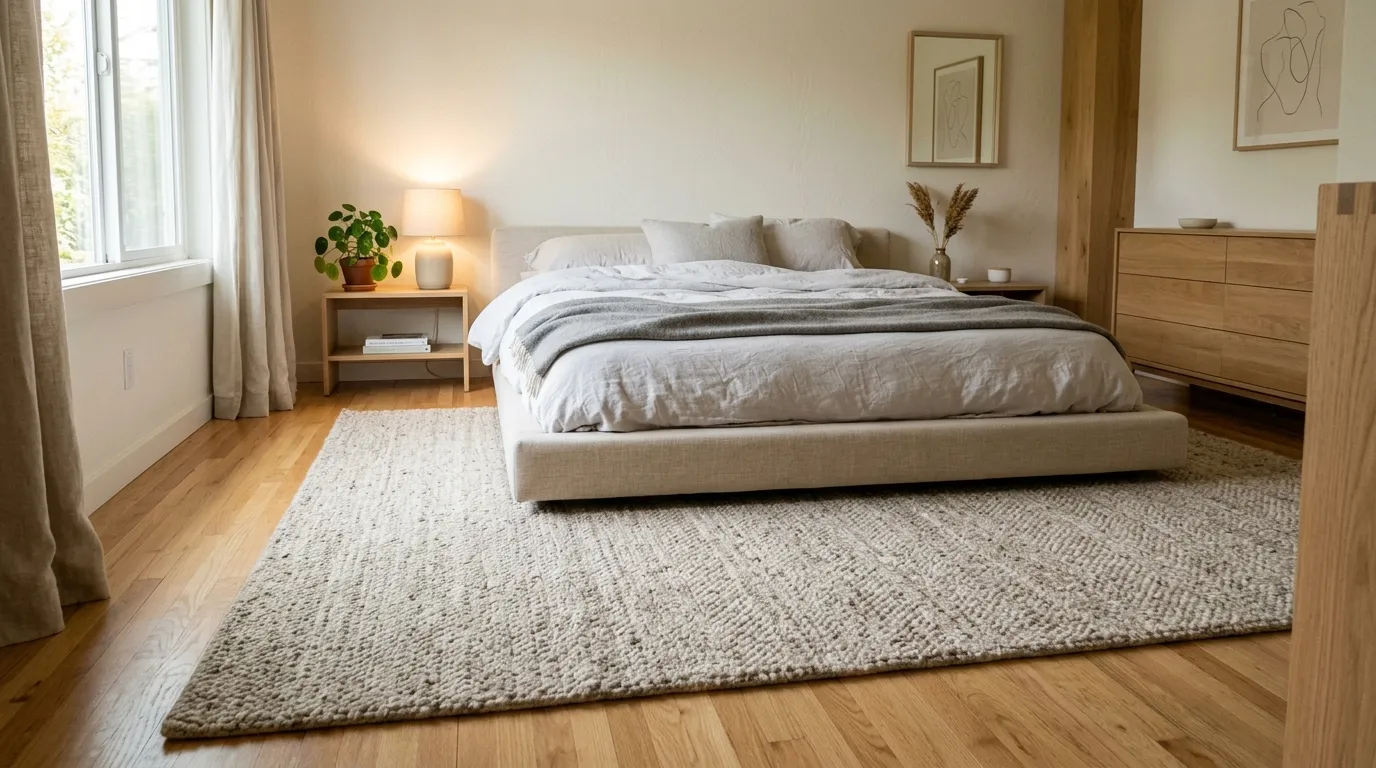
A neutral area rug can quietly transform a bedroom by adding warmth and texture without disrupting the overall simplicity. Soft tones like beige, cream, or light gray blend seamlessly with the rest of the space, creating a cozy yet clean look. This subtle layer makes the room feel more inviting while still maintaining a calm atmosphere. In my experience, a well-chosen rug can make the space feel complete without adding visual clutter.
It also helps define the layout, especially in rooms with open floor space. Placing a rug under the bed anchors the area and creates a sense of structure. At the same time, it adds comfort underfoot, making everyday movement more pleasant. This balance of function and style makes neutral rugs a perfect fit for a minimalist bedroom, supporting both comfort and a clean, cohesive design.
16. Wall-Mounted Lighting
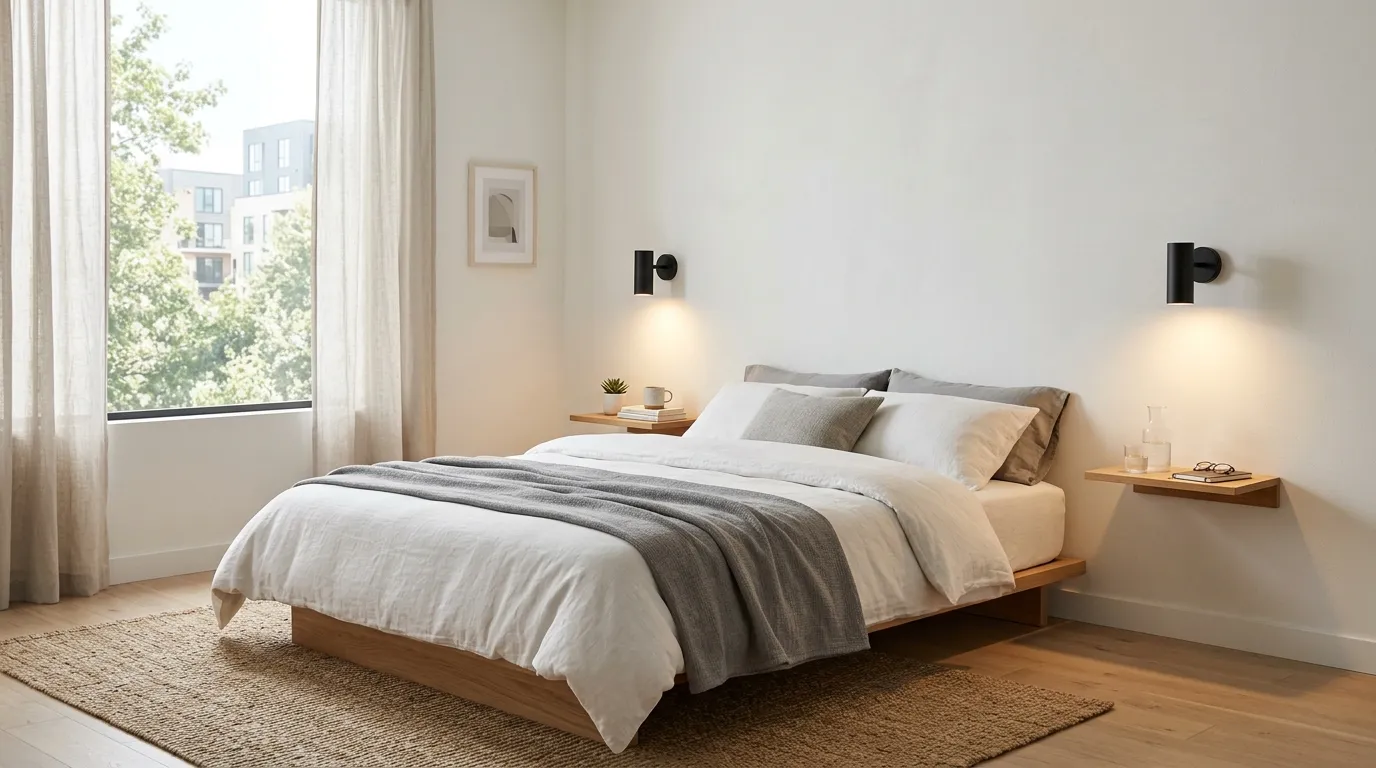
Wall-mounted lighting is a smart way to keep a bedroom clean and uncluttered while still providing practical illumination. By removing the need for table lamps, you instantly free up valuable surface space on nightstands. This creates a more open and organized look that feels easier to maintain. I’ve noticed that shifting lighting to the walls often makes the entire setup feel more intentional and less crowded.
It also improves functionality by offering focused light exactly where you need it, whether for reading or relaxing. The fixed position keeps everything consistent and avoids unnecessary adjustments. With fewer objects on display, the room maintains a calm and balanced appearance. This is why wall-mounted lighting works so well in a minimalist bedroom, blending practicality with a sleek and streamlined design.
17. Minimal Decor Pieces
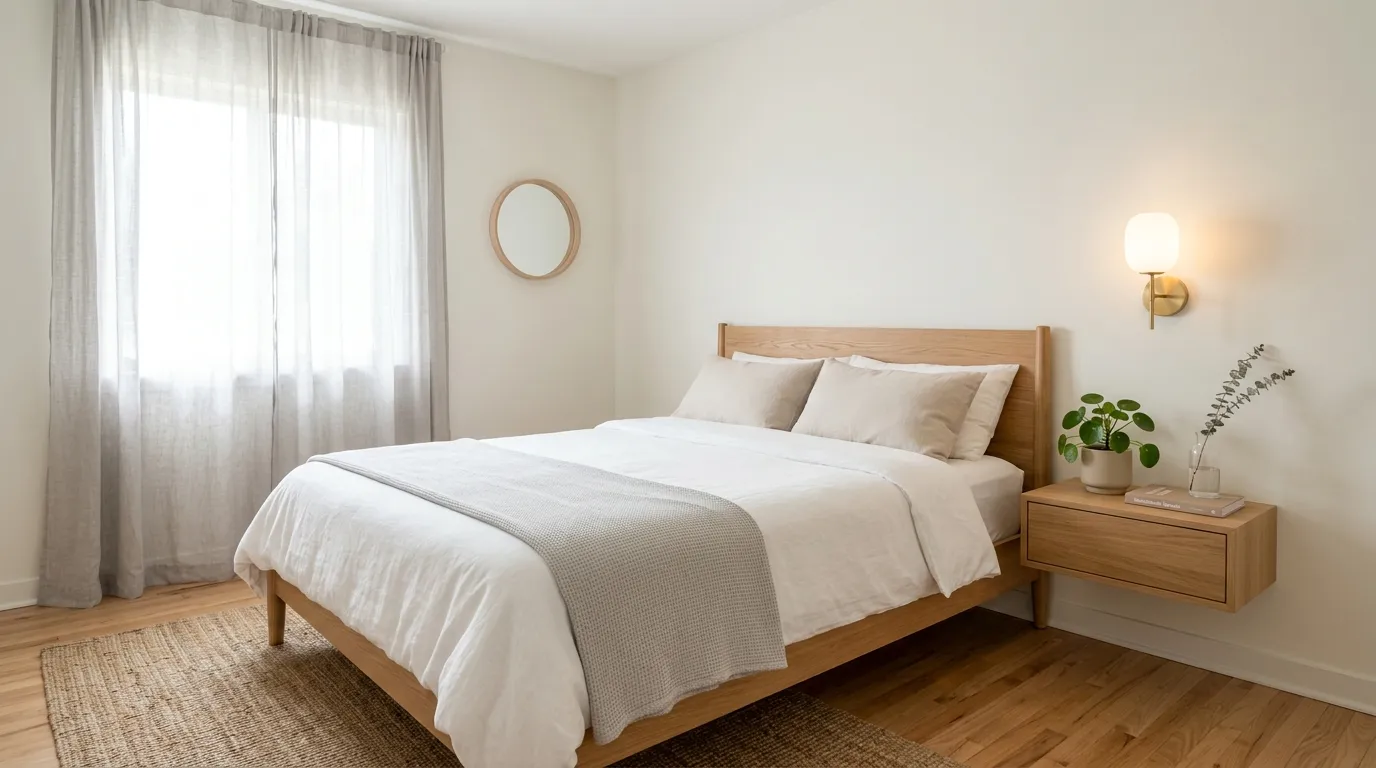
Minimal decor pieces allow a bedroom to feel styled without becoming overwhelming. Instead of filling every corner, choosing a few meaningful items creates a balanced and thoughtful design. This approach draws attention to what truly matters while keeping the overall space calm. I’ve seen this work well in many homes, where reducing decor actually makes each piece stand out more clearly.
It also simplifies maintenance and daily living. With fewer objects to manage, cleaning becomes quicker and the room stays organized with less effort. This encourages a more mindful approach to decorating, where every item has a purpose. That’s why limiting decor is such an effective strategy in a minimalist bedroom, helping maintain both visual clarity and a sense of personal style.
18. Sliding Door Closets
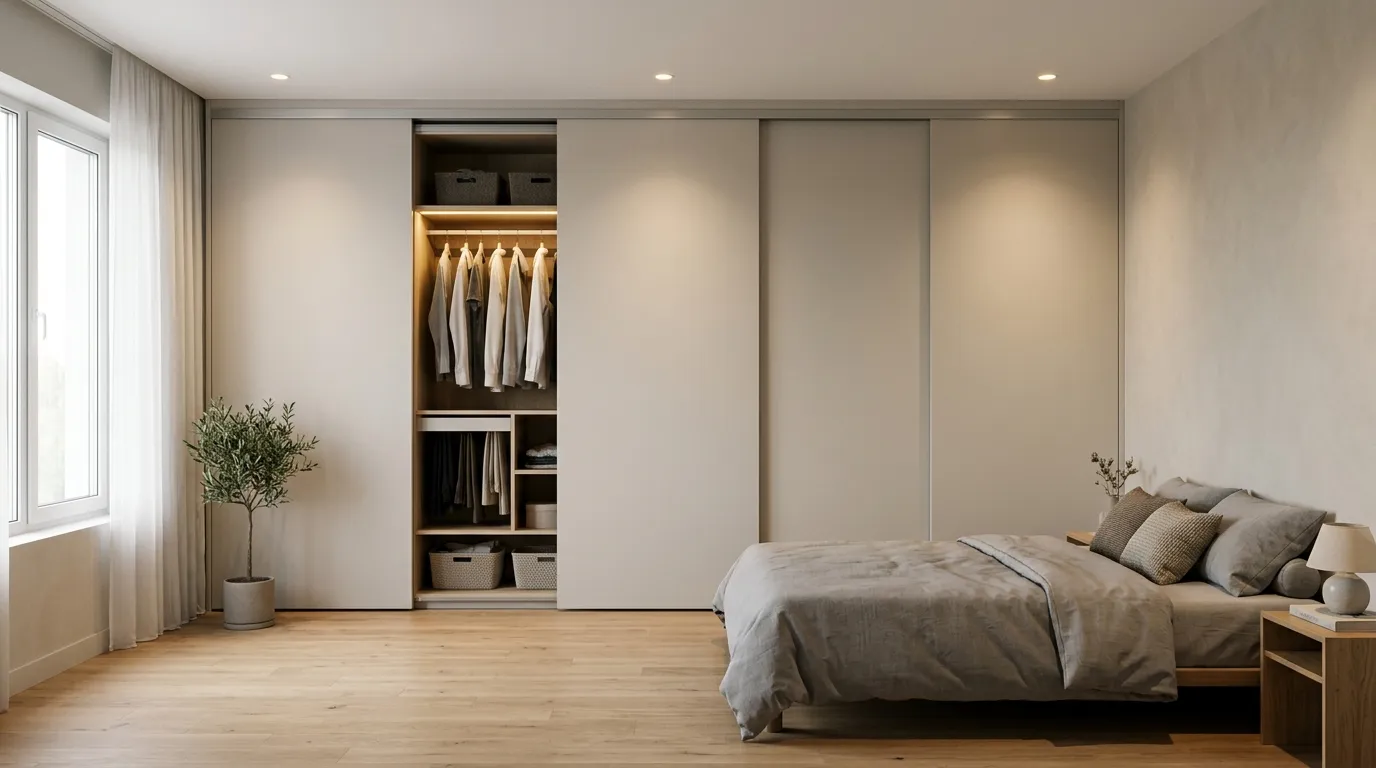
Sliding door closets are a practical solution for maintaining a clean and efficient bedroom layout, especially in tighter spaces. Unlike traditional doors, they don’t require extra room to open, which helps preserve valuable floor space. This makes the entire room feel less cramped and more functional. I’ve noticed that this simple change can significantly improve how smoothly a room flows.
They also contribute to a more streamlined and modern appearance. With flat panels and minimal detailing, sliding doors blend seamlessly into the overall design. This reduces visual clutter and keeps the focus on the room’s clean lines. For anyone aiming to create a minimalist bedroom, sliding door closets offer a perfect balance of convenience, style, and space-saving efficiency.
19. Wooden Furniture Accents
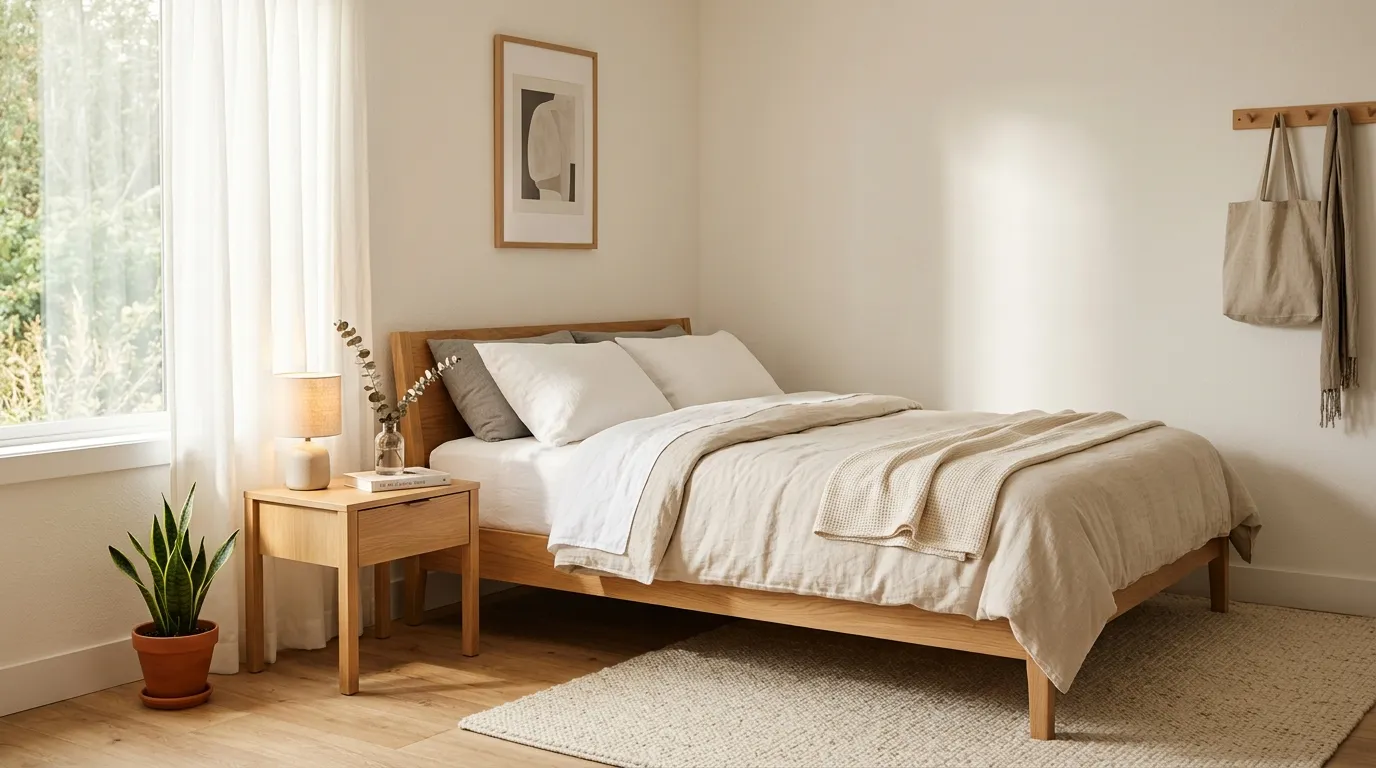
Wooden furniture accents bring a sense of warmth and natural comfort into a clean bedroom design. Light wood tones, in particular, soften the look of neutral spaces and prevent them from feeling too cold or plain. This subtle contrast adds depth without introducing visual clutter. I’ve noticed that even one or two wooden elements can make a room feel more inviting while still maintaining a simple and organized look.
They also connect the space to natural materials, which helps create a more relaxing environment. Smooth finishes and clean lines keep everything aligned with a clutter-free style. This balance between warmth and simplicity is what makes wooden accents so effective. In a minimalist bedroom, they provide just enough texture and character to keep the space feeling comfortable, without disrupting the overall clean aesthetic.
20. Symmetrical Layout Design
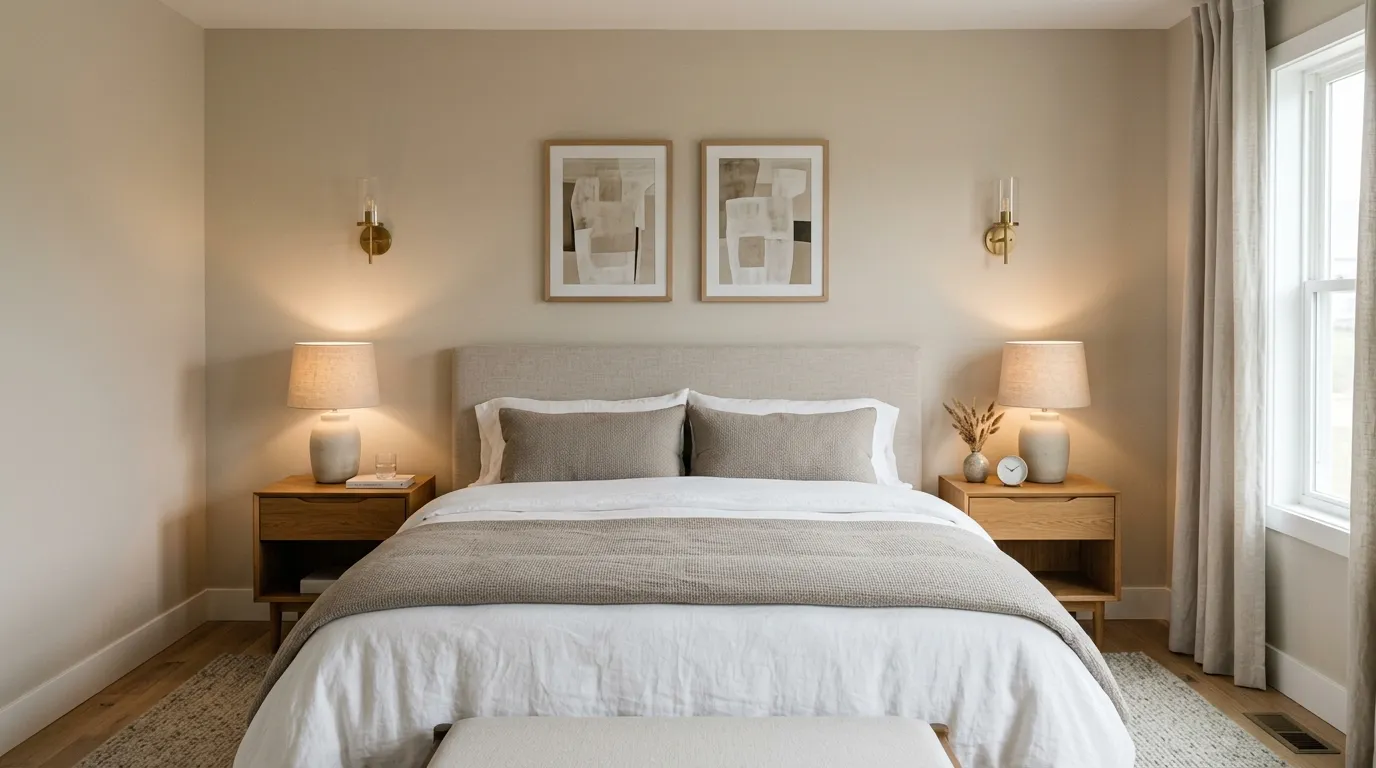
A symmetrical layout design brings a strong sense of balance and calm to a bedroom by aligning elements evenly on both sides. When furniture and decor are arranged in a mirrored way, the space feels more structured and visually pleasing. This organized look naturally reduces the feeling of chaos. I’ve seen this approach work especially well in bedrooms where simplicity is the main goal.
It also makes styling and maintenance easier over time. With a clear layout, it becomes simpler to decide where things belong and how to keep the room consistent. This reduces the chances of clutter building up in random areas. The clean and predictable structure supports a peaceful environment. That’s why symmetry is often used in a minimalist bedroom, helping create a space that feels both calm and intentionally designed.
21. Clutter-Free Corners
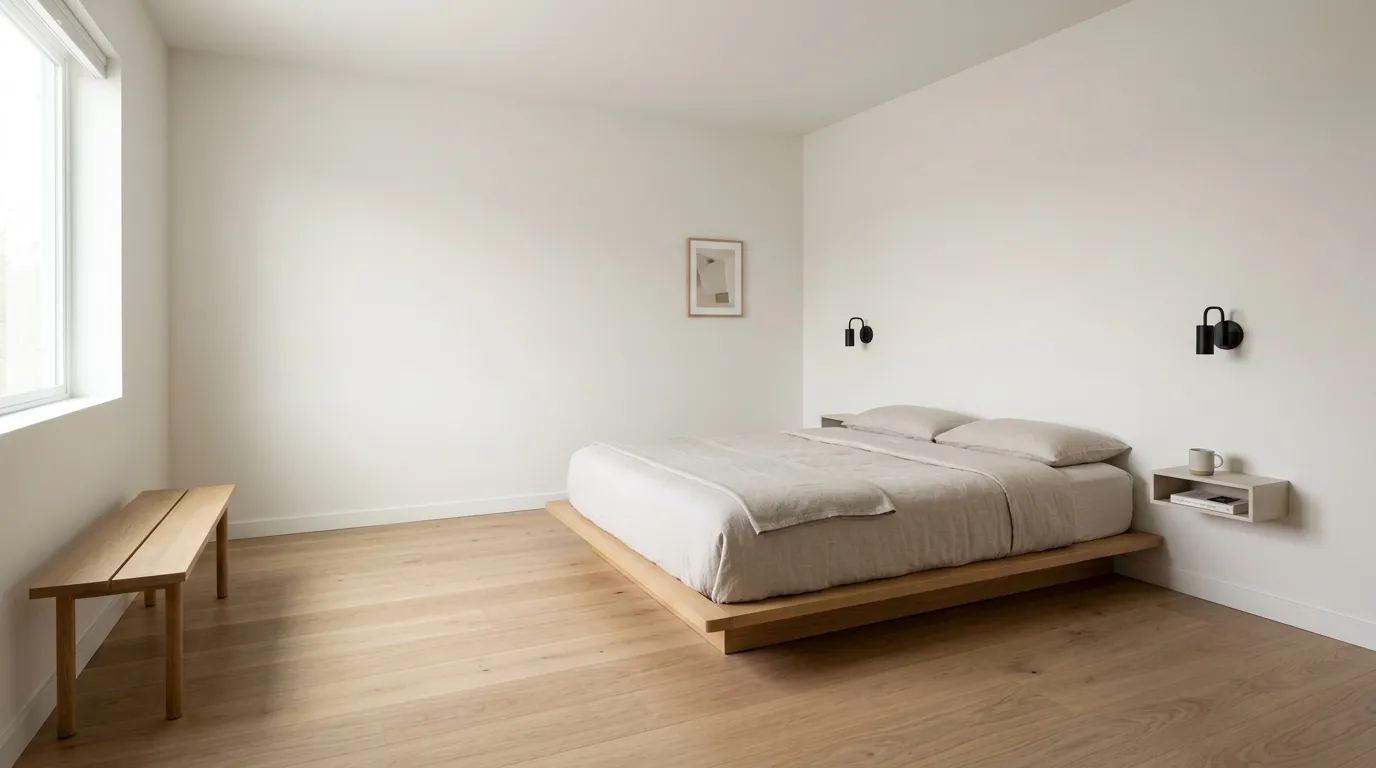
Clutter-free corners can make a surprisingly big difference in how open and clean a bedroom feels. Corners often become places where unused items collect, which slowly adds to visual mess. Keeping these areas empty or intentionally styled helps maintain a clear and spacious look. I’ve noticed that when corners are left open, the entire room instantly feels more breathable and organized.
This simple habit also improves long-term maintenance. When you avoid filling every corner, there’s less chance for clutter to build up unnoticed. It becomes easier to clean and keep the space consistent over time. Clear corners help define the room’s structure while supporting a calm atmosphere. This is why they are an essential part of a minimalist bedroom, reinforcing simplicity and making the space feel effortlessly tidy.
Conclusion
Creating a peaceful and clutter-free bedroom doesn’t require a complete makeover—just a series of smart, intentional choices. From simplifying furniture to refining your layout, each idea you’ve explored can help you build a space that feels calm, functional, and truly your own. I’ve seen how small changes like these can completely transform not just a room, but the way you feel in it every day.
If you’re ready to refresh your minimalist bedroom, start with one idea that speaks to you and build from there. Don’t forget to save this post on Pinterest for later inspiration, and share it with anyone looking to create a more relaxing and organized home.
FAQs
1. What makes a bedroom truly minimalist?
A minimalist bedroom focuses on simplicity, functionality, and intentional design. It includes only essential furniture, clean surfaces, and a calm color palette. The goal is to remove visual clutter while keeping the space practical and comfortable. I’ve noticed that the key is not having fewer things, but choosing the right things that truly serve a purpose.
2. How do I start creating a clutter-free bedroom?
Start by removing items you don’t use daily and clearing visible surfaces like nightstands and dressers. Focus on one area at a time to avoid feeling overwhelmed. Simple steps like organizing storage or reducing decor can make a big difference. In my experience, starting small helps build momentum and makes the process easier to maintain.
3. Can a small bedroom still follow a minimalist style?
Yes, small bedrooms actually benefit the most from this approach. Keeping furniture minimal, using light colors, and maximizing hidden storage can make the space feel larger and more open. I’ve seen small rooms completely transform just by removing unnecessary items and improving layout flow.
4. What colors work best for a simple bedroom design?
Neutral colors like white, beige, gray, and soft earth tones work best because they create a calm and cohesive look. These shades reflect light well and make the room feel more spacious. You can add subtle variations through textures instead of bold colors to keep the design interesting without adding clutter.
5. How do I decorate without making the room look busy?
Stick to a “less is more” approach by choosing a few meaningful decor pieces instead of many small items. Focus on quality over quantity, like one artwork or a single accent piece. I’ve noticed that limiting decor actually makes each piece stand out more and keeps the space visually balanced.
6. Is minimalist design expensive to achieve?
Not necessarily. In fact, it can save money because you’re buying fewer items and focusing on essentials. You can start with what you already have and simply reduce, rearrange, or repurpose items. Many people find that simplifying their space is more about mindset than spending.
7. How do I maintain a clean and organized bedroom long-term?
Consistency is key. Make it a habit to return items to their place and avoid bringing in unnecessary things. Regularly declutter small areas before they build up. I’ve found that once a room is simplified, it becomes much easier to keep it that way with minimal effort.