Introduction
Dreaming of a bright, breezy coastal kitchen that feels calm, stylish, and effortlessly inviting? You’re not alone—and the good news is, creating that look is easier than you think.
Whether your space feels dull, cluttered, or just missing personality, the right design choices can completely change how it looks and functions. This article brings together simple yet impactful ideas that help you create a lighter, more open kitchen without overwhelming renovations. From textures to colors and layout tweaks, each idea is designed to feel achievable and inspiring.
In my experience, even small updates—like switching lighting or adding natural materials—can make a kitchen feel brand new. I’ve seen many people benefit from focusing on details rather than full makeovers. These ideas are practical, visually driven, and perfect for anyone who wants a space that feels fresh, welcoming, and easy to love every day.
1. White Shaker Cabinets
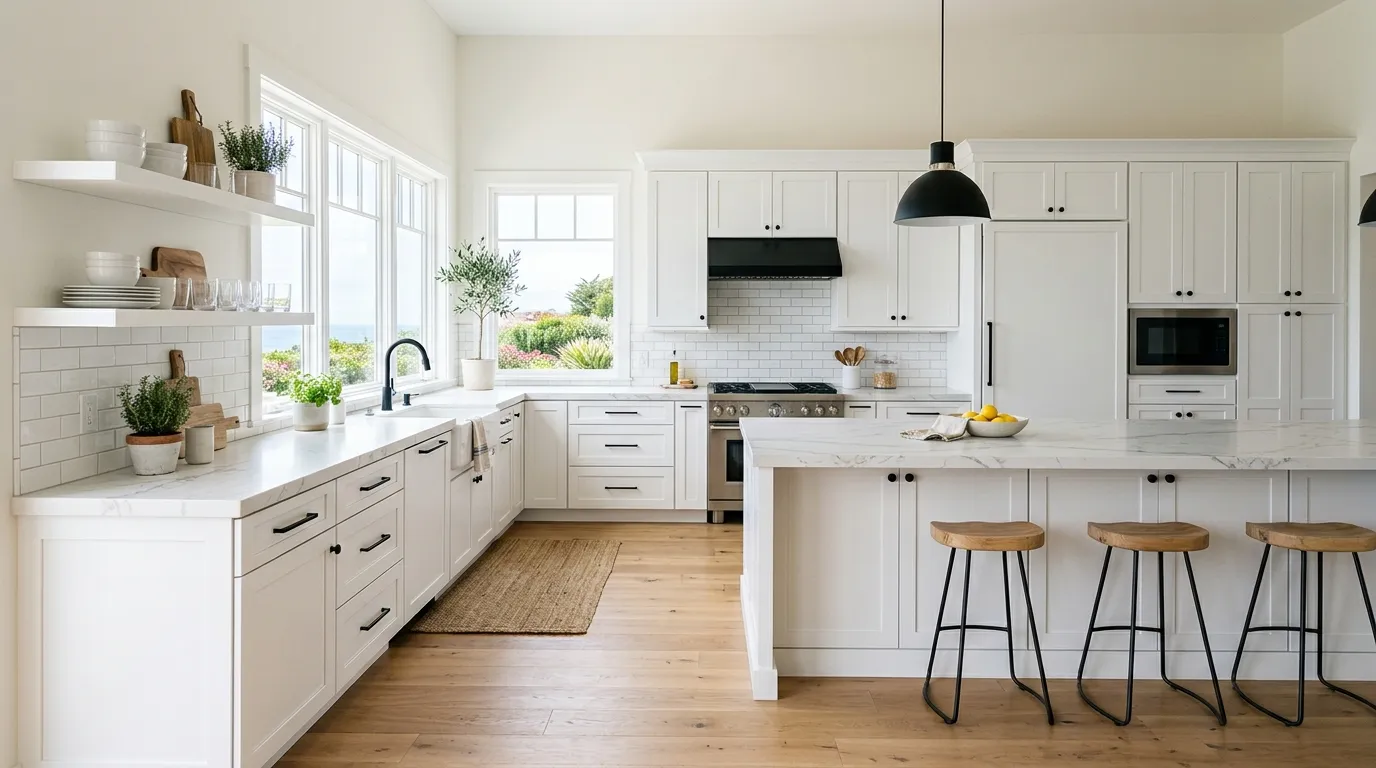
A fresh, light-filled look can completely change how your kitchen feels the moment you walk in. White shaker cabinets are one of the easiest ways to create that breezy, open vibe without overwhelming the space. Their simple panel design adds just enough detail while still keeping things calm and uncluttered. In my experience, this style works beautifully in both small apartments and larger homes because it reflects light so well. That’s what makes it a go-to feature in many coastal kitchen designs that aim for simplicity and elegance.
What makes this idea especially powerful is how flexible it is when you start layering other elements around it. You can pair these cabinets with warm wood tones, soft blues, or even subtle metallic finishes without losing the relaxed feel. I’ve noticed that homeowners often appreciate how easy it is to update the look later just by changing decor or hardware. The result is a kitchen that feels fresh year-round, effortlessly stylish, and incredibly welcoming for both everyday living and entertaining guests.
2. Ocean Blue Backsplash
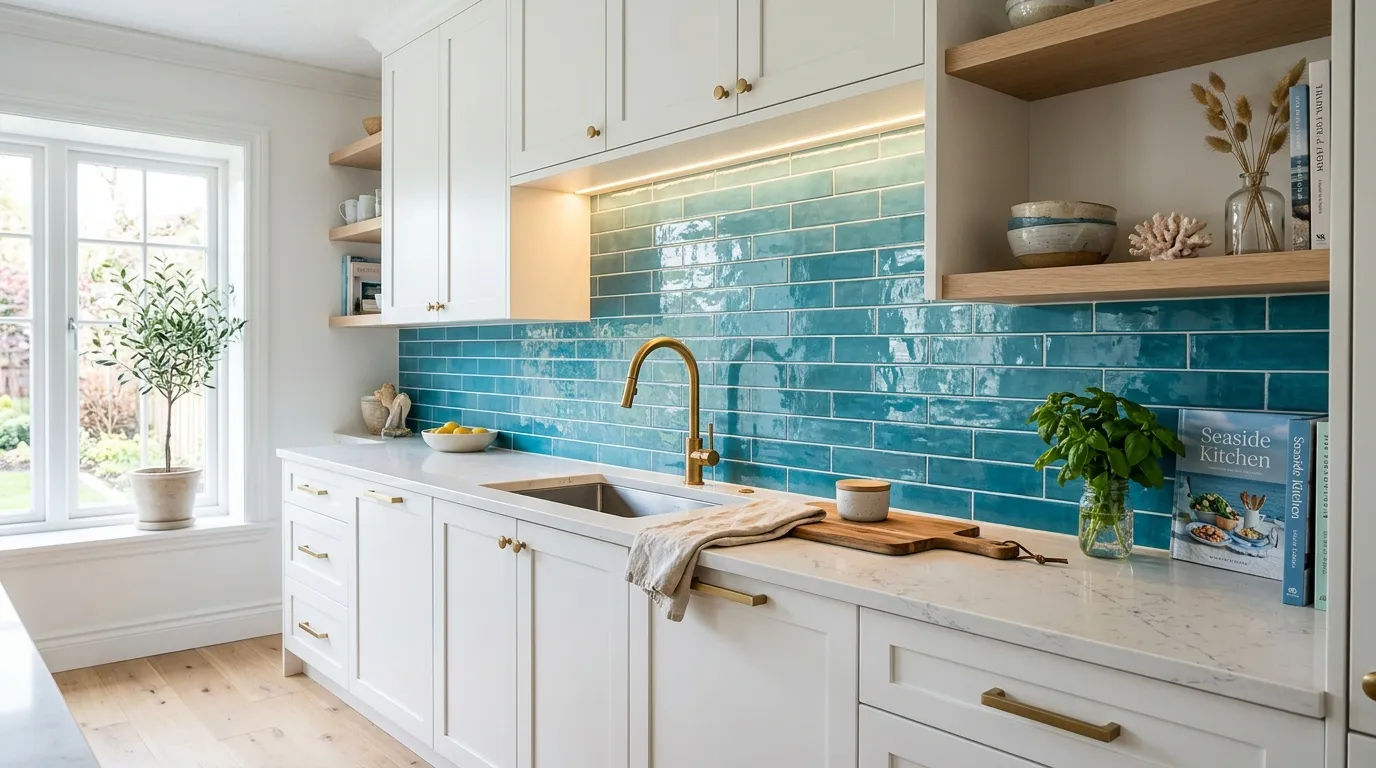
A splash of ocean-inspired color can instantly bring life into a neutral kitchen without making it feel too busy. A blue backsplash, especially in glossy or glass tiles, catches the light beautifully and creates a soft, reflective glow throughout the space. This design detail works particularly well if the rest of the kitchen is kept light and minimal. I’ve seen this approach transform even the simplest kitchens into something visually striking while still maintaining that relaxed, breezy charm people love in a coastal kitchen setting.
Beyond aesthetics, this feature also adds practical value by protecting your walls while keeping maintenance simple. The smooth surface makes cleaning quick and easy, which is always a plus in high-use areas. That’s why many designers recommend choosing shades that mimic natural water tones rather than overly bright hues. This keeps the look sophisticated and timeless. Over time, you’ll notice how this one element subtly ties the entire space together, making it feel more intentional, cohesive, and effortlessly styled.
3. Natural Wood Accents
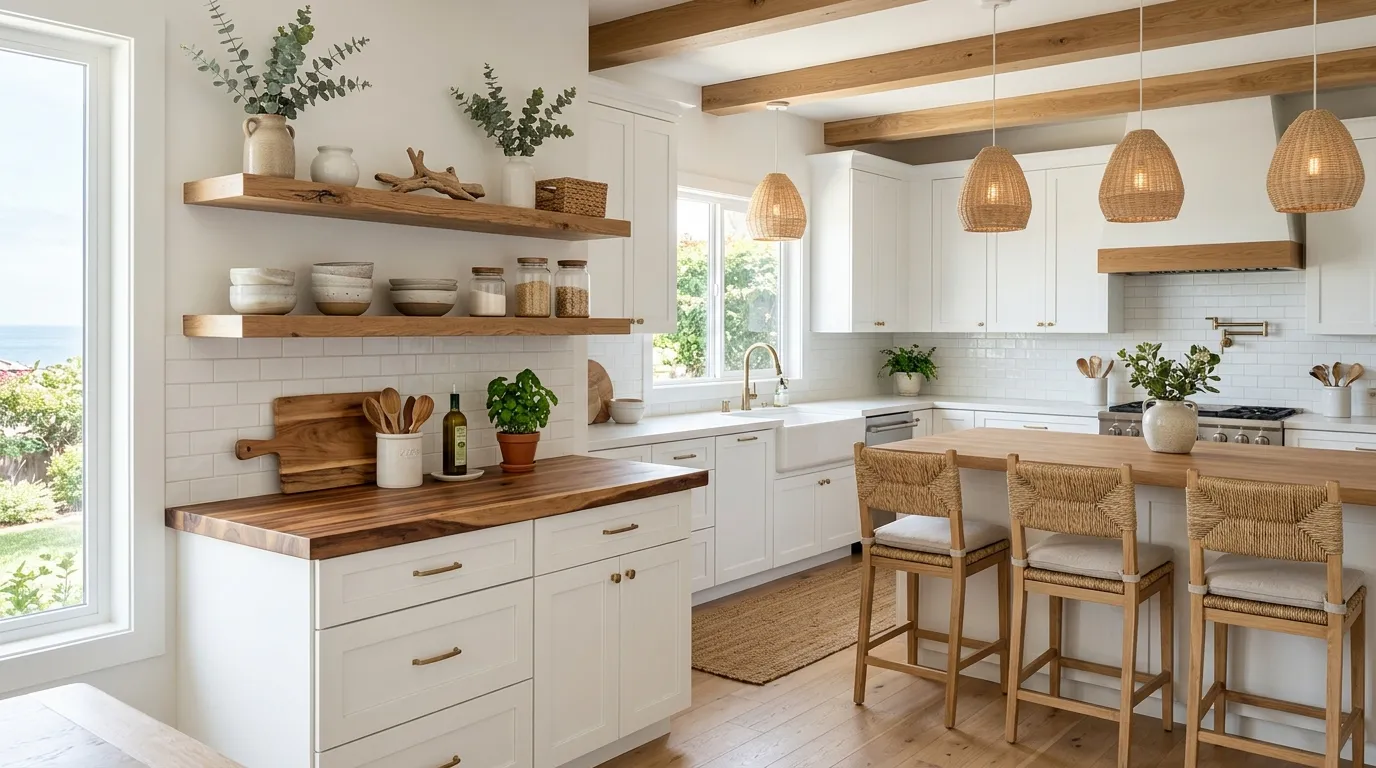
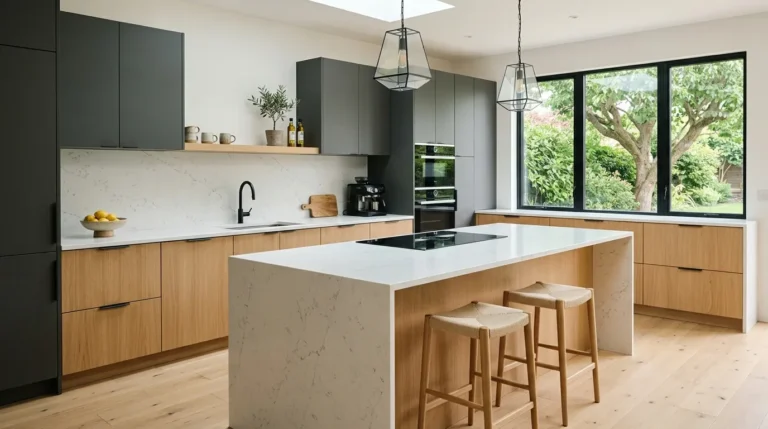
If your kitchen feels a little too crisp or sterile, natural wood accents can instantly soften the entire look. Introducing elements like open shelves, bar stools, or even a butcher block section creates a warm contrast against lighter surfaces. This combination feels grounded and welcoming, which is exactly what many homeowners want. In my experience, even small touches of wood can make a noticeable difference, especially when paired with light colors commonly used in coastal kitchen interiors.
The beauty of this idea lies in its ability to evolve with your style over time. You can keep it minimal with just a few shelves or go further with larger features like a wood island base. I’ve noticed that lighter wood tones tend to work best because they maintain that airy feel without making the space look heavy. The result is a balanced kitchen that feels both relaxed and refined, offering a natural connection to the outdoors while still looking polished and thoughtfully designed.
4. Rattan Bar Stools
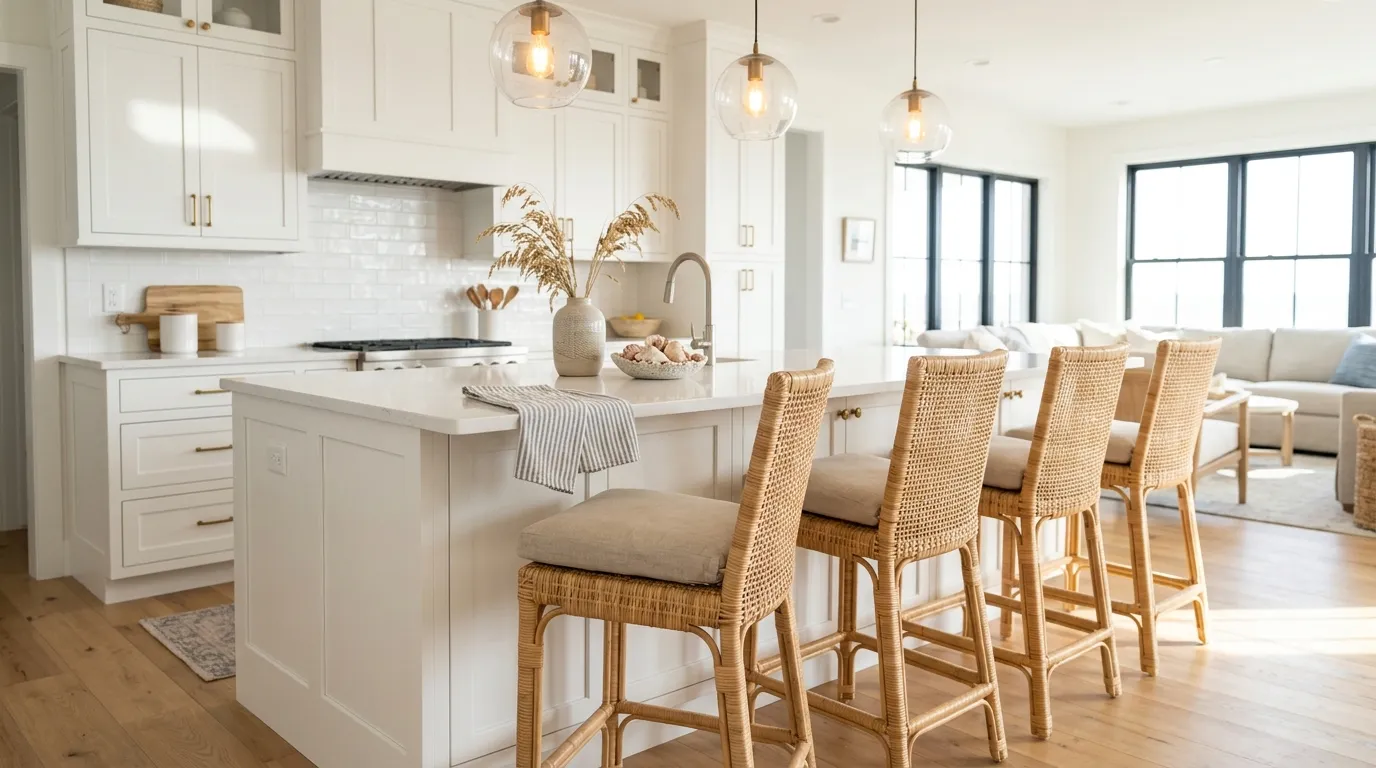
Sometimes, all a kitchen needs is a small seating upgrade to completely shift its atmosphere. Rattan bar stools introduce a soft, natural texture that feels both casual and stylish without overpowering the space. Their woven design creates visual interest while still allowing the room to feel open and breathable. I’ve noticed that this type of seating works especially well in bright kitchens where you want to keep things light but not boring. It’s a simple change that can instantly make the area feel more lived-in and welcoming.
Beyond looks, these stools are also incredibly practical for everyday use. They’re lightweight, easy to reposition, and often more comfortable than they appear, especially when paired with soft cushions. In my experience, they hold up well in busy homes where people gather around the kitchen island frequently. The natural material also blends seamlessly with other textures like wood and linen, helping create a layered, cohesive design that feels relaxed yet thoughtfully put together.
5. Glass Pendant Lighting
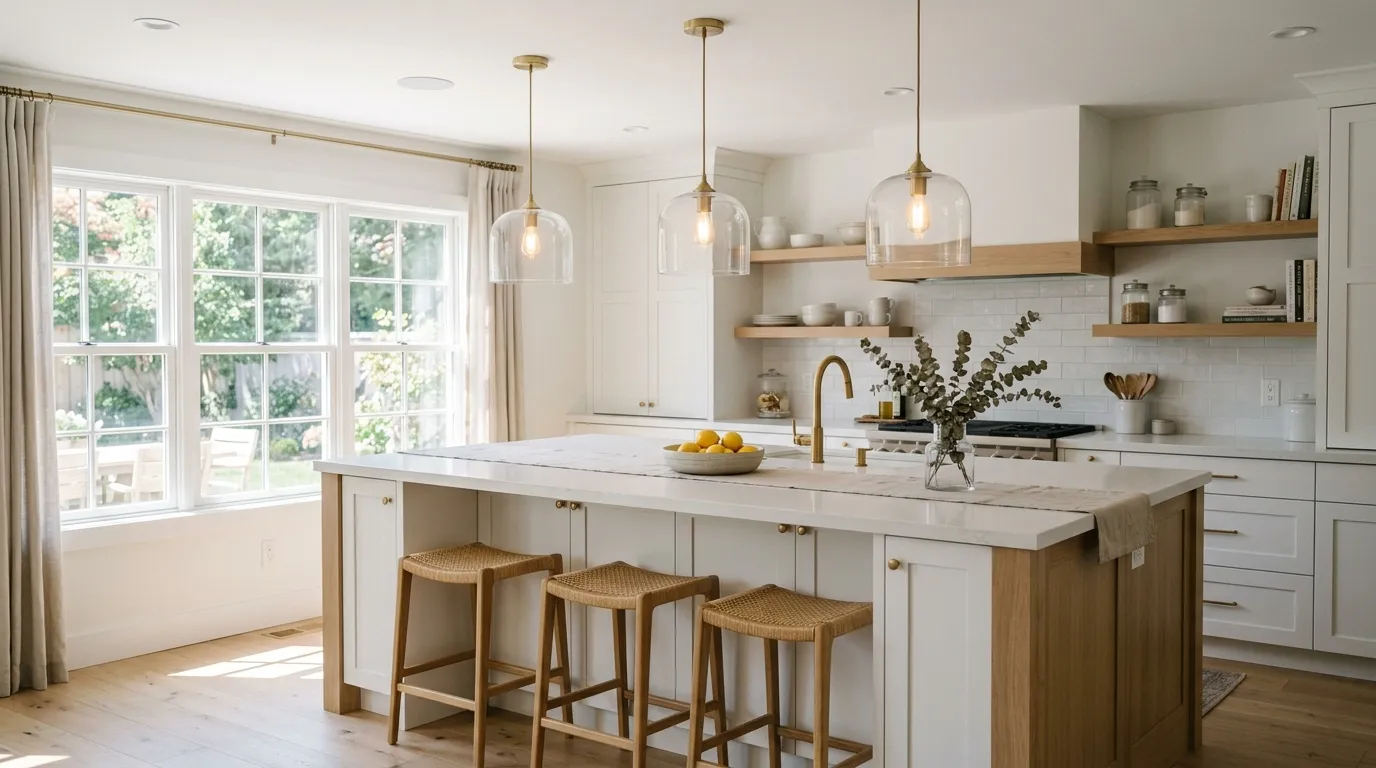
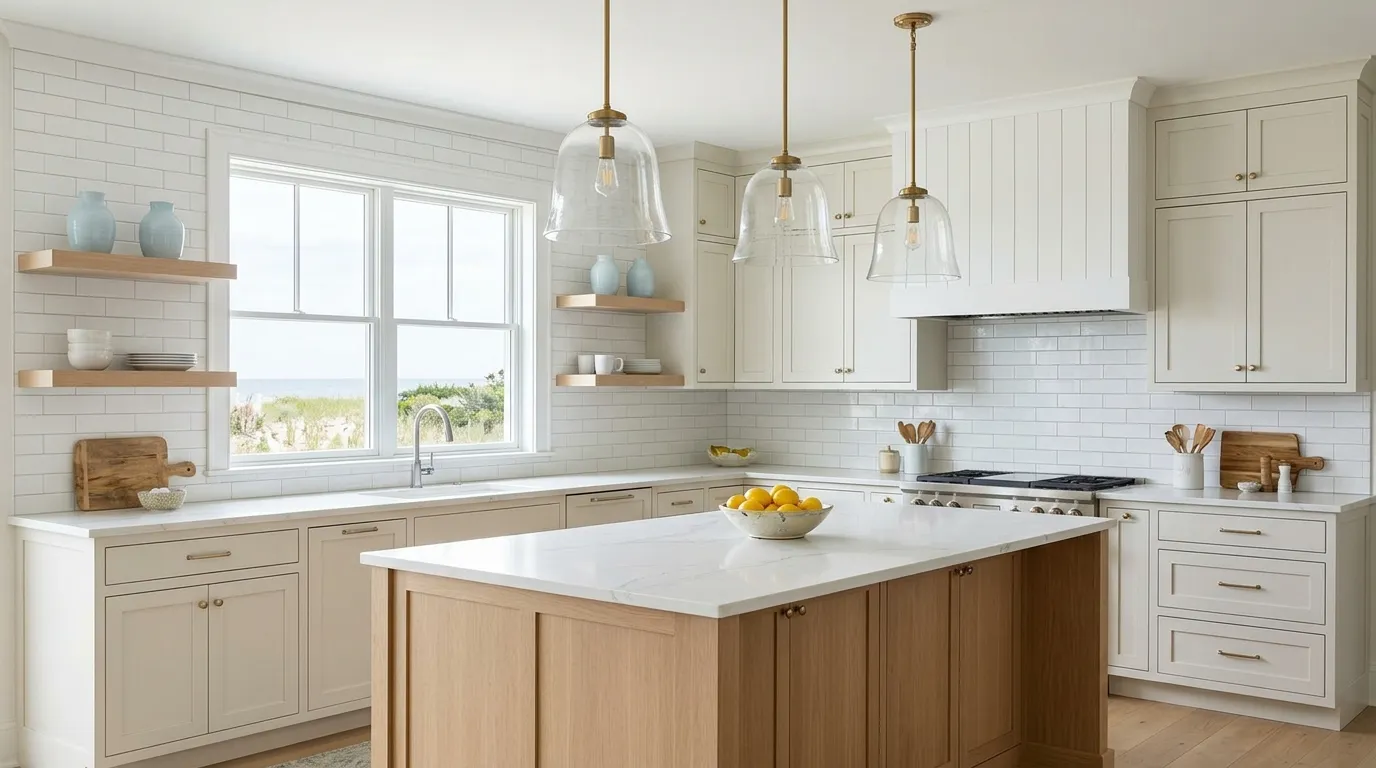
Lighting can completely change the way your kitchen looks and feels, and glass pendant fixtures are a perfect example of that transformation. Their transparent design allows light to flow freely, keeping the room bright and open. This is especially helpful in kitchens that rely on natural light during the day. I’ve seen how these fixtures can elevate even the simplest spaces, adding a refined touch without making things feel heavy or overly decorative.
Another reason this idea works so well is its versatility. You can pair glass pendants with warm bulbs for a cozy glow in the evening or keep them bright and crisp for a more modern feel. That’s why many designers recommend them for kitchens that aim to balance style with simplicity. Over time, you’ll notice how this lighting choice subtly enhances every other element in the space, from countertops to seating, creating a polished and cohesive look.
6. Open Floating Shelves
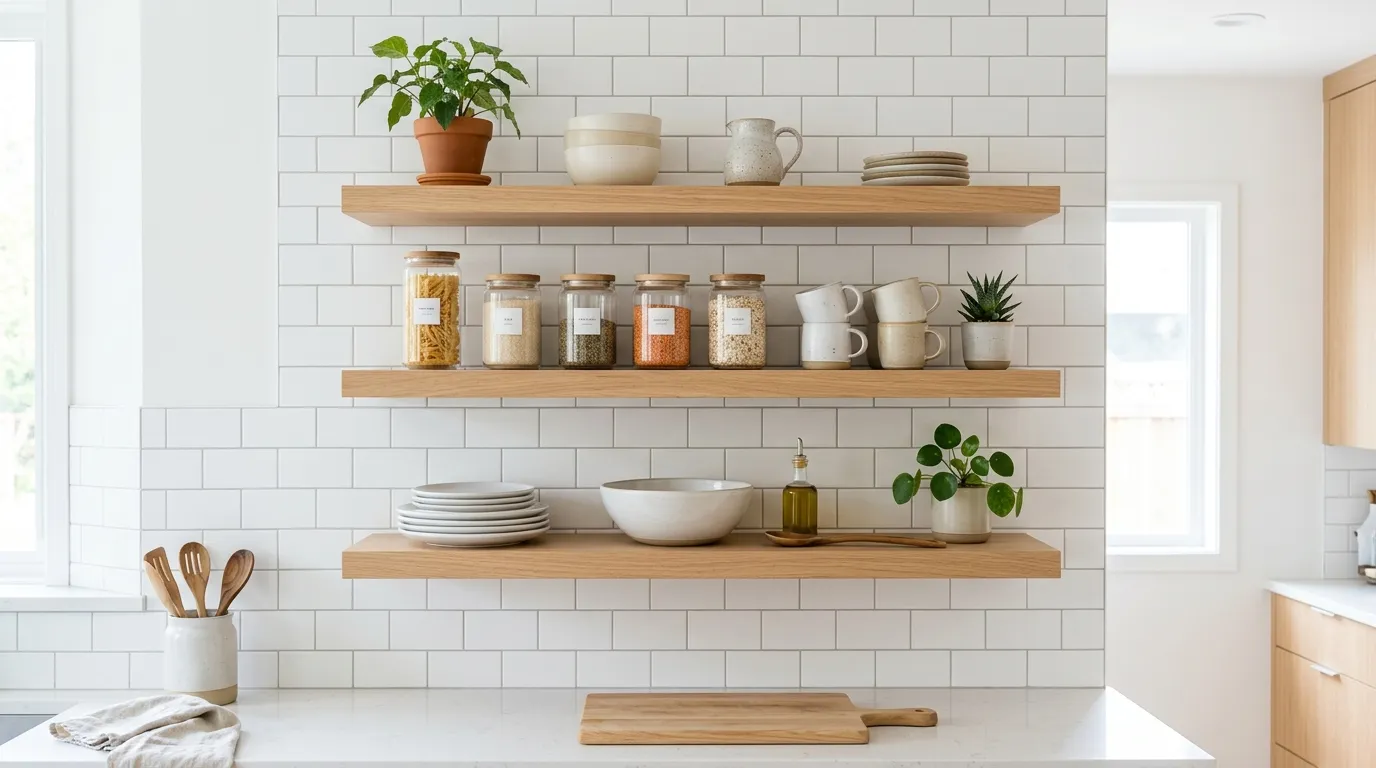
If your kitchen feels closed off or overly packed, switching to open floating shelves can instantly create a more relaxed and airy environment. These shelves remove the visual weight of upper cabinets, allowing walls to breathe and making the entire space feel larger. In my experience, even adding just one or two shelves can make a noticeable difference. They also give you the chance to display beautiful dishes or simple decor, turning everyday items into part of the overall design.
Functionally, this setup encourages you to stay organized since everything is visible and within reach. I’ve noticed that people tend to keep only what they truly use, which naturally reduces clutter over time. That’s why this idea works so well in homes aiming for a calm, effortless look. With the right balance of practical items and subtle decoration, these shelves can transform a plain wall into a stylish focal point that feels both useful and visually appealing.
7. Soft Neutral Palette
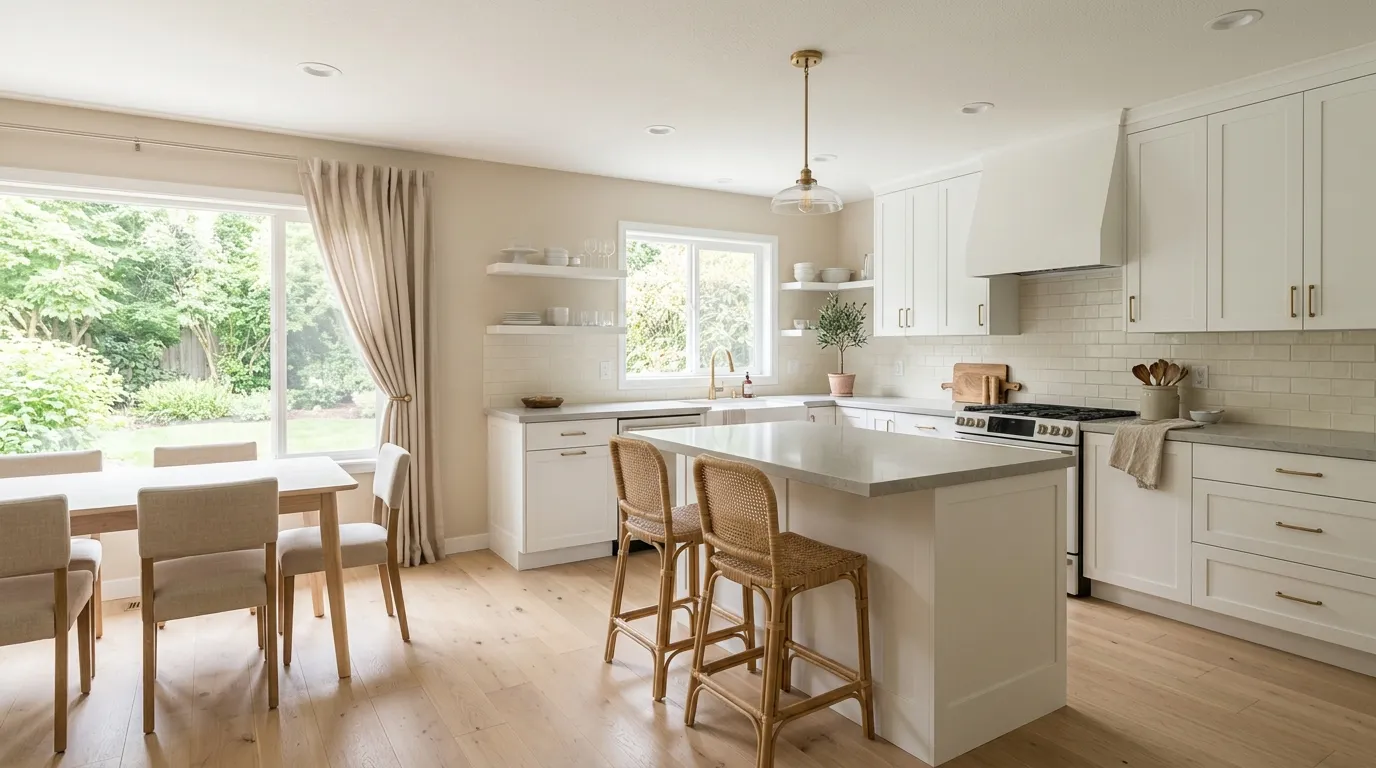
A soft, neutral color palette can completely transform how a kitchen feels without requiring major renovations. Shades like warm white, beige, and light gray create a soothing backdrop that instantly makes the space feel open and inviting. This approach works especially well if you want a clean look that still feels warm and livable. I’ve noticed that neutral tones also help reflect natural light better, which makes even smaller kitchens appear more spacious and airy throughout the day.
What makes this idea so effective is its flexibility when adding accents and textures. You can easily introduce wood, woven materials, or subtle metallic finishes without clashing with the base colors. In my experience, this type of palette also ages well, meaning you won’t feel the need to update it frequently. The overall result is a kitchen that feels balanced, timeless, and effortlessly styled, creating a peaceful environment that works for both daily routines and relaxed gatherings.
8. Coastal Pattern Tiles
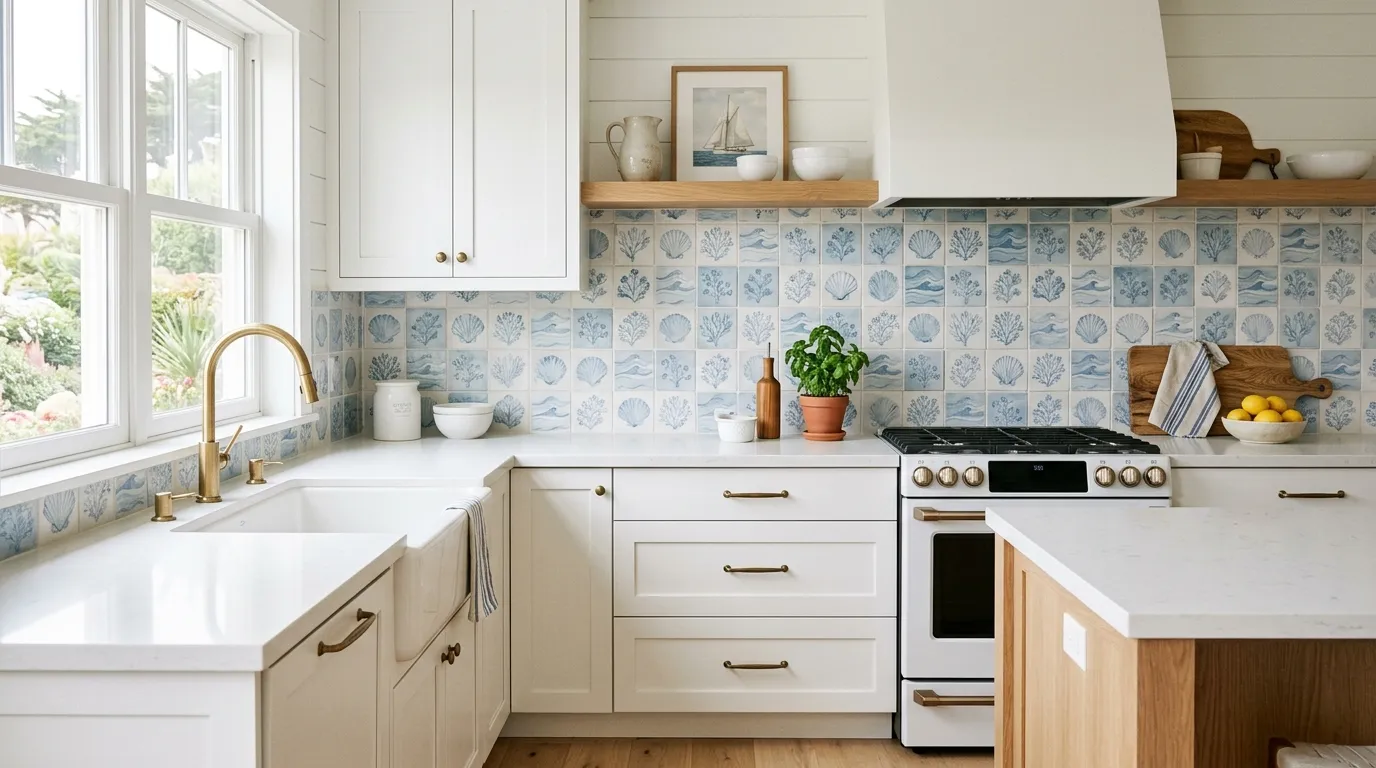
Patterned tiles can instantly bring character into a kitchen while still keeping the overall look light and cohesive. Choosing designs inspired by soft waves or geometric coastal patterns helps create a gentle visual flow that feels natural and calming. This idea works especially well on backsplashes or small floor sections where you want to add interest without dominating the space. I’ve seen this approach elevate simple kitchens into something more curated and visually engaging.
The key is to keep the pattern subtle and the colors balanced so it complements the rest of the room. That’s why many designers recommend sticking to soft blues, whites, and muted tones. In my experience, this helps maintain a clean and timeless feel while still adding personality. Over time, these tiles continue to draw attention in a quiet, elegant way, making the kitchen feel more thoughtfully designed without becoming overwhelming or busy.
9. Driftwood Decor Touches
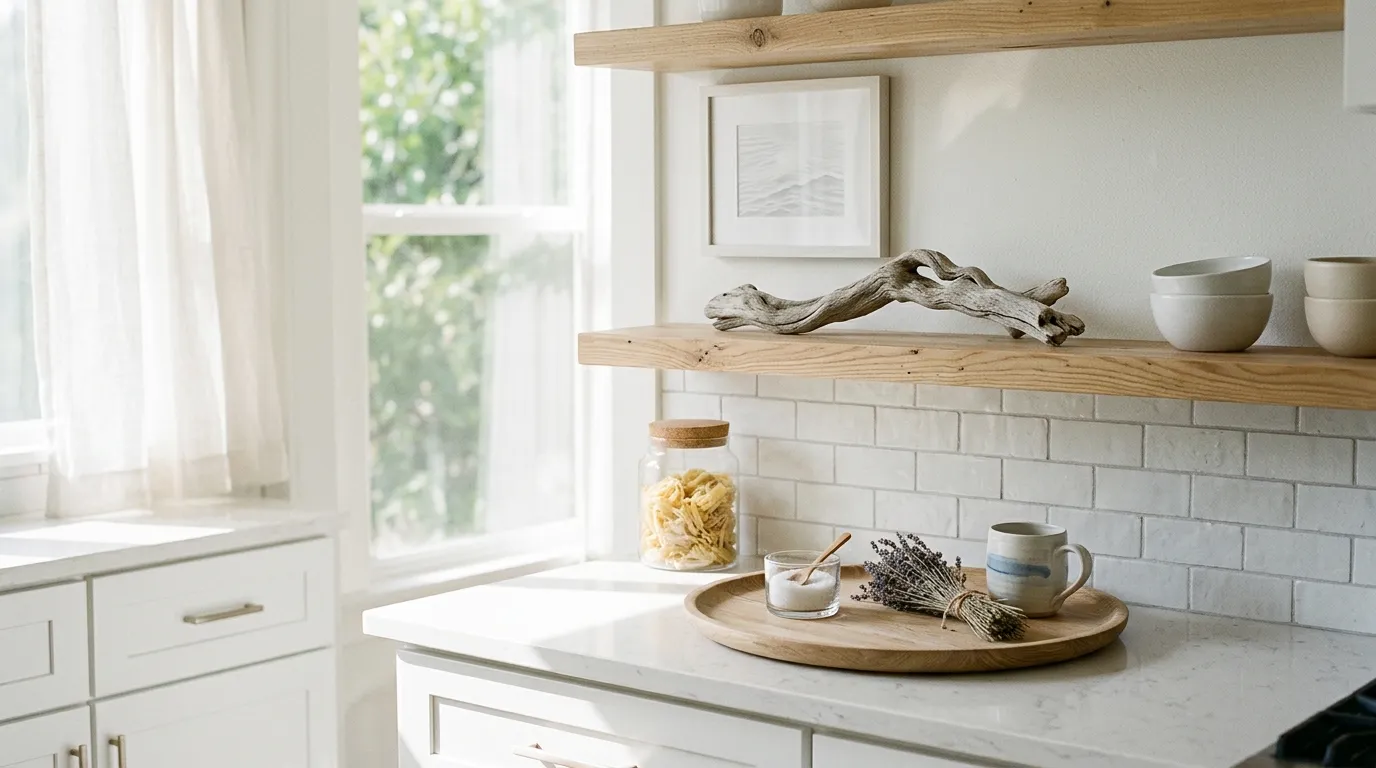
Small decor details can make a big difference, and driftwood-inspired elements are a perfect example of that. These pieces add a soft, weathered texture that feels natural and relaxed without trying too hard. Whether it’s a tray, shelf accent, or decorative object, this type of decor blends effortlessly into light and neutral kitchens. I’ve noticed that even a few well-placed pieces can shift the overall mood, making the space feel more grounded and connected to nature.
What makes this idea especially appealing is how easy it is to adjust or update over time. You can start with just one or two accents and build from there depending on your style. In my experience, keeping these elements minimal helps maintain a clean look while still adding character. The result is a kitchen that feels warm, inviting, and subtly styled, with just enough detail to make it visually interesting without feeling crowded.
10. White Quartz Countertops
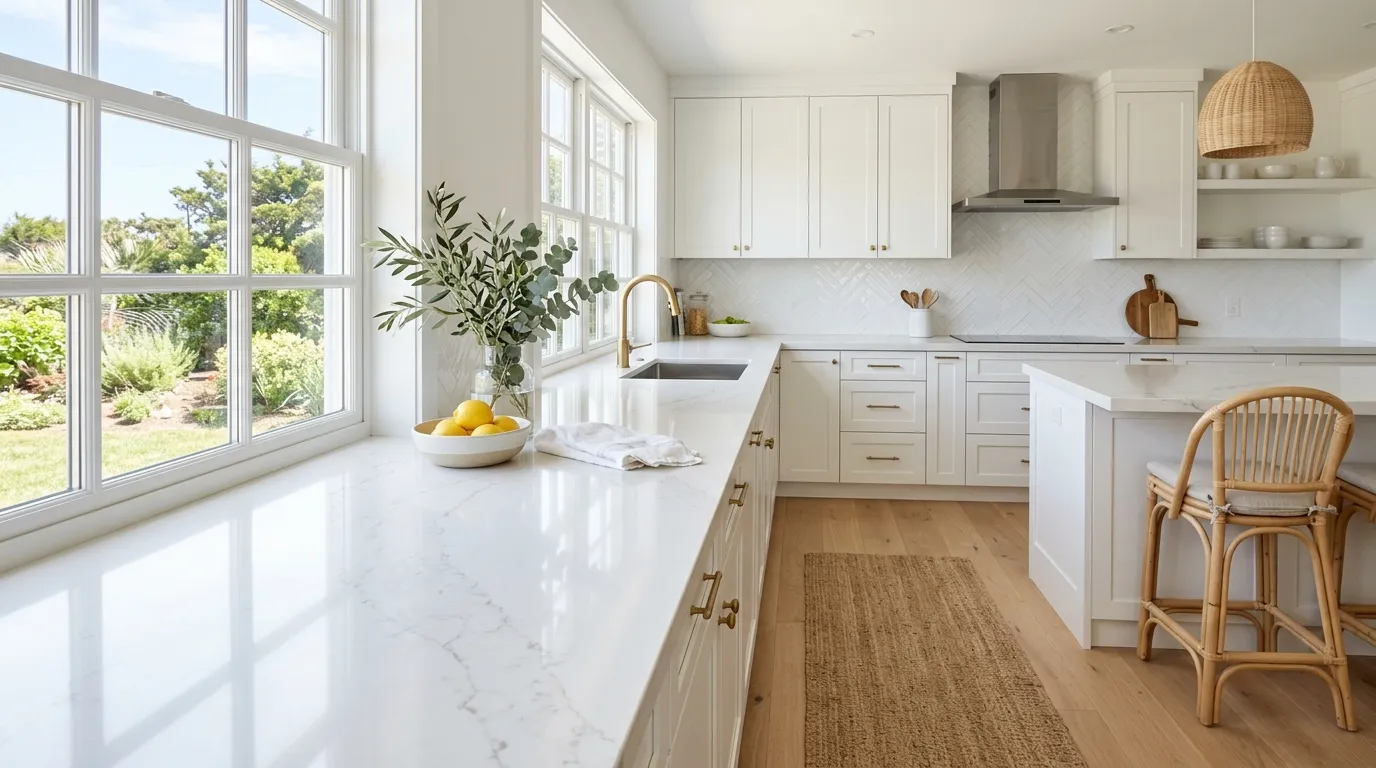
A clean, seamless countertop can instantly elevate the entire look of your kitchen without overwhelming other design elements. White quartz surfaces are especially effective because they reflect light beautifully while maintaining a soft, natural appearance. This makes the space feel more open and fresh throughout the day. I’ve noticed that homeowners often prefer this option because it delivers both style and practicality, creating a surface that looks refined but still works for everyday use.
Another reason this idea works so well is its durability and low maintenance. Unlike more delicate materials, quartz resists stains and scratches, making it ideal for busy kitchens. In my experience, it also pairs effortlessly with a wide range of finishes, from warm wood accents to subtle metallic fixtures. The result is a kitchen that feels bright, polished, and easy to maintain, giving you a balance of beauty and functionality that lasts over time.
11. Shiplap Walls
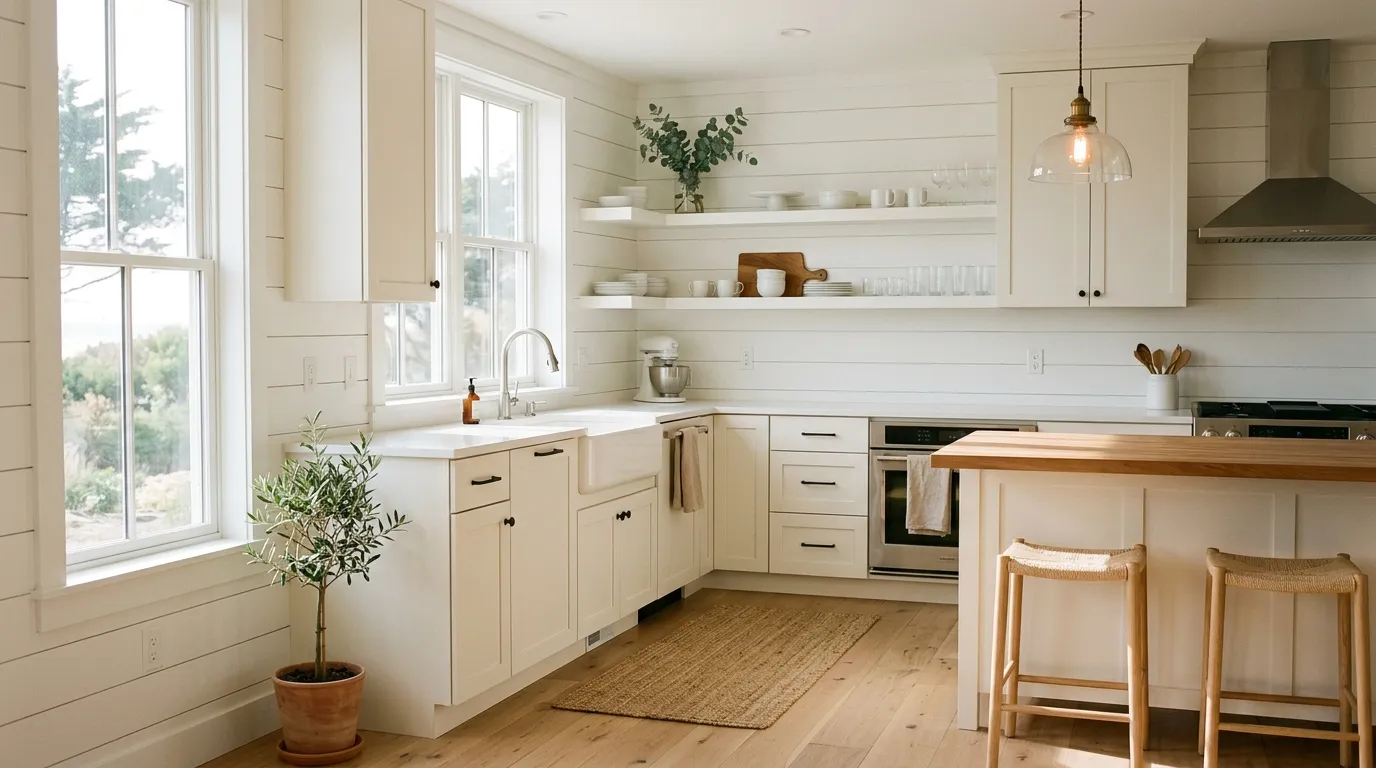
Wall treatments can dramatically influence how a kitchen feels, and shiplap is one of the most effective ways to add texture without overwhelming the space. Its horizontal lines create a sense of width, making the room feel more open and expansive. This style works particularly well in light-toned kitchens where you want to introduce detail while keeping things calm. I’ve seen this feature turn plain walls into a standout design element that still feels simple and understated.
What makes shiplap especially appealing is its versatility across different styles. You can paint it crisp white for a clean look or choose soft tones for added warmth. In my experience, it pairs beautifully with both modern fixtures and rustic accents, helping tie the entire space together. Over time, this subtle texture continues to add depth and character, making the kitchen feel thoughtfully designed without appearing overly styled or busy.
12. Nautical Brass Hardware
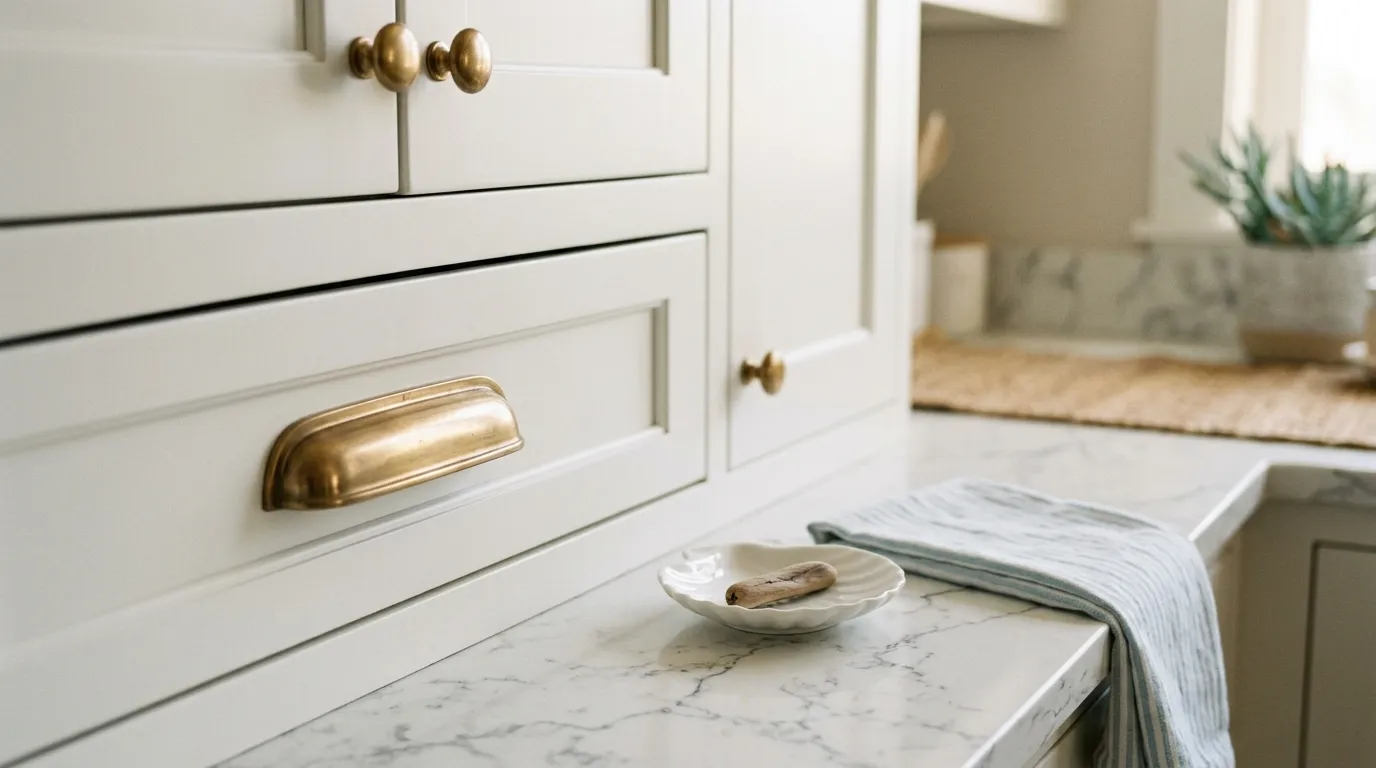
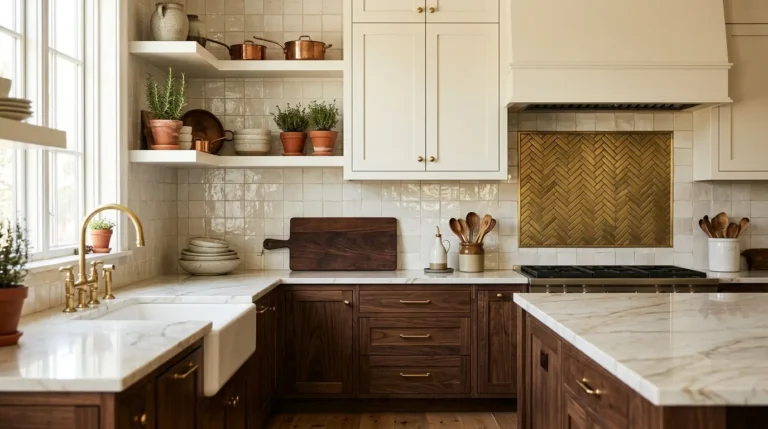
Sometimes, the smallest details create the biggest transformation, and cabinet hardware is a perfect example. Brass handles and knobs introduce a warm, polished touch that stands out beautifully against lighter cabinetry. This simple update can make the entire kitchen feel more refined without requiring a full renovation. I’ve noticed that this type of hardware adds just enough shine to catch the eye while still maintaining a soft, relaxed aesthetic.
Another advantage of this idea is how easy it is to implement and update over time. You can switch out existing hardware in just a few steps, instantly refreshing the look of your space. In my experience, choosing brushed or satin finishes helps keep the look subtle rather than overly glossy. The end result is a kitchen that feels more detailed and cohesive, with a touch of warmth that enhances the overall design without overpowering it.
13. Woven Light Fixtures
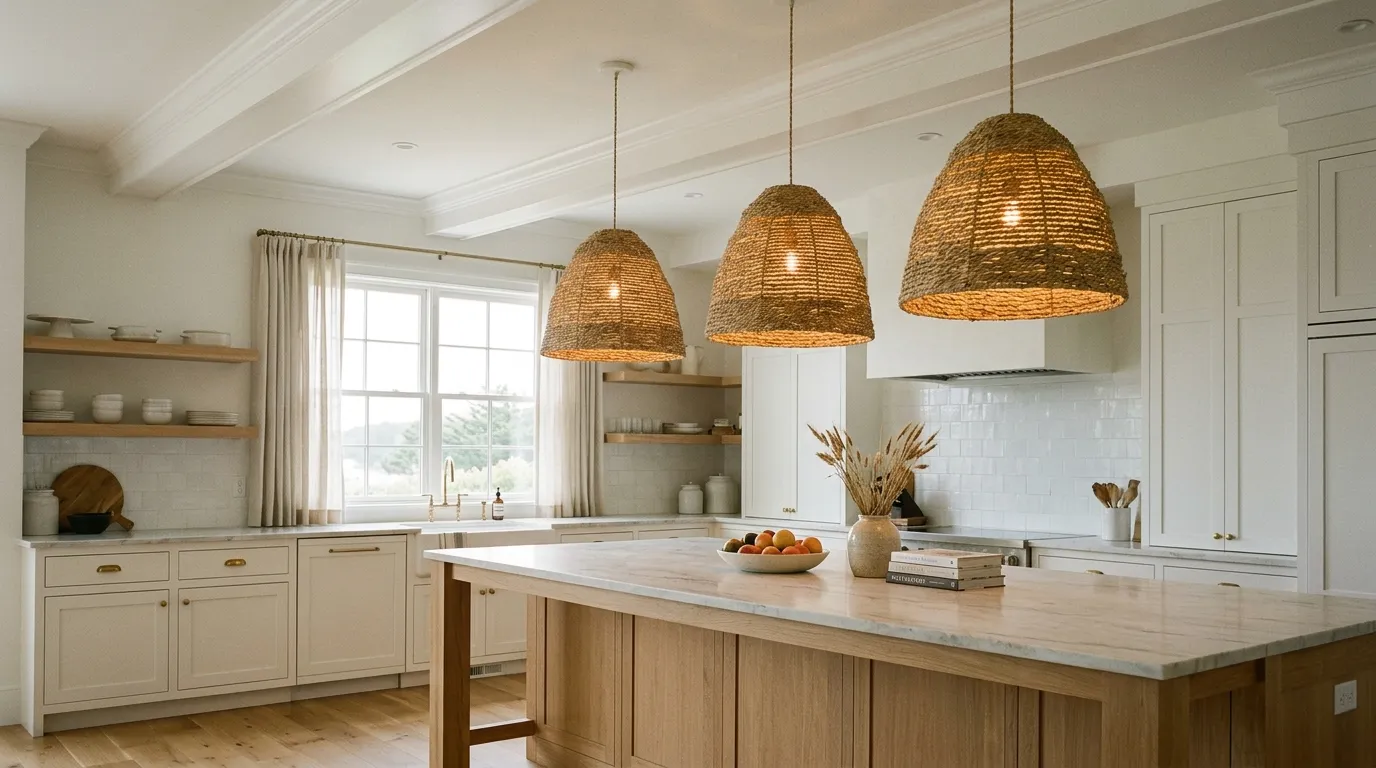
Lighting doesn’t have to be purely functional—it can also become one of the most eye-catching design elements in your kitchen. Woven light fixtures introduce a soft, organic texture that instantly warms up the space while maintaining an airy feel. Their natural fibers diffuse light beautifully, creating a gentle glow that feels calm and welcoming. I’ve noticed that this type of lighting works especially well in kitchens that lean toward minimal or neutral styles, adding just enough character without overwhelming the overall design.
What makes woven fixtures stand out is their ability to blend effortlessly with other natural elements like wood, linen, and stone. In my experience, they help create a layered look that feels intentional yet relaxed. They also work well over islands or dining areas where you want to draw subtle attention upward. Over time, this lighting choice continues to enhance the atmosphere, making the kitchen feel more comfortable and visually balanced without needing constant updates or changes.
14. Sea Glass Accents
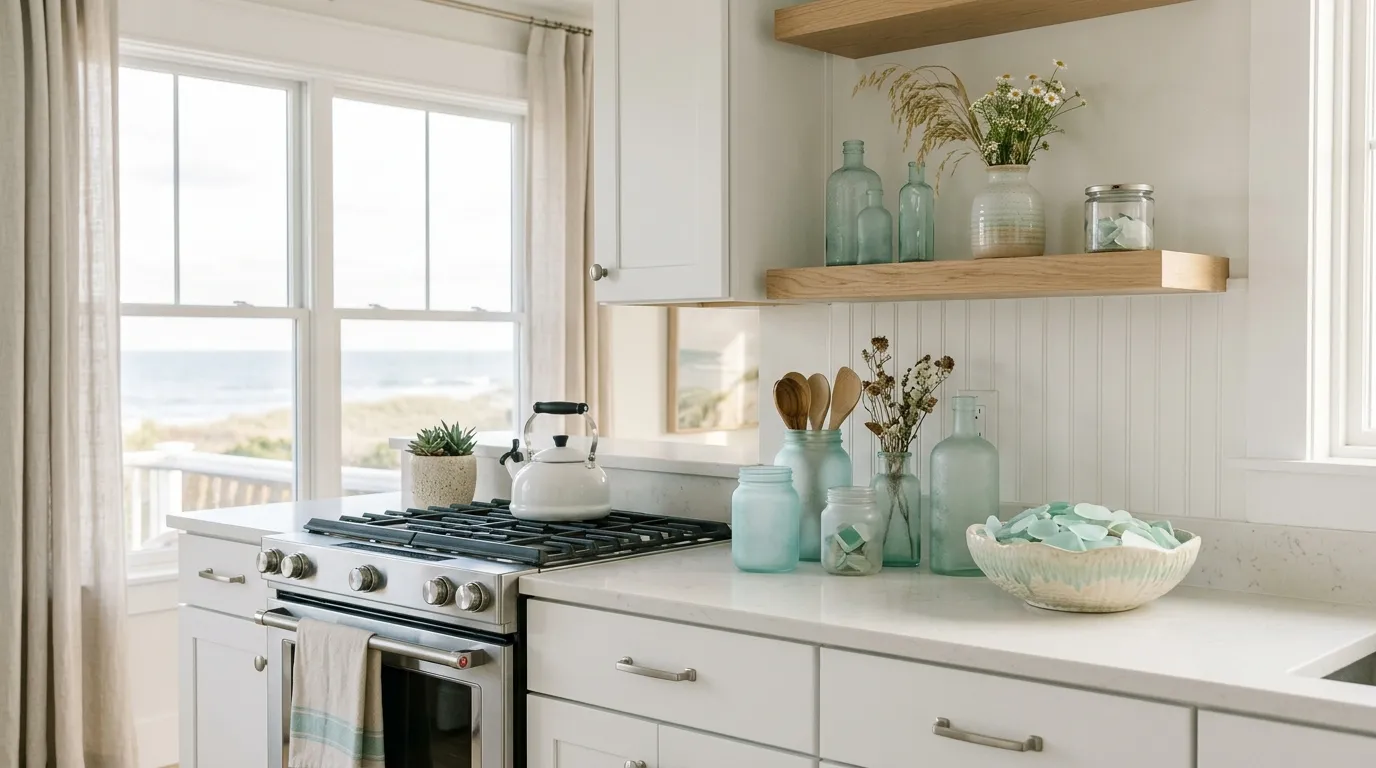
Small accents can completely shift the mood of a kitchen, and sea glass-inspired decor is a perfect example of that subtle transformation. Soft hues of aqua, green, and frosted blue bring in a gentle pop of color that feels calm rather than bold. These tones blend beautifully with neutral backgrounds, creating a light and refreshing atmosphere. I’ve seen this approach work especially well in kitchens that already have a simple base but need a bit of personality to feel complete.
The beauty of this idea lies in its flexibility and ease of change. You can incorporate these accents through jars, bowls, or small decorative pieces without committing to permanent design changes. In my experience, this allows homeowners to refresh their space whenever they want without much effort. Over time, these subtle touches continue to enhance the overall aesthetic, making the kitchen feel thoughtfully styled while still remaining clean, airy, and uncluttered.
15. Light Oak Flooring
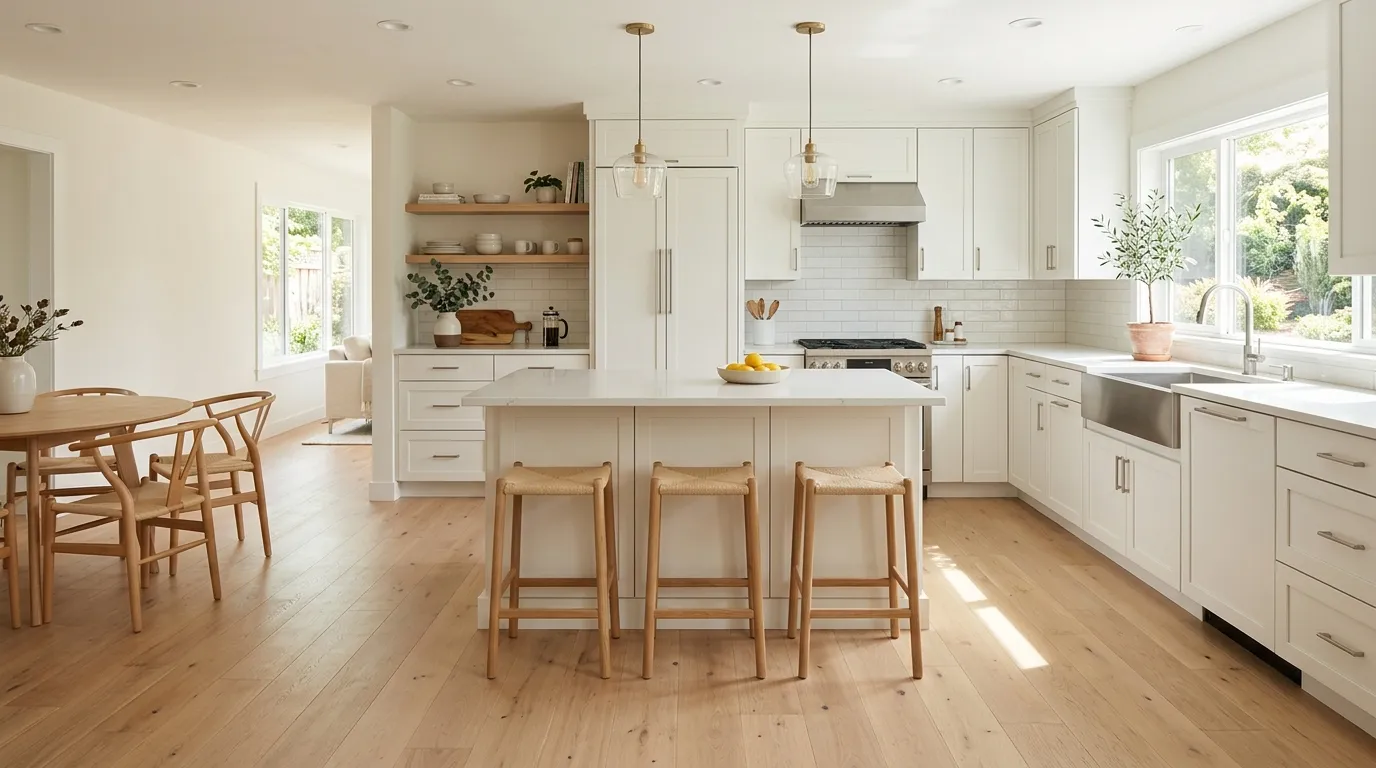
Flooring plays a major role in how a kitchen feels, and light oak is one of the best choices for maintaining a bright and open atmosphere. Its soft, natural tone adds warmth while still reflecting enough light to keep the space feeling airy. This is especially helpful in kitchens that rely on natural daylight to enhance their overall look. I’ve noticed that lighter flooring also helps unify different design elements, creating a smooth visual flow throughout the room.
Another reason this idea works so well is its versatility across different styles and layouts. Whether your kitchen leans modern or slightly rustic, light oak flooring adapts easily without clashing with other materials. In my experience, it also hides minor wear better than darker floors, making it practical for busy homes. The end result is a kitchen that feels warm, balanced, and effortlessly stylish, with a foundation that supports both function and visual appeal.
16. Minimal Coastal Decor
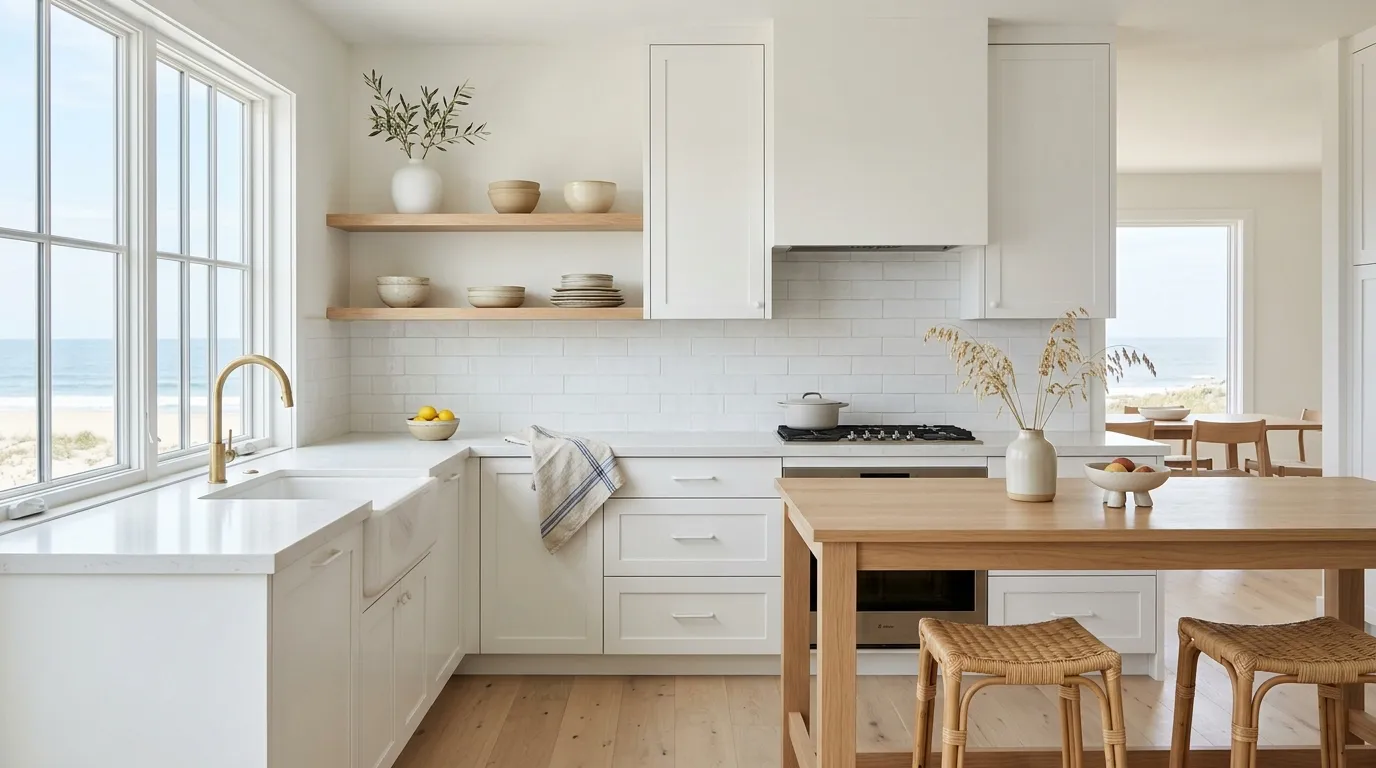
Sometimes, less truly is more when it comes to styling a kitchen. Minimal decor allows the space to breathe, making it feel more open, calm, and visually balanced. Instead of filling every surface, focusing on a few carefully chosen pieces creates a stronger impact. I’ve noticed that this approach works especially well in a coastal kitchen where the goal is to maintain a light and effortless feel without unnecessary distractions.
What makes this idea so effective is how easy it is to maintain over time. With fewer items on display, cleaning becomes simpler and the space stays organized naturally. In my experience, choosing decor with soft textures and subtle tones helps maintain visual interest without cluttering the room. The result is a kitchen that feels intentional, शांत, and inviting, offering a peaceful environment that supports both daily routines and relaxed gatherings.
17. Large Window Views
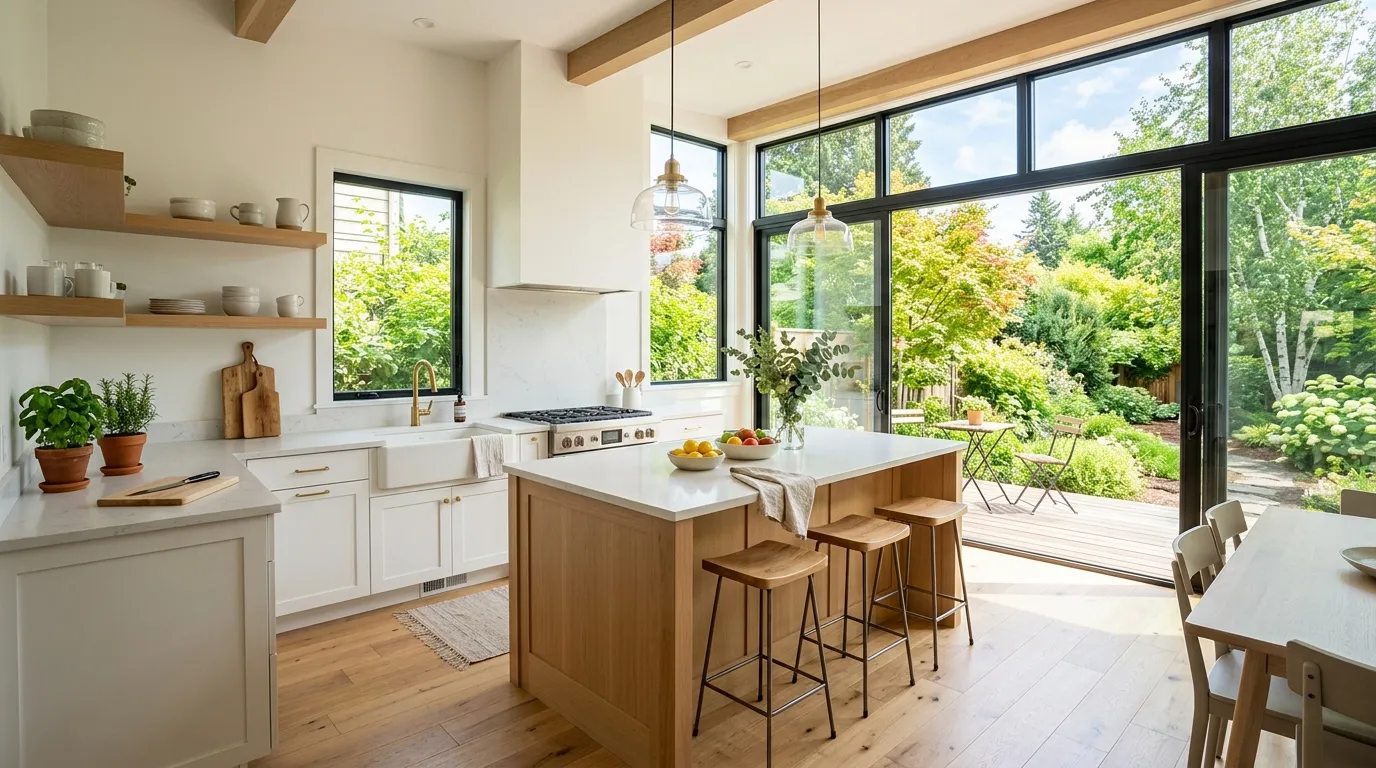
Natural light can completely transform how a kitchen looks and feels, and large windows are one of the most effective ways to achieve that. They allow sunlight to flood the space, creating a bright and uplifting environment that feels open and refreshing. I’ve seen how even a single large window can make a noticeable difference, especially in kitchens that might otherwise feel closed in or dim.
Beyond brightness, windows also create a strong visual connection to the outside world, which adds depth and interest to the space. In my experience, this connection helps the kitchen feel more relaxed and comfortable, especially during the day. Whether it’s a garden view or simple greenery, the outdoor element enhances the overall atmosphere. Over time, this feature continues to improve both the functionality and the emotional feel of the kitchen.
18. Marble Texture Surfaces
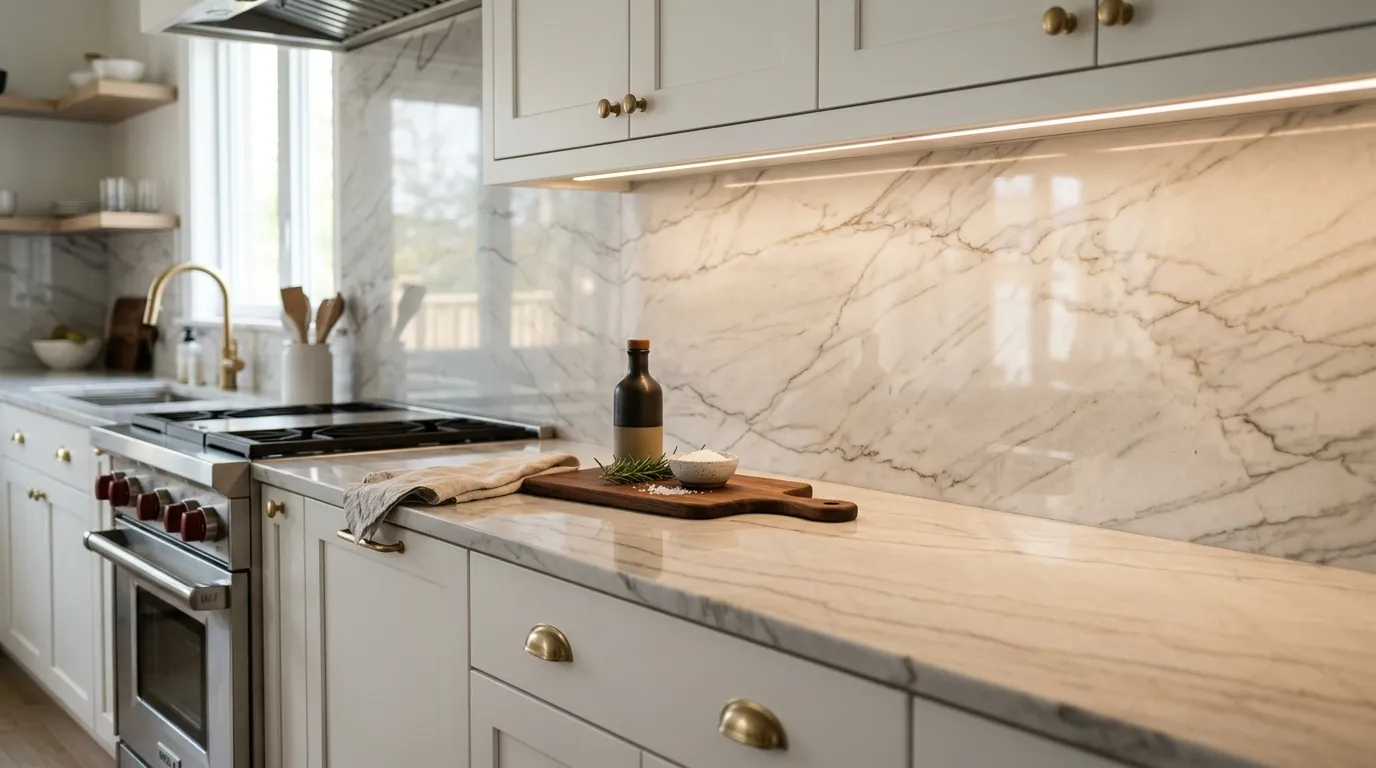
Marble textures have a unique way of making a kitchen feel instantly more refined without overwhelming the design. The soft veining adds gentle movement, which keeps the space visually interesting while still maintaining a calm and clean look. This works especially well in kitchens that rely on lighter tones for their overall style. I’ve noticed that even small marble elements can create a noticeable upgrade in how the space feels.
Another advantage of this idea is how easily it pairs with other materials like wood, glass, or metal. In my experience, this flexibility makes it a reliable choice for both modern and classic kitchens. Whether used on countertops or backsplashes, marble textures add a sense of quality and detail that stands out subtly. The result is a kitchen that feels elegant, balanced, and thoughtfully designed without appearing overly decorative.
19. Coastal Color Cabinets
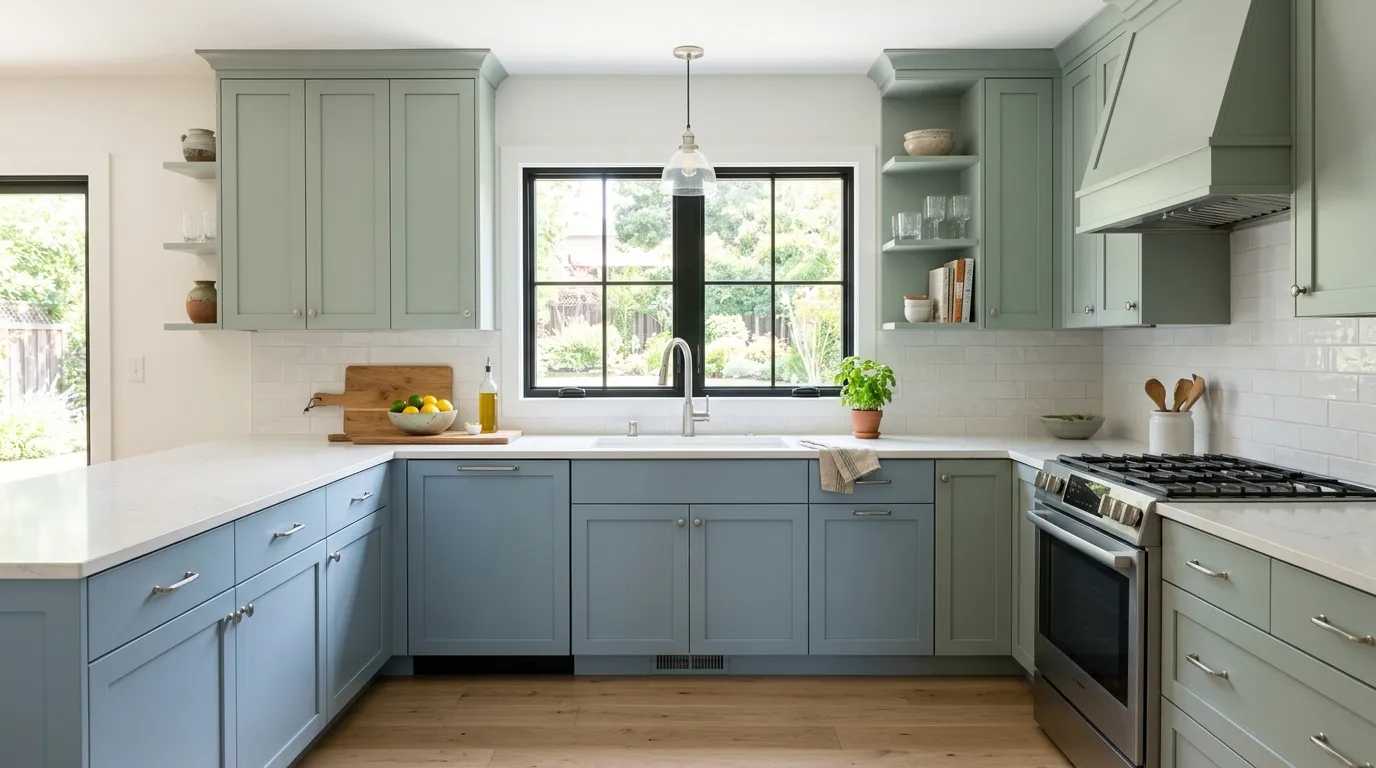
Color can completely transform a kitchen when used thoughtfully, and soft-toned cabinets are a perfect way to do it. Shades like muted blue, sage, or dusty teal bring in a calm, refreshing feel without making the space look too bold or busy. This approach works especially well if the rest of the kitchen remains light and balanced. I’ve noticed that these tones help create a relaxed atmosphere that still feels polished and intentional.
What makes this idea stand out is its ability to add personality while maintaining a timeless appeal. You can keep the look subtle with lower cabinets or go all in for a more cohesive feel. In my experience, pairing these colors with warm wood or soft metallic finishes creates a beautiful contrast. Over time, this design choice continues to feel fresh and inviting, making the kitchen a more enjoyable space for everyday use.
20. Rope Detail Accents
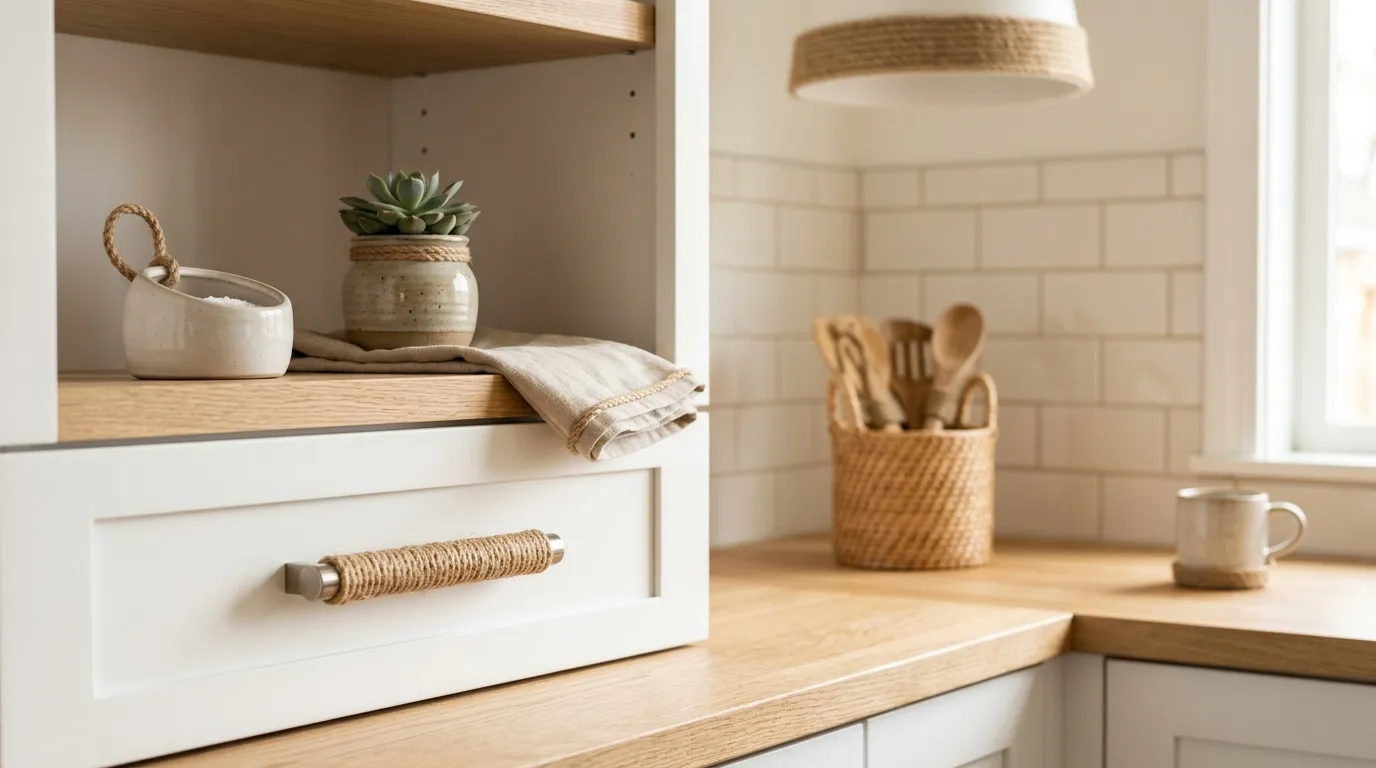
Sometimes, it’s the smallest details that bring a design together, and rope accents are a great example of that. Whether used in handles, lighting, or decor, this texture introduces a subtle nod to nautical style without feeling overly themed. I’ve seen this work especially well in kitchens that already have a light, natural base and just need a bit more character to feel complete.
The key is to use rope elements sparingly so they enhance rather than dominate the design. In my experience, even one or two well-placed accents can create a noticeable impact. These details add a handcrafted feel that makes the space more personal and inviting. Over time, they continue to complement other textures in the kitchen, helping create a layered and cohesive look that feels both relaxed and thoughtfully styled.
21. Open Concept Layout
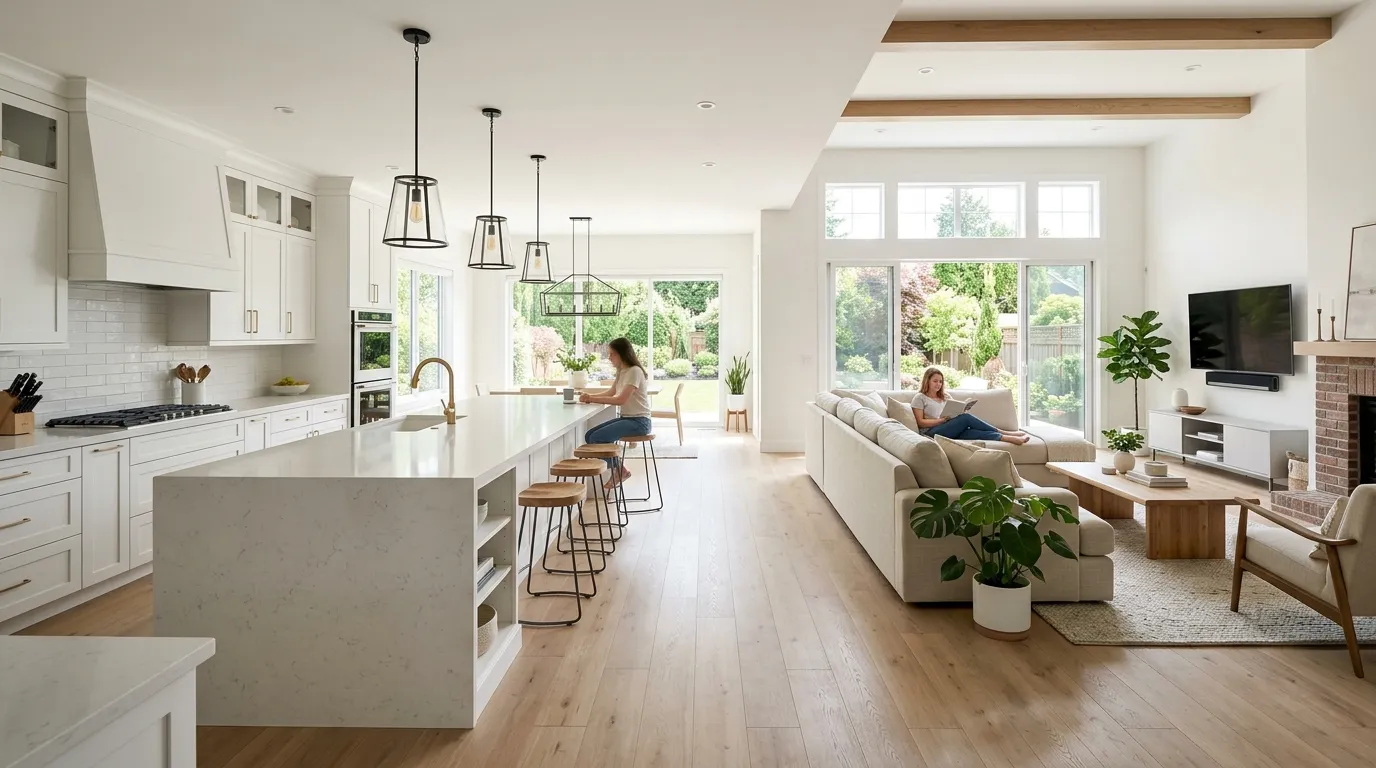
An open concept layout can completely change how a kitchen functions and feels within a home. By removing barriers and connecting it to adjacent spaces, the kitchen becomes part of a larger, more social environment. This setup allows light to travel freely, making the entire area feel brighter and more expansive. I’ve noticed that this layout works especially well for families or those who love entertaining, as it keeps everyone connected.
Functionally, it also improves movement and flexibility, allowing you to cook, dine, and interact without feeling confined. In my experience, this type of layout makes daily routines smoother and more enjoyable. It also gives you more freedom to style the space cohesively with nearby areas. The result is a kitchen that feels open, welcoming, and perfectly integrated into the overall home design.
Conclusion
Creating a beautiful, relaxed kitchen doesn’t have to be complicated or expensive. With the right mix of light colors, natural textures, and thoughtful details, you can design a space that feels both stylish and comfortable. These coastal kitchen ideas are all about making your home feel brighter, calmer, and more inviting in a way that fits your lifestyle.
Try starting with just one or two ideas and build from there. I’ve seen how small changes like these can completely transform a space over time. If you found inspiration here, save this post on Pinterest, share it with others, and start creating a kitchen you truly enjoy every day.
FAQs
1. How can I create a coastal-style kitchen on a budget?
Start with small, high-impact changes like swapping cabinet hardware, adding open shelves, or using light, neutral colors. In my experience, even affordable updates like woven decor, simple lighting changes, or fresh paint can make a big difference without requiring a full renovation.
2. What colors work best for a coastal-inspired kitchen?
Soft whites, warm beiges, light grays, and muted blues or greens work beautifully. These shades reflect light and create a calm, airy feel. I’ve noticed that sticking to a soft palette helps the space feel more open and timeless rather than overly themed.
3. Do I need a large space to achieve this style?
Not at all. Even small kitchens can feel bright and open with the right choices. Using light colors, reflective surfaces, and minimal decor can visually expand the space. I’ve seen compact kitchens look significantly larger just by improving lighting and reducing clutter.
4. What materials help create a natural, coastal feel?
Materials like light wood, rattan, linen, and subtle stone textures work best. These elements add warmth and texture without making the space feel heavy. In my experience, mixing just two or three natural materials is enough to create a balanced and cohesive look.
5. How do I keep the kitchen from looking cluttered?
Focus on minimal styling and keep only essential or visually appealing items on display. Open shelves should be styled with intention, not overcrowded. I’ve noticed that regularly editing what you keep visible helps maintain that clean, relaxed look over time.
6. Can I mix modern and coastal styles together?
Yes, and it often looks even better. Clean lines from modern design pair beautifully with soft textures and natural elements. I’ve seen this combination create a space that feels both polished and comfortable, which is perfect for everyday living.
7. What lighting works best for this type of kitchen?
Natural light is ideal, but you can enhance it with warm-toned fixtures like glass or woven pendants. Layered lighting works best to keep the space functional and inviting. In my experience, softer lighting instantly makes the kitchen feel more relaxed and welcoming.