Introduction
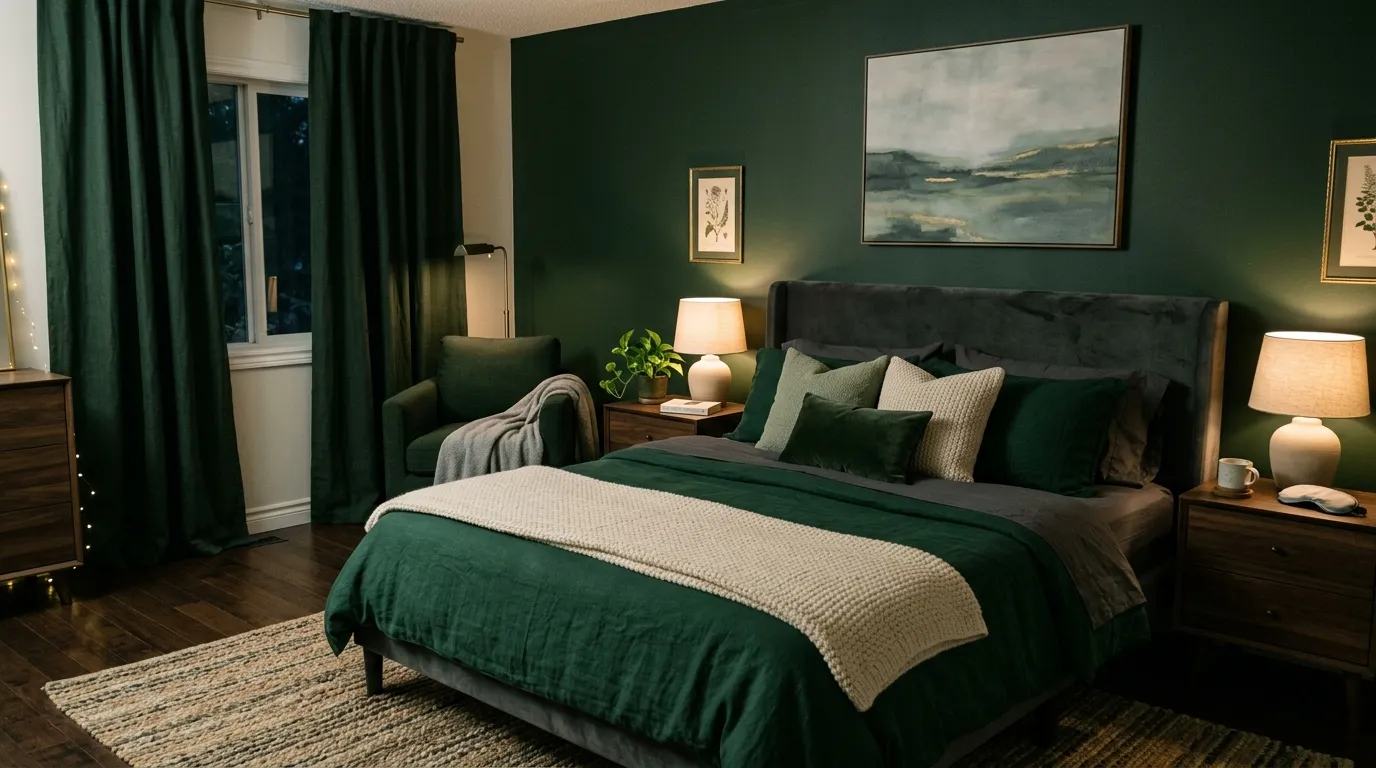
Dreaming of a calm, cozy retreat? A dark green moody bedroom can completely transform how your space feels and how well you rest. The rich tones, soft lighting, and layered textures create a peaceful atmosphere that helps you unwind after long, busy days.
This article brings together 23 simple yet powerful ideas to help you design a bedroom that feels both stylish and deeply relaxing. Whether you’re starting from scratch or updating a few details, these ideas focus on small changes that make a big visual and emotional impact. I’ve noticed that even subtle upgrades—like better lighting or softer fabrics—can shift the entire mood of a room.
You’ll discover practical ways to balance deeper colors, add warmth, and create a space that truly supports better sleep. Each idea is easy to apply, beginner-friendly, and designed to feel real—not overwhelming. If you’ve been wanting a bedroom that looks beautiful and feels even better, you’re in the right place.
1. Matte Green Walls
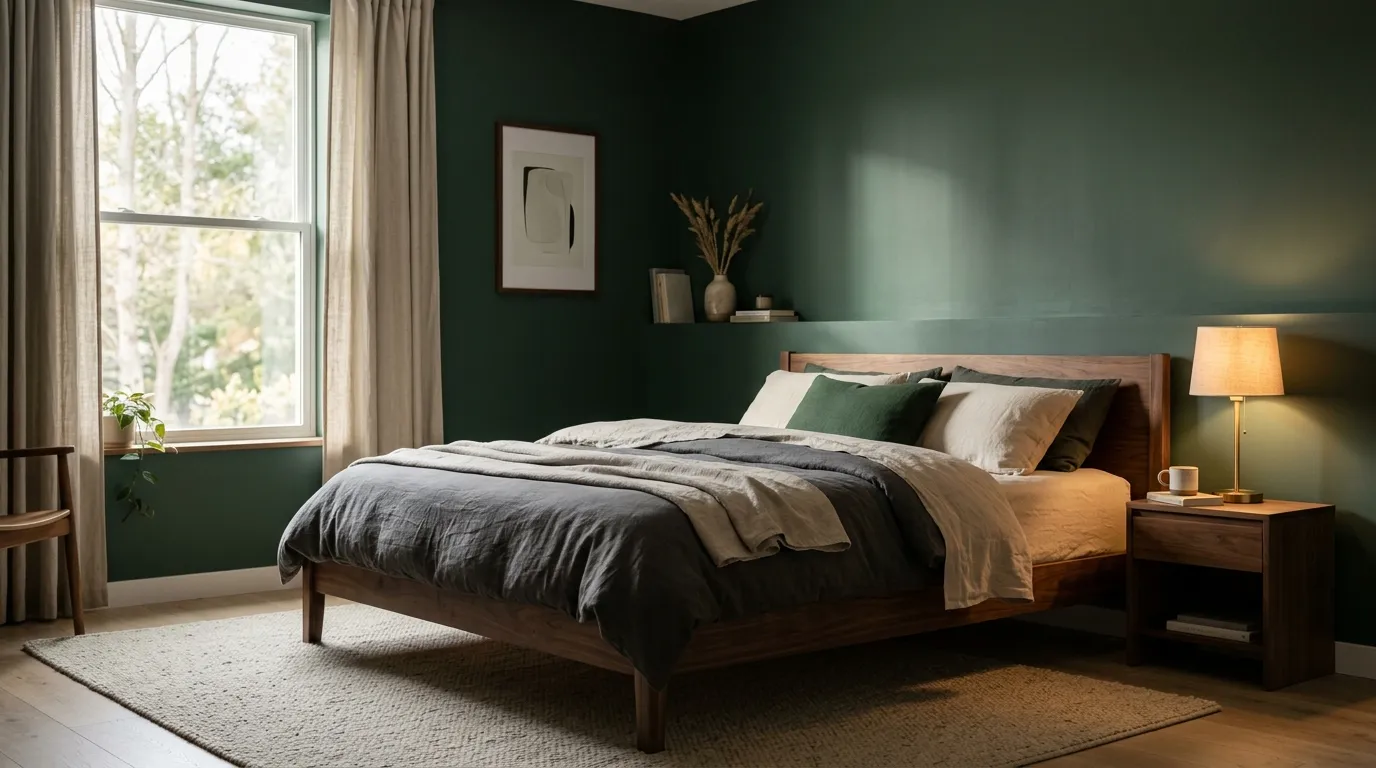
The moment you switch to matte finishes, the entire room starts to feel softer and more grounded. Unlike glossy paints, matte surfaces absorb light, which helps reduce visual noise and creates a calming effect. This subtle change makes a noticeable difference in how the space feels, especially in the evening when lighting becomes more important. It’s a simple way to turn a bold color into something relaxing rather than overwhelming.
In my experience, matte green walls work especially well in bedrooms where you want to disconnect and unwind. They create a cocoon-like feeling that encourages better rest without making the space feel too dark or heavy. When paired with soft lighting and minimal decor, the overall environment becomes more intentional and peaceful. This approach is often used in a dark green moody bedroom because it balances depth with comfort in a very natural way.
2. Dark Wood Bed Frame
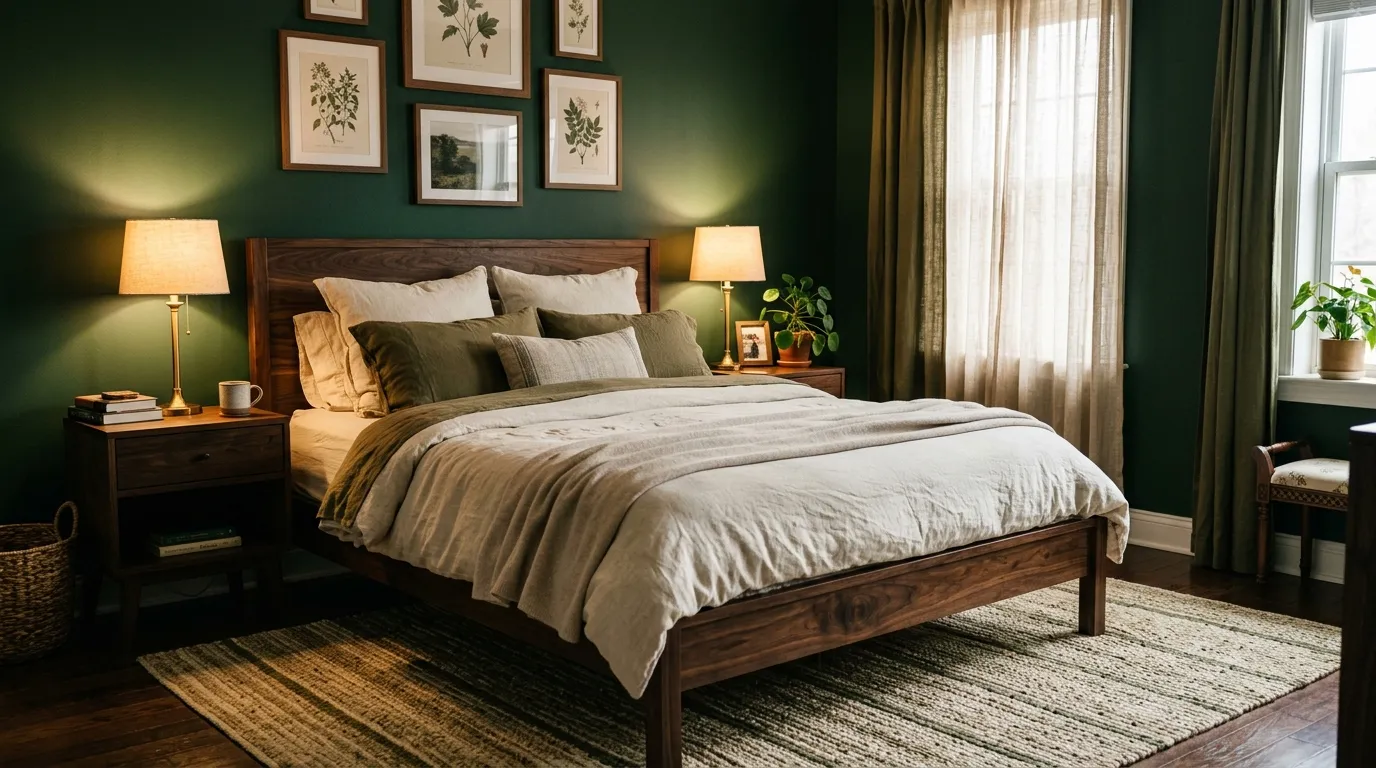
A darker wood bed frame instantly anchors the room and gives it a strong visual base. When combined with deep green tones, it creates a natural, earthy palette that feels both rich and calming. This pairing works because wood introduces warmth, preventing the space from feeling too cold or overly dramatic. It’s a small upgrade that makes the entire setup feel more intentional and put together.
I’ve noticed that darker wood tones also age beautifully, making them a long-term design choice rather than a trend. They blend easily with different textures like linen, cotton, and even velvet, giving you flexibility over time. That’s why many designers recommend starting with a solid wood frame when building a moody bedroom setup—it sets the tone for everything else without overpowering the space.
3. Layered Neutral Bedding
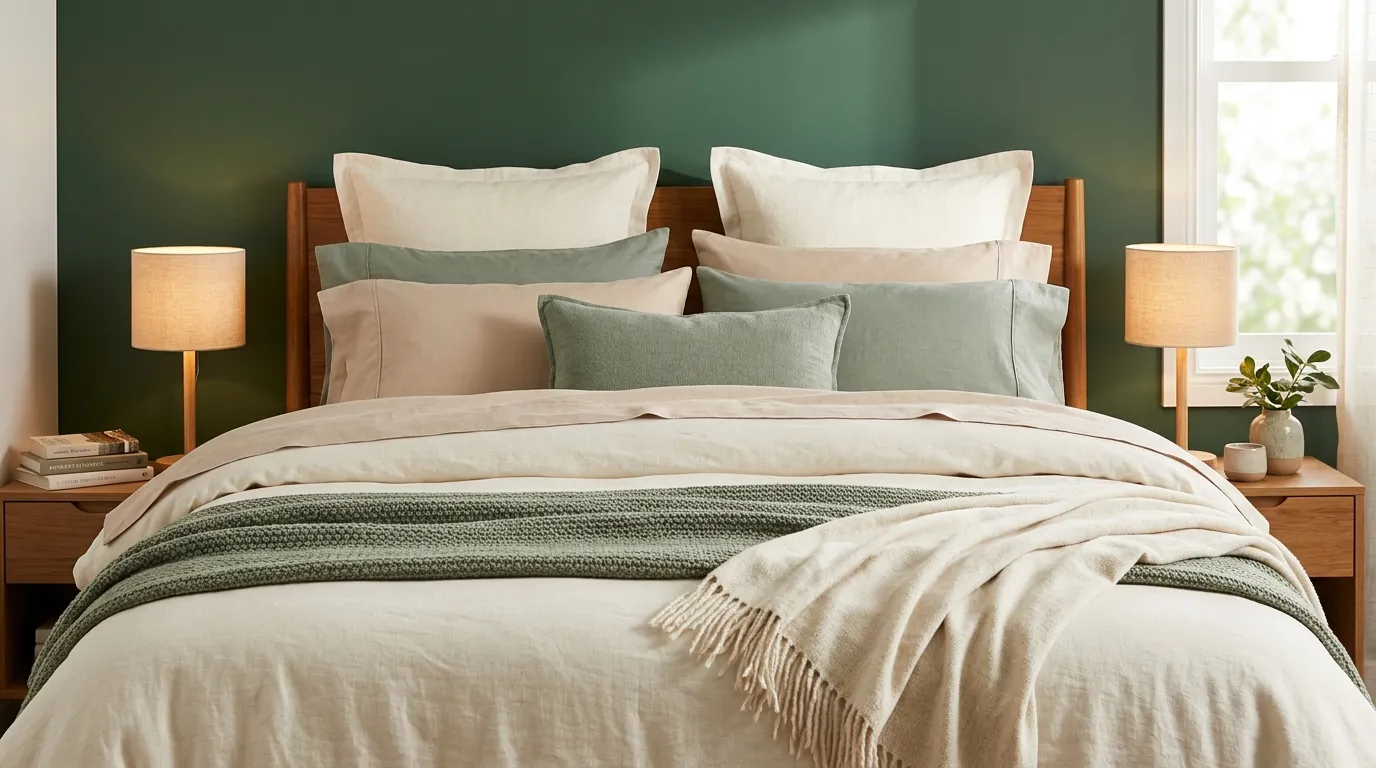
Nothing transforms a bedroom faster than well-layered bedding. By combining soft neutrals like cream, beige, and muted greens, you create contrast without clashing with deeper tones. This layering technique adds both comfort and visual depth, making the bed look more inviting. It also helps break up darker colors, so the room feels balanced rather than heavy or overwhelming.
I’ve seen this work well in many homes where people want a cozy look without sacrificing style. The key is mixing textures—think soft duvets, knitted throws, and breathable sheets. This not only improves comfort but also enhances the overall aesthetic. In a dark green moody bedroom, layered bedding plays an important role in keeping the space warm, soft, and visually appealing without needing major design changes.
4. Velvet Accent Pillows

A few velvet pillows can completely shift the mood of your bedroom without requiring a full redesign. The soft sheen of velvet catches light gently, adding depth and dimension to darker tones. This makes the space feel more layered and visually interesting while still maintaining a calm, restful vibe. It’s one of the easiest ways to upgrade your bed styling with minimal effort.
In my experience, velvet works best when balanced with simpler fabrics like cotton or linen to avoid overwhelming the space. That contrast keeps the room feeling cozy instead of overly formal. These small touches are often what elevate a dark green moody bedroom from basic to thoughtfully styled, creating a space that feels both comfortable and visually rich.
5. Warm Ambient Lighting
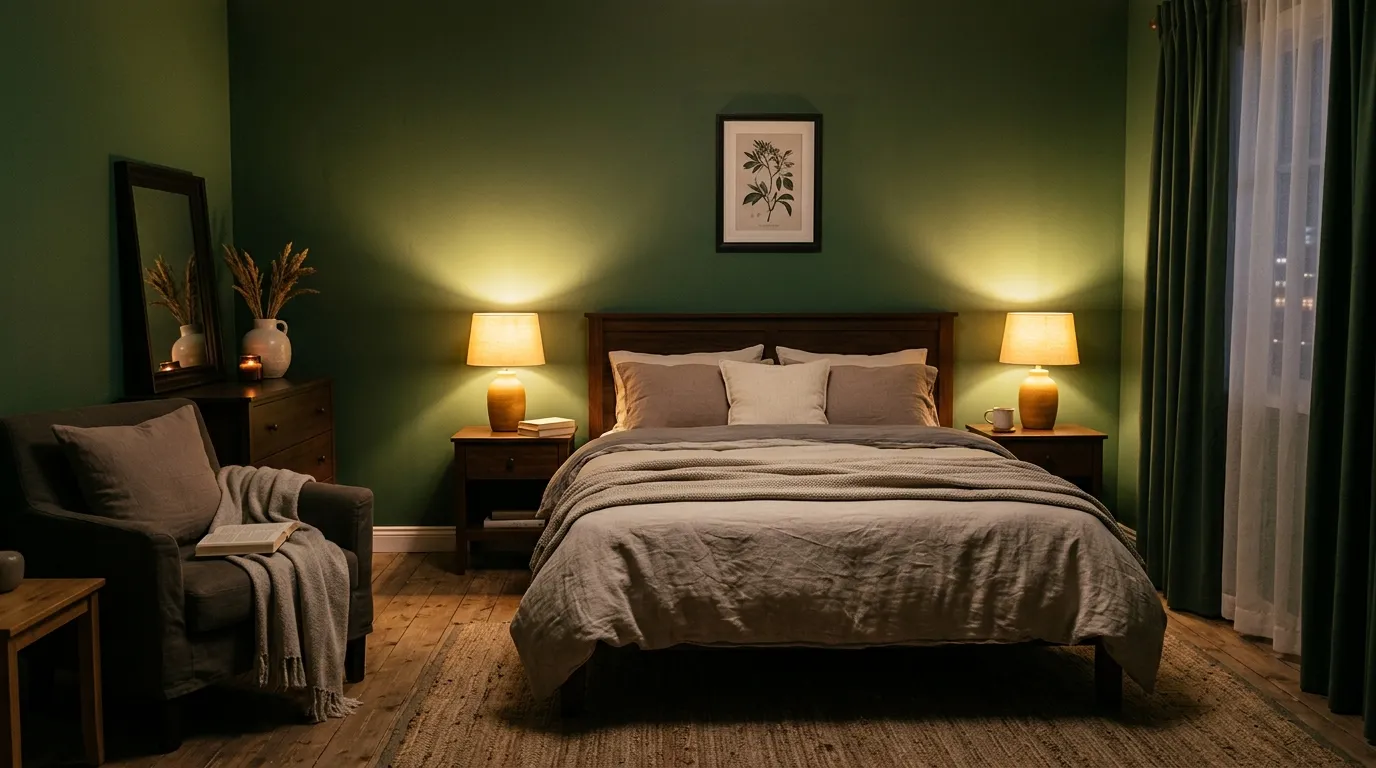
Lighting can completely change how a room feels, especially when working with deeper colors. Warm ambient lighting softens the intensity of darker walls and creates a calm, inviting atmosphere. Instead of bright overhead lights, softer sources like table lamps or wall sconces help distribute light evenly, reducing harsh contrasts. This makes the room feel more comfortable and easier to unwind in at night.
I’ve noticed that switching to warm bulbs is one of the fastest ways to improve the mood of a bedroom. It instantly makes the space feel more relaxing without any major changes. That’s why many designers recommend layered lighting—combining multiple soft sources—to create depth and flexibility depending on the time of day or mood.
6. Minimal Wall Art
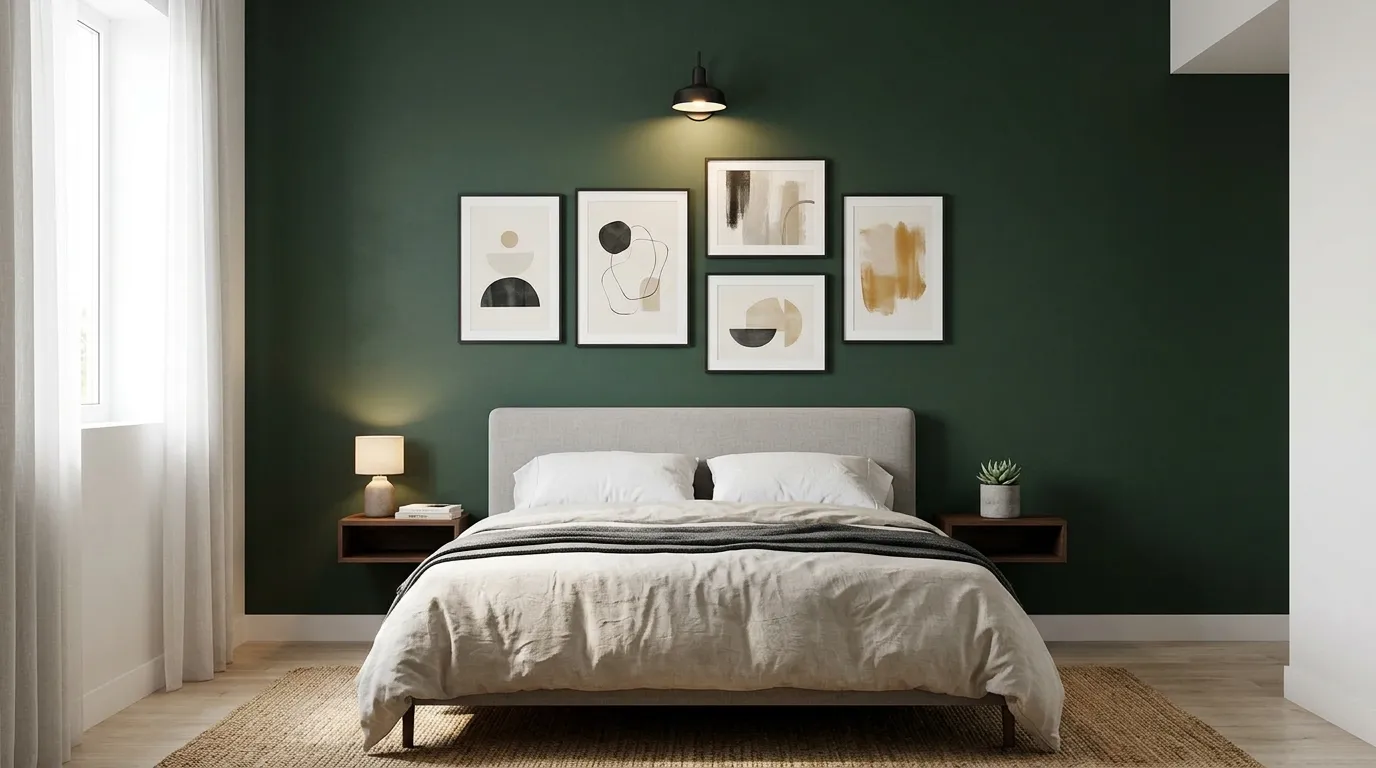
Keeping wall art minimal allows the color of the room to take center stage without unnecessary distractions. Instead of filling every wall, a few well-placed pieces create a cleaner and more intentional look. This approach works especially well with deeper tones, where too much decoration can make the space feel busy or overwhelming. Simplicity helps maintain a peaceful, restful environment.
I’ve seen this approach make a big difference in smaller bedrooms where space is limited. By reducing visual clutter, the room instantly feels more open and breathable. Choosing neutral or abstract art also keeps the focus on texture and tone rather than bold imagery, making the overall design feel more cohesive and calming.
7. Olive Green Curtains
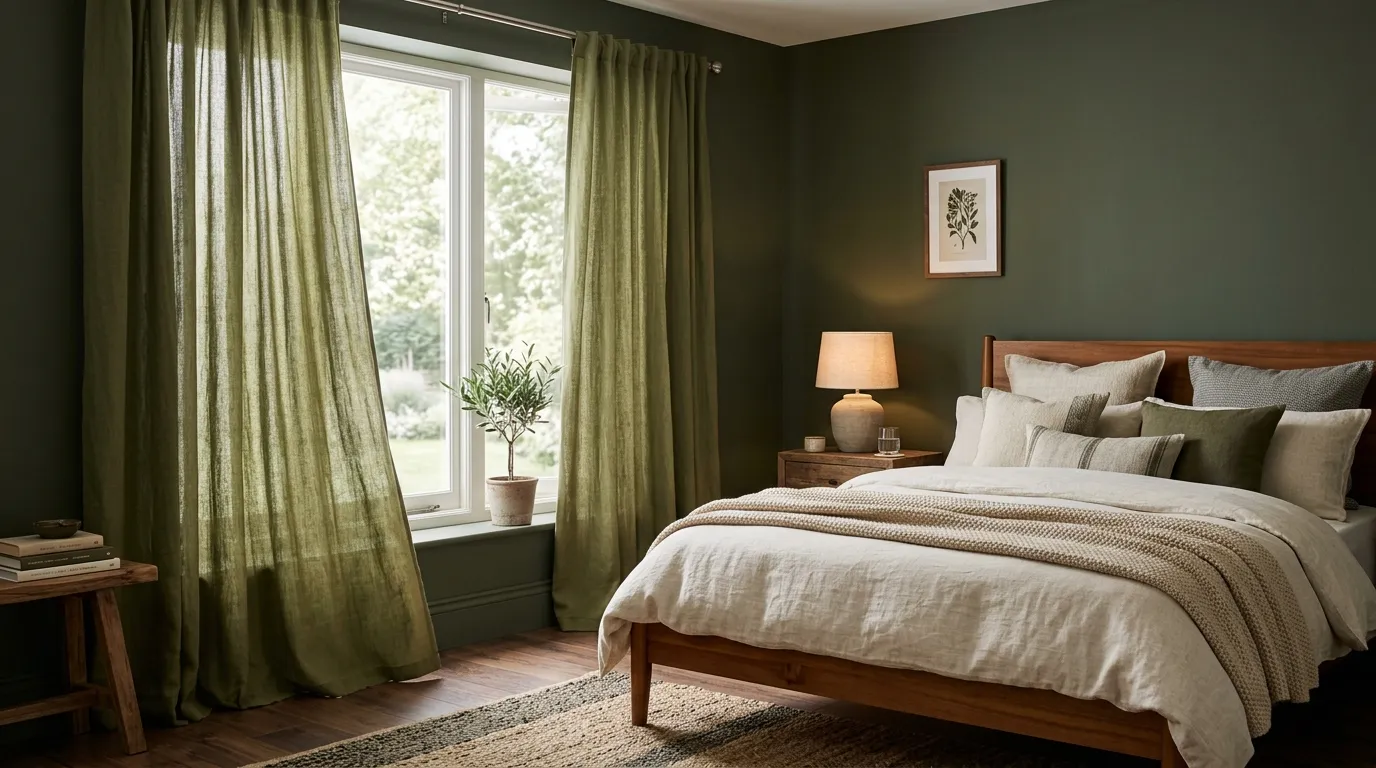
Curtains often get overlooked, but they play a huge role in shaping how a bedroom feels. Olive green fabric filters natural light beautifully, creating a soft glow instead of harsh brightness. This gentle diffusion makes the space feel calmer throughout the day and more restful in the evening. It also adds another layer of color without overwhelming the room, helping everything feel cohesive and intentional.
I’ve noticed that floor-length curtains instantly make a room feel taller and more refined. They draw the eye upward and add a sense of softness that balances stronger wall tones. When paired with natural fabrics and subtle textures, this simple upgrade can transform the overall mood into something more relaxed and comfortable without requiring major changes.
8. Black Metal Accents
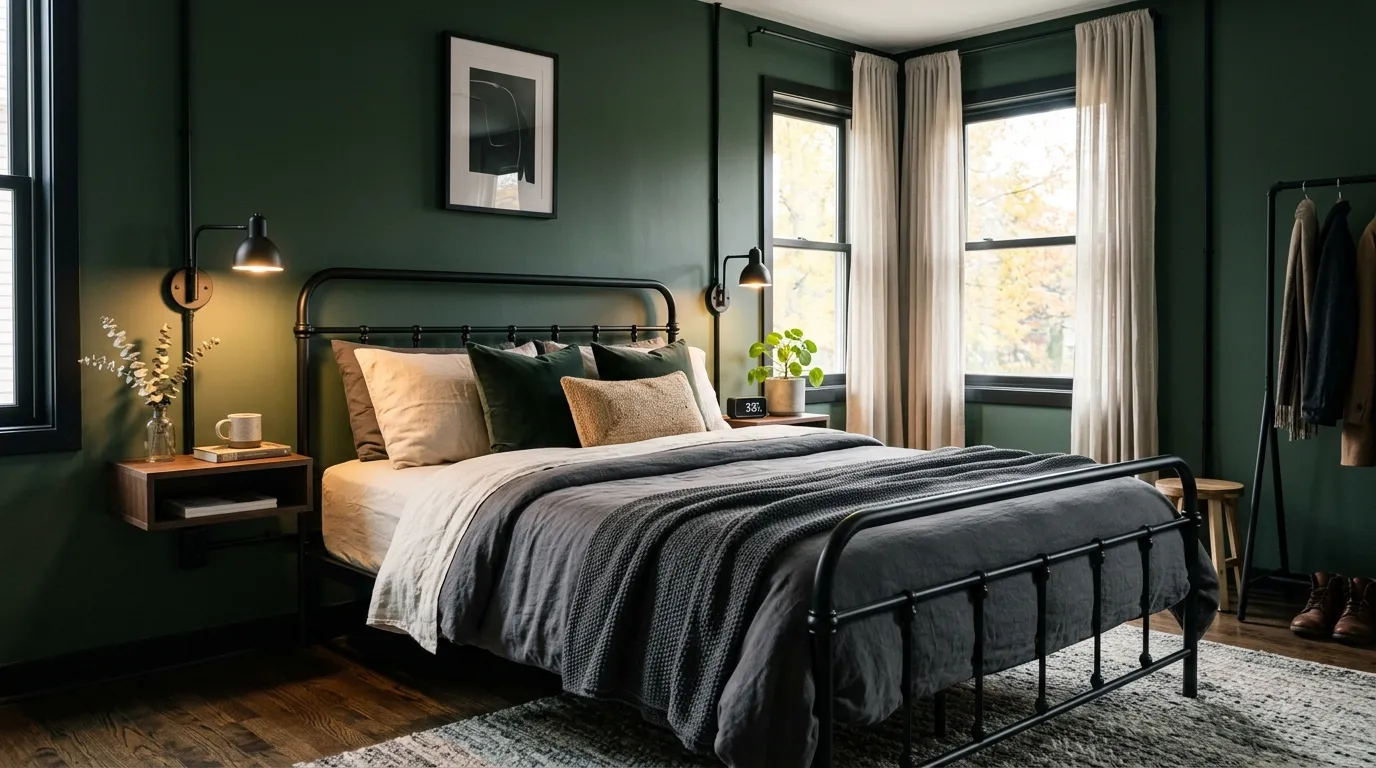
Adding black metal elements creates a subtle contrast that sharpens the overall design. Whether it’s in lighting fixtures, bed frames, or small decor pieces, these accents break up the softness of fabric and wood. This balance between soft and structured elements keeps the room from feeling too flat or overly cozy, giving it a more refined and intentional look.
In my experience, a few well-placed metal accents go a long way. You don’t need to overdo it—just enough to create visual interest and contrast. That’s why many designers use black finishes to anchor a space, especially when working with deeper tones. It adds clarity and definition without taking away from the relaxing atmosphere.
9. Textured Area Rug
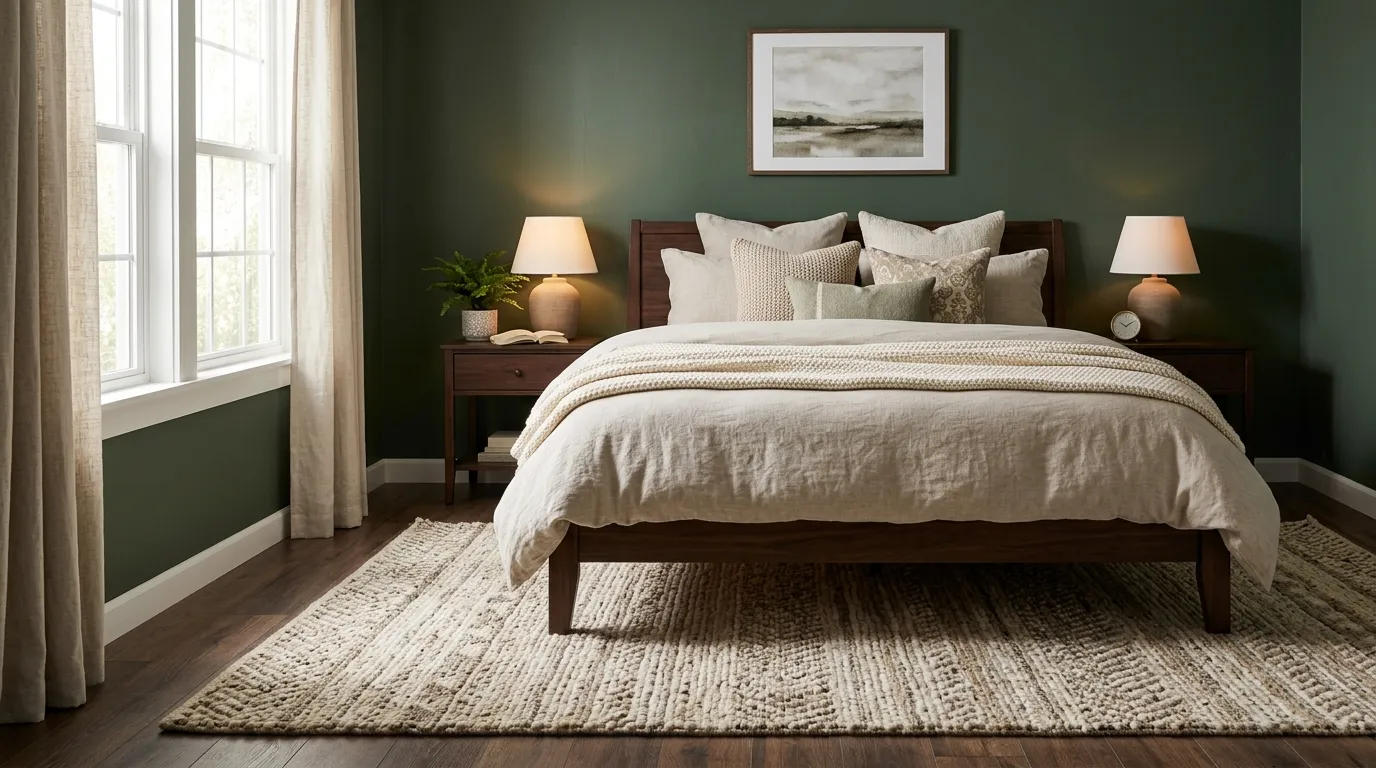
A textured rug can completely change how a bedroom feels the moment you step into it. It introduces warmth and softness, especially important when working with deeper colors. The added texture also creates visual contrast, preventing the room from feeling too uniform or heavy. It’s one of those elements that quietly improves both comfort and design at the same time.
I’ve seen this work particularly well in rooms with minimal decor, where every piece matters more. A well-chosen rug helps anchor the bed and define the space without needing extra furniture. It also makes the room feel more inviting and lived-in, which is essential for creating a relaxing environment that supports better sleep.
10. Brass Lighting Fixtures
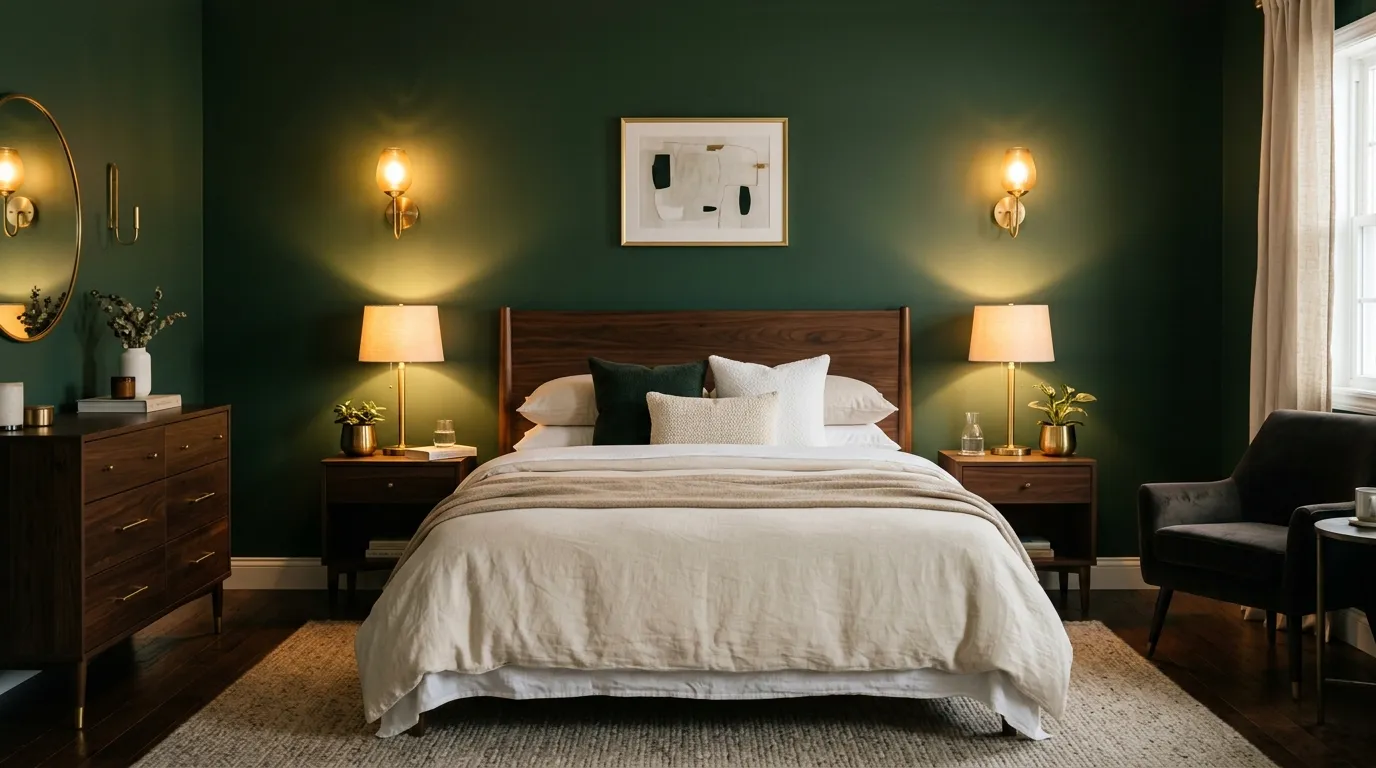
Brass lighting instantly warms up a bedroom and adds a soft, golden glow that feels inviting rather than harsh. Against deeper green tones, it creates a beautiful contrast that feels both elegant and calming. This type of lighting doesn’t just brighten the room—it shapes the mood, making evenings feel more relaxed and comfortable without overwhelming the space.
I’ve noticed that brass fixtures also bring a timeless quality that doesn’t go out of style easily. Even a small change like switching lamp bases or wall sconces can elevate the entire look. That’s why many designers lean toward warm metals when designing a dark green moody bedroom—they enhance depth while keeping the space feeling cozy and balanced.
11. Floating Wooden Shelves
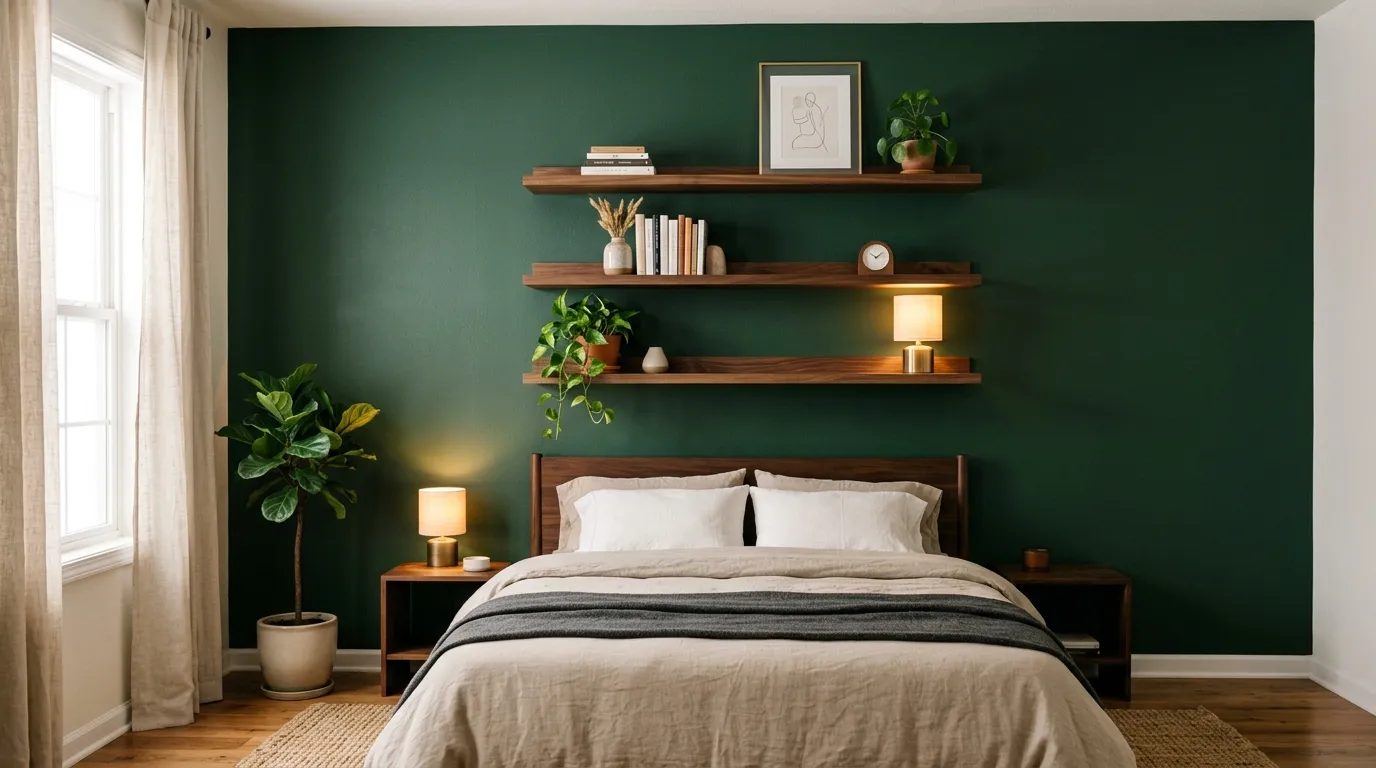
Floating shelves are a smart way to add function without taking up floor space. They keep the room feeling open while still giving you a place to display a few meaningful items. When styled simply, they complement the overall look instead of competing with it, which is especially important in a bedroom designed for rest and relaxation.
In my experience, less is always more when it comes to shelf styling in bedrooms. A few books, a small plant, or a candle is often enough to create visual interest. Overloading them can quickly make the space feel cluttered, so keeping things minimal helps maintain that calm, balanced atmosphere you’re aiming for.
12. Soft Linen Curtains
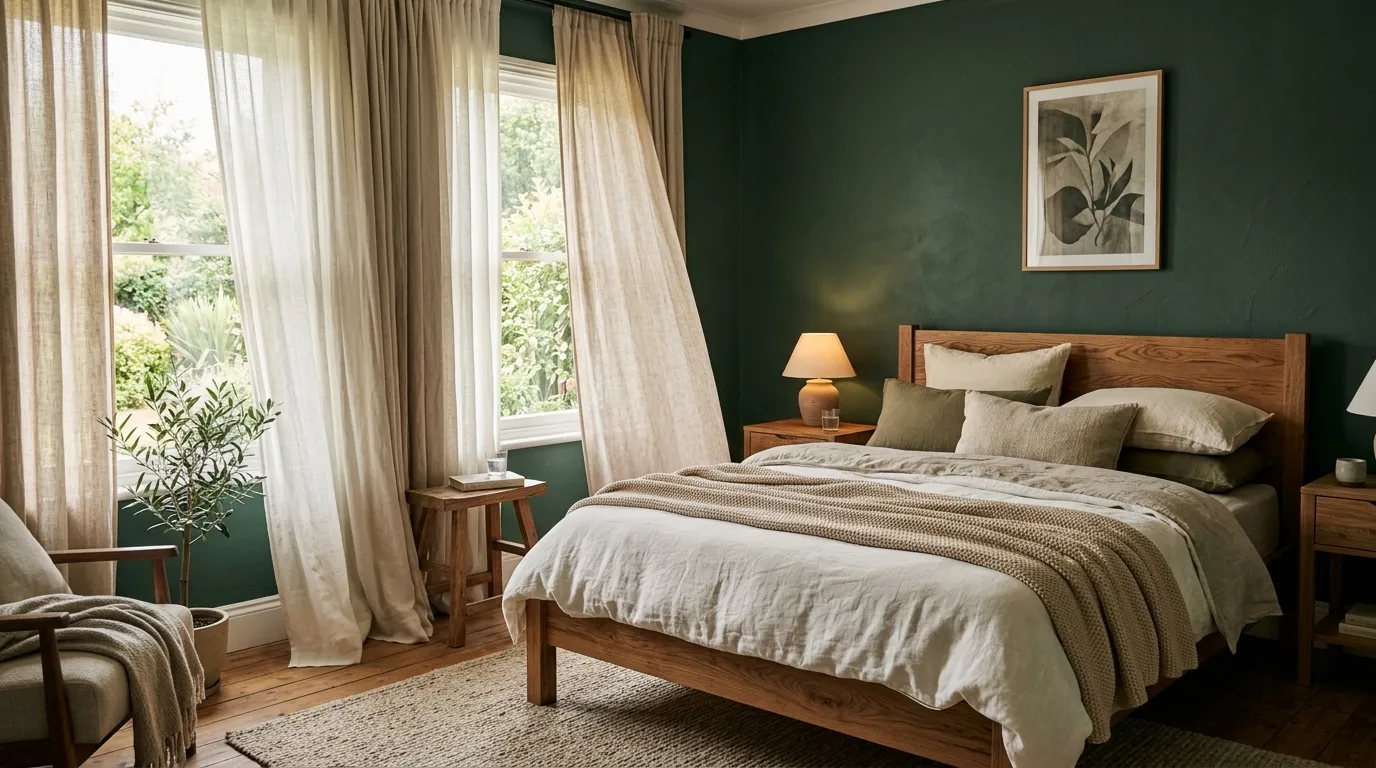
Linen curtains bring a light, airy contrast that balances deeper tones beautifully. Their natural texture allows light to pass through softly, creating a gentle glow instead of harsh brightness. This helps maintain a calm and soothing environment throughout the day, making the room feel more comfortable and inviting without losing its moody appeal.
I’ve seen linen work especially well in bedrooms where you want a mix of cozy and fresh. It prevents the space from feeling too heavy while still complementing the overall color palette. This simple addition can make a noticeable difference in how the room feels, especially when paired with soft lighting and natural materials.
13. Dark Green Accent Wall
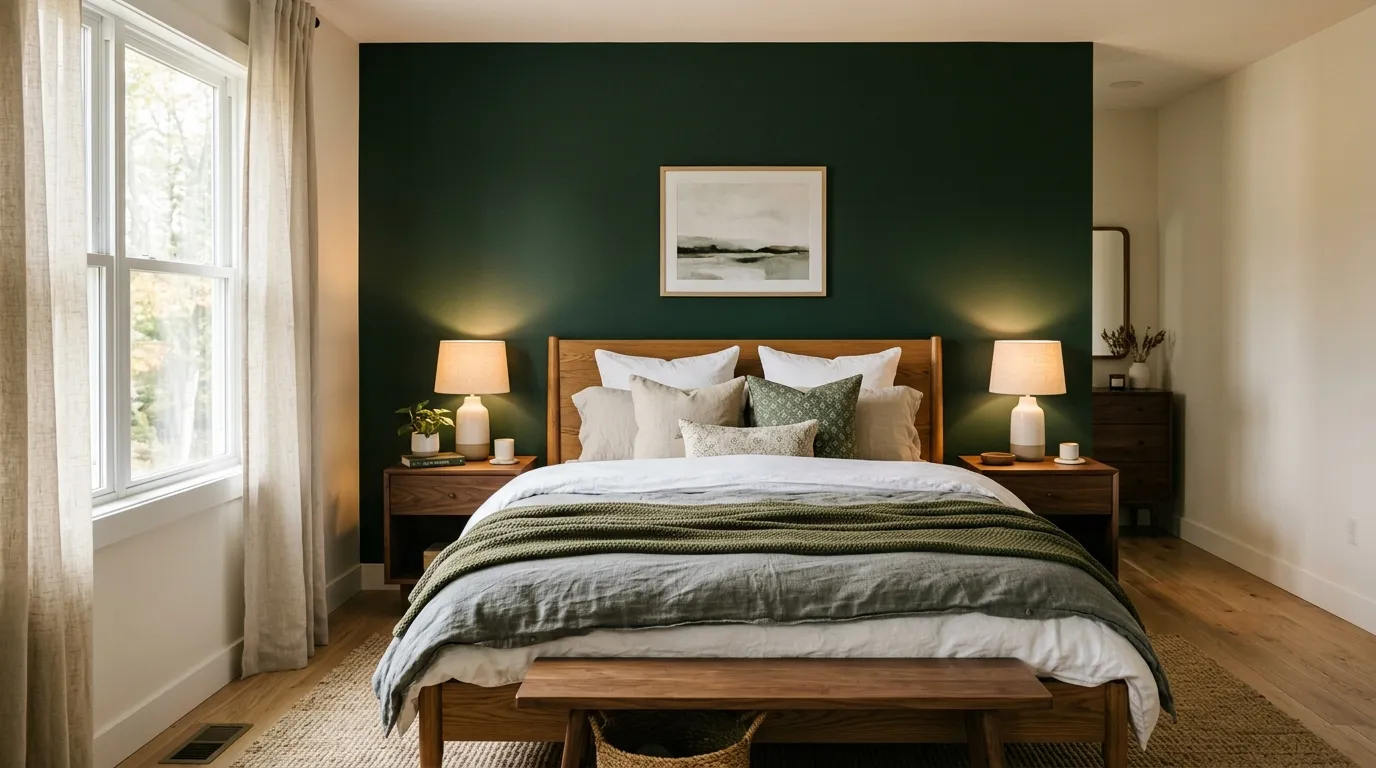
If painting an entire room feels too bold, an accent wall is the perfect starting point. It gives you the richness of deeper tones without making the space feel closed in. By focusing the color behind the bed, the room naturally feels more grounded and visually structured, which helps create a calm and restful environment.
I’ve seen this approach work especially well for beginners experimenting with deeper shades. It allows flexibility—you can always expand later if you love the look. This is often how people ease into a dark green moody bedroom, starting with one wall and gradually building the rest of the design around it.
14. Woven Basket Decor
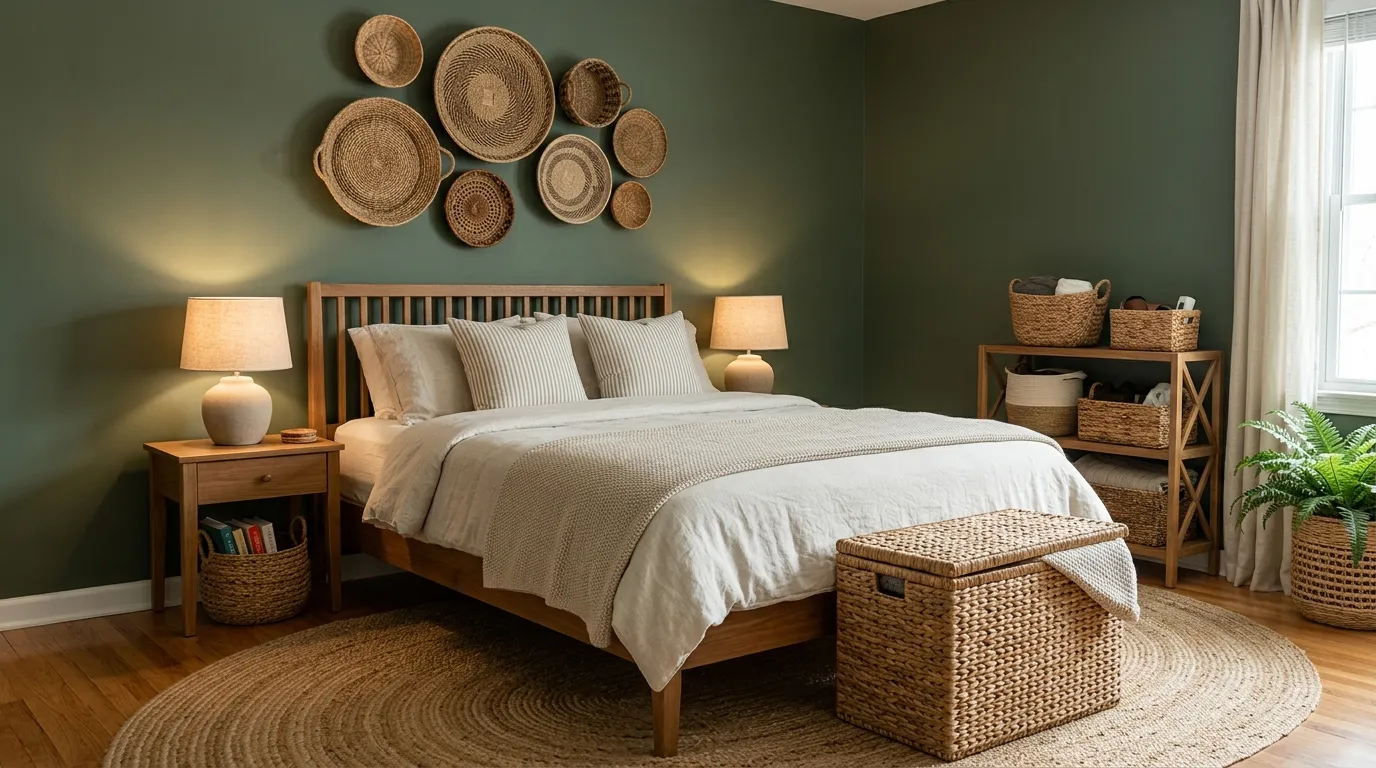
Woven baskets introduce an organic texture that instantly makes a bedroom feel more relaxed and grounded. The natural fibers contrast beautifully with deeper colors, preventing the space from feeling too heavy or flat. They also add a subtle warmth that helps balance the overall palette without needing additional colors.
In my experience, baskets are one of the most practical decor pieces you can add. They work for storage while still contributing to the design, whether placed near the bed or under a console. This combination of function and style makes them a reliable choice for maintaining a clean and cozy space.
15. Low Profile Bed
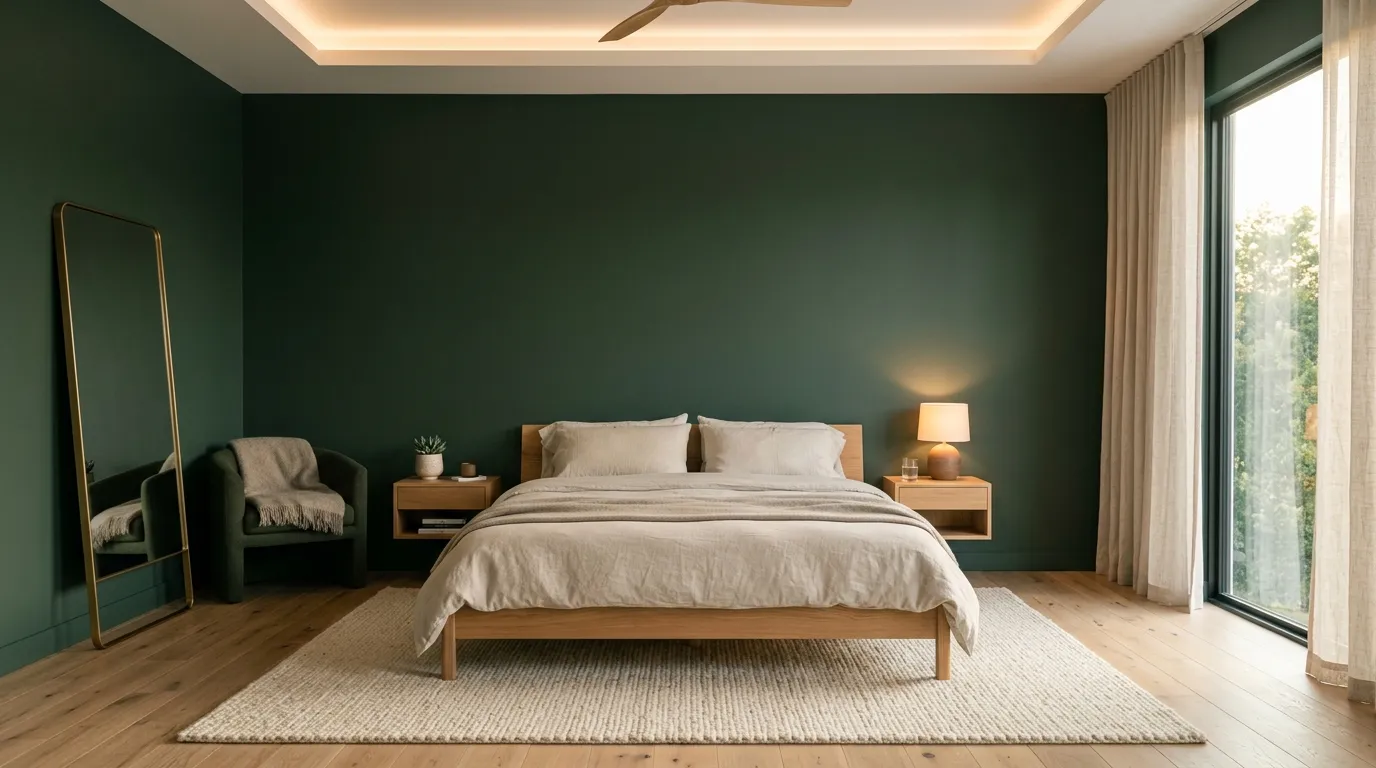
A low profile bed creates a sense of openness that makes the entire room feel more spacious. By reducing visual height, it allows the walls and surrounding elements to stand out without making the space feel crowded. This is especially helpful when working with deeper tones, as it prevents the room from feeling too enclosed.
I’ve noticed that this style also encourages a more minimal approach to decorating. With less visual bulk, every detail becomes more intentional, from bedding to lighting. It’s a simple shift that can make a big impact, especially if you’re aiming for a calm and uncluttered bedroom environment.
16. Moody Wall Paneling
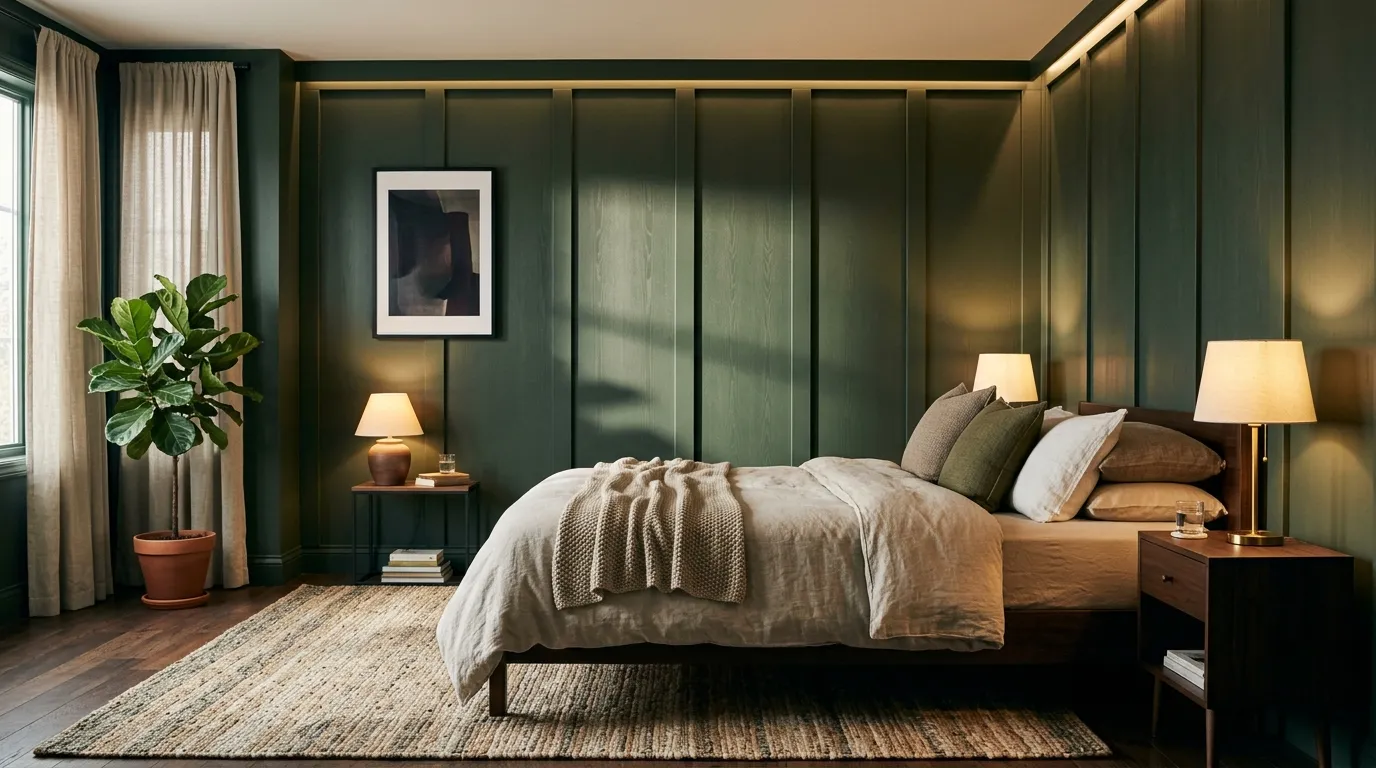
Wall paneling instantly adds structure and depth, turning a simple wall into a design feature. The vertical lines create gentle shadows that shift with lighting, giving the room a more dynamic and layered appearance. This added dimension makes the space feel more polished and thoughtfully designed without needing additional decoration.
I’ve seen this technique work especially well in bedrooms that feel a bit flat or plain. Even simple paneling can transform the atmosphere into something richer and more refined. It’s one of those upgrades that quietly enhances the entire space while still keeping the overall mood calm and relaxing.
17. Soft Glow String Lights
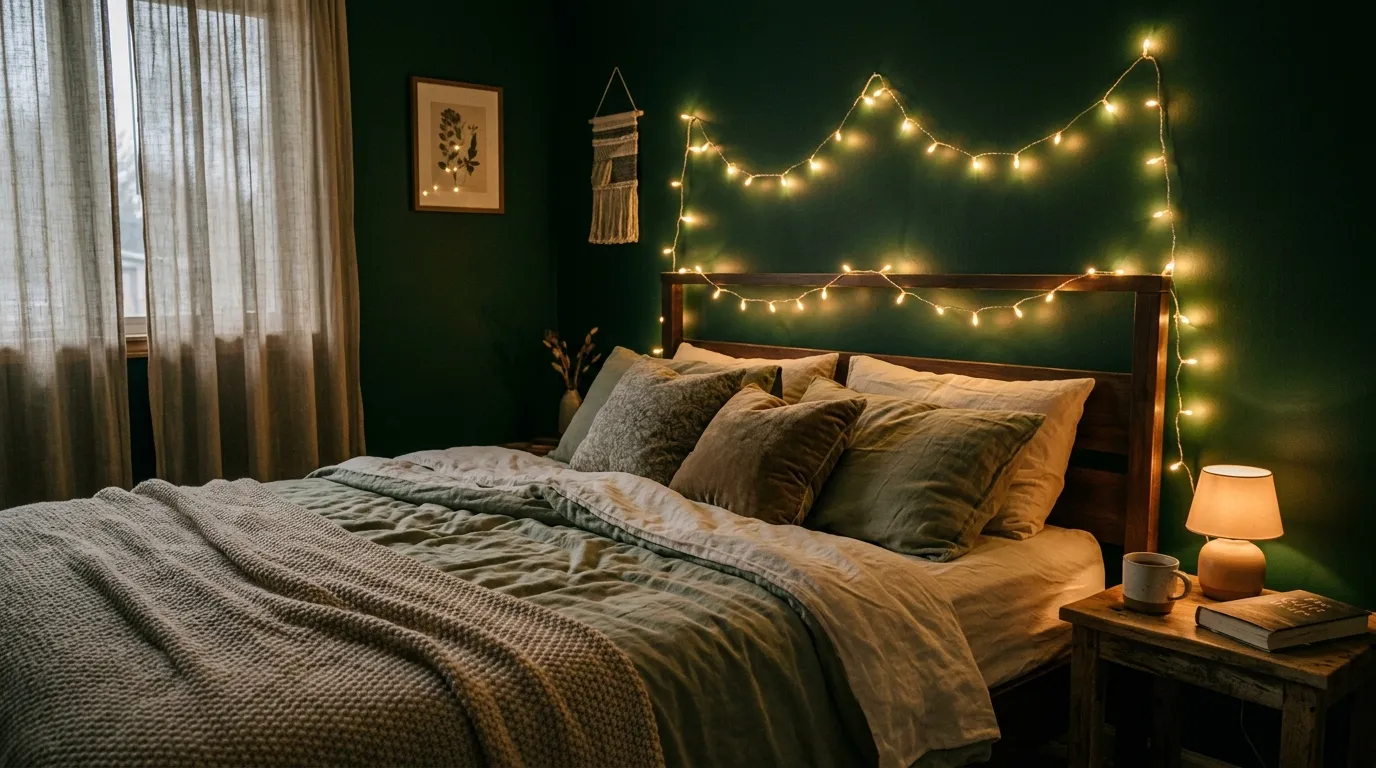
String lights bring a gentle glow that instantly makes a bedroom feel more relaxed and inviting. Unlike harsh lighting, they create a soft ambiance that’s perfect for winding down at night. This subtle lighting layer adds warmth and depth without overpowering the rest of the design, making the space feel calm and comforting.
In my experience, placing them around the headboard or along a wall works best for an even glow. It creates a peaceful environment that encourages rest without being too bright. This simple addition is often enough to transform the nighttime mood of the room without requiring major changes.
18. Neutral Upholstered Headboard
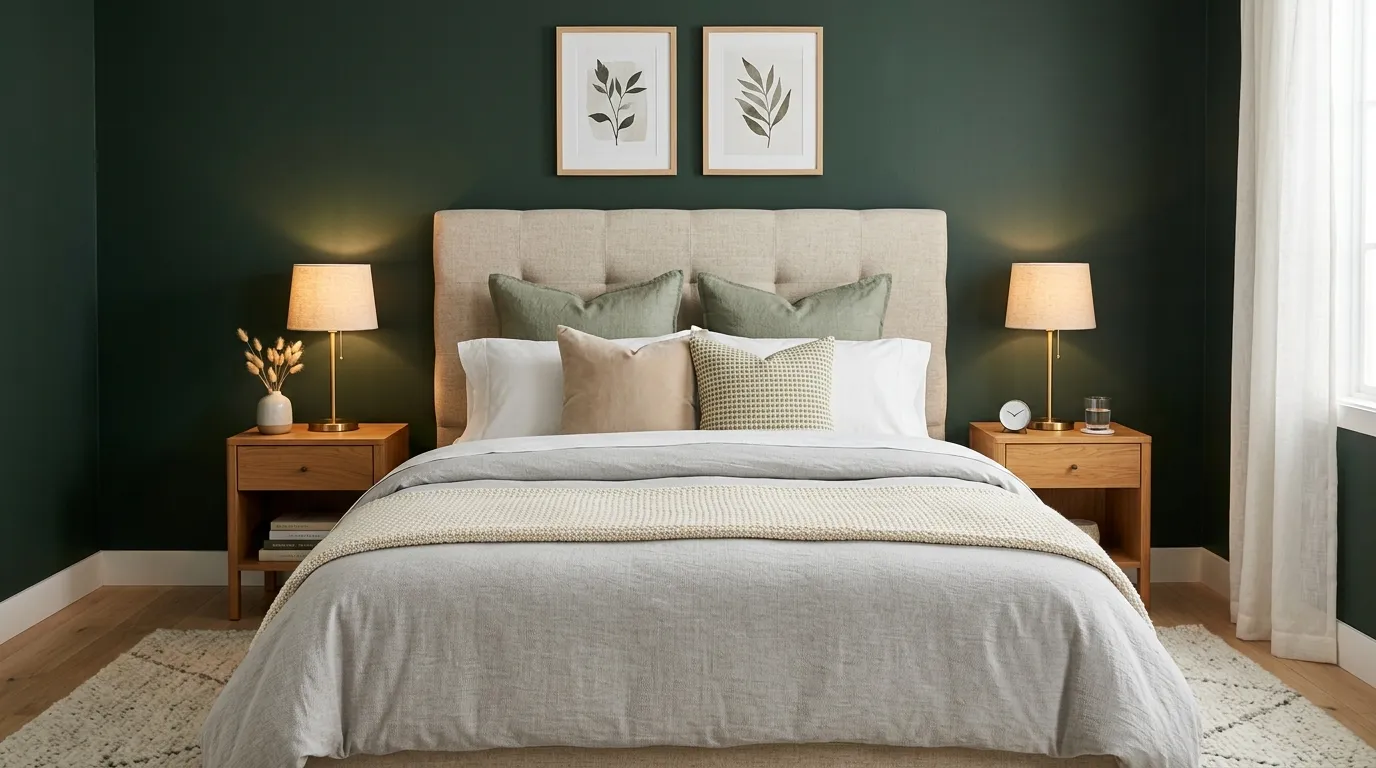
An upholstered headboard introduces softness that balances deeper tones beautifully. The fabric texture creates a comfortable focal point, making the bed feel more inviting while also breaking up the intensity of darker walls. This combination helps the room feel cozy without losing its structured, intentional look.
I’ve noticed that neutral tones like beige or soft gray work best because they keep the space feeling light and balanced. They also make it easier to switch out bedding or decor later without clashing. This flexibility makes upholstered headboards a practical and stylish addition to any bedroom.
19. Dark Green Bedding Layers
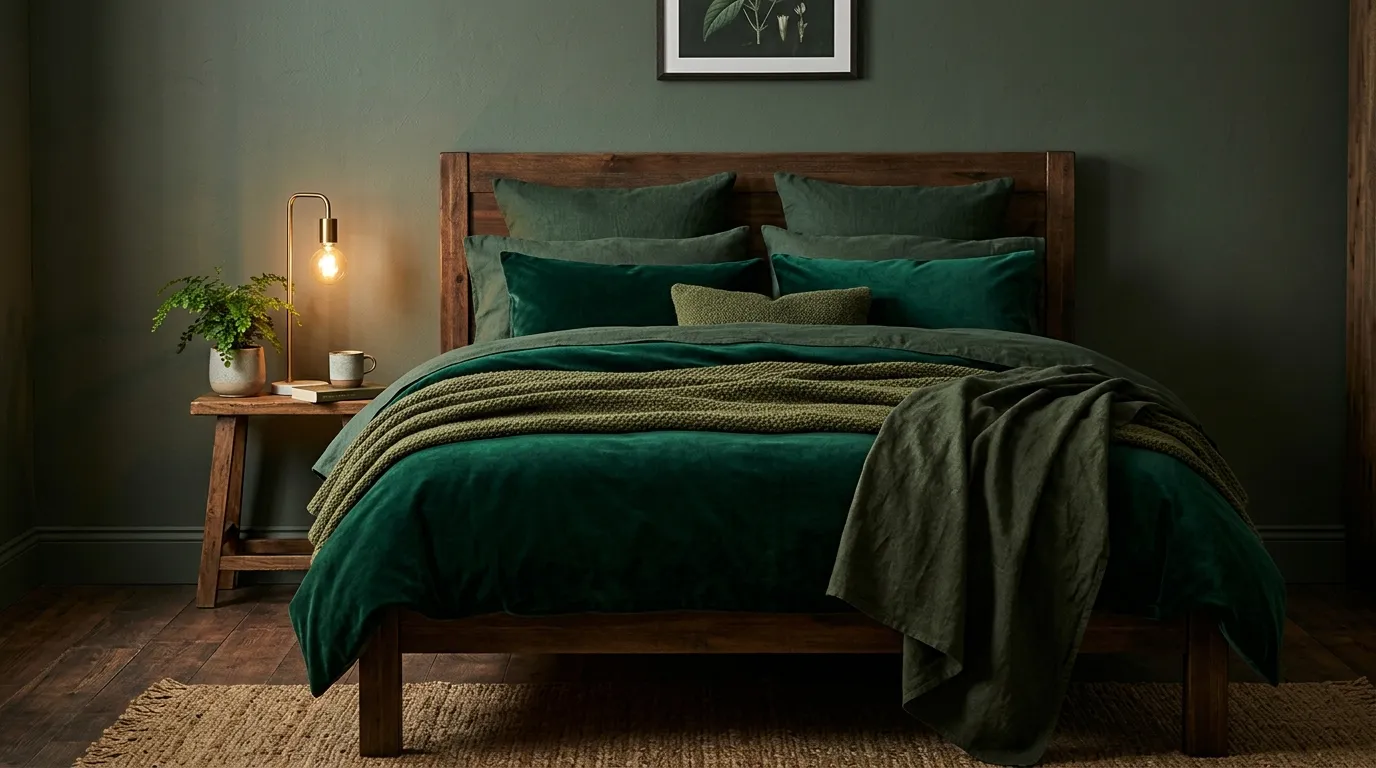
Layering different shades of green on the bed creates a rich, tonal effect that feels both cohesive and calming. Instead of relying on contrast, this approach builds depth through subtle variation, which makes the space feel more refined and intentional. It’s a great way to embrace deeper tones while keeping everything visually connected.
I’ve noticed that mixing textures—like smooth cotton, soft velvet, and knitted throws—makes this look even more effective. It prevents the palette from feeling flat and adds a sense of comfort. In a dark green moody bedroom, this layering technique turns the bed into a standout feature while still maintaining a peaceful and relaxing environment.
20. Minimal Nightstand Styling
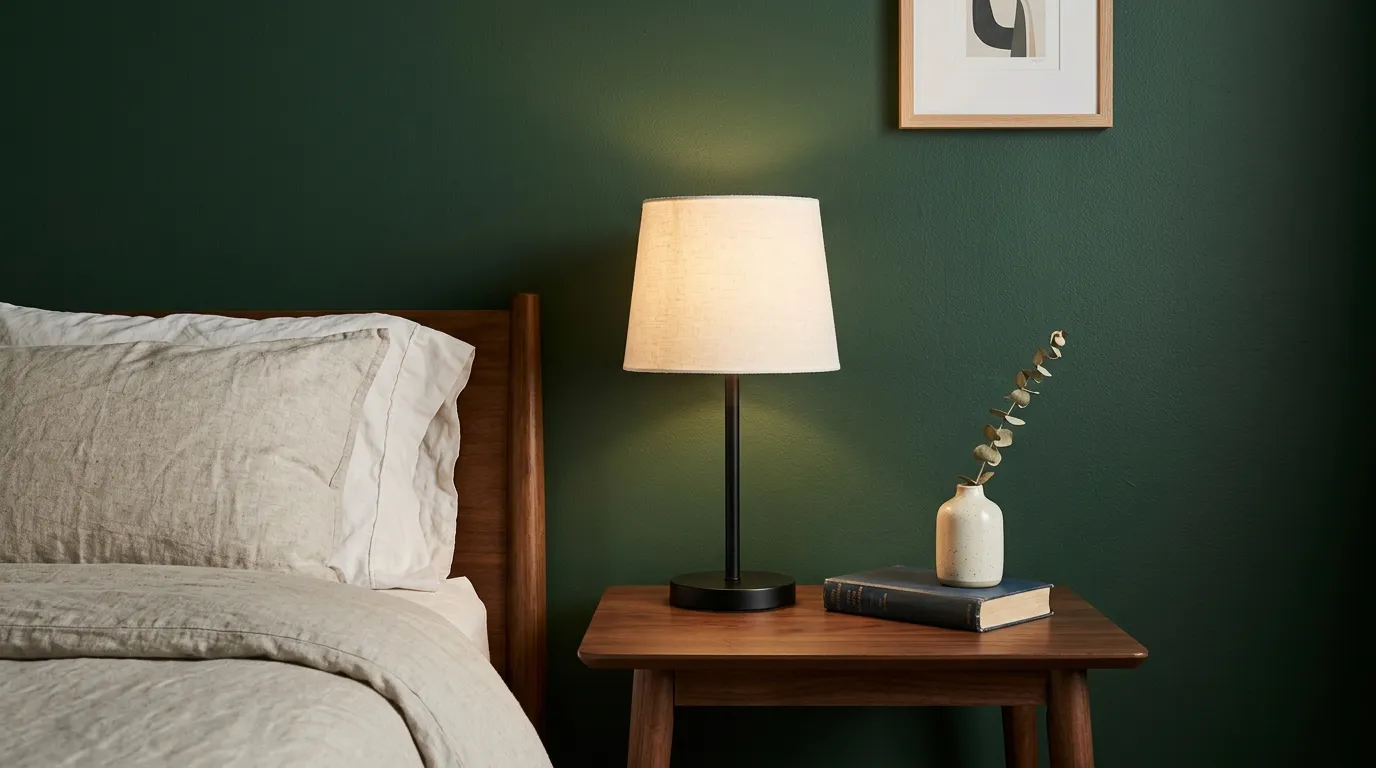
A clutter-free nightstand can make a surprising difference in how a bedroom feels. By keeping only a few essentials—like a lamp, a book, or a small decor piece—you create a cleaner and more calming environment. This simplicity helps reduce distractions, making it easier to relax and unwind at the end of the day.
In my experience, limiting what stays on the nightstand also makes daily routines smoother. You know exactly where everything is, and the space feels more intentional. This small adjustment supports both function and design, helping the room feel more peaceful without requiring any major changes.
21. Indoor Plants Touch
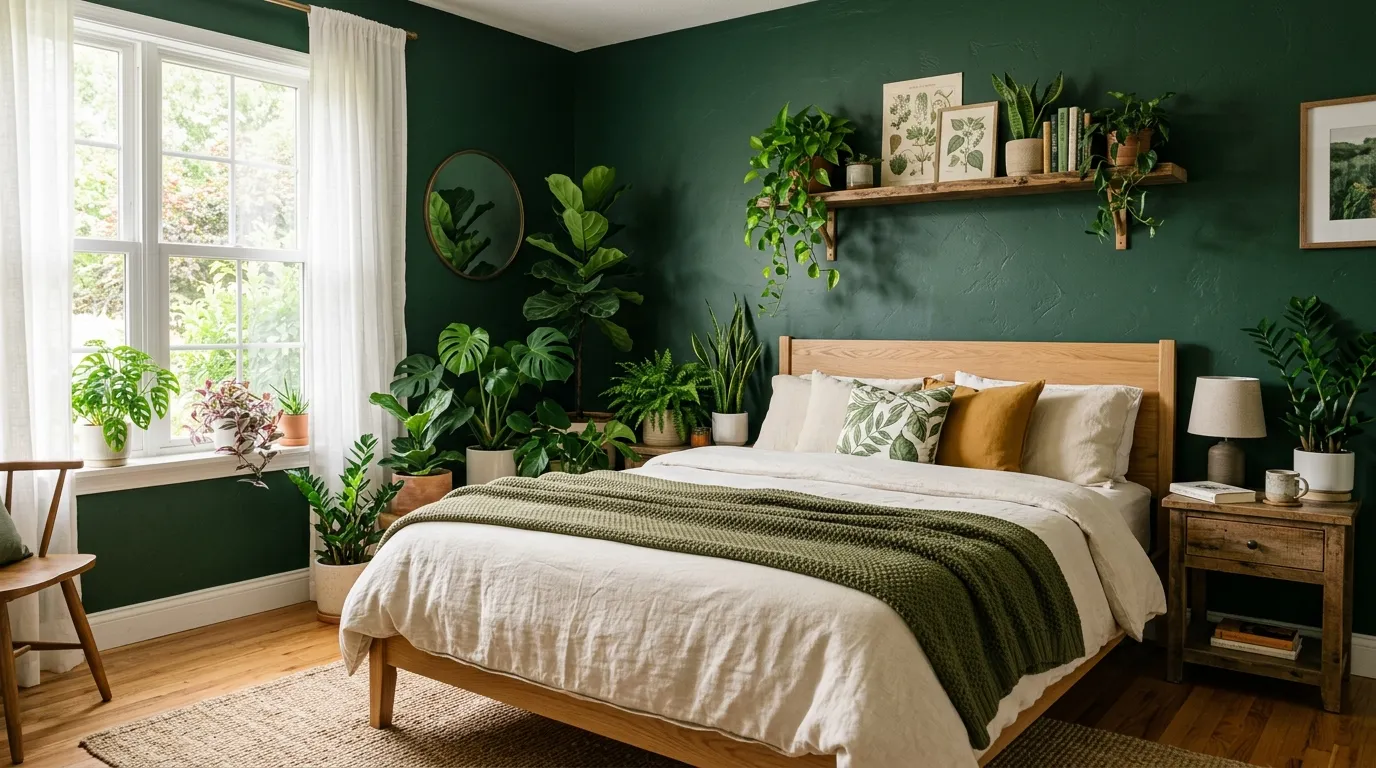
Adding plants brings a refreshing contrast that makes the room feel more alive and balanced. The natural green tones blend beautifully while still standing out through shape and texture. This helps break up the depth of darker colors and introduces a sense of movement and freshness into the space.
I’ve seen this work especially well near windows where plants can thrive naturally. Even one or two well-placed plants can make a noticeable difference in how the room feels. They add a soft, organic element that complements the overall design while enhancing the sense of calm and comfort.
22. Soft Beige Throw Blanket
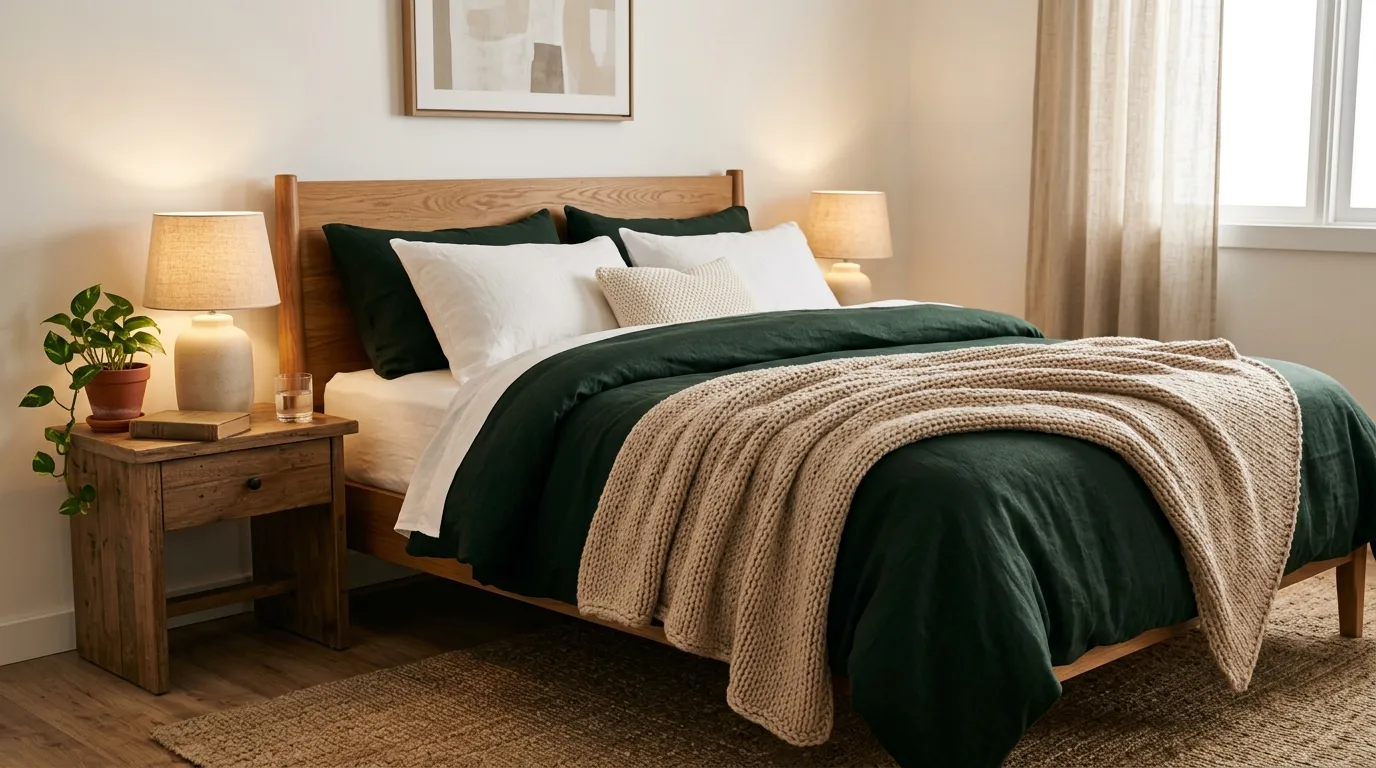
A beige throw blanket is a simple addition that instantly softens deeper tones and adds a sense of balance. The lighter shade creates contrast without clashing, making the bed feel more inviting and visually complete. This small detail helps break up darker colors, ensuring the room feels cozy rather than too heavy or intense.
I’ve noticed that casually draping a throw instead of folding it perfectly makes the space feel more relaxed and lived-in. It adds a natural, effortless touch that works well in everyday settings. This kind of styling keeps the room comfortable while still looking thoughtfully designed.
23. Scented Candle Corner
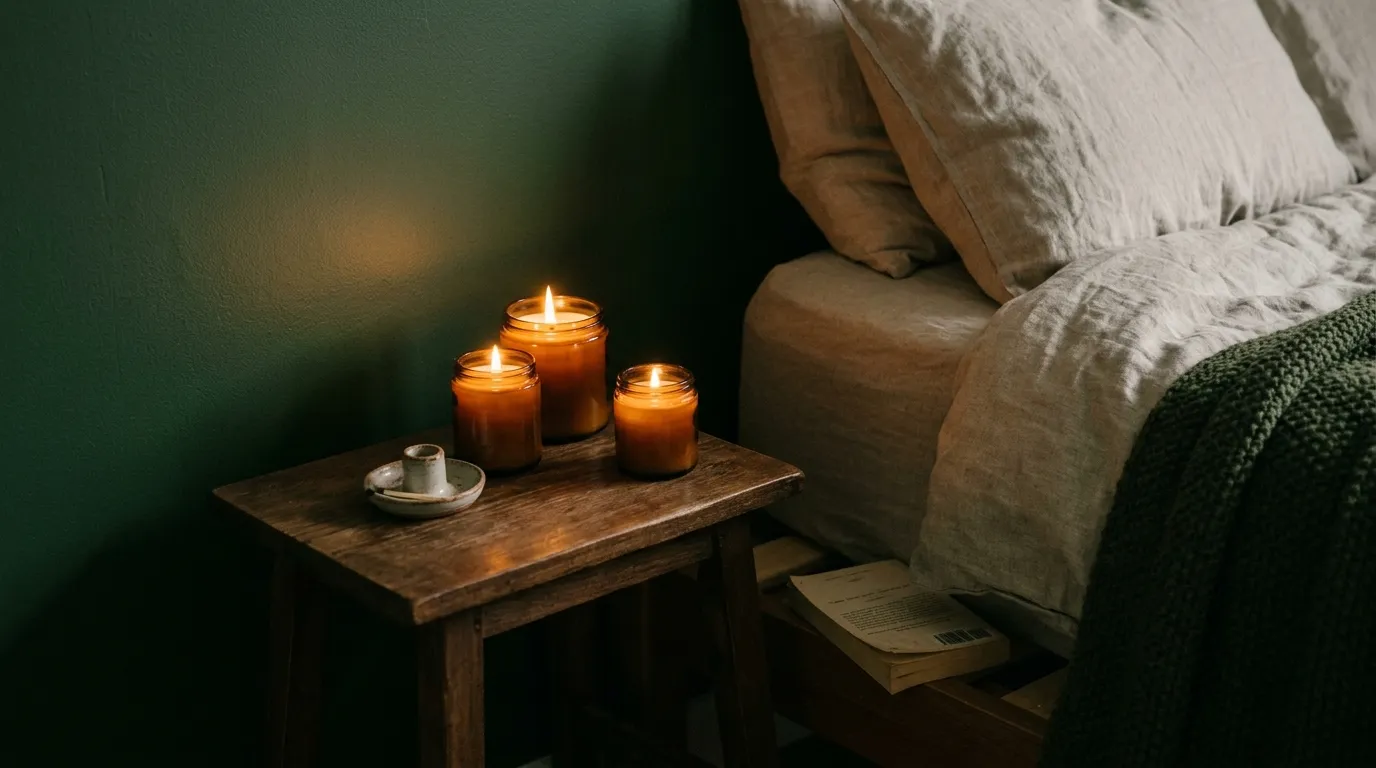
A dedicated candle corner can turn a bedroom into a true relaxation space, especially in the evening. The soft flicker of candlelight creates a calming atmosphere that feels intimate and peaceful. Combined with subtle scents, it helps signal the body to slow down, making it easier to transition into rest.
In my experience, keeping this setup simple works best—just a few candles placed safely on a small surface. It becomes a small ritual at the end of the day, something that adds comfort without effort. This final touch completes the space, making it feel warm, personal, and deeply relaxing.
Conclusion
Creating a bedroom that feels calm, cozy, and visually inspiring doesn’t require a full makeover—just thoughtful details that work together. From layered textures to warm lighting, each idea helps shape a space that supports rest and comfort. A dark green moody bedroom is all about balance, depth, and intention, and even small updates can make a noticeable difference.
I’ve seen how simple changes like these can completely transform a space into something more peaceful and personal. Save this post on Pinterest so you can come back to it later, try a few ideas that speak to you, and share it with anyone looking to refresh their bedroom.
FAQs
1. Is a dark green bedroom good for sleep?
Yes, deeper green tones are known to create a calming and grounding effect, which can support better sleep. They feel natural and soothing, especially when paired with soft lighting and minimal clutter. I’ve noticed that rooms with earthy tones tend to feel more relaxing compared to bright or overly stimulating colors.
2. How do I keep a moody bedroom from feeling too dark?
Balance is key. Use lighter elements like neutral bedding, soft rugs, or beige throws to break up darker tones. Adding warm lighting and a few reflective surfaces can also prevent the space from feeling heavy while still maintaining that cozy, moody vibe.
3. What colors go well with dark green in a bedroom?
Neutral shades like beige, cream, and soft gray work beautifully with deep green. You can also add warmth with wood tones or subtle metallic accents like brass. These combinations keep the room feeling balanced and visually appealing without overwhelming the space.
4. Do I need a large room for this style to work?
Not at all. This style can work in small bedrooms too. In fact, using deeper tones on an accent wall or combining them with lighter elements can make a smaller space feel more intentional and cozy rather than cramped.
5. What type of lighting works best in a moody bedroom?
Warm, soft lighting works best. Table lamps, wall sconces, or string lights create a gentle glow that enhances the relaxing atmosphere. Avoid harsh overhead lighting, as it can disrupt the calm and cozy feel you’re trying to achieve.
6. Can I achieve this look on a budget?
Yes, many of these ideas are budget-friendly. Simple changes like adding a throw blanket, switching pillow covers, or updating lighting can make a big difference. I’ve seen many people transform their bedrooms without spending much by focusing on small, impactful details.