

Introduction
Your bedroom should feel like a calm escape, not just another room in your home. If you’ve been craving a space that feels peaceful, minimal, and quietly luxurious, a Japandi Bedroom might be exactly what you need. This style blends warmth, simplicity, and intentional design to create a space that truly supports rest and relaxation.
In this guide, you’ll discover 21 carefully selected ideas that transform ordinary bedrooms into serene retreats. From soft textures to natural materials, each idea focuses on small, realistic upgrades that make a big visual impact. I’ve noticed that even simple changes—like lighting or bedding—can completely shift how a room feels. That’s why this list is designed to be practical, inspiring, and easy to apply, no matter your space or budget.
1. Neutral Wood Layers
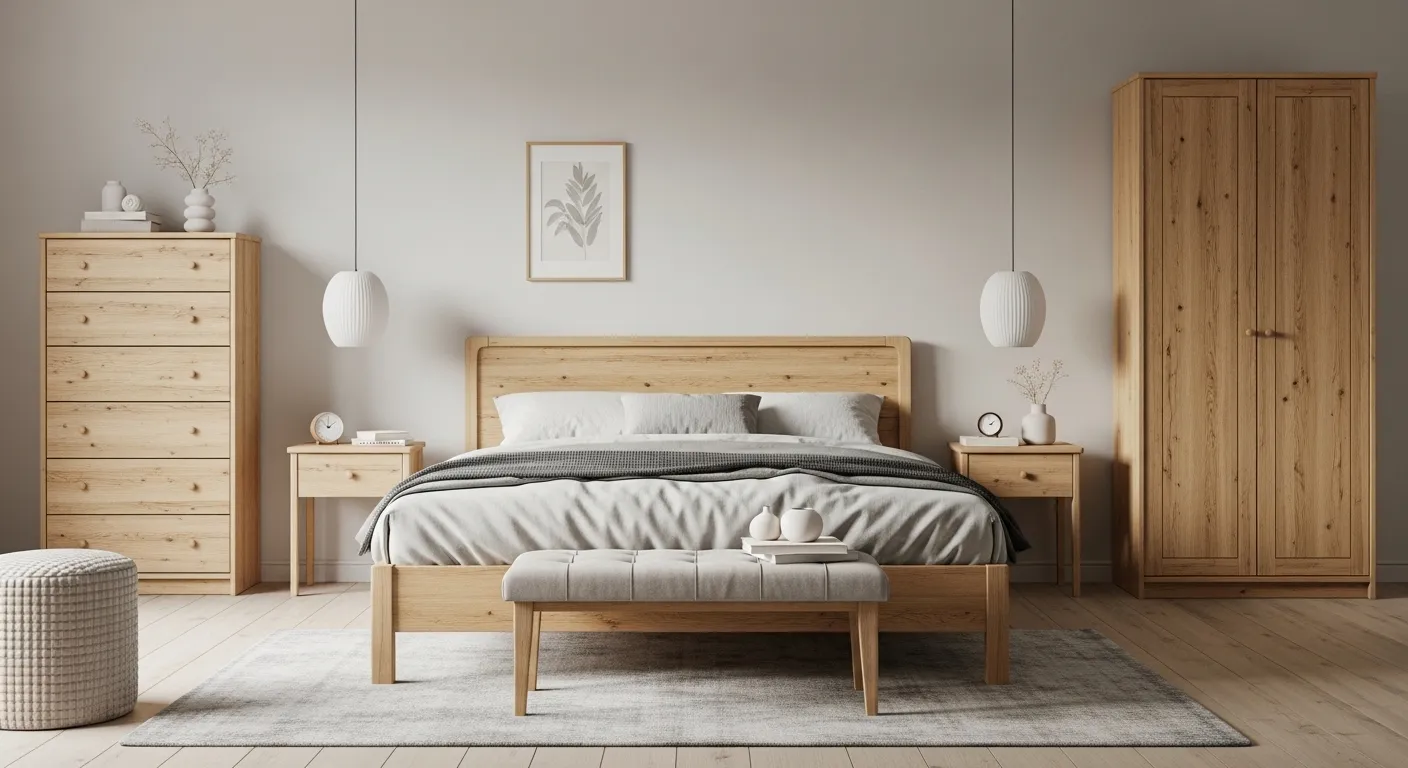
A calm space often starts with layers that feel intentional yet effortless. Neutral wood tones instantly soften the room while keeping everything visually connected and grounded. When you combine light oak furniture with subtle variations in texture, the bedroom begins to feel more curated and peaceful without trying too hard. This approach works especially well in a Japandi Bedroom because it builds harmony through simplicity. The natural grains add quiet detail, while the muted palette ensures the space never feels overwhelming or busy.
In my experience, layering similar wood tones is one of the easiest ways to make a bedroom feel expensive without actually spending more. A wooden bed frame, matching side tables, and even small decor pieces can completely transform the mood. I’ve noticed that when everything visually “flows,” the space instantly feels more relaxing and organized. This setup also allows you to experiment with soft textiles like linen or cotton without clashing. The result is a room that feels warm, minimal, and effortlessly luxurious every single day.
2. Soft Beige Palette
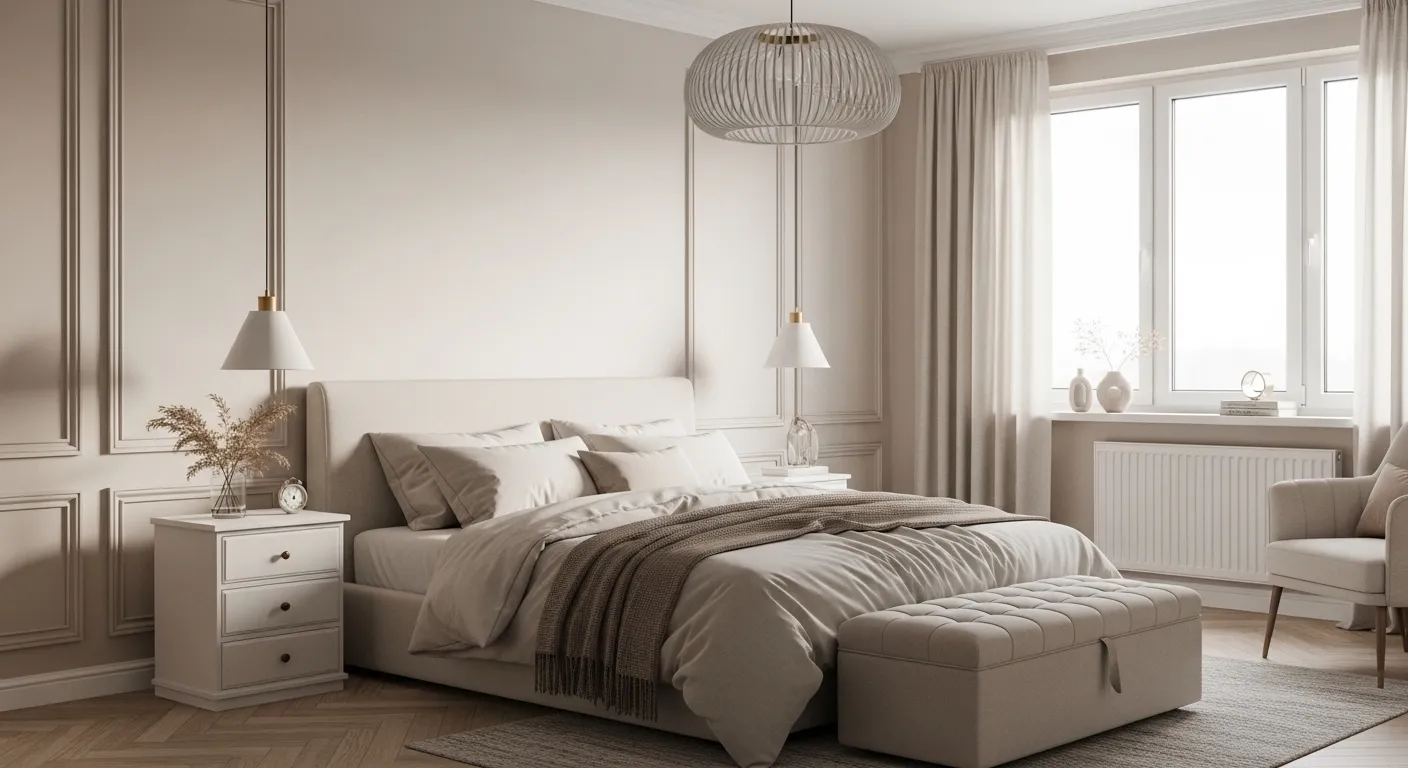
Soft beige tones have a unique way of making a bedroom feel both cozy and refined at the same time. This palette gently reflects light, creating a soft glow that makes the entire room feel more open and breathable. Instead of harsh contrasts, everything blends smoothly, which is a key element in Japandi-inspired interiors. Using beige across walls, bedding, and decor creates a seamless flow that feels visually relaxing. It’s especially effective if you want your Japandi Bedroom to feel warm without losing its minimalist edge.
I’ve seen this color scheme work beautifully in homes where people struggle with making their space feel “finished.” Beige naturally ties everything together without requiring too much effort. Even mismatched pieces start to feel cohesive when placed in this soft, neutral environment. That’s why many designers recommend starting with a beige base before adding textures or accents. The result is a bedroom that feels peaceful, timeless, and easy to maintain, while still looking thoughtfully styled and Pinterest-worthy.
3. Low Platform Bed
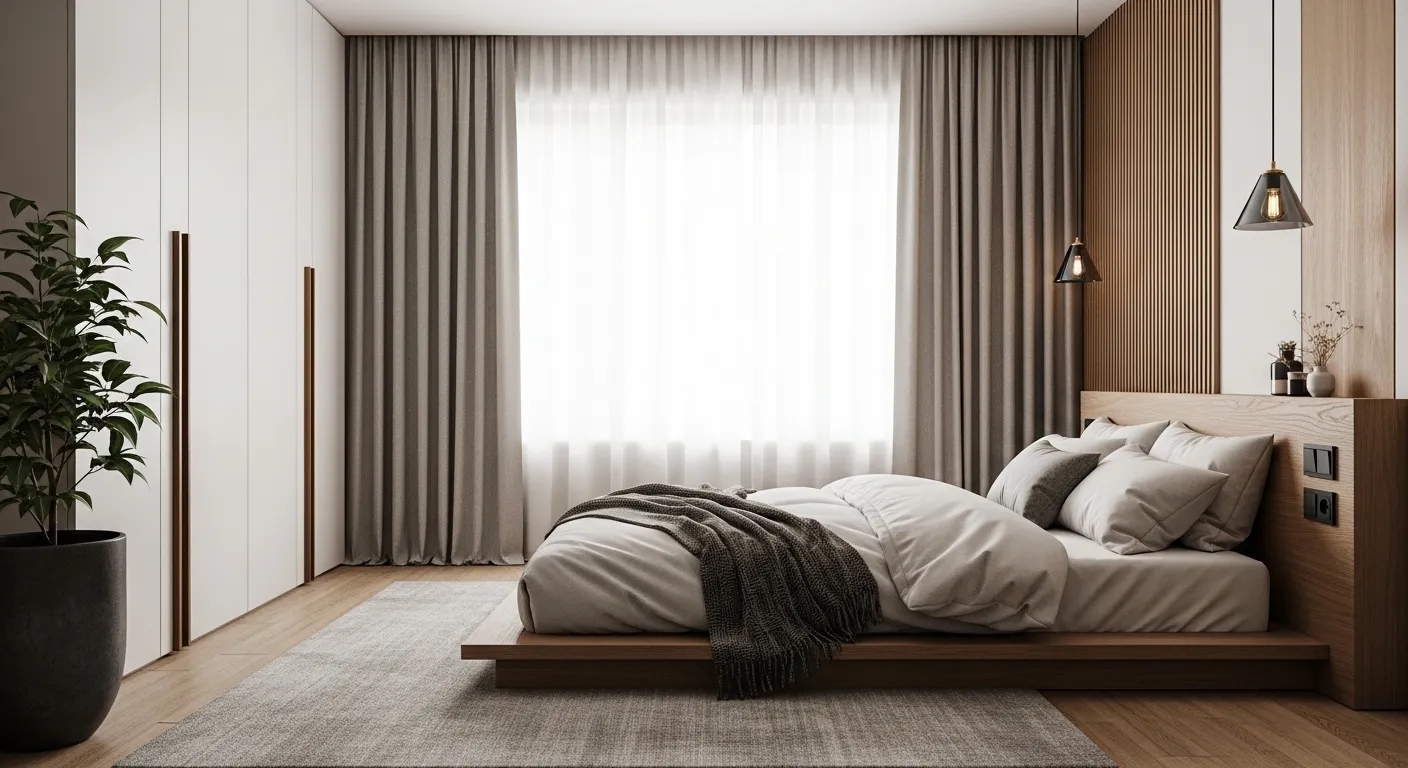
A low platform bed instantly changes how a bedroom feels by bringing everything closer to the ground. This design creates a sense of stability and calm that’s hard to achieve with taller, bulkier furniture. The extra space above the bed makes ceilings look higher, which is especially helpful in smaller rooms. This setup is a signature feature in many Japandi Bedroom designs because it promotes simplicity and balance. The clean lines and low height keep the focus on the overall atmosphere rather than heavy furniture.
I’ve noticed that rooms with low beds naturally feel less cluttered, even when nothing else changes. It shifts the entire visual weight of the room, making it feel lighter and more intentional. That’s why many designers recommend this setup for anyone trying to create a peaceful retreat at home. Pairing it with soft bedding and minimal decor enhances the effect even more. The result is a space that feels open, calming, and quietly luxurious without needing excessive styling.
4. Linen Bedding Layers
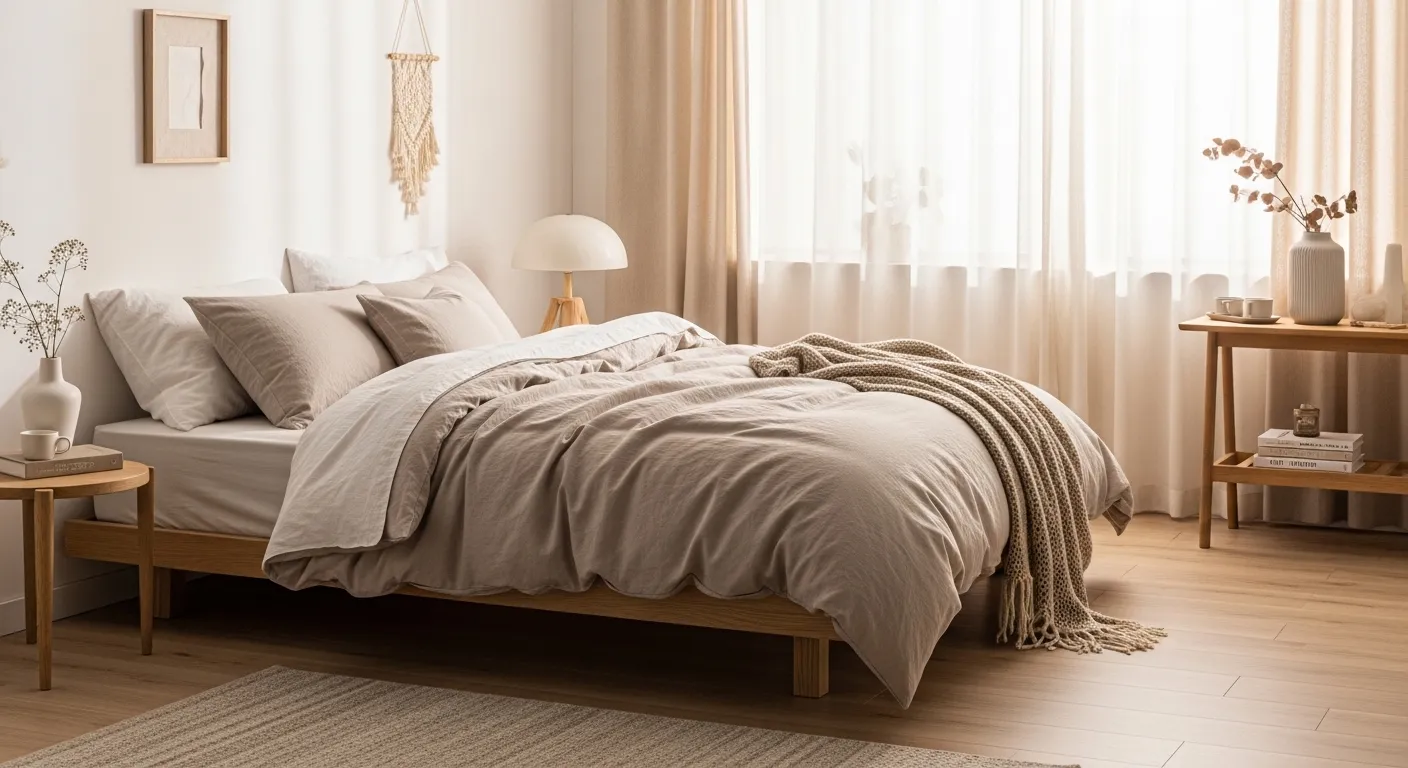
Nothing transforms a bedroom faster than soft, layered linen bedding that feels both effortless and refined. The slightly wrinkled texture adds a natural, relaxed charm that fits perfectly within Japandi-inspired spaces. Instead of looking overly styled, the bed feels organic and comfortable, which is exactly what makes it visually appealing. Linen also reflects light in a soft way, enhancing the calm atmosphere. In a Japandi Bedroom, this layering technique helps balance minimalism with warmth, making the space feel complete without adding clutter or unnecessary decoration.
I’ve tried different bedding materials, and linen consistently creates the most relaxed and high-end feel without trying too hard. It’s breathable, durable, and gets softer over time, which makes it a practical choice as well. I’ve noticed that even simple beds start to look styled when you layer neutral linen sheets with a light throw. That’s why many designers rely on linen to add depth without overwhelming the room. The result is a calm, cozy environment that feels natural, airy, and effortlessly put together.
5. Minimal Wall Art
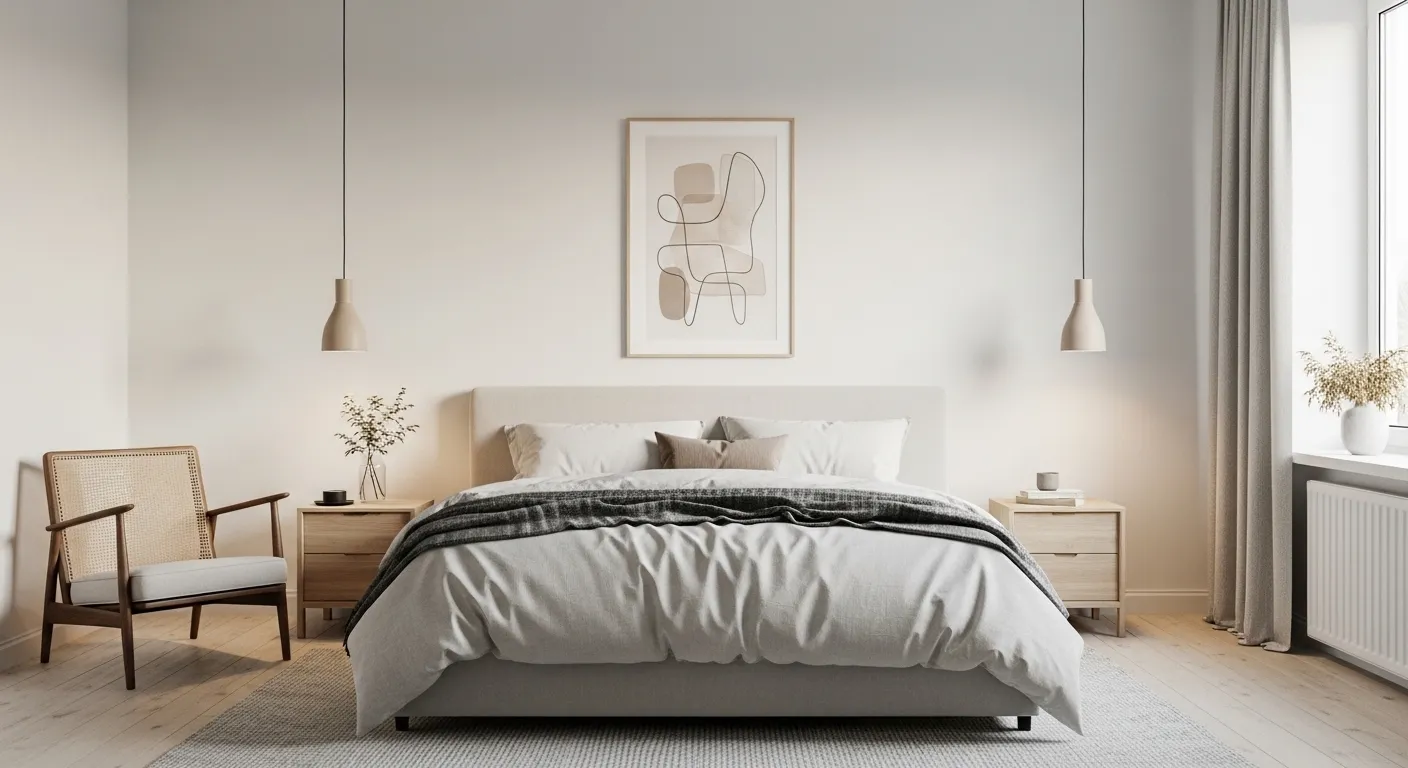
A single piece of minimal wall art can completely define the mood of a bedroom without making it feel crowded. Instead of filling every wall, this approach focuses on intentional placement and simplicity. Neutral-toned artwork or abstract prints work especially well because they blend into the overall palette while still adding interest. This style aligns perfectly with Japandi interiors, where less truly feels like more. In a Japandi Bedroom, minimal wall decor allows the textures and materials in the room to stand out naturally.
I’ve seen many spaces improve instantly just by removing excess wall decor and replacing it with one thoughtful piece. It creates breathing room and makes everything feel more balanced. That’s why designers often recommend scaling back instead of adding more. A carefully chosen frame or artwork can bring quiet elegance without competing for attention. This approach not only enhances the visual calmness but also makes the room feel more curated, intentional, and aligned with a peaceful, modern lifestyle.
6. Warm Ambient Lighting
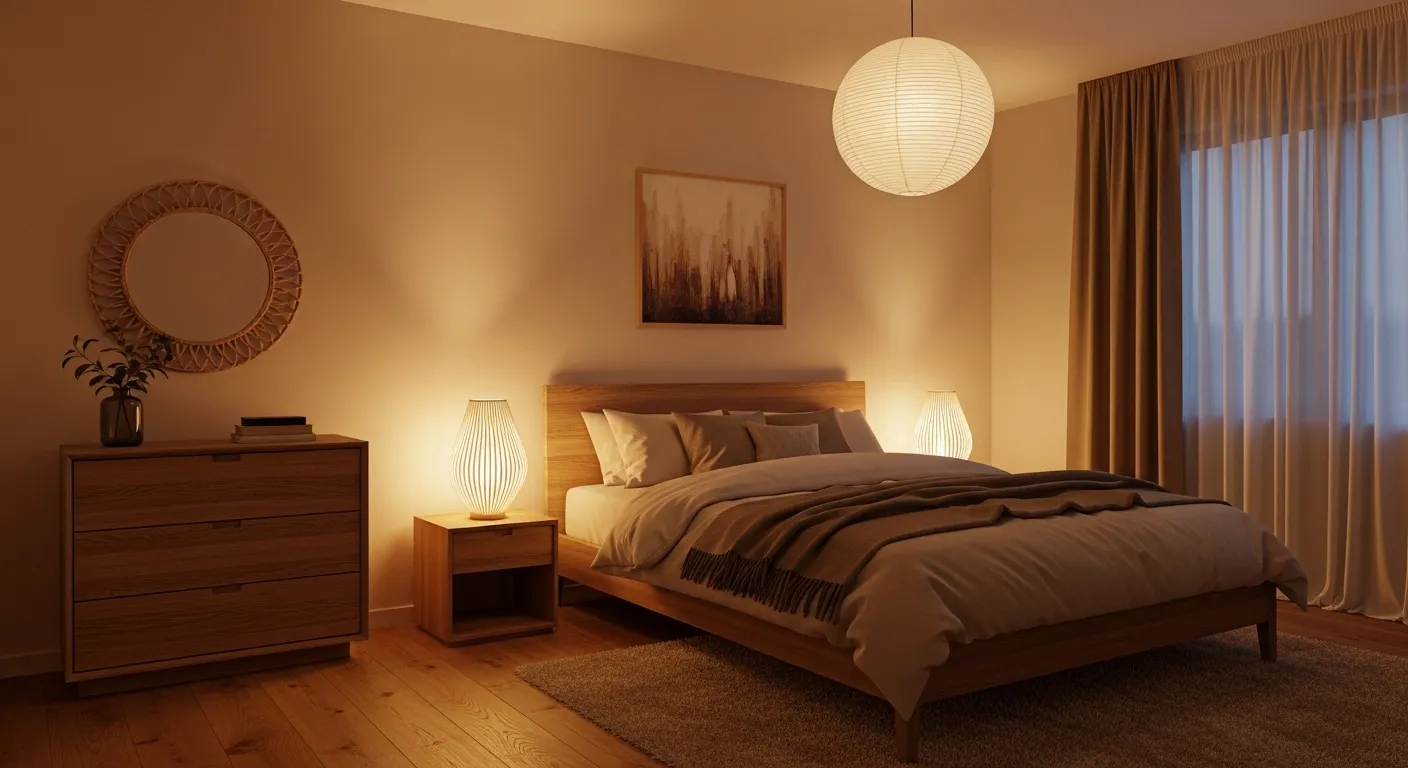
Lighting can completely change how a bedroom feels, and warm ambient lighting is key to creating a cozy, relaxing environment. Instead of bright overhead lights, soft glows from bedside lamps or paper lanterns create gentle shadows that make the space feel calm and inviting. This type of lighting works beautifully with natural materials and neutral tones, enhancing their warmth. In a Japandi Bedroom, lighting is not just functional—it’s part of the overall aesthetic that supports rest and tranquility.
In my experience, switching to warm lighting instantly makes a room feel more comfortable, especially in the evening. I’ve noticed that harsh white lights can make even well-designed spaces feel cold and uninviting. That’s why many designers recommend layered lighting sources instead of relying on one main fixture. A combination of soft lamps and diffused light creates depth and comfort. The result is a bedroom that feels peaceful at night, helping you unwind and truly enjoy the calm atmosphere you’ve created.
7. Textured Neutral Rug
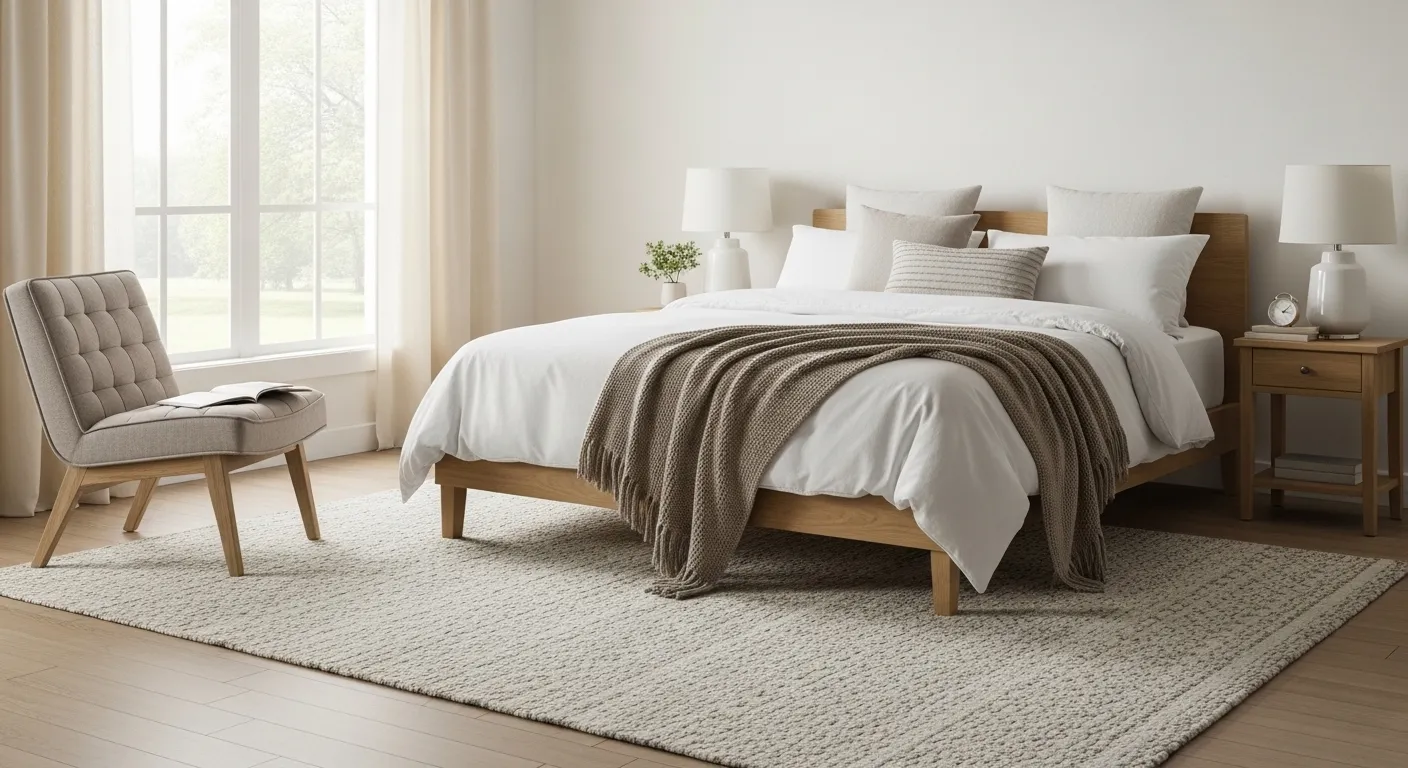
A textured neutral rug can quietly transform a bedroom by adding depth without overwhelming the space. It softens the look of hard flooring while creating a cozy foundation that ties everything together. The subtle texture adds visual interest, especially in minimal interiors where every detail matters. In a Japandi Bedroom, this kind of rug works beautifully because it enhances warmth while maintaining a clean, uncluttered aesthetic. It also helps define the bed area, making the room feel more structured and intentional without adding extra furniture.
I’ve noticed that even the simplest bedrooms feel more complete once a soft, textured rug is added. It’s one of those small changes that instantly improves comfort and visual balance. In my experience, choosing neutral tones like beige or off-white keeps the look timeless and flexible. You can easily update other decor elements without replacing the rug. That’s why designers often recommend investing in a quality neutral rug—it grounds the space while keeping everything feeling calm, cohesive, and effortlessly stylish.
8. Sliding Panel Doors
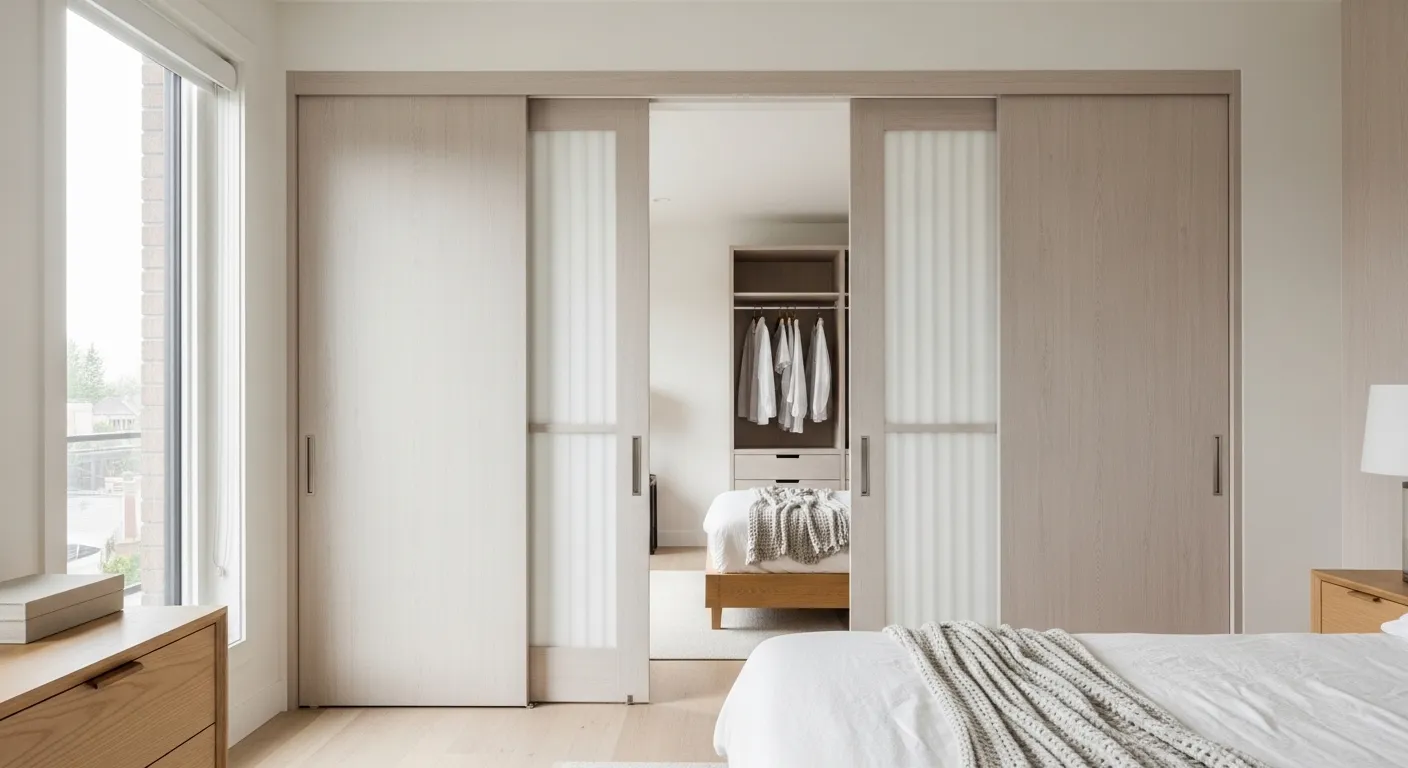
Sliding panel doors bring both function and elegance into a bedroom by simplifying the overall layout. Unlike bulky swinging doors, they glide smoothly and take up less space, making the room feel more open. The clean lines and soft materials align perfectly with Japandi design principles, where simplicity and practicality go hand in hand. In a Japandi Bedroom, these doors also allow light to pass through gently, creating a soft, diffused glow that enhances the calm atmosphere without harsh contrasts.
I’ve seen this feature work especially well in smaller homes where space optimization matters. It instantly makes the room feel more modern and intentional. That’s why many designers recommend sliding panels for anyone trying to achieve a minimalist yet functional look. In my experience, even adding them to closets can elevate the entire room’s aesthetic. The result is a space that feels open, Calm, and thoughtfully designed, while maintaining that signature balance between comfort and simplicity.
9. Indoor Plant Accent
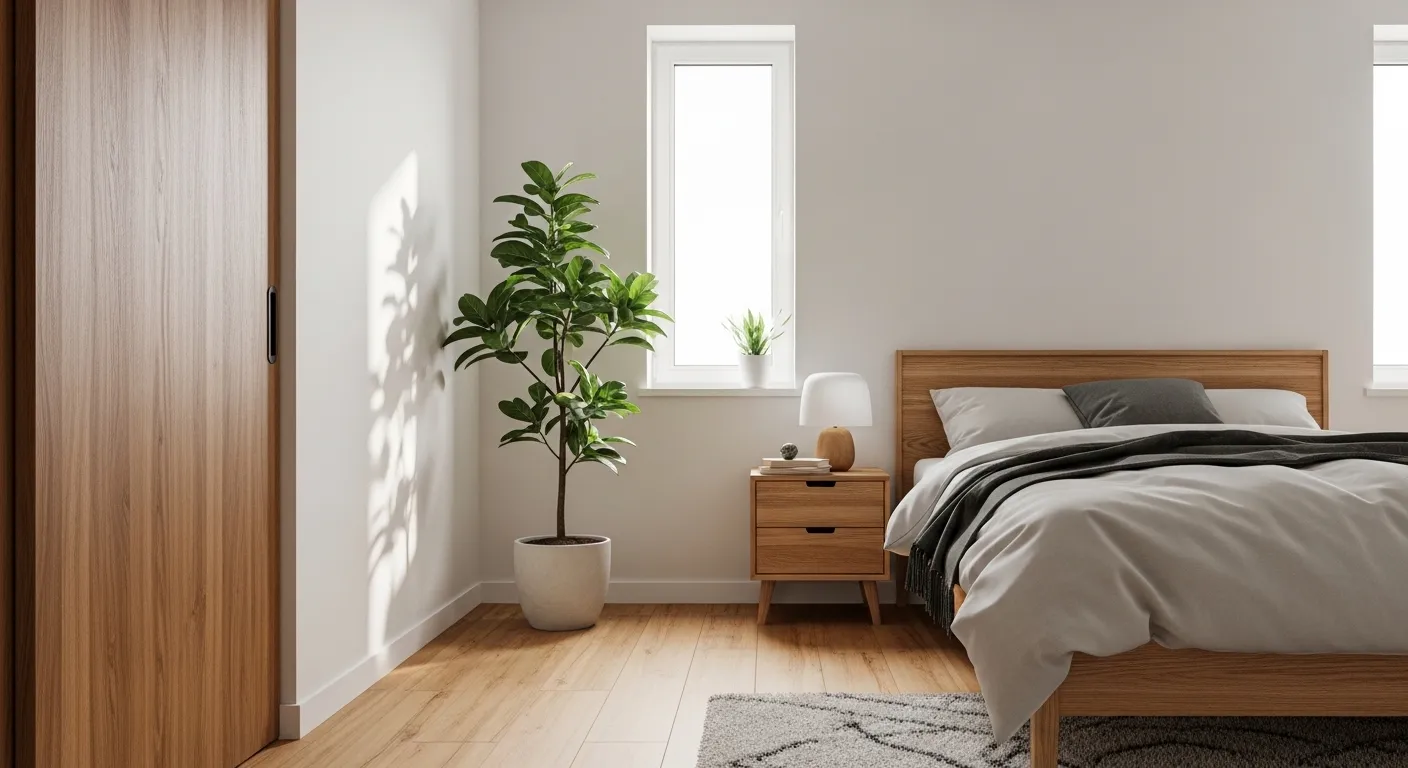
A single indoor plant can completely refresh the feel of a bedroom by introducing a natural, organic element. It adds just enough contrast to break up neutral tones without disrupting the calm aesthetic. Placing it near a window allows sunlight to highlight its shape and texture, creating a subtle focal point. In a Japandi Bedroom, plants are used intentionally, not excessively, to maintain balance and simplicity while still bringing life into the space.
I’ve noticed that even one well-placed plant can make a room feel more alive and welcoming. It’s a small addition, but it creates a strong visual impact. In my experience, choosing low-maintenance plants like snake plants or ficus works best for busy lifestyles. That’s why designers often suggest keeping it simple rather than overcrowding the room with greenery. The result is a clean, calming space that feels connected to nature and quietly energizing at the same time.
10. Paper Lantern Lighting
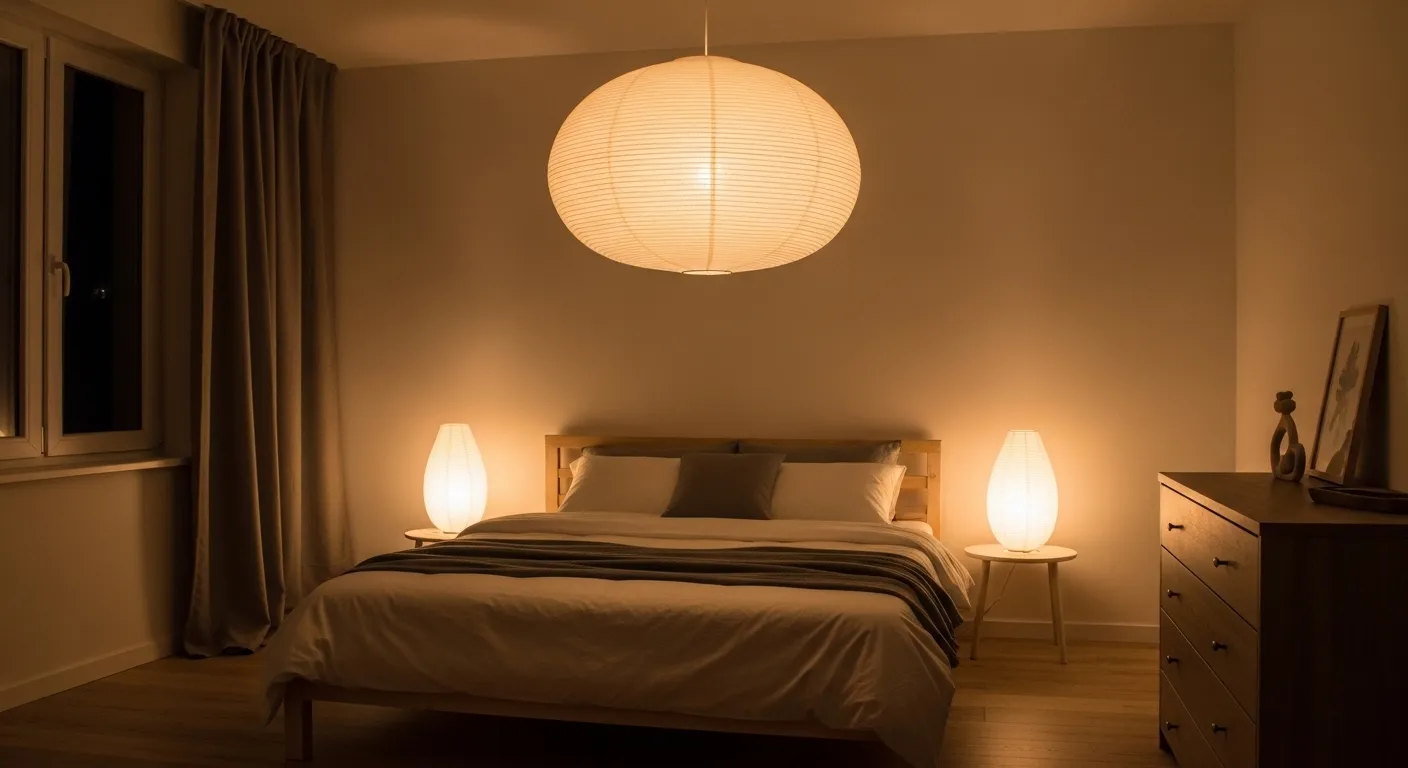
Paper lantern lighting brings a soft, glowing warmth that instantly transforms the mood of a bedroom. Instead of sharp or direct light, it diffuses illumination evenly, creating a gentle ambiance that feels calm and inviting. The organic shape and material add a subtle design feature without overwhelming the space. In a Japandi Bedroom, this type of lighting perfectly balances function and aesthetic, making the room feel peaceful while maintaining a clean, minimalist look that doesn’t distract from the overall design.
In my experience, switching to a paper lantern light can completely shift how a room feels at night. I’ve noticed that it reduces visual stress and makes the space feel more comfortable to unwind in. That’s why many designers recommend soft lighting sources for bedrooms focused on relaxation. It’s a simple upgrade that delivers a big impact without requiring a full redesign. The result is a warm, calming environment that feels cozy, elegant, and perfectly aligned with a slow-living lifestyle.
11. Dark Wood Contrast
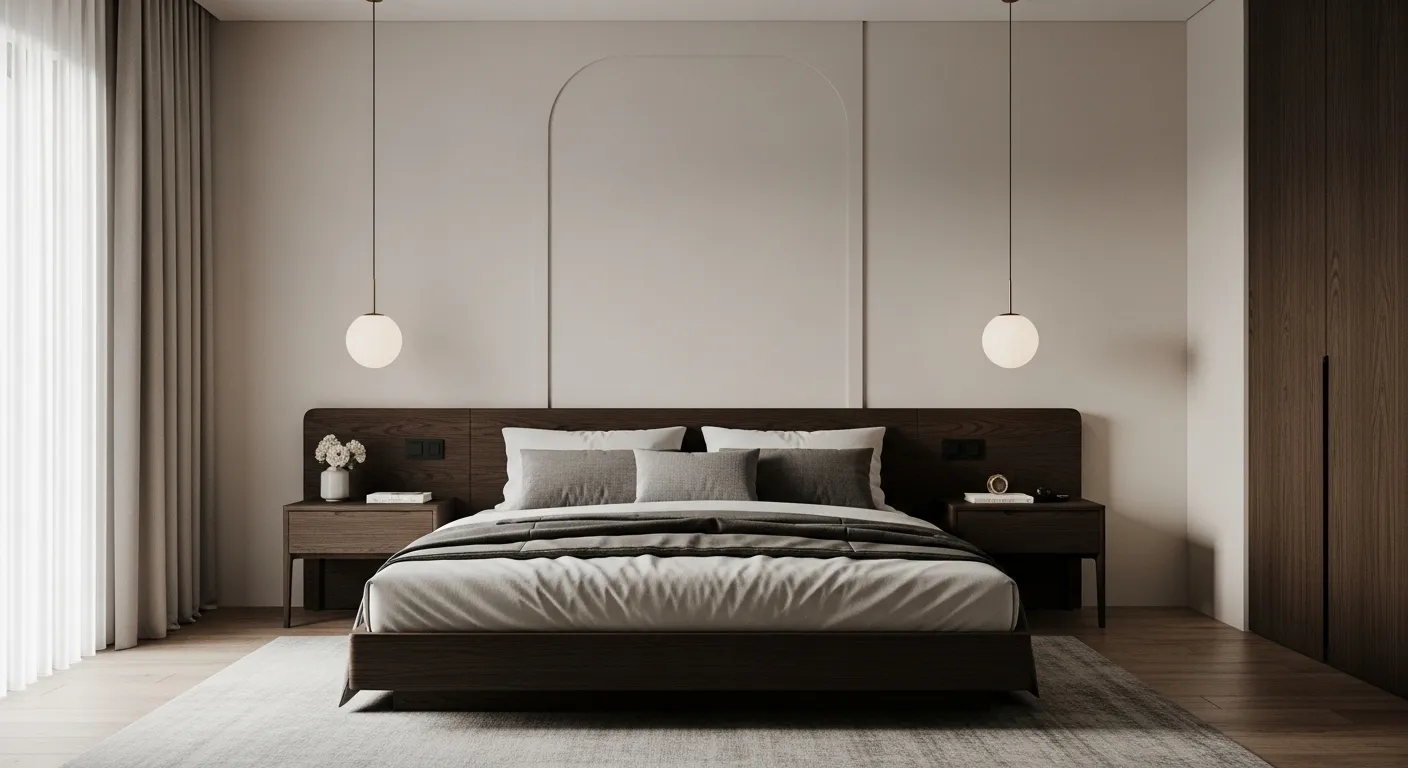
Adding dark wood elements is a powerful way to create contrast in a soft, neutral bedroom. While lighter tones keep the space airy, darker accents bring depth and definition. This balance prevents the room from looking washed out or overly simple. In a Japandi Bedroom, dark wood is often used sparingly to highlight key furniture pieces like the bed or side tables. The contrast adds richness while still maintaining a calm and harmonious aesthetic that feels both modern and timeless.
I’ve seen this approach work especially well in rooms that feel too light or lacking character. Introducing just one darker element can instantly ground the entire space. In my experience, it’s best to keep the rest of the palette soft so the contrast feels intentional rather than overwhelming. That’s why designers often mix light and dark woods carefully to achieve balance. The result is a bedroom that feels more dynamic, visually interesting, and quietly luxurious without losing its peaceful vibe.
12. Floating Nightstands
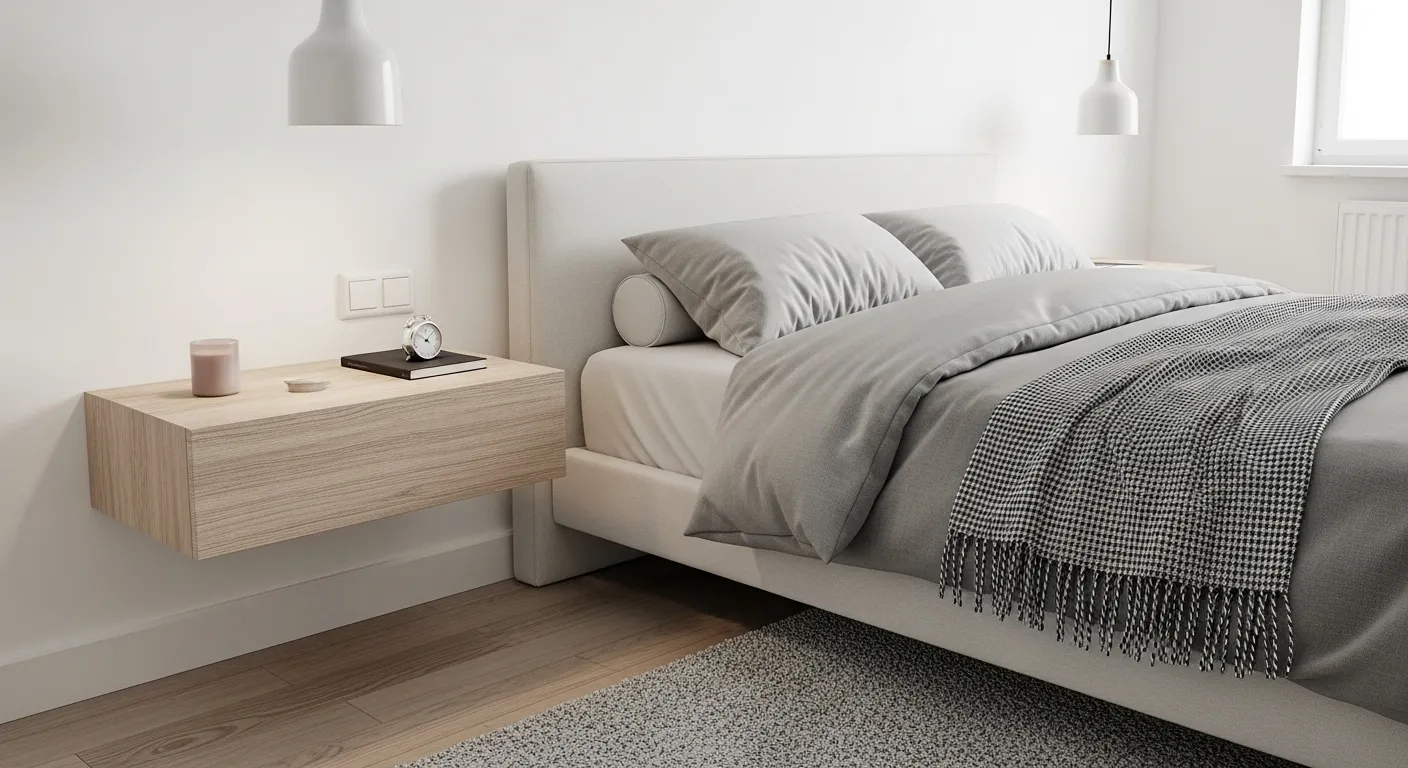
Floating nightstands are a simple upgrade that can instantly make a bedroom feel more modern and spacious. By lifting furniture off the floor, they create a sense of openness that helps the room breathe visually. This design works especially well in minimalist interiors where every element should feel intentional. In a Japandi Bedroom, floating pieces align perfectly with the clean and uncluttered aesthetic, making the space look more refined without adding unnecessary bulk or visual weight.
I’ve noticed that removing bulky furniture from the floor can dramatically change how spacious a room feels. In my experience, floating nightstands are especially helpful in smaller bedrooms where every inch matters. They keep the essentials accessible while maintaining a clean and streamlined look. That’s why many designers recommend wall-mounted furniture for modern minimalist spaces. The result is a bedroom that feels lighter, more organized, and visually calming, while still being fully functional and stylish.
13. Sheer Curtain Light
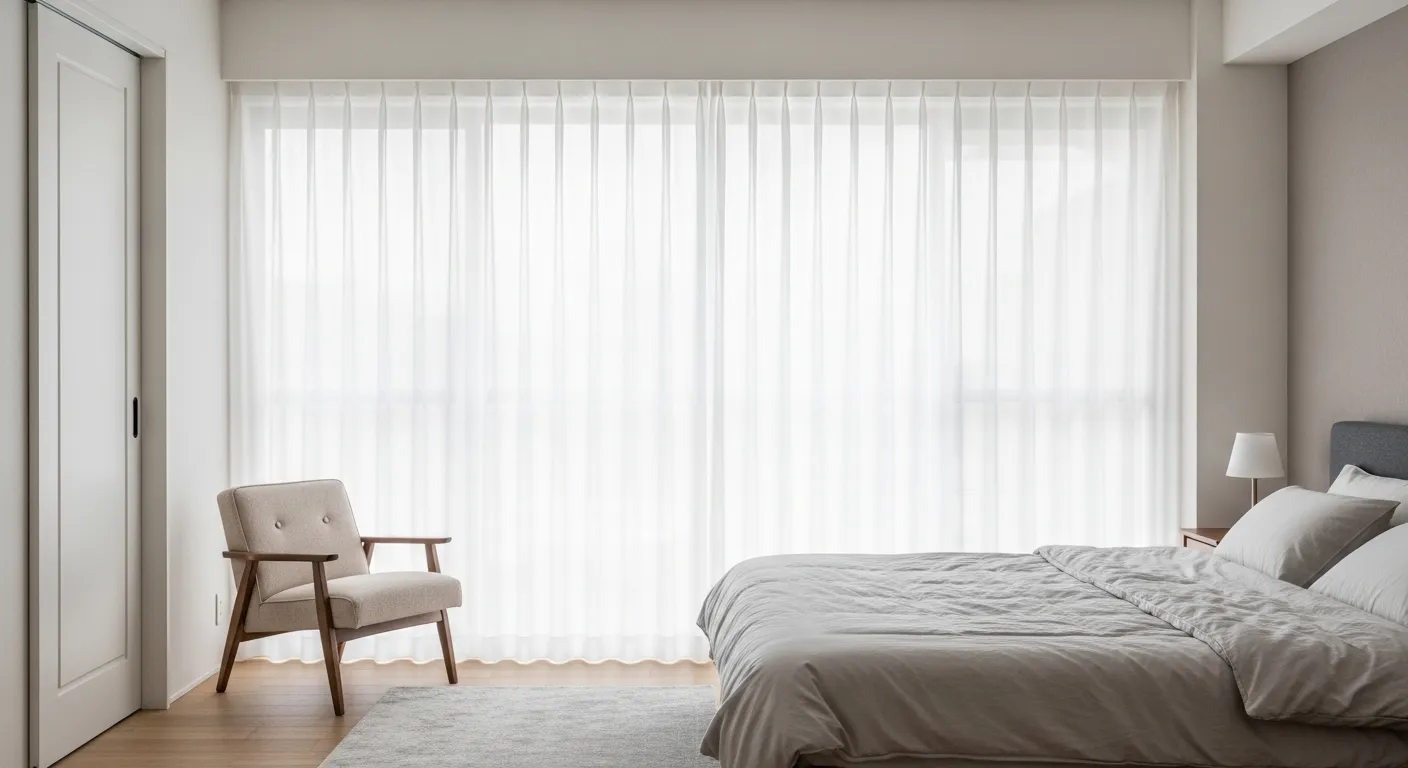
Soft, filtered light can completely change the feeling of a bedroom, and sheer curtains are one of the easiest ways to achieve it. They allow sunlight to pass through gently, reducing harsh glare while keeping the room bright and open. This creates a calm, diffused glow that enhances every element in the space. In a Japandi Bedroom, sheer curtains play an important role in balancing light and privacy, helping the room feel peaceful without becoming dark or heavy.
I’ve noticed that rooms instantly feel more relaxing when natural light is softened instead of blocked. In my experience, sheer curtains are a simple upgrade that makes a big difference without requiring major changes. That’s why many designers recommend them for minimalist spaces where light plays a key role. They add movement and softness while keeping the overall look clean. The result is a bedroom that feels fresh, airy, and quietly elegant throughout the day.
14. Minimal Floor Mattress
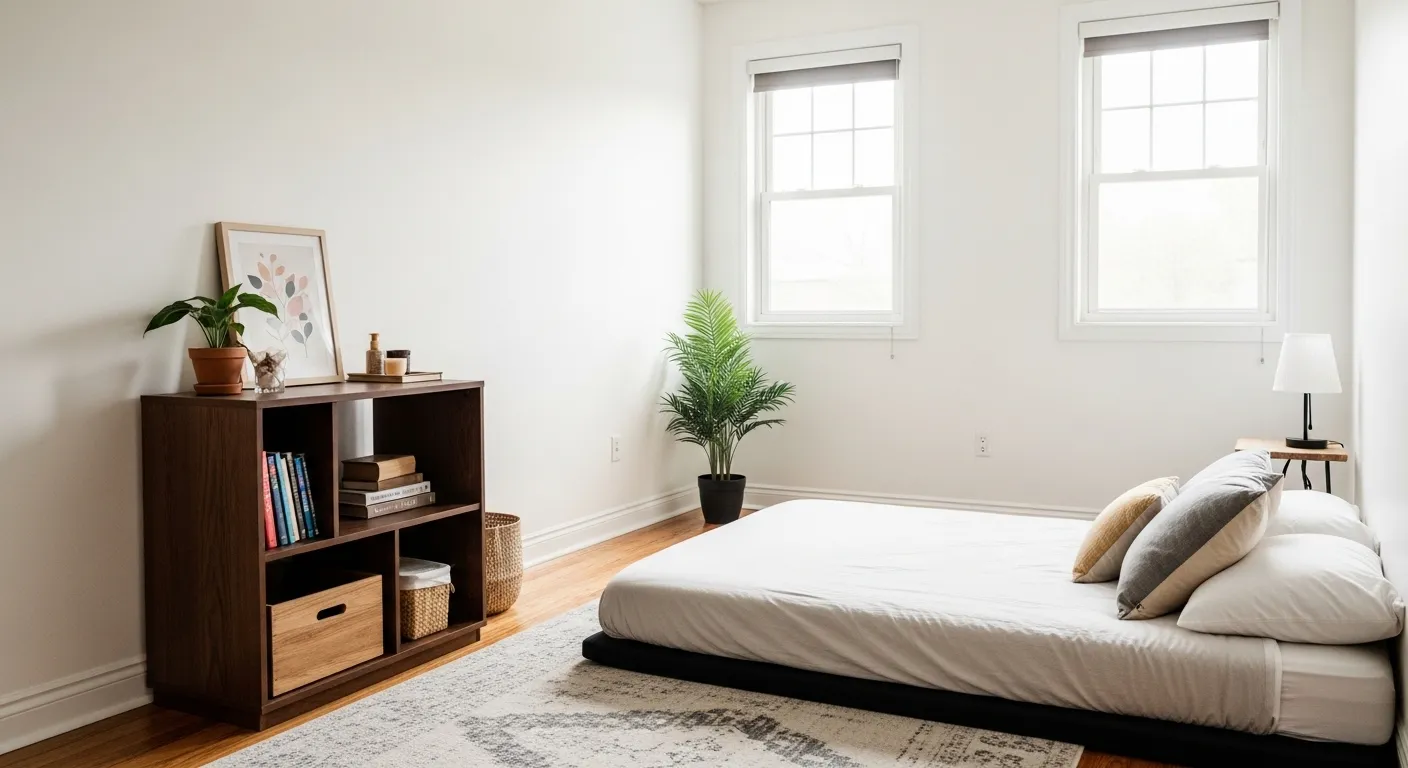
A minimal floor mattress setup brings a deeply calming and grounded energy into a bedroom. By removing elevated furniture, the space instantly feels more open and connected to its surroundings. This approach reflects traditional Japanese living, where simplicity and functionality come first. In a Japandi Bedroom, a floor mattress creates a peaceful, uncluttered environment that encourages relaxation and mindfulness, making the room feel less like a styled space and more like a personal retreat.
In my experience, this setup works especially well for people who want a flexible and minimal lifestyle. I’ve seen it transform small rooms by freeing up visual and physical space. That’s why many designers recommend it for those who value simplicity over excess furniture. It also encourages more intentional living, where every item has a purpose. The result is a bedroom that feels calm, open, and effortlessly aligned with a slow, peaceful way of life.
15. Neutral Accent Bench
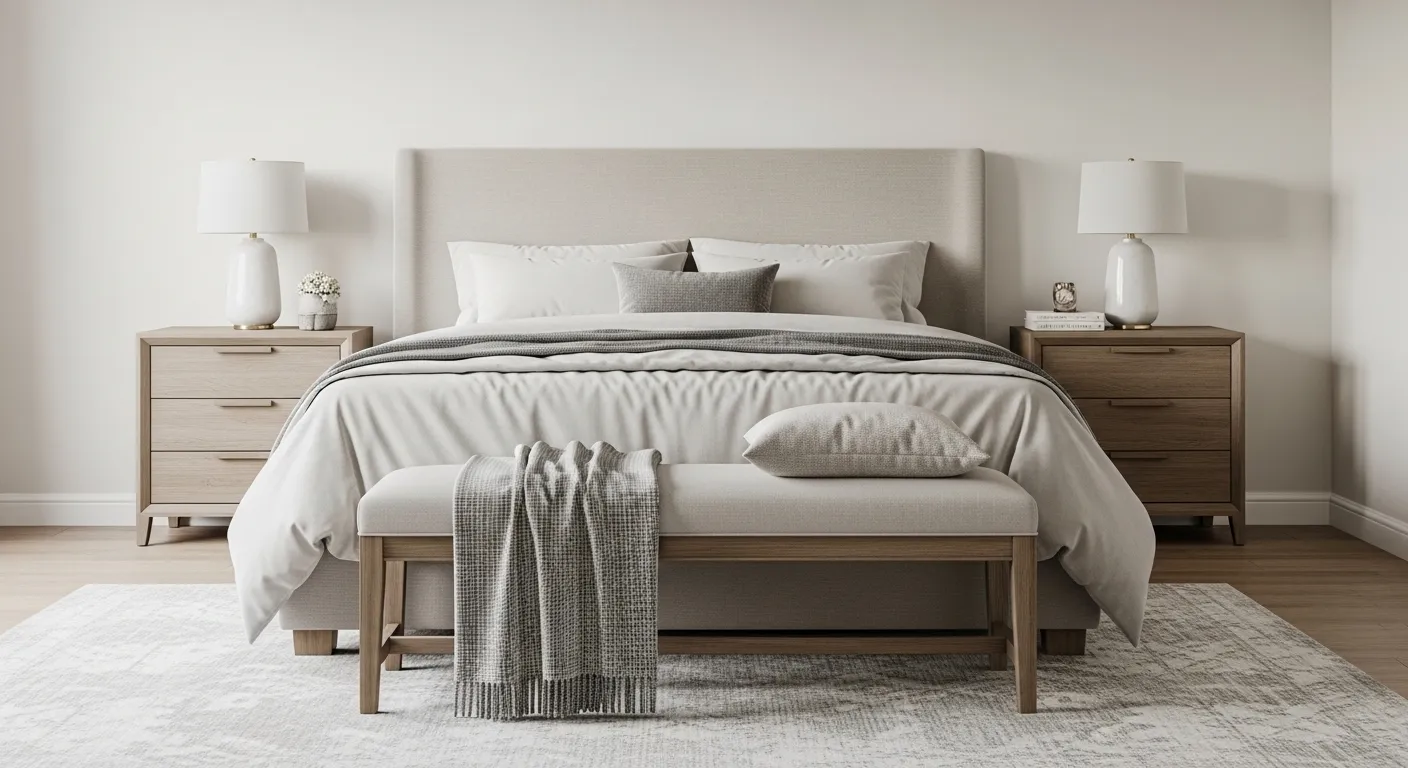
A neutral accent bench at the foot of the bed adds both function and subtle style without overwhelming the room. It helps complete the visual layout while providing a practical spot for seating or placing extra bedding. The soft upholstery and natural tones blend seamlessly into the overall palette, enhancing warmth and comfort. In a Japandi Bedroom, this small addition creates a sense of balance and refinement while maintaining the minimalist approach that defines the style.
I’ve noticed that bedrooms often feel incomplete without something anchoring the end of the bed. In my experience, a simple bench can solve that instantly while adding functionality. That’s why designers often include this element to create a more polished and intentional look. It doesn’t need to be bold or decorative—just well-placed and cohesive. The result is a space that feels thoughtfully styled, practical, and quietly luxurious without adding unnecessary complexity.
16. Clay Tone Walls
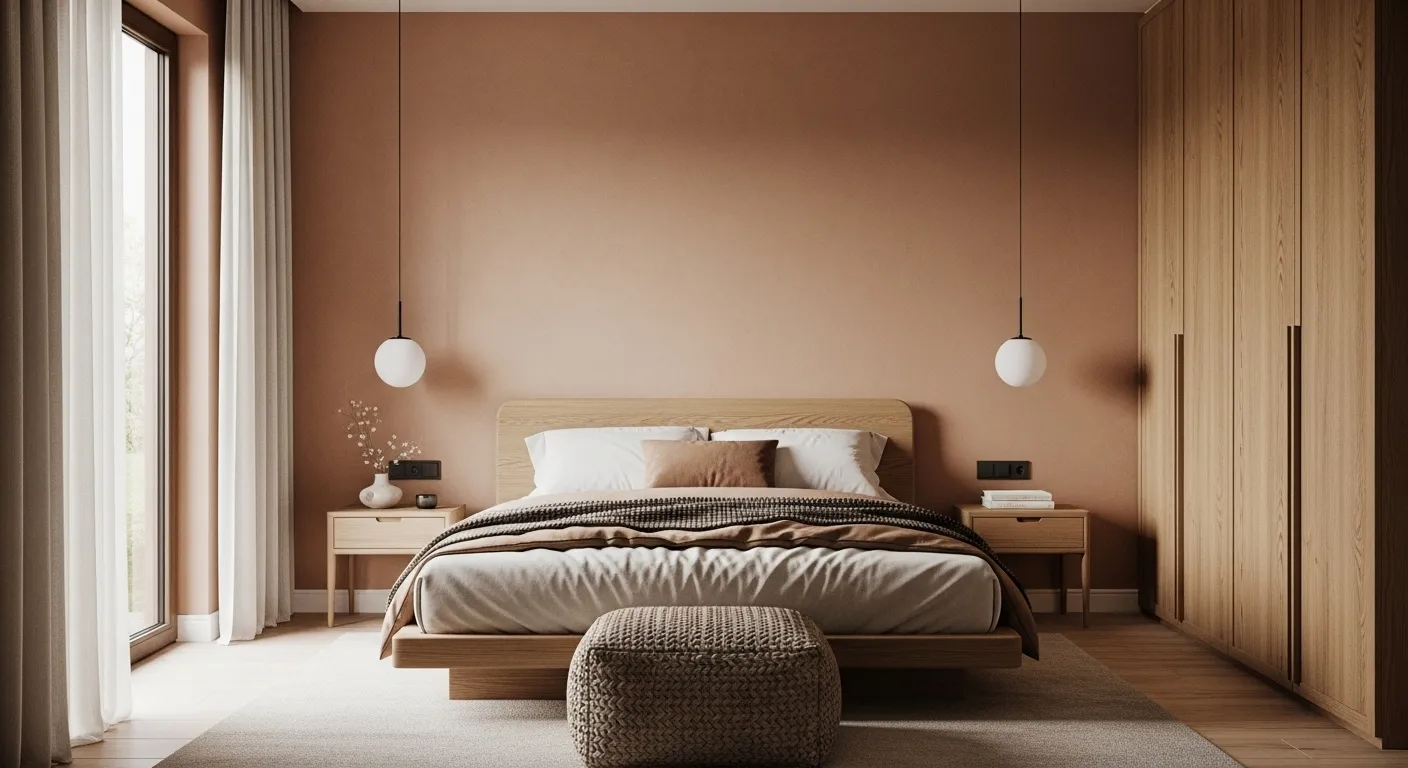
Clay-toned walls introduce a subtle warmth that makes a bedroom feel instantly more inviting and grounded. Unlike plain white, these earthy hues add depth while still maintaining a soft and calming look. The muted tones blend effortlessly with natural materials like wood and linen, creating a cohesive design. In a Japandi Bedroom, this color choice enhances the connection to nature while keeping the space minimal and balanced, making it feel both modern and timeless at the same time.
I’ve noticed that switching from plain walls to warm earthy tones can completely transform the mood of a room. In my experience, clay shades work especially well in spaces that feel too cold or flat. That’s why many designers recommend adding warmth through wall color instead of extra decor. It keeps the room simple while still feeling rich and layered. The result is a bedroom that feels cozy, calming, and naturally elegant without losing its minimalist appeal.
17. Open Wooden Shelving
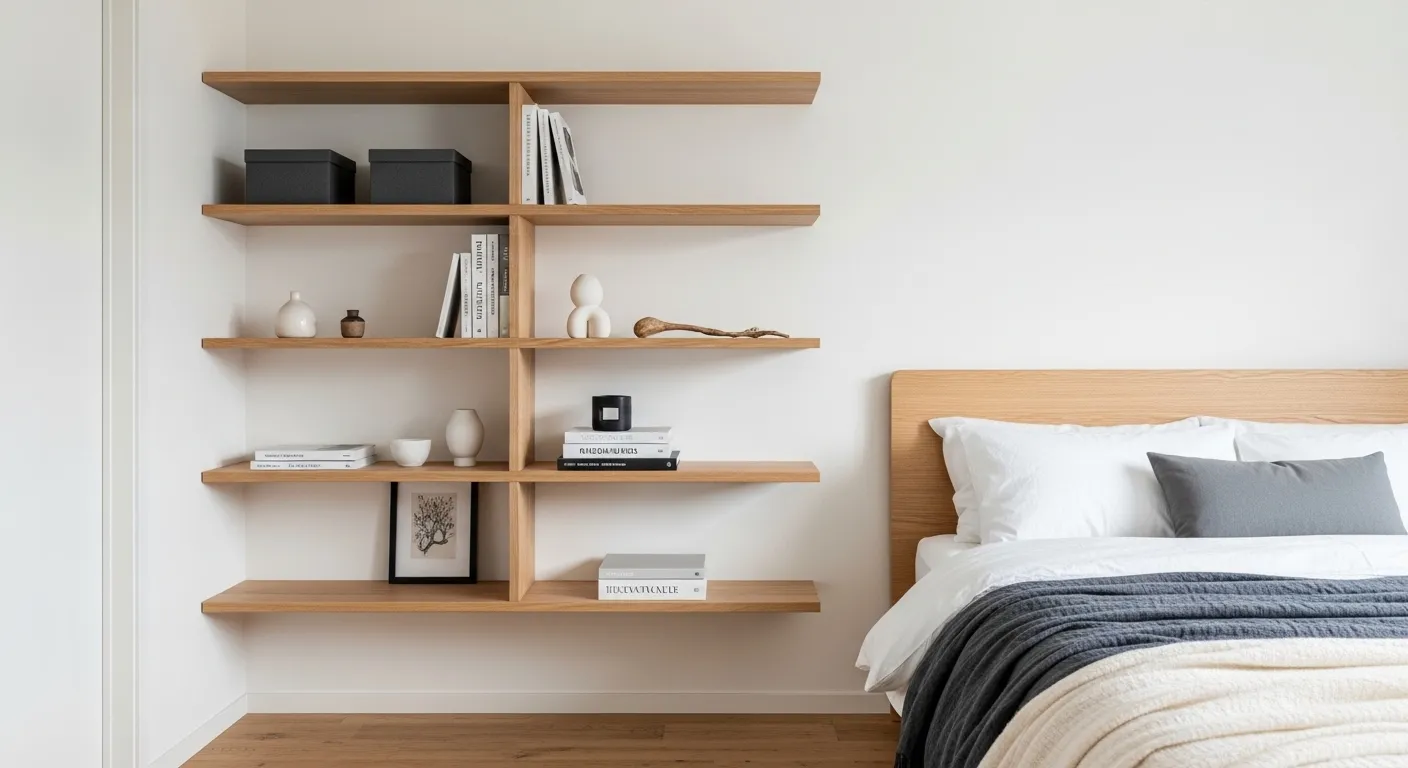
Open wooden shelving offers a perfect balance between storage and display while keeping the room feeling light and uncluttered. Instead of bulky cabinets, these shelves create a sense of openness that aligns with minimalist design principles. Carefully selected items like books or simple decor pieces can add personality without overwhelming the space. In a Japandi Bedroom, this approach helps maintain visual clarity while still allowing room for subtle, meaningful styling elements.
In my experience, open shelving works best when you keep it simple and avoid overfilling it. I’ve seen spaces lose their calm feel when too many items are displayed at once. That’s why many designers recommend limiting decor to just a few well-chosen pieces. This keeps the focus on quality over quantity while maintaining a clean aesthetic. The result is a bedroom that feels organized, airy, and thoughtfully styled, without sacrificing functionality or visual harmony.
18. Black Accent Details
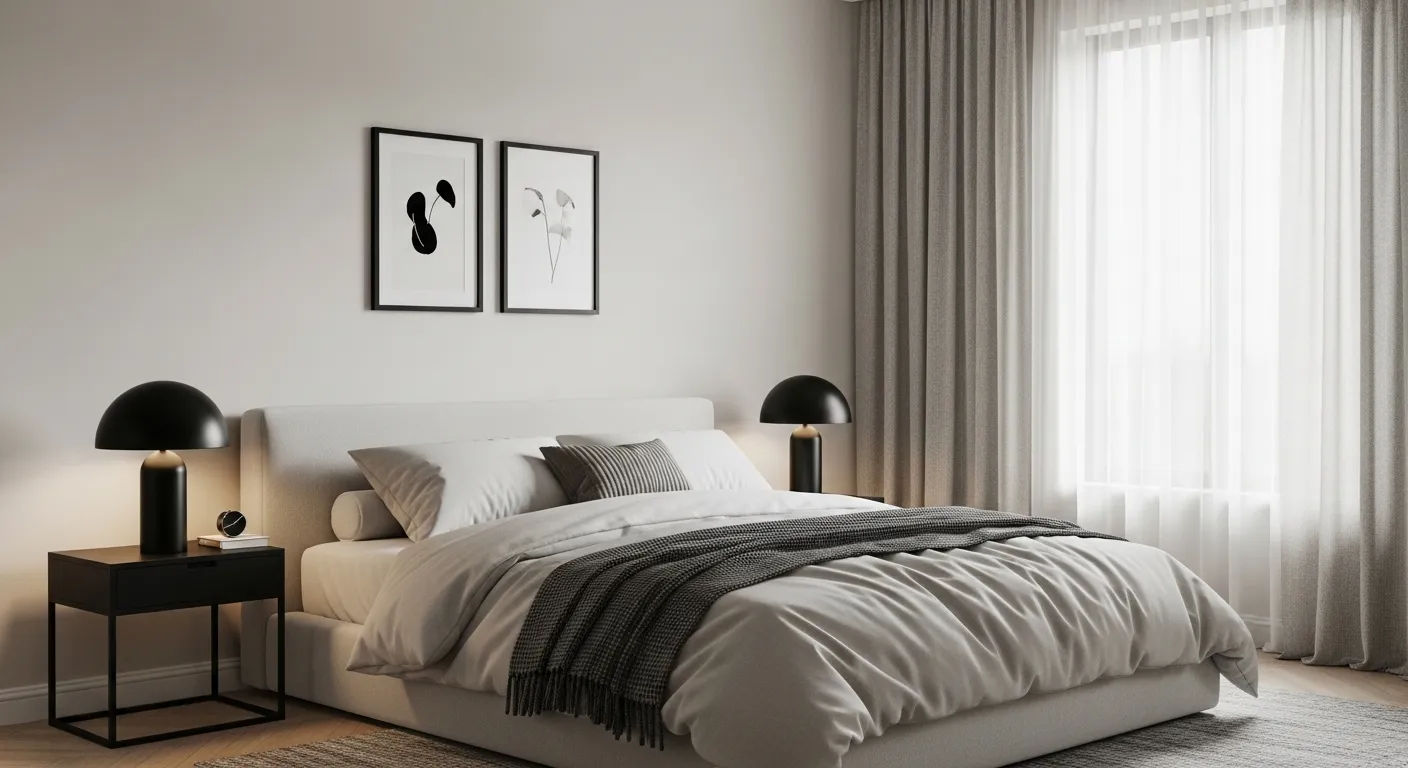
Small black accents can dramatically improve the balance of a neutral bedroom by adding just the right amount of contrast. These details help define shapes and create visual structure without making the space feel heavy. Items like a lamp, frame, or hardware can subtly stand out against softer tones. In a Japandi Bedroom, black accents are used sparingly to maintain harmony while still introducing a modern edge that keeps the design feeling fresh and intentional.
I’ve noticed that even a few black details can make a room feel more complete and visually interesting. In my experience, the key is restraint—too much can overpower the calm aesthetic. That’s why designers often use black as a finishing touch rather than a dominant color. It sharpens the overall look while keeping the atmosphere peaceful. The result is a bedroom that feels balanced, refined, and quietly sophisticated without losing its sense of calm.
19. Tatami Style Flooring
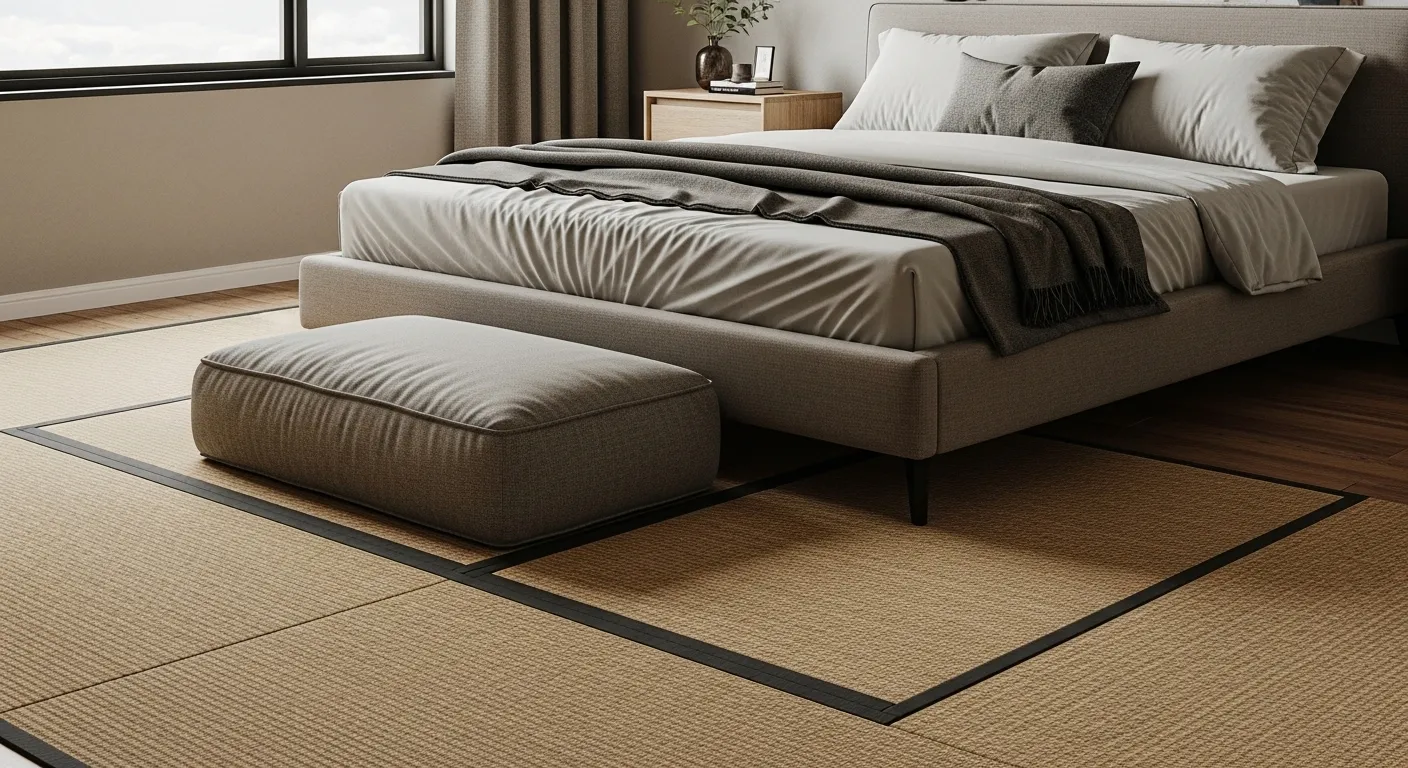
Tatami-style flooring introduces a natural texture that instantly makes a bedroom feel more grounded and peaceful. The woven surface adds subtle visual interest while maintaining a soft and neutral appearance. This type of flooring pairs perfectly with low furniture, helping create a cohesive and balanced layout. In a Japandi Bedroom, tatami elements strengthen the connection to traditional Japanese design while still blending seamlessly with modern minimalism, making the space feel both authentic and refined.
I’ve seen this flooring style completely change how a room feels underfoot and visually. In my experience, it adds a calming sensory element that standard flooring often lacks. That’s why many designers recommend it for spaces focused on relaxation and mindfulness. It also encourages a simpler layout, reducing the need for excessive furniture. The result is a bedroom that feels grounded, serene, and deeply connected to natural materials and traditional design principles.
20. Neutral Canopy Frame
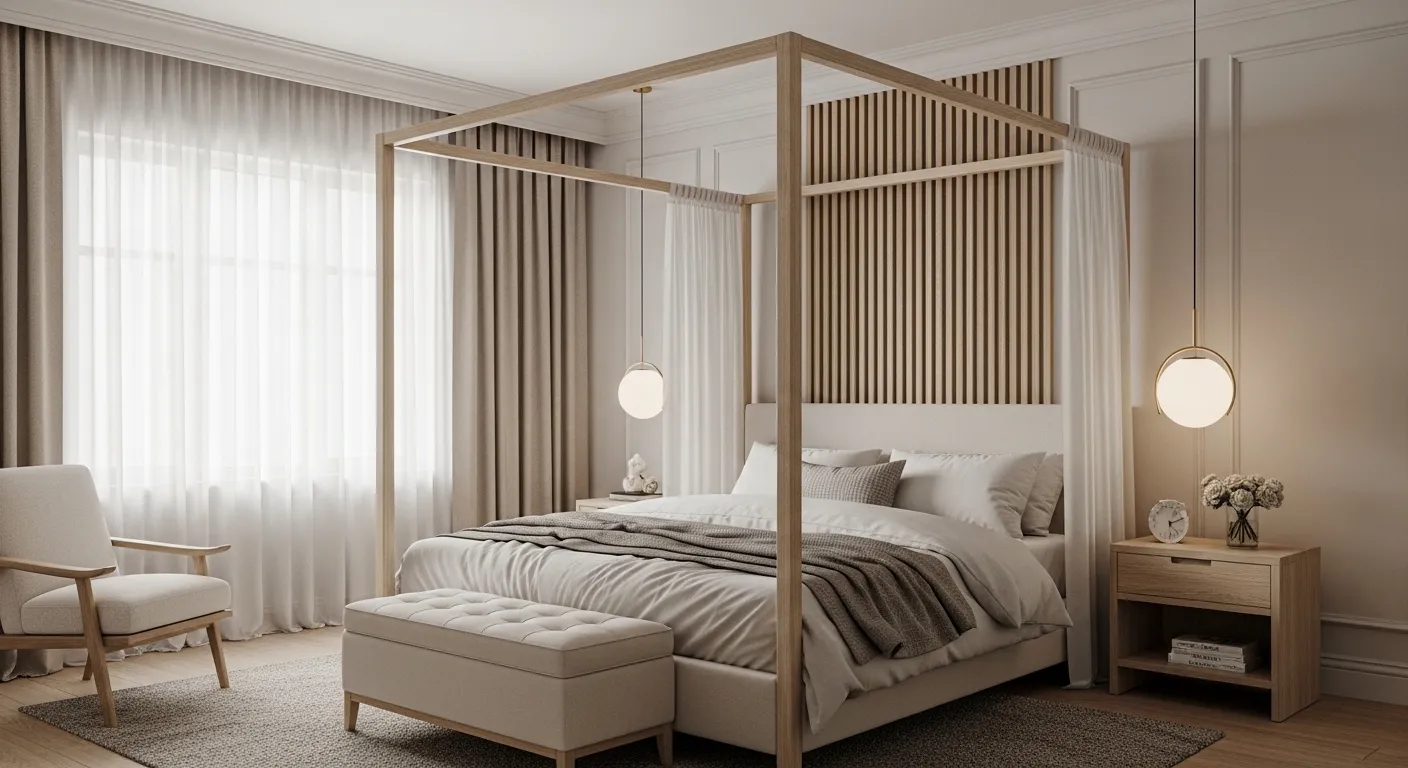
A neutral canopy frame can add structure and elegance to a bedroom without making it feel heavy or traditional. Using light wood and soft fabrics keeps the look minimal while still creating a defined sleeping area. The vertical lines draw the eye upward, making the space feel taller and more refined. In a Japandi Bedroom, this design works beautifully because it introduces a sense of luxury while maintaining the simplicity and calmness that define the style.
I’ve noticed that canopy frames often feel overwhelming in smaller rooms, but using light materials completely changes that. In my experience, keeping the design minimal allows the structure to enhance the space rather than dominate it. That’s why many designers recommend soft, neutral tones for this feature. It adds presence without clutter. The result is a bedroom that feels elegant, airy, and thoughtfully designed, with just the right balance of comfort and sophistication.
21. Simple Ceramic Decor
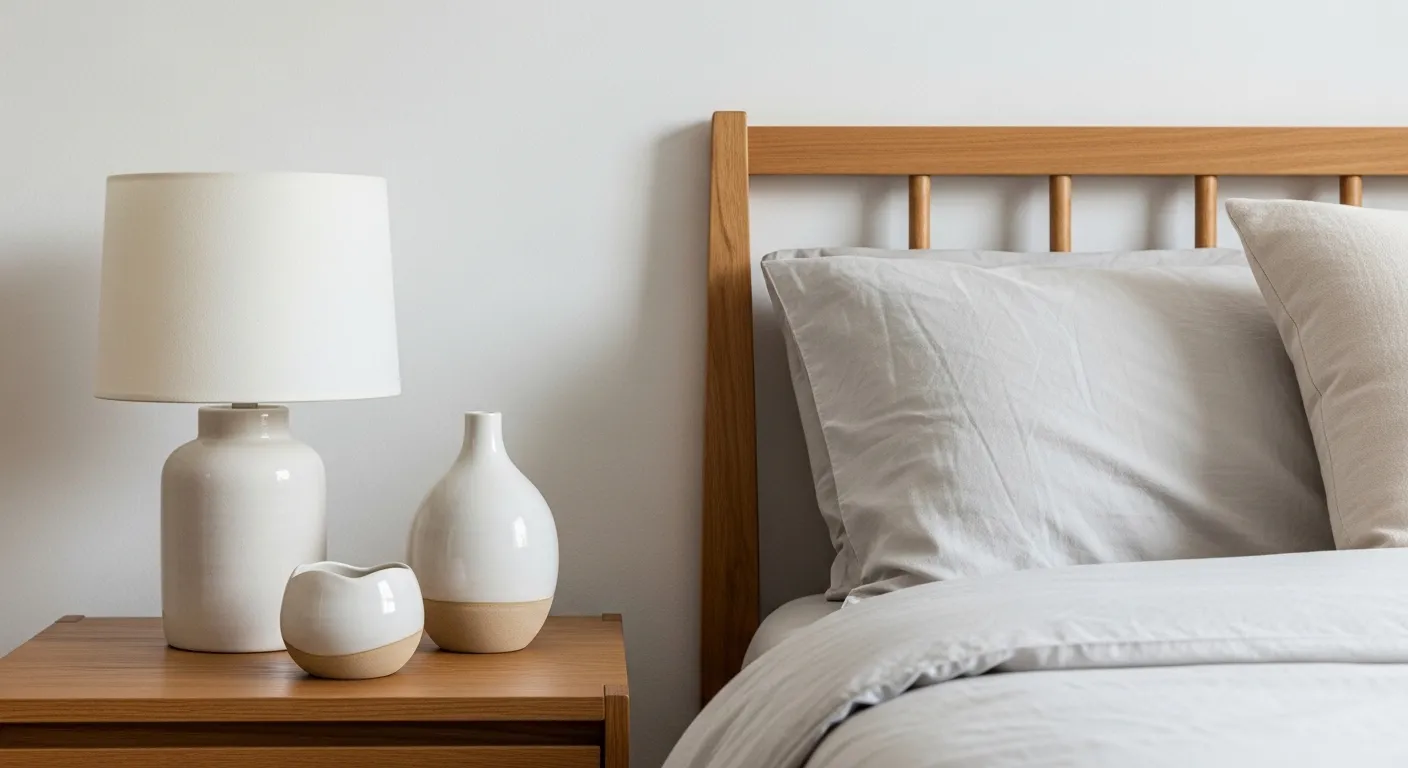
Simple ceramic decor is one of the easiest ways to add character to a bedroom while staying true to a minimalist aesthetic. Handmade pieces with soft, imperfect shapes bring a sense of authenticity and warmth that mass-produced items often lack. Placing them on a nightstand or shelf creates a subtle focal point without overwhelming the space. In a Japandi Bedroom, these elements help balance simplicity with personality, making the room feel more lived-in and thoughtfully designed.
In my experience, a few well-chosen ceramic pieces can make a bigger impact than multiple decorative items. I’ve noticed that they add quiet texture and depth without disrupting the calm atmosphere. That’s why many designers recommend focusing on quality over quantity when styling decor. Keeping it minimal allows each piece to stand out naturally. The result is a bedroom that feels artistic, balanced, and effortlessly aligned with a peaceful, intentional lifestyle.